There is a dress that requires six metres of fabric to construct, a separately wrapped undergarment, a precisely tied sash, and the knowledge of two distinct folding techniques depending on whether the occasion is joyful or sorrowful. Most fashion writing will never tell you that. It will call the gomesi “colourful” and move on. This article will not.
In the global fashion conversation about African dress, Uganda is rarely mentioned. The East African textile traditions that receive attention are the Maasai shuka, the Kanga of the Swahili coast, and the Kitenge prints that span the continent. The gomesi, also called the busuuti or bodingi, is Uganda’s most consequential garment and one of the most structurally complex traditional dresses in all of East Africa. It is the de facto national dress for Ugandan women. It has been worn at royal coronations, political campaigns, funerals, and every significant ceremony in central Uganda since the early twentieth century. And yet, outside Uganda, almost nobody in the fashion world can tell you what it is. That absence does not reflect Gomesi’s significance. It is a reflection of whose significance the fashion world chooses to acknowledge.
From the silk Kwanjula gomesi to the contemporary chiffon new-style, these are the top 5 gomesi styles for Baganda women in 2026, each one rooted in the cultural depth of the Buganda Kingdom and the long, precise history of Uganda’s most powerful dress.
Buganda, the Baganda, and the Foundation: The Gomesi Was Built On
The Baganda are the largest ethnic group in Uganda, comprising 15.3% of the total population at the 2024 census and numbering approximately 16.3 million people. They are the founding people of Buganda, the largest traditional kingdom in present-day East Africa, which occupies the central region of Uganda, including the capital, Kampala. Their language is Luganda, a Bantu language with millions of speakers. Their political and cultural system, centred on the Kabaka (king) and a sophisticated clan-based governance structure of 52 clans, made Buganda one of the most organised and most powerful states in East Africa by the 19th century.
When British colonisers arrived in the region in the 1860s, they described Buganda as among the most civilised kingdoms on the continent, a description that reveals as much about their own prejudice as it does about the genuine sophistication of Buganda’s political and social architecture.
Before the gomesi, Baganda women wore the suuka, a garment made from lubugo (barkcloth), a textile produced from the inner bark of the mutuba tree (Ficus natalensis). Barkcloth production among the Baganda is one of the oldest industrial traditions in East Africa, dating to at least the 18th century. In 2005, UNESCO declared it an Intangible Cultural Heritage of Humanity. The barkcloth suuka was a strapless garment wrapped from the chest to the ankle and tied at the waist with a sash. It was the daily and ceremonial dress of Baganda women for generations. The arrival of Arab traders and Christian missionaries in the 19th century introduced cotton to the region, and the suuka’s material began to change even before the gomesi itself was designed.
The gomesi, as a structured dress form, originated in 1905, when Miss Alfreda Allen, headmistress of the newly opened Gayaza High School in Kampala, commissioned a Goan tailor, Caetano Milagres Gomes, to design a school uniform for her girls. Gomes took the existing suuka, added a yoke and puffed sleeves, and created a more structured silhouette. The dress was named after its maker, with Gomes’s name mispronounced by local students as “Gomesi” and the name staying. The dress gained widespread popularity in 1914 when Irene Drusilla Namaganda, the Nabagereka (queen consort) of Buganda, wore it at the coronation of Kabaka Daudi Chwa II. A dress that had begun as a school uniform was elevated overnight to a symbol of Buganda royalty, elegance, and national identity. From that moment, the gomesi’s trajectory was set.
The gomesi has since passed through four documented evolutionary phases. The original barkcloth version gave way to a cotton gomesi in the 1960s. The 1970s brought the khadi gomesi, made from hand-spun, hand-woven cloth. The most recent evolution introduced the kikooyi gomesi, incorporating the vibrantly coloured kikooyi fabric. Today, the dress is made from cotton, silk, linen, satin, polyester, and the modern addition of chiffon, organza, and crepe. A single well-made gomesi requires up to six metres of fabric. Its price ranges from approximately $13 for a standard cotton version to several hundred dollars for silk or hand-embroidered linen. But what distinguishes the gomesi from most other African traditional garments is not just its material or its silhouette. It is its system. The gomesi is a complete dressing philosophy, with specific rules governing construction, wearing technique, occasion, and meaning.
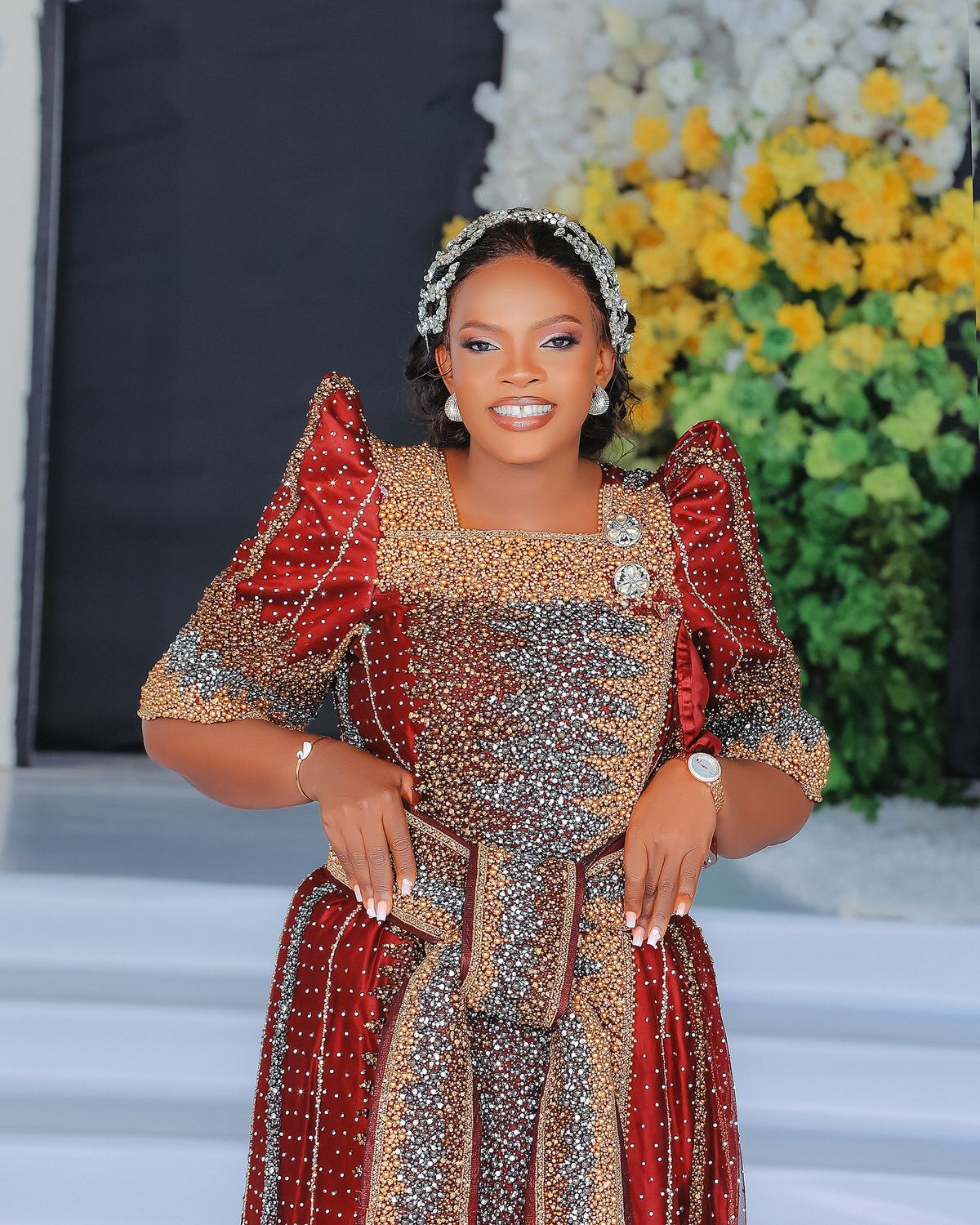
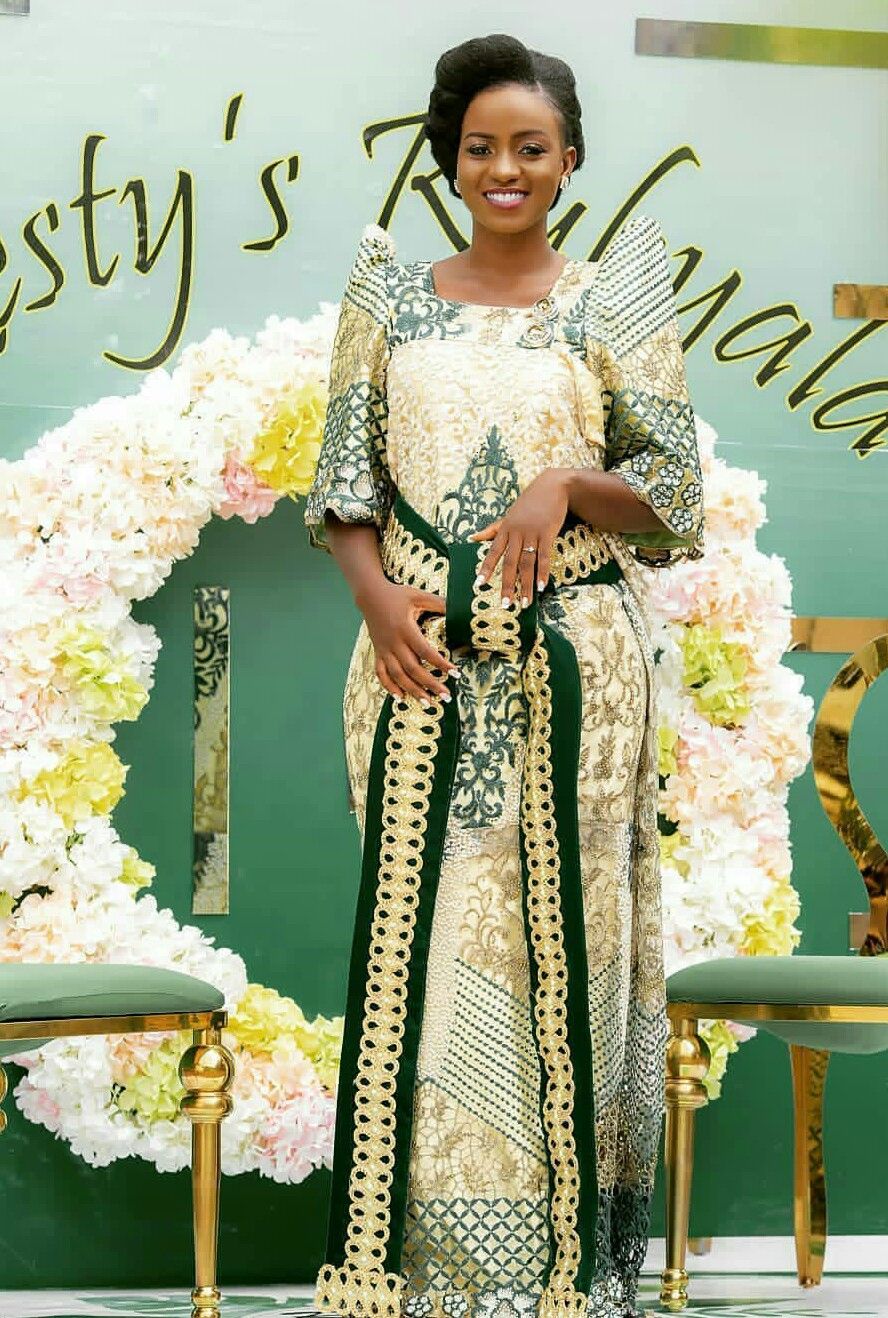
Every element of the gomesi carries deliberate cultural content. The square neckline represents stability and balance — the straight lines symbolising order and harmony, values that the Baganda hold central to their social structure. The puffed sleeves are symbols of femininity and grace, and in cultural contexts, also signal fertility and the centrality of women’s roles in family and community life. The kitambaala (sash), worn tied just below the waist over the hips, covers the pubis bone and holds the entire garment together, with its hanging part concealing a woman’s thighs to preserve the dignity that the gomesi is specifically designed to project. The sash must match the colour of the dress. Even the two buttons on the left side of the neckline are not arbitrary: they are structural anchors for the garment’s characteristic front opening. There is nothing casual about the gomesi. Every feature was placed with intention.
This is the Omiren argument about the gomesi in 2026: it is not a “national costume”. It is not a colourful African dress. It is a system of dress so internally coherent, so culturally specific, and so deeply tied to the Baganda’s understanding of dignity, femininity, and ceremony that reducing it to aesthetic description is a category error. The five styles below present the gomesi in the full depth of that system.
ALSO READ ON OMIREN STYLES
- Top 5 Shuka Styles for Maasai Women in 2026: Colour, Ceremony, and the Grammar of the Great Rift Valley
- Top 5 Styles for Temne Women in 2026: Gara Cloth and the Northern Province Textile Tradition
- Omushanana and Mishanana: The Ankole Dress Traditions of Western Uganda
- Kanzu and Kikoi: The Swahili Coast Dress Tradition and What It Argues About East African Identity
The 5 Styles
- The Silk Kwanjula Gomesi
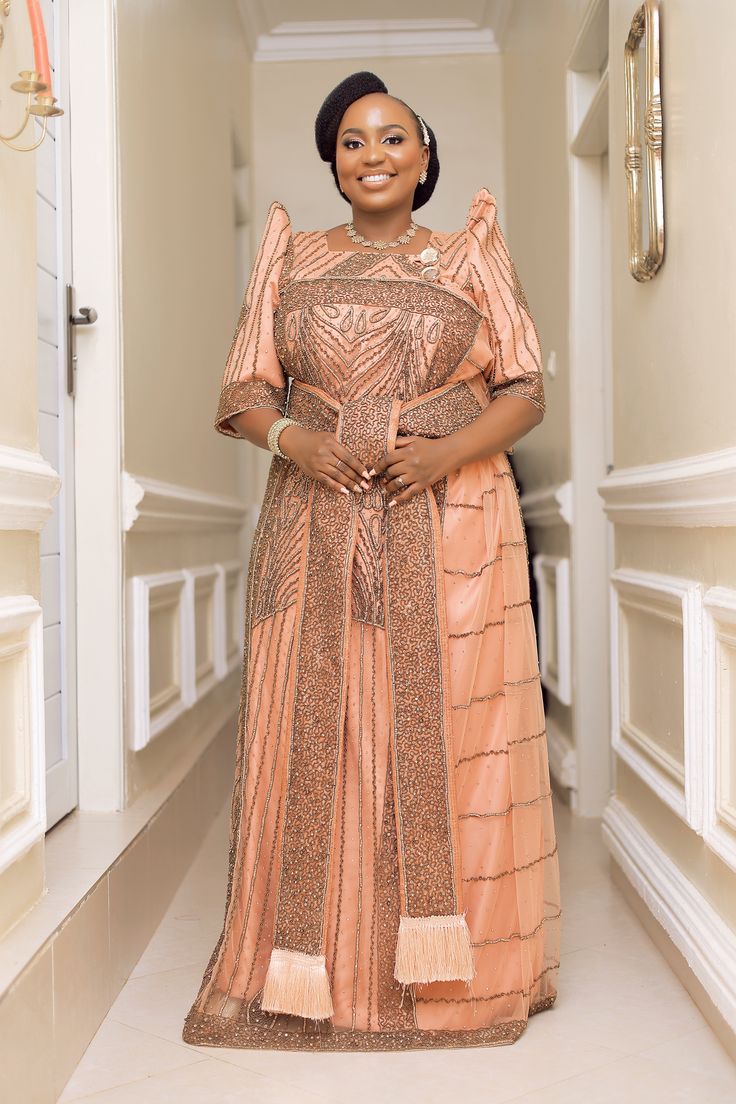
No Gomesi occasion carries higher stakes than the Kwanjula, the traditional introduction ceremony that formalises a couple’s engagement before marriage in Buganda culture. The Kwanjula is not a rehearsal for the wedding. It is itself a major social and cultural event, governed by strict protocol. One of its absolute rules is that all female members of the groom’s family must appear dressed in gomesi. No exceptions. The Kwanjula gomesi is therefore the highest-profile, most scrutinised, and most socially consequential version of the dress that a Baganda woman will wear. The fabric of choice is silk. Silk flows, catches light, and projects the opulence and ceremony that the Kwanjula demands. A silk gomesi is the most expensive, ranging from USh150,000 to over USh500,000 (approximately $40 to $133), but at a Kwanjula, it is the appropriate investment. The sash is tied in a square knot at the waist, colour-matched precisely to the dress fabric. The okutereeza fold is applied: the material that sits over the sash is pulled and pleated neatly to the left, leaving the sash exposed and visible, signalling the joyful nature of the occasion. The jewellery is elaborate. The woman is dressed from the inside out, beginning with the kikooyi and building the full silhouette before the gomesi is placed over it. The Kwanjula silk gomesi is also the style most frequently worn in coordinated family ensembles, with all women of the groom’s family dressed in matching fabric to present a visual statement of unity and celebration. This is the gomesi at its most political, its most familial, and its most formally beautiful.
- The Cotton Daily Gomesi
If the silk Kwanjula gomesi represents the gomesi at its peak ceremony, the cotton daily gomesi represents something equally important: the gomesi as a lived tradition rather than a performance. In rural Buganda, older women wear the gomesi every day, opting for lightweight cotton or satin for comfort. They tie a simple sash or string rather than the elaborate folded kitambaala used for formal occasions. When performing household chores, they use the okukubira technique: instead of the formal okutereeza left-fold, the gomesi’s fold-over section is pulled to the right over the back, covering the sash entirely and creating a looser, more practical silhouette suited to movement and work. This technique is also the appropriate draping for funerals, where the covered sash communicates solemnity rather than celebration. The cotton daily gomesi is cut and constructed with the same care as the formal versions — the square neckline, puffed sleeves, and buttons are all present — but its fabric is lighter, its sash simpler, and its purpose is to document a daily cultural commitment. Florence Kiwanuka of Buganda Kingdom has described the gomesi as “It is a mark of respect and must be worn at all social engagements.” The daily cotton version makes that mark accessible for everyday life, not just for the ceremonies that the outside world tends to photograph. It is the most worn gomesi in Uganda and the least discussed.
- The Bbula-Kikooyi Gomesi
The kikooyi, the undergarment worn beneath the gomesi for shape, structure, and modesty, has its own styling variations that significantly alter the dress’s silhouette. The bbula style positions the kikooyi above the breast, wrapped across the chest and secured there, leaving the collarbone and upper back exposed before the outer gomesi is placed over it. This style changes the internal architecture of the entire ensemble: the bbula kikooyi is longer than the standard undergarment, creating a different foundation for the gomesi to rest on. Even with the Bubula style, a standard kikooyi worn underneath is recommended by Buganda culture experts for full propriety. Still, the bbula adds the structural visual dimension that the style is known for. The body-shaping function of the kikooyi is taken seriously within the gomesi tradition: slim women wear heavier kikooyi fabric to create the illusion of fuller hips, while curvier women opt for lighter fabric to avoid adding bulk. This internal tailoring, invisible from outside, is one of the most technically considered aspects of the entire Gomesi system. The bbula-kikooyi style is worn at semi-formal occasions and is popular among younger women who want the gomesi’s cultural presence while adapting its silhouette to their own body. The outer gomesi sits differently over a bbula foundation, and the resulting shape communicates both cultural literacy and personal style.
- The Linen Mudalizo Embroidered Gomesi
Ugandan gomesi designers describe linen as a premium fabric with unique properties: it portrays African cultural patterns with a depth of texture that cotton and polyester cannot replicate, and it carries a natural weight that makes the gomesi’s silhouette particularly authoritative. The linen gomesi is worn for high-ceremony and formal occasions, including church services, formal family gatherings, and funerals. The distinguishing feature of the ceremonial linen version is the mudalizo: embroidery applied along the hem, across the sleeves, and around the neckline. Mudalizo embroidery is among the oldest decorative elements in gomesi construction, and each artisan brings a distinct hand to the work. A heavier, more intricate mudalizo is found on the most prestigious versions: some gomesi are so densely embroidered that, as one Buganda culture expert notes, a woman wearing them needs only dangling earrings because the dress itself makes the visual statement. The linen gomesi buttons match the fabric colour and can also be embroidered. A kikooyi is tied beneath to prevent the linen from clinging to the body, which is essential given this fabric’s weight. The linen mudalizo gomesi at a Buganda funeral is worn with the okukubira fold, the sash concealed, and the embroidery carrying the solemnity of the occasion. At church, the okutereeza fold is applied. The same dress makes two entirely different statements based solely on how it is draped. This is the sophistication that the fashion world consistently fails to examine.
- The Contemporary Chiffon New-Style Gomesi
The gomesi has always adapted. It was barkcloth, then cotton, then khadi, then kikooyi fabric. In 2026, it is also chiffon, organza, and crepe. Designers at Kampala labels, including Chrisms Designs Limited, the firm credited with developing both the “new style gomesi” and the “dot.com gomesi”, have created streamlined versions that preserve the essential silhouette while removing much of the construction complexity. The new-style gomesi has an inner lining and a kikooyi in the form of a skirt rather than a wrapped cloth, significantly simplifying the dressing process. The sash has modern matching buttons sewn on it rather than requiring the traditional folding technique. The dot.com gomesi has its foldings attached to the dress itself, making it even more accessible. Designer Fiona Kyamazima of Charmacouture has documented the contemporary trend: bold prints, metallic hues, and colour-blocking are now standard in contemporary gomesi fashion, alongside beading, lace detailing, sequins, and embroidered panels. These changes have made the gomesi accessible to younger Baganda women in Kampala and to the diaspora in the United Kingdom, the United States, Sweden, Canada, and South Africa. Hajara Namukwaya, known as the artist Spice Diana, has publicly stated that the gomesi remains relevant to her generation because it provides identity for Ugandans, and Baganda in particular. “At cultural events like introductions, the gomesi is the official wear for women.” The contemporary chiffon new-style gomesi is the version that travels, that appears on social media from London, Houston, and Stockholm, that has allowed the tradition to persist across geographies without losing its cultural core. Chiffon flows. Organza catches light differently from silk. Crepe has a texture that reads as modern. But the square neckline, the sash below the waist, and the two buttons on the left remain. The grammar of the Gomesi is intact.
What the Gomesi Has Always Known About Dress
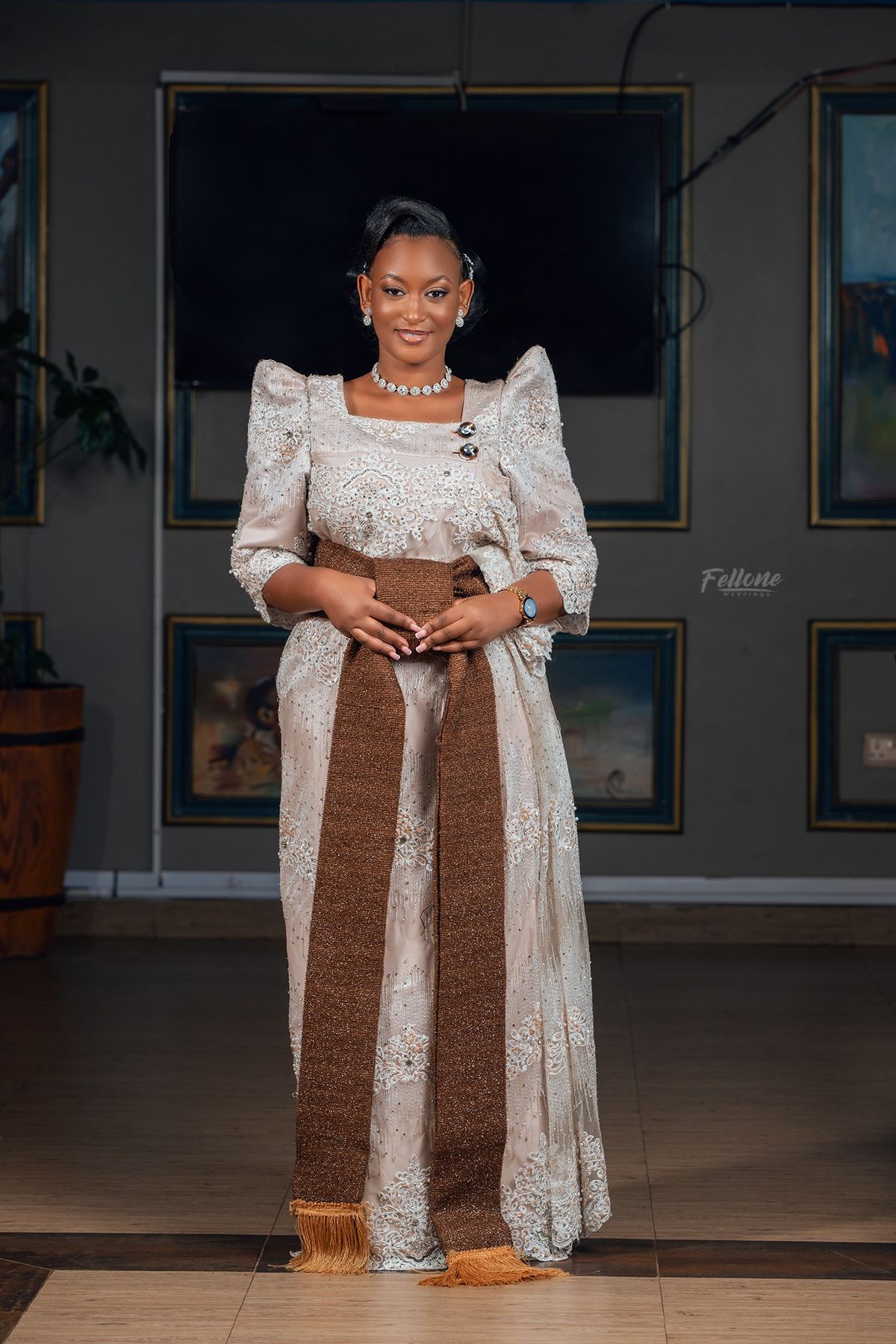
The gomesi is Uganda’s most studied garment among its own people and its most ignored garment by the global fashion industry. The contrast is stark. Ugandan women political candidates consistently choose gomesi for their official campaign photographs because, as one commentator has noted, “it is the one single thing that bestows instant dignity on the wearer.” Singer Alicia Keys wore a gomesi when visiting Uganda as an ambassador for an HIV/AIDS organisation. Keep a Child Alive. Queen Sylvia Nagginda, the Nabagereka of Buganda, wears it as a primary expression of her royal identity. Ugandan female athletes have worn it at international events. And still, the fashion world’s coverage of Africa rarely reaches it.
The reason is not obscurity. It is the geography of attention. The global fashion industry has decided which African dress traditions are worth knowing about. That decision has been shaped by the same processes that have consistently undervalued East and Central African cultural production in favour of West African traditions that have already been commercialised, sampled, and absorbed into international runway aesthetics. Louis Vuitton has not sampled the gomesi. A Beyoncé or a Rihanna has worn it. And so it does not appear on the lists.
What those lists miss is a dress that requires six metres of fabric, a specific undergarment, a colour-matched sash, two folding techniques, and the knowledge of when each is appropriate. They miss a dress that simultaneously communicates the wearer’s occasion, her social role, her family’s unity, and her commitment to the cultural values of the Buganda Kingdom. They miss a garment that has been worn continuously since 1914 across urban and rural Uganda, across generations, across political regimes, across the entire social spectrum from the Kabaka’s court to a Wabigalo market vendor carrying a baby on her back. The gomesi is not a trend. It is not a look. It is a complete philosophy of how a woman presents herself to the world, and the Baganda women who wear it, daily or ceremonially, with silk or with cotton, know exactly what they are saying when they put it on.
Frequently Asked Questions
1. What is a gomesi?
A gomesi (also called busuuti or bodingi) is a floor-length, brightly coloured dress worn by women, primarily among the Baganda and Basoga peoples of Uganda. It features a distinctive square neckline, short puffed sleeves, and a sash (kitambaala) tied below the waist over the hips, with two buttons on the left side of the neckline. A well-made gomesi requires up to six metres of fabric and is worn over an undergarment called a kikooyi, which is wrapped around the body for shape and structure. The gomesi was first designed in 1905 and is now the de facto national dress for Ugandan women.
2. When must Baganda women wear a gomesi?
The gomesi is the required attire for all female members of the groom’s family at the Kwanjula (the traditional introduction ceremony before marriage). It is expected at weddings, funerals, church services, graduations, and formal family occasions. It is also the appropriate dress for meetings with elders. In rural Buganda, older women wear the gomesi as daily attire. In urban areas, it is more commonly reserved for ceremonial occasions, though the contemporary new-style gomesi is increasingly worn in professional and social settings in Kampala.
3. What is the difference between okutereeza and okukubira?
These are the two primary methods of folding and draping the gomesi, each signalling a different occasion. Okutereeza (folding to the left) refers to the neat pleating of the material over the sash, with the sash left exposed at the back, used for happy and celebratory occasions such as weddings and introduction ceremonies. Okukubira involves pulling the foldable section of the gomesi over the back to the right, covering the sash, and is used for funerals, daily household chores, and informal occasions. The folding method communicates the nature of the occasion immediately and is a core element of gomesi literacy.
4. What fabrics are used for a gomesi in 2026?
The gomesi is made from a range of fabrics depending on the occasion and the wearer’s means. Silk is the most prestigious and most expensive fabric, worn for high-ceremony occasions like the Kwanjula. Linen is valued for its texture and its ability to carry mudalizo embroidery. Cotton is the most practical and widely worn fabric, used for daily and rural wear. Modern designers have introduced chiffon, organza, and crepe for lighter, more contemporary versions, as well as polyester for affordable everyday options. Satin is also common. Prices range from approximately $13 for a standard cotton gomesi to several hundred dollars for a fully embroidered silk version.
For more on African dress traditions across all 54 nations, explore Omiren Styles. Fashion. Culture. Identity.