Every textile carries information. What makes Isi-Agu different is the precision of its communication. The lion-head motif woven into this Igbo fabric is not decoration. It is notation. Before a woman speaks at a title ceremony, an outing, or a family gathering, her Isi-Agu has already introduced her.
That introduction has grown more complex. Igbo women today wear Isi-Agu across a wider range of silhouettes than at any previous point in the fabric’s documented history. The George wrapper remains foundational. But the blouse, the skirt suit, the kaftan, and the contemporary co-ord have all become legitimate carriers of the same authority. As documented in Nnadiebube Journal of Philosophy (2018), the symbolic function of Isi-Agu in Igbo culture is tied to production, patronage, and social status, not to any single cut or silhouette. Each configuration speaks. Each one says something different.
This is not fashion evolution for its own sake. These five styles represent five distinct positions Igbo women occupy and perform: in ceremony, in professional life, in diaspora, and in daily cultural expression. To flatten them into a single category called ‘Isi-Agu outfits’ is to lose most of the meaning.
Five Isi-Agu styles Igbo women wear today and the distinct declarations of identity, rank, and aesthetic authority each one carries.
What Isi-Agu Is and What It Has Never Been?
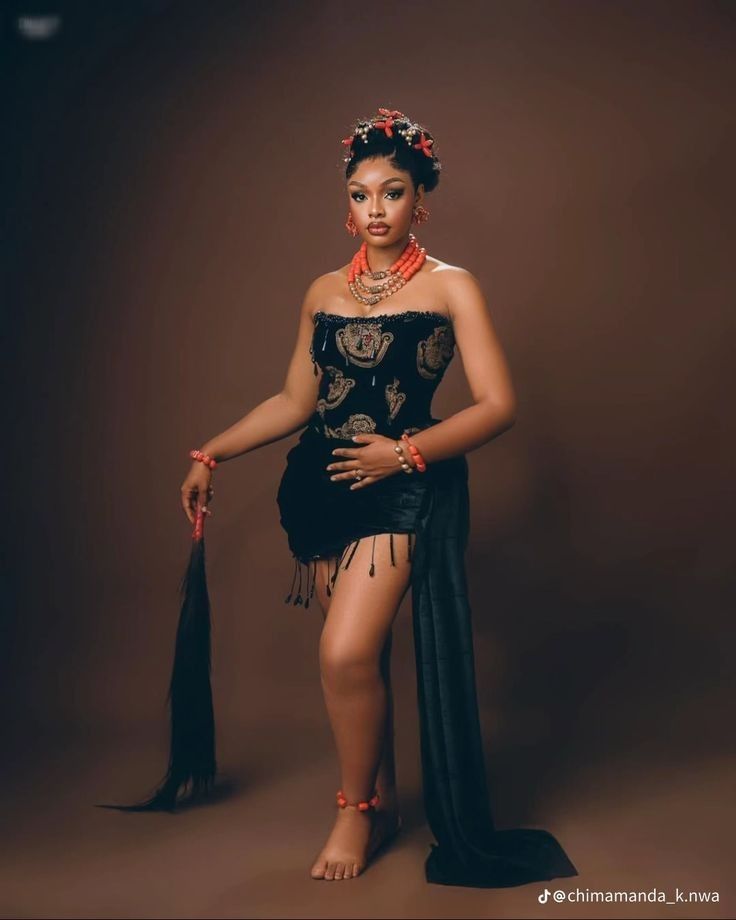
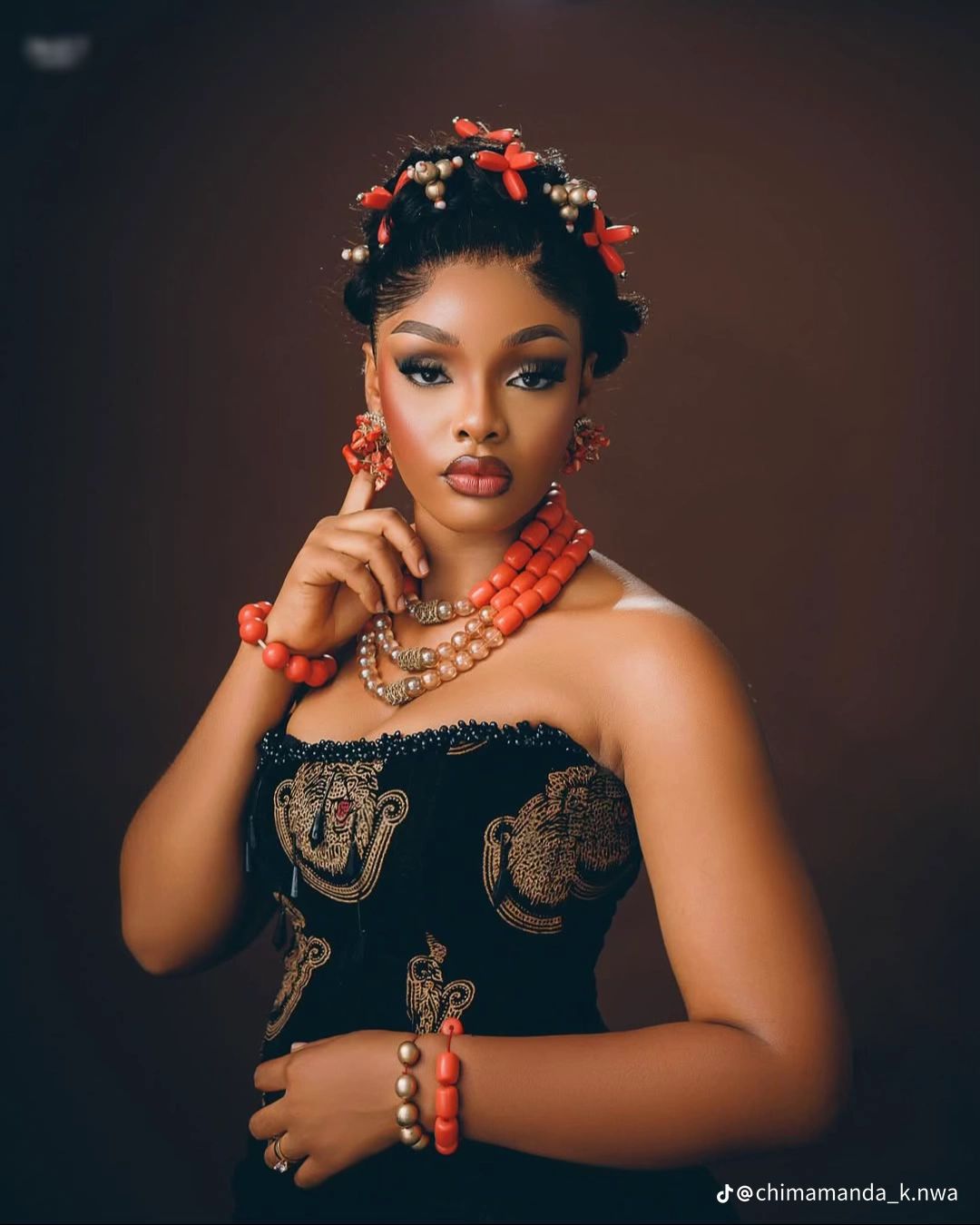
Isi-Agu translates from Igbo as ‘head of the lion’. The fabric is distinguished by its woven or printed lion-head motif, repeated in a grid pattern across the textile. Its use has historically been concentrated among the Igbo of south-eastern Nigeria, where it carries associations with strength, nobility, and titled status. Scholars at Ozi Ikoro note that the fabric became prominent in the mid-20th century and was closely associated with Nze and Ozo titleholders and with ceremonial life. Both men and women wear it, but the gendered conventions of how it is worn, combined with what occasion it marks, are specific and legible to those within the culture.
What Isi-Agu has never been is decorative. The error made by external commentary, particularly fashion media that frames it as an ‘Africa-inspired’ pattern or a ‘bold African print’, is to strip the motif of its referential function and treat it as surface. As Omiren Styles argues in When Dressing Becomes Declaration, clothing in African cultural contexts has consistently carried social, spiritual, and communal weight that mainstream fashion discourse is only beginning to acknowledge. When an Igbo woman selects Isi-Agu for a ceremony, she is not making an aesthetic choice alone. She is making a claim. The five styles below are five different kinds of claims.
|
1. The Isi-Agu Blouse with George Wrapper: Ceremonial Authority
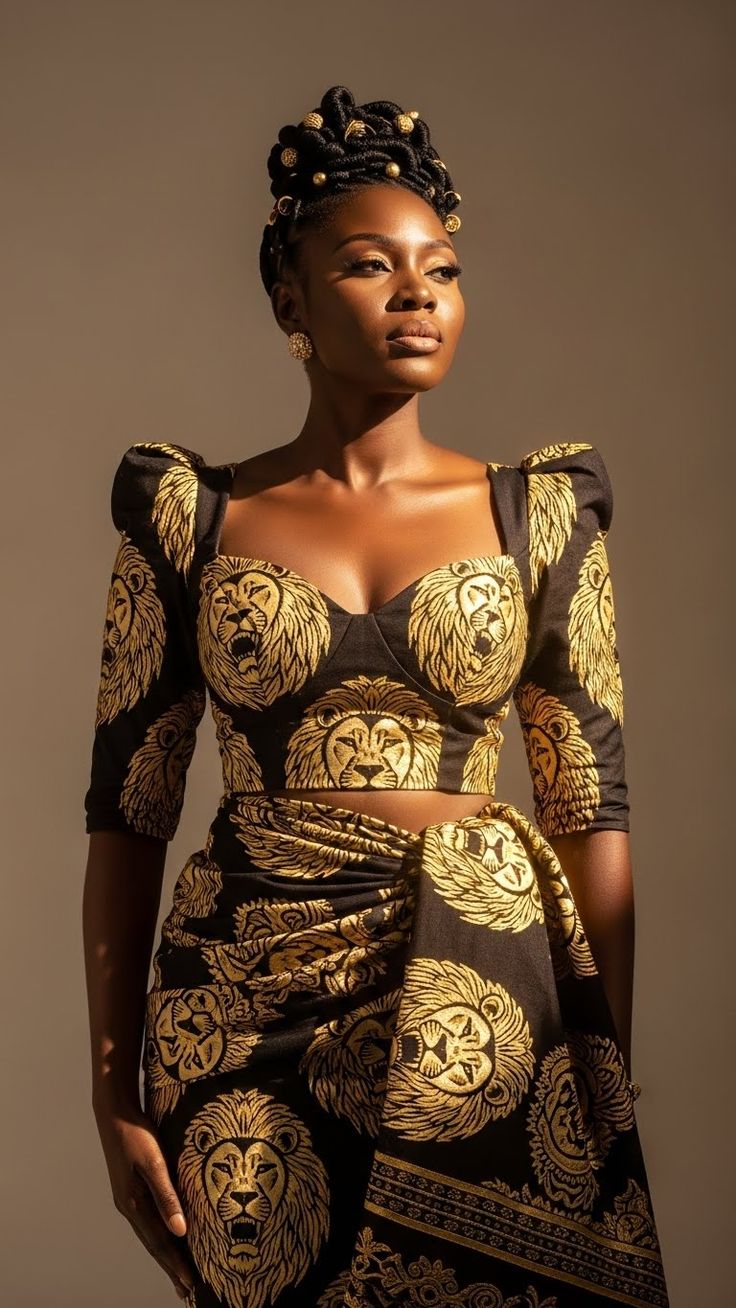
This is the foundational configuration and the one with the deepest ceremonial weight. An Isi-Agu fabric cut into a fitted blouse, typically with a round or V-neckline, three-quarter sleeves, and tailored seams, worn over a George wrapper secured with a matching or tonal fila (head tie) is the dress code of women who hold or are proximate to titled status in Igbo society.
The George wrapper is itself a prestige fabric. Its pairing with Isi-Agu is not incidental. It is a doubling of authority markers. At burial ceremonies, title outings (ichie), and chieftaincy events, this combination signals that the woman wearing it occupies a specific social position. Elders read the combination immediately. The silhouette is not aspirational. It is declarative.
Contemporary tailors have refined the blouse cut without altering its function. The structure may be more precise, the neckline more deliberate, the sleeve treatment more architectural. The statement remains the same. This style does not travel into casual settings. When it appears, it means something specific.
2. The Isi-Agu Skirt Suit: Professional Sovereignty
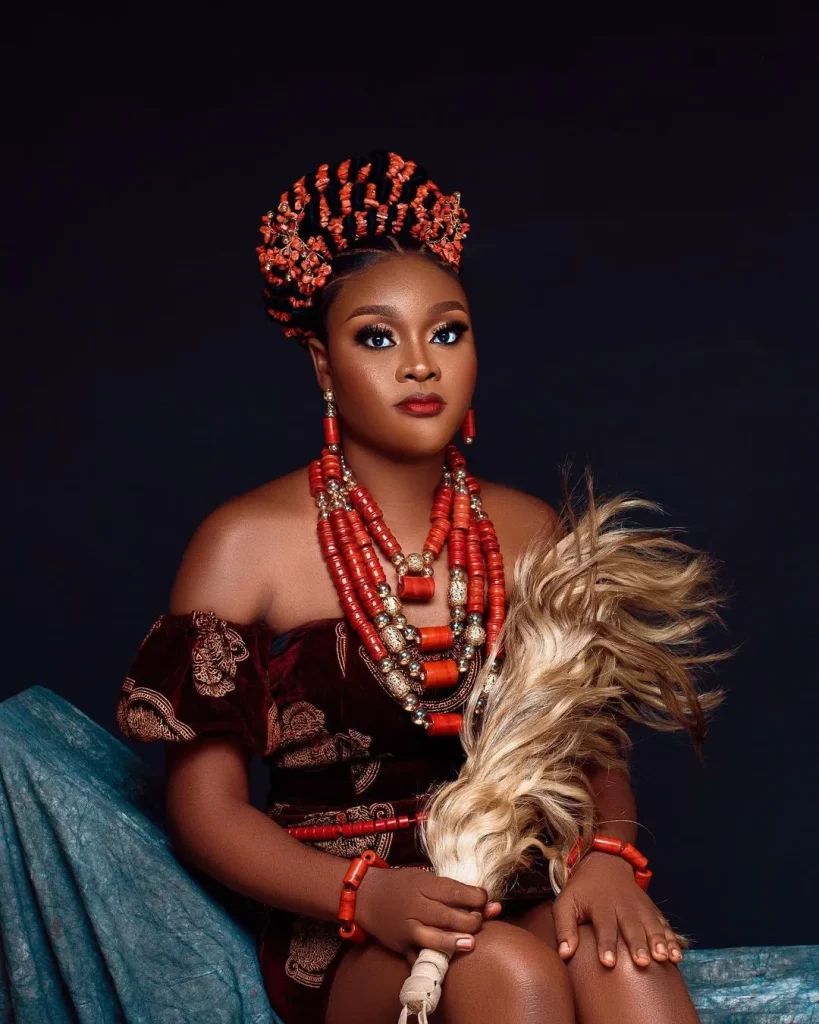
The tailored Isi-Agu skirt suit, a structured blazer, and a pencil or A-line skirt cut from the same lion-head fabric occupy different territory. It emerged as Igbo women navigated formal professional and civic spaces where Western dress codes had established themselves as the default language of authority.
The skirt suit does not abandon Igbo aesthetic grammar. It translates it. The Isi-Agu motif worn in a boardroom, a government chamber, or a formal institutional setting carries the same claim as it does at a ceremony, in a register legible to a wider audience. The woman in the Isi-Agu skirt suit is not code-switching. She is asserting that her cultural and professional authority are the same. This is the logic explored in How Cultural Resistance Shaped the World’s Most Powerful Style Movements: that communities under pressure have consistently used clothing to reclaim dignity and assert authorship over how their bodies are read in public.
This matters. Much of the critical writing on African fashion in professional contexts focuses on the tension between Western dress norms and African textile traditions. The Isi-Agu skirt suit collapses that tension by refusing to resolve it. There is no compromise garment. There is only the suit, and the suit carries one message: these are not competing registers.
3. The Isi-Agu Kaftan: Matriarchal Ease
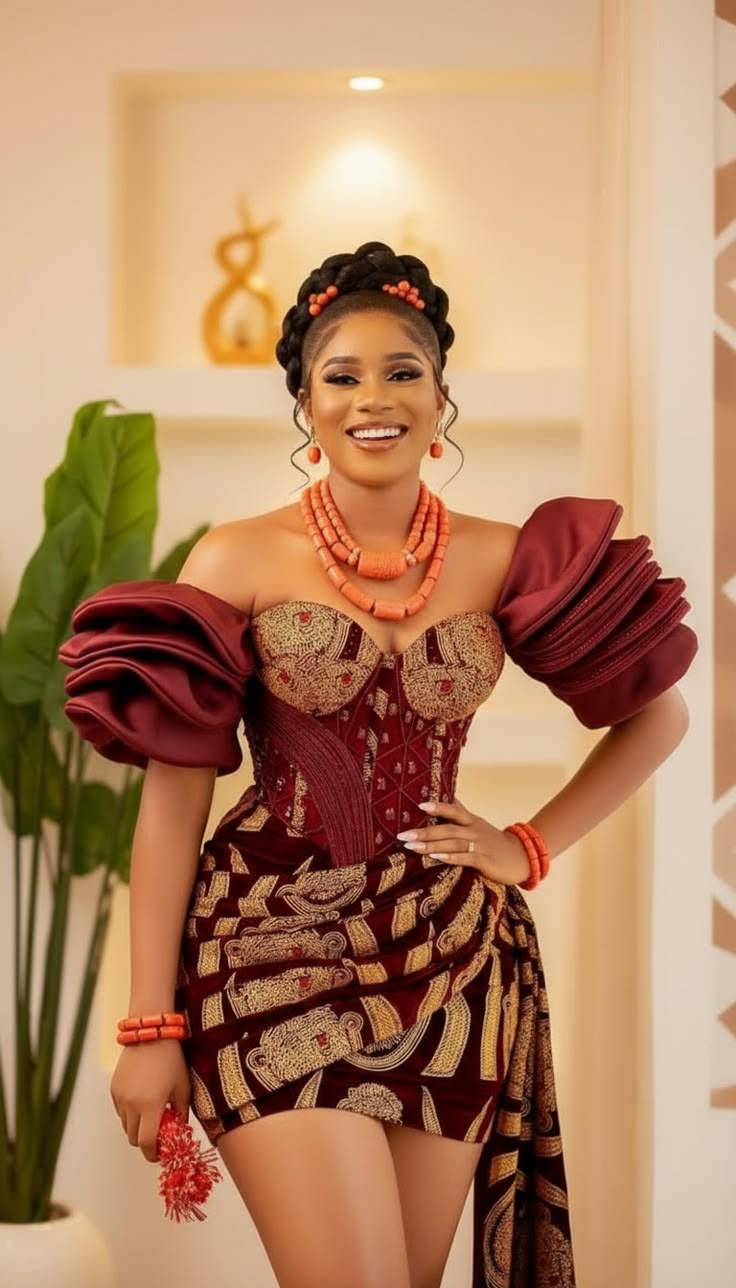
The kaftan cut in Isi-Agu is a more recent styling development, but one with clear precedent in Igbo textile culture’s relationship with volume and status. Where the blouse-and-wrapper configuration structures the body into visible components, the kaftan envelops. The silhouette is one of abundance: in fabric, in presence, in space claimed.
Women who wear this style tend to be among those with the highest social capital in a given setting. The kaftan does not require effort. It performs arrival. At naming ceremonies, family gatherings, and cultural festivals, the Isi-Agu kaftan is worn by women who have nothing to prove and know it. The ease is not accidental. It is a product of accumulated standing.
The kaftan also travels well across ages. Younger women wearing it are making a deliberate claim to that register of authority, borrowing forward, so to speak. Older women wearing it are simply occupying a space they have earned. The same silhouette, the same fabric, the same declaration: I am here, and I am fully so.
4. The Isi-Agu Co-Ord: Diaspora Fluency
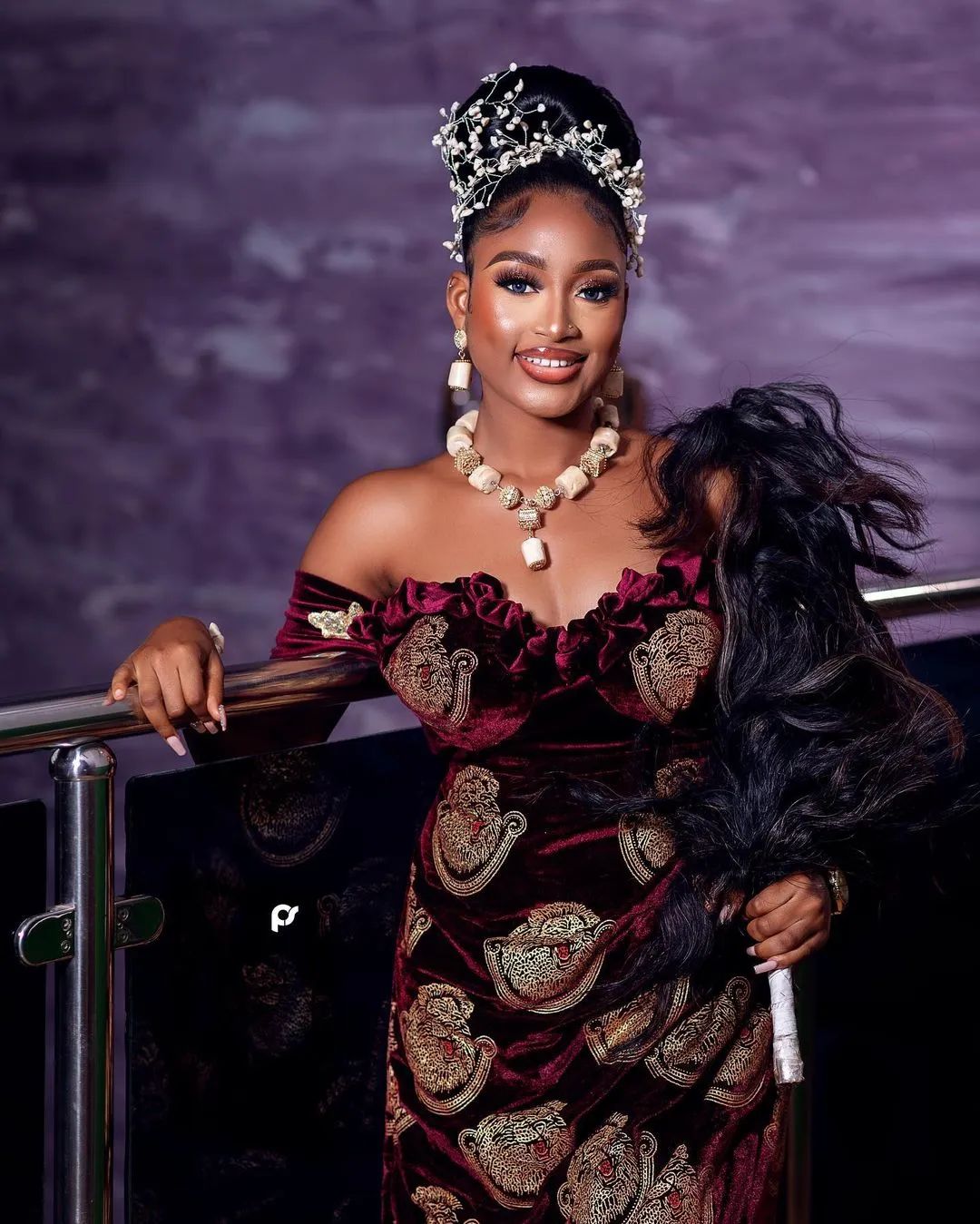
The contemporary co-ord, a matching crop top and wide-leg trousers, or structured top and midi skirt cut from Isi-Agu, is the diaspora iteration. It was not designed for village squares or title ceremonies. It was designed for Igbo women navigating cities where the full ceremonial vocabulary of blouse-and-wrapper would be legible only to those already inside the culture.
The co-ord compresses the authority claim into a format readable across cultural contexts. The lion’s head is still present. The fabric is still Isi-Agu. But the silhouette speaks a language that crosses borders. Igbo women in London, Houston, Toronto, and Lagos wear this style to events where they are both participants in mainstream fashion culture and carriers of a specific cultural identity. The co-ord allows both to be true simultaneously.
This is not dilution. Translation, when done with precision, preserves meaning. The Isi-Agu co-ord at a gallery opening or a cultural festival in the diaspora does exactly what the blouse-and-wrapper does at a title ceremony: announcing a specific cultural position to those who can read it and commanding attention from those who cannot. For a deeper reading of how diaspora communities use dress to negotiate layered identities, see Maasai Beadwork: Meaning, Symbolism, and the Language of Identity, which documents a parallel logic of textile authority operating across African communities.
5. The Isi-Agu Gown: Bridal and Ceremonial Sovereignty
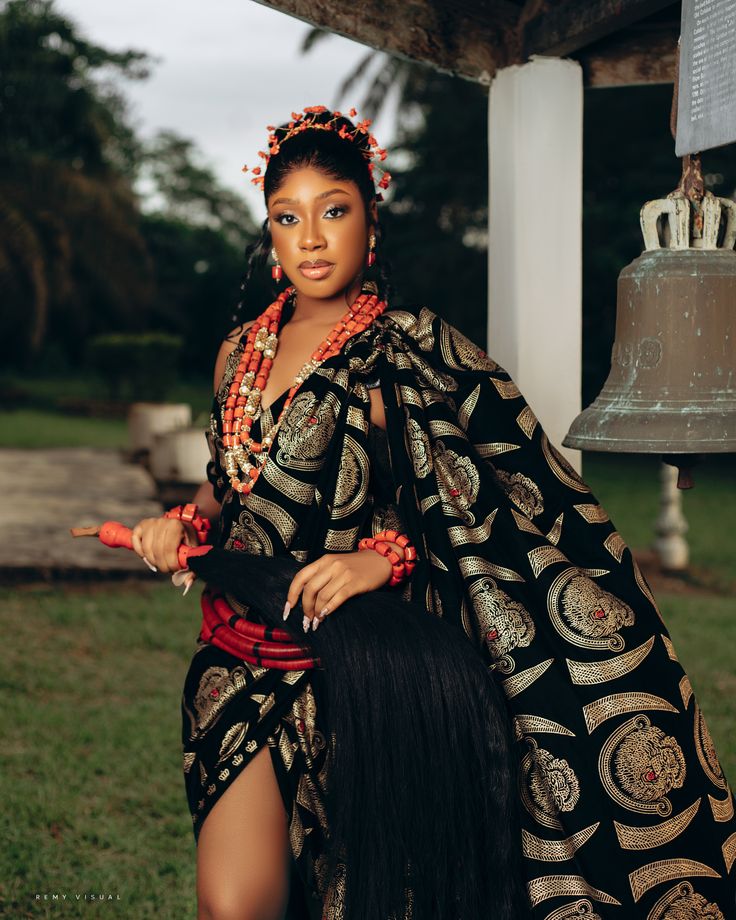
The floor-length Isi-Agu gown, worn at traditional marriage ceremonies either as the bride’s second outfit or as the dress worn by senior women on the groom’s side, is perhaps the most direct statement the fabric makes about feminine power in Igbo culture.
At a traditional Igbo wedding, known as Igba Nkwu Nwanyi, the sequence of garments matters. The Isi-Agu gown, when worn by the bride, marks the moment at which she transitions from her family’s household into her own authority as a married woman. It is not worn for beauty alone, though the gowns produced by contemporary Igbo designers are technically extraordinary. It is worn because the occasion requires the full weight of the fabric’s cultural meaning to be present.
Senior women who wear Isi-Agu gowns to weddings are performing a different but related function. They are embodying the social continuity of which the marriage is a part: the lineage, the title history, the accumulated cultural authority that surrounds and underwrites the ceremony. Their presence in the fabric is not incidental. It is structural.
|
Also Read on Omiren Styles:
- When Dressing Becomes Declaration: Clothing as Cultural Identity
- How Cultural Resistance Shaped the World’s Most Powerful Style Movements
- Maasai Beadwork: Meaning, Symbolism, and the Language of Identity
Five Styles. One Argument.
Isi-Agu does not change meaning depending on how it is cut. What changes is the register in which it speaks. The blouse-and-wrapper speaks the language of ceremony and title. The skirt suit speaks the language of professional authority. The kaftan speaks the language of social standing earned over time. The co-ord speaks the language of diaspora fluency. The gown speaks the language of transition and continuity.
Every one of these styles is Isi-Agu doing its primary work: declaring who a woman is, what she holds, and where she stands. That the declaration now travels across more silhouettes than ever before does not dilute it. It extends the reach of the language. And Igbo women, across generations and geographies, are speaking it with precision.
Frequently Asked Questions
1. What does Isi-Agu mean?
Isi-Agu is an Igbo phrase meaning ‘head of the lion’. It refers to a woven or printed textile bearing a repeating lion-head motif, traditionally associated with strength, noble status, and cultural authority among the Igbo people of south-eastern Nigeria.
2. Can Igbo women wear Isi-Agu to a traditional wedding?
Yes. The Isi-Agu gown is a recognised and significant garment at traditional Igbo weddings, known as Igba Nkwu Nwanyi. Brides wear it during the ceremony, and senior women on both sides do as well. Its presence marks ceremonial weight and social standing.
3. Is Isi-Agu only worn by Igbo people?
Isi-Agu is specifically an Igbo textile tradition. While its aesthetic has attracted admiration across Nigeria and beyond, wearing it carries cultural meaning rooted in Igbo social and ceremonial life. Non-Igbo wearers should be aware of that context.
4. What is the difference between Isi-Agu and Ankara?
Ankara refers to African wax-print fabrics produced by a specific industrial printing process and widely worn across West Africa. Isi-Agu is a distinct Igbo textile defined by its lion-head motif and cultural specificity. The two are different materials with different histories and different registers of meaning.
5. How do contemporary Igbo designers use Isi-Agu?
Contemporary Igbo designers have expanded the range of silhouettes in which Isi-Agu appears, from structured co-ords and tailored suits to couture gowns, while maintaining the cultural authority the fabric carries. The innovation lies in the cut and construction, not in the motif’s meaning.
6. Is Isi-Agu appropriate for non-ceremonial occasions?
Context matters. The blouse-and-wrapper configuration carries the highest ceremonial register and is best suited to those settings. Co-ord and contemporary silhouettes are more flexible and can be worn at cultural events, formal social gatherings, and diaspora occasions where Isi-Agu’s presence is appropriate and intentional.