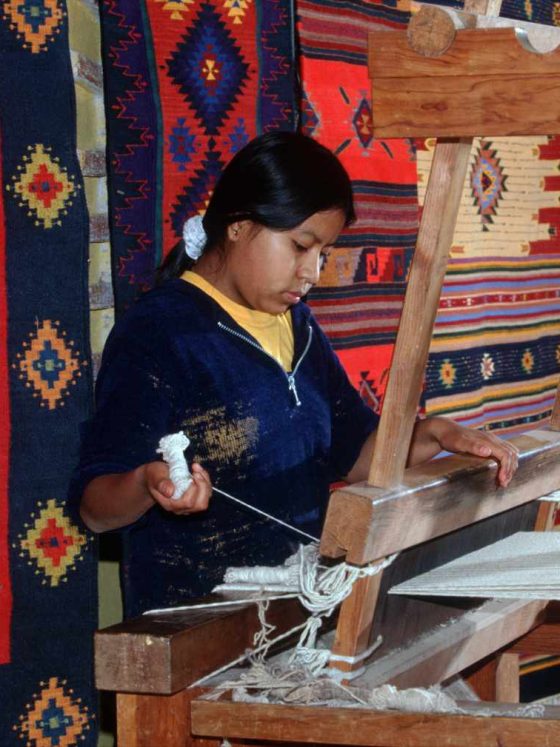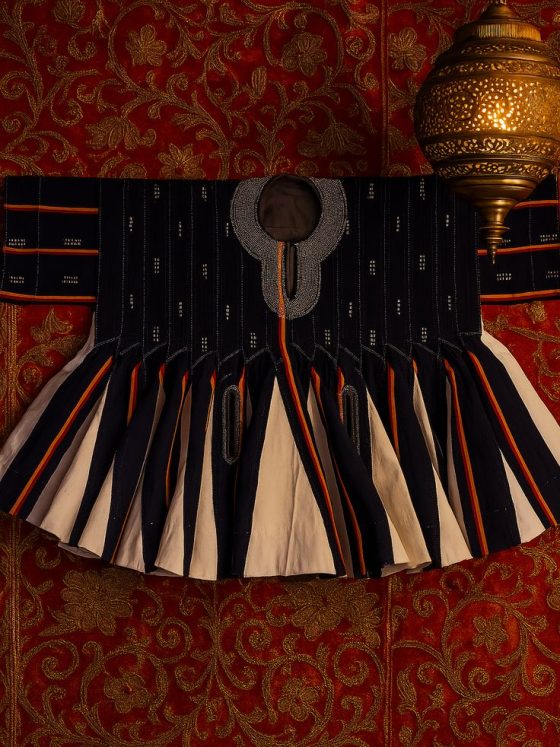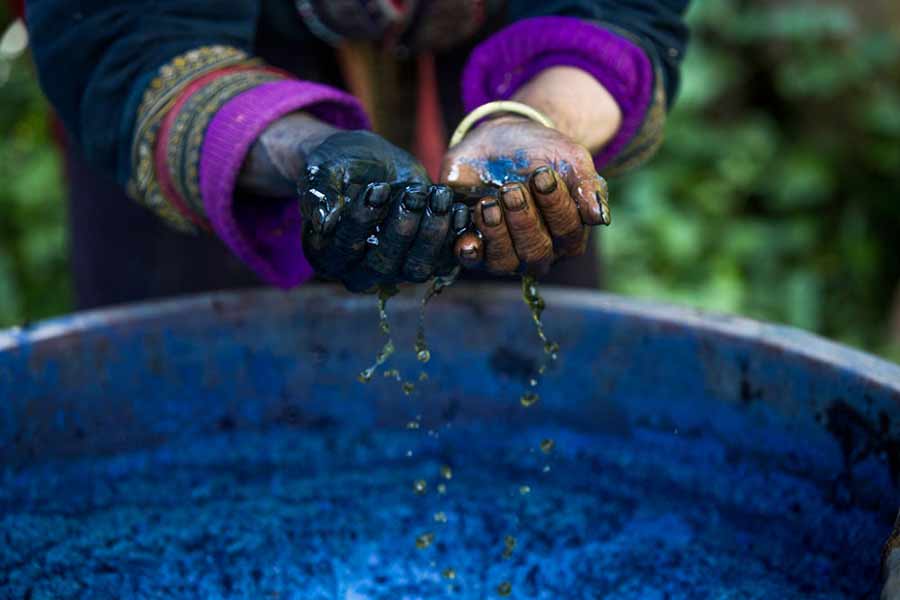
Before European traders entered it in their ledgers, indigo had already accumulated centuries of meaning in African communities. It grew in the fields of Mali and Senegal. It fermented in the dye pits of Northern Nigeria. It moved through village economies in Ghana, where its blue carried a weight that currency had not yet learned to measure. The biography of indigo, told honestly, does not begin with trade. It begins with knowledge: specifically, with the knowledge of how to transform a plant into a colour so culturally loaded that it marked status, ceremony, protection, and belonging across communities separated by hundreds of kilometres of geography.
The colonial name for it, “blue gold,” acknowledged its economic value while erasing everything that preceded it. This article traces what the ledger left out.
Indigo was blue gold for European traders. For the communities that cultivated it, fermented it, and dyed it across West Africa centuries before European contact, it was something that gold could not buy: cultural authority encoded in colour.
The Roots of Indigo: Craft, Ceremony, and Power in African Communities
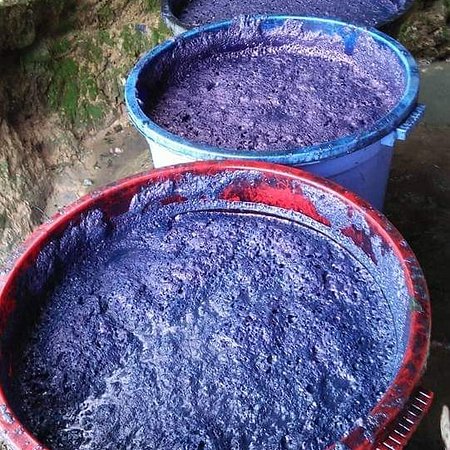
The story of indigo begins with hands-on dye pits and specific, accumulated knowledge of how to make a plant yield a colour that deepens with each successive dip.
Indigofera tinctoria and related species grew across West Africa as indigenous crops long before they became objects of European commercial interest. In Hausa communities in Northern Nigeria, dyemasters kept fermentation vats that had been in use for generations. They used smell and touch to assess the alkalinity of the vats rather than instruments. The Kano dye pits, some of which operated continuously for over five centuries and are recognised as UNESCO World Heritage sites today, represent the most visible surviving infrastructure in this tradition, but they are not exceptional. They were the most documented instance of a practice that extended across the region.
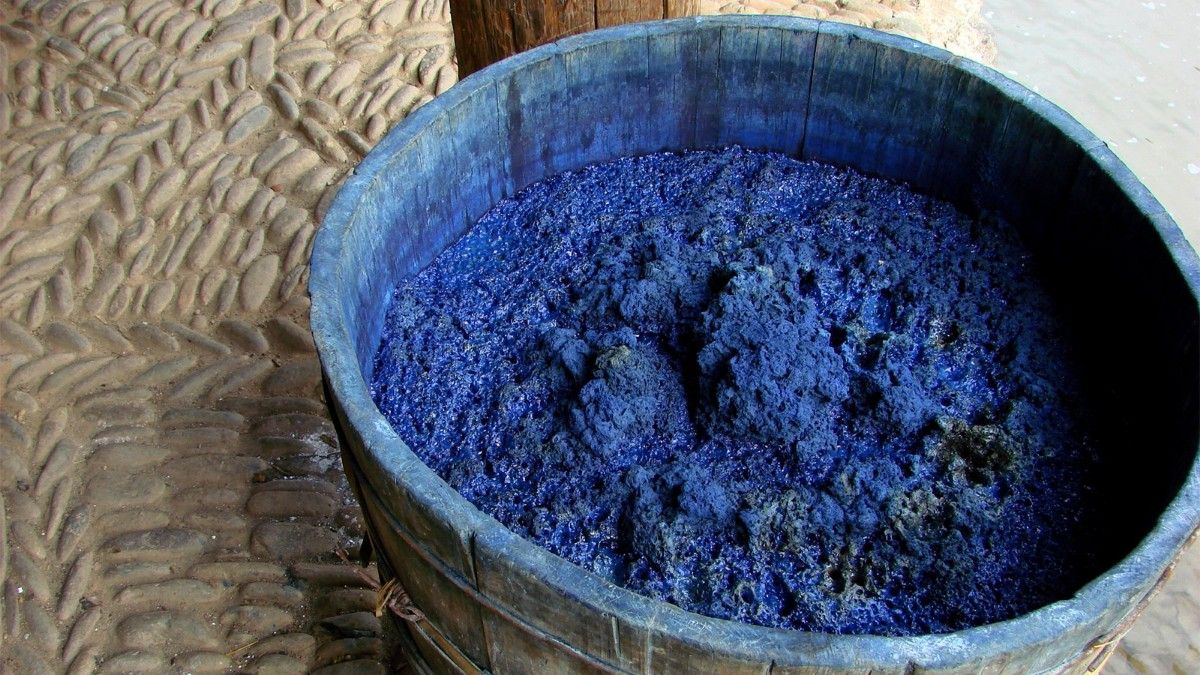
The dyeing process demanded precision that industrial production later attempted to automate but never fully replicated. Leaves were harvested at specific points in the plant’s growth cycle, then fermented for days in earthen vats with water, ash, and organic material that maintained the alkaline environment the dye required. The cloth was dipped repeatedly; each immersion was followed by exposure to air, which oxidised the indigo and deepened the blue. The colour’s depth was not achieved in a single session. It was built up slowly, with the dyer knowing when to move to the next stage.
In Yoruba communities, this process underpinned the adire tradition: resist-dyed cloth produced by women artisans who controlled both the technical knowledge of the dye vat and the design vocabulary of the resist patterns applied before dyeing. A folded resist produced one visual language. A stitched resist produced another. A hand-painted starch resist produced a third. Each method encoded different social meanings, and the women who produced adire were not craft practitioners in any diminished sense. They were the keepers of a knowledge system that the community depended on to mark its most significant occasions.
Among the Bambara of Mali, indigo entered the bogolanfini tradition as a complementary dyeing system, working alongside fermented mud to produce the deep contrast between the cloth’s dark and light registers. The two knowledge systems, indigo dyeing and mud dyeing, operated in the same communities and sometimes in the same hands, producing cloth whose colour carried meaning at every level of its construction.
The biography of Indigo at this stage is not a trade story. It is a knowledge architecture that different communities built independently, in parallel, across the same geography, each with its own technical approach and its own cultural grammar for what the colour meant and who had the authority to apply it.
Blue Gold And The Price Of Power
The biography of indigo moves from African soils to the world stage, but its global rise carried stakes far beyond trade. European demand in the 17th and 18th centuries transformed the dye into a commodity recorded in ledgers.
But behind every bolt and vat were the communities shaping its meaning and value. Coastal towns from Dakar to Lagos became hubs for exchange, linking African ingenuity directly to distant markets, yet the craft and cultural significance of indigo remained firmly African.
As indigo’s value grew, it became a tool of influence. Wealth, politics, and even access to weapons were tied to control over production. Plantations expanded, labour systems intensified, and local economies shifted under pressure.
Despite these changes, communities continued to dye and wear indigo according to their own customs, infusing each piece of cloth with identity, social status, and ritual significance.
The biography of indigo at this stage is not just a story of commerce; it is a record of resilience. The dye reflects ambition, global demand, and power dynamics, as well as the enduring authority of African knowledge, skill, and tradition.
Even as “blue gold” enriched empires abroad, it never left behind the communities whose hands and heritage first made it possible.
ALSO READ:
- Mud Cloth as Fine Art: The Cultural Authority of Bogolanfini
- African Print as Modern Armour: Identity, Belonging, and Cultural Authority
- How Silhouettes Speak: A History Of Power In Black Women’s Fashion
- How The Colour Purple Claimed Its Royalty
Indigo in Contemporary African Creativity
While the biography of indigo is rooted in history, its story is very much alive today. Across West and East Africa, artisans and designers are reclaiming the dye for modern textiles, haute couture, and art installations.
Contemporary fashion lines, gallery exhibitions, and sustainable craft projects in Accra, Dakar, and Lagos are incorporating hand-dyed indigo fabrics. Indigo now bridges the past and present. Designers experiment with new patterns, mixes of natural and synthetic techniques, and collaborations between rural artisans and urban ateliers.
The colour carries memory, identity, and innovation simultaneously. In this way, the biography of indigo is ongoing: a testament to African creativity that continues to influence global aesthetics while remaining rooted in local knowledge.
Conclusion
The biography of Indigo is a journey of African mastery, resilience, and creativity. From village dye pits in Mali, Senegal, Nigeria, and Ghana to coastal trade hubs and modern fashion ateliers, indigo has always been more than a commodity. It is a cultural marker, a creative language, and a living symbol of African identity.
Today, as artisans reclaim traditional techniques and designers innovate with modern applications, indigo continues to weave together history, culture, and future possibility. The biography of indigo proves that its value was never only economic. It has always been African, inventive, and enduring.
Frequently Asked Questions
-
How Was Indigo Traditionally Produced in Africa?
Communities in places like Kano and Abeokuta grew indigo plants, harvested the leaves, and fermented them for days to produce dye. The process was hands-on and careful, with repeated dips to create deep, vibrant colours that were tied to identity and status.
-
When Did Indigo Become Part Of The Global Trade System?
By the 17th century, European traders were buying indigo from producers in Africa and India. African expertise powered this trade, turning local craft into a valuable commodity recorded in European trade ledgers.
-
Why Was Indigo Called Blue Gold?
Indigo earned the nickname “blue gold” because of its high demand in European textile markets. Its colour was hard to replicate, making it extremely valuable and linking it to colonial wealth and global commerce
-
Did the Colonial Trade Affect Local Communities?
Yes. European demand led to the expansion of plantations and coercive labour systems in some regions. While indigo created wealth for empires, it also disrupted local economies and social structures.
-
Are Traditional Indigo Practices Still Alive Today?
Yes. Even with synthetic dyes and industrial textile production, artisans in Africa continue to hand-dye indigo. Communities preserve centuries-old techniques, combining them with modern fashion and sustainable practices.