For a long time, I had noticed how Arabian fashion influenced African dress, but that afternoon I saw something unique and powerful.
That was an afternoon in Kano City, the air filled with the scent of dust and sun-warmed cotton. A call to prayer drifted across the Singa market, folding itself between stalls of indigo dye, leather sandals, and copper jewellery. Men passed me in long, flowing robes, loose, dignified, and unhurried. At a glance, you could mistake them for garments from Jeddah or Muscat. But look closer: the embroidery told a different story. Hausa motifs. The embroidery displayed Kanuri cuts and Tuareg symbolism.
This was Africa, but also something more layered.
As a journalist who has walked markets from Zaria to Zanzibar and studied fashion histories across the Middle East and North Africa, I’ve come to understand clothing as evidence. Proof of where people met, traded, prayed, married, and moved. Long before borders, before passports, fabric carried memory.
Arabian merchants crossed the Sahara with salt, silk, and scripture. African artisans responded with adaptation, reshaping Arab garments to suit local climates, aesthetics, and identities. What emerged were not copies, but new traditions.
In this article, I describe 10 traditional African clothes with an apparent Arabian influence in design, cultural symbolism, lifestyle impact, and weaving techniques.
These ten garments are not costumes. They are living archives.
A curated exploration of African traditional garments that reflect centuries of Arabian trade, religion, climate adaptation, and cultural exchange across the continent.
The Trade Routes That Dressed a Continent
The story begins not in a tailor’s shop, but on the road.
From the 8th century onwards, trans-Saharan and Indian Ocean trade routes connected West, North, and East Africa to the Arabian Peninsula. Alongside spices and gold came textiles: cotton from Yemen, silk from Damascus, and weaving techniques from Hijaz.
An elderly trader in Agadez once told me, adjusting his turban,
Cloth travelled faster than people. Before we spoke the same language, we wore familiar shapes.”
This is how form travelled: loose silhouettes for desert heat, long sleeves for sun and modesty, and layered garments adaptable for prayer and travel.
The Garments Themselves: 10 Living Examples
Boubou (West Africa – Nigeria, Senegal, Mali): Arabian Flow, African Authority
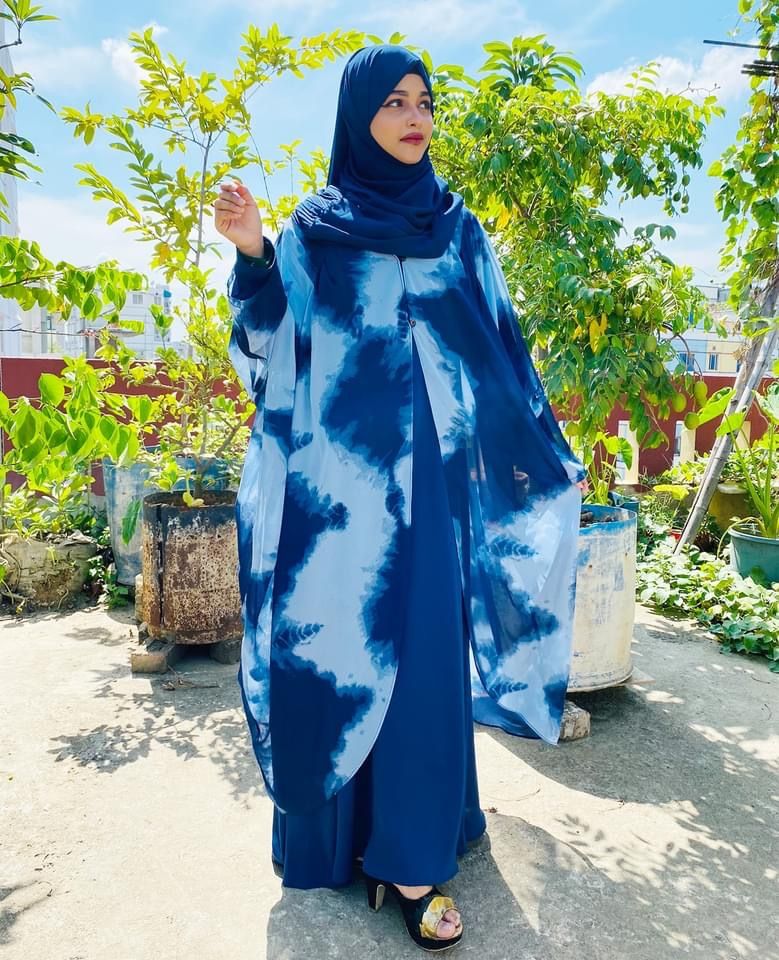
The Boubou traces its roots to the long, flowing robes of Arab traders and scholars who crossed the Sahara centuries ago. While the silhouette mirrors Arabian thobes, West African artisans transformed the garment by expanding its width and enriching it with dense embroidery. In African societies, volume became a visual language that signalled wisdom, wealth, and social standing. Today, the Boubou stands as a distinctly African expression of prestige, shaped by Arabian form but defined by local identity.
Jalabiya (Sudan & Egypt): Where Nile Traditions Meet Arabian Dress
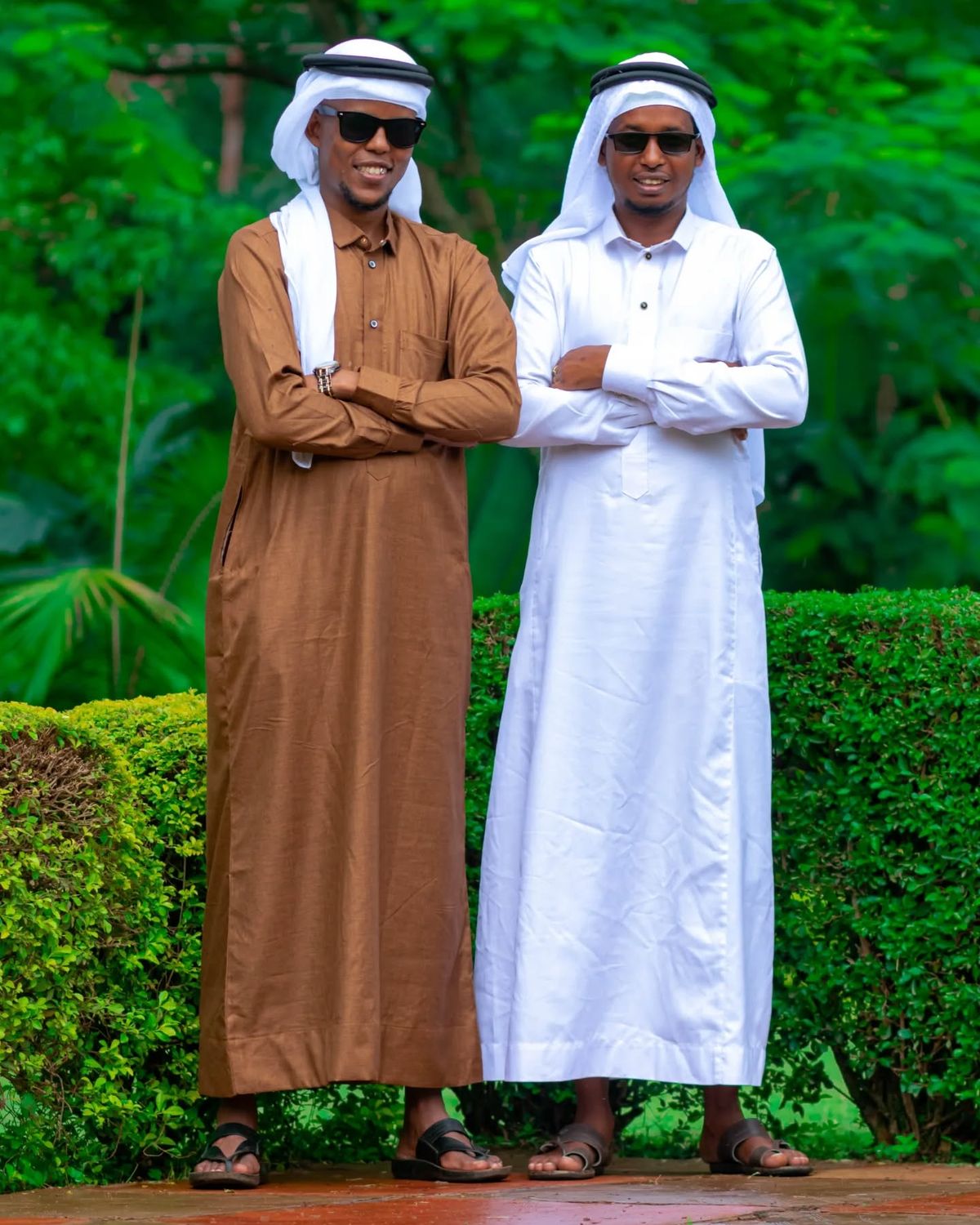
The Jalabiya reflects one of the most direct connections between African and Arabian clothing cultures. Introduced through early Arab settlement and Islamic scholarship along the Nile, the garment retained its Arabian structure while absorbing African sensibilities. Softer local cottons, earth-toned dyes, and relaxed tailoring rooted the Jalabiya firmly in Sudanese and Egyptian daily life, making it both a cultural bridge and a practical African staple.
Kanzu (East Africa – Uganda, Kenya, Tanzania): Swahili Elegance Shaped by Arab Trade
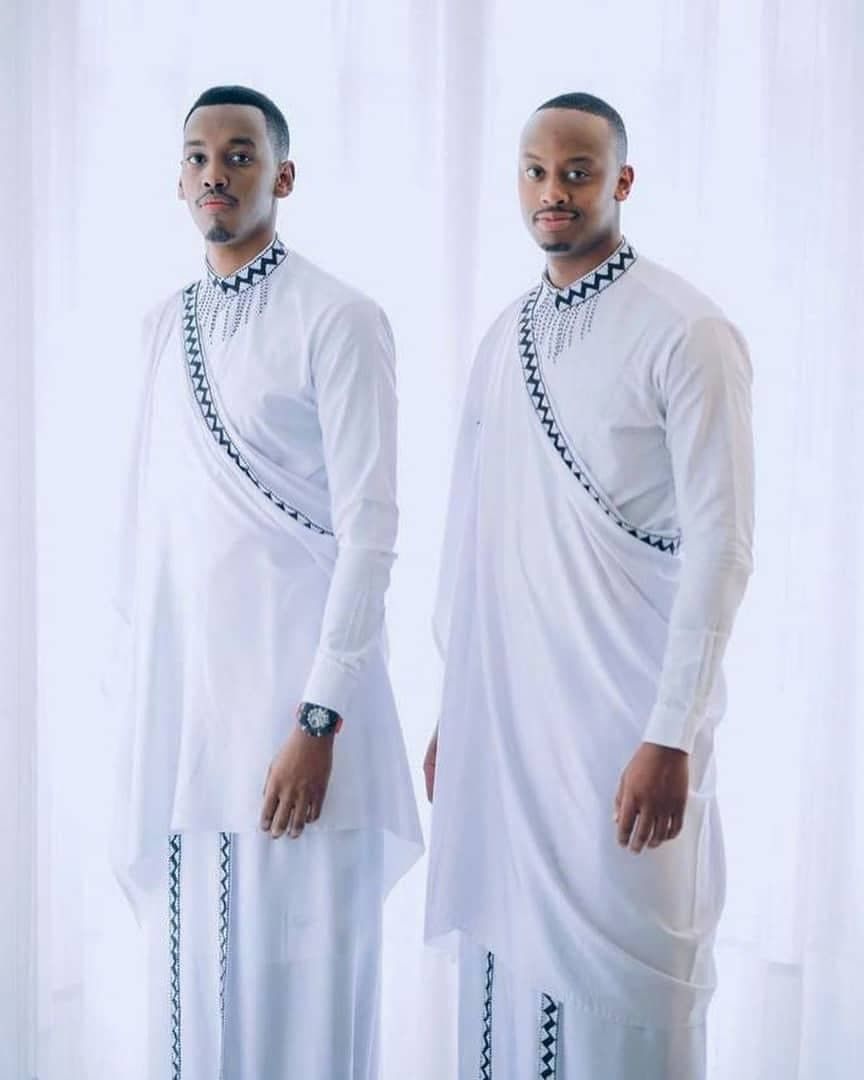
Carried inland by Arab-Swahili traders along the Indian Ocean, the Kanzu represents a fusion of Arabian modest dress and East African ceremonial culture. Its clean lines echo Arabian robes, yet its cultural meaning is distinctly African; it is worn during weddings, religious rites, and public celebrations. Over time, the Kanzu became a marker of respectability within Swahili-influenced African societies.
Gandora (North & West Africa): Arabian Lightness Adapted for African Heat
The Gandora evolved from Moroccan-Arab robes but found a new purpose across African desert regions. Sleeveless and lightweight, it reflects Africa’s demand for extreme climate adaptability. While Arabian in origin, African tailoring refined the Gandora into a functional everyday garment, worn widely in Sahelian communities where survival and style are inseparable.
Djellaba (North Africa): Shared Silhouettes, African Identity
Though often associated with Morocco, the Djellaba’s African versions differ subtly yet significantly from Arabian counterparts. Its Berber patterns, Saharan colours, and regional weaving traditions distinguish it as part of North Africa’s cultural fabric. The garment illustrates how shared Afro-Arab history produced parallel styles without erasing local character.
Thobe-Style Hausa Babban Riga (Northern Nigeria): Arabian Form, Hausa Expression
The Babban Riga borrows its basic structure from Arabian thobes but becomes unmistakably African through embroidery and symbolism. Hausa artisans stitch proverbs, lineage markers, and spiritual motifs into the fabric, turning a borrowed silhouette into a storytelling garment. It is worn not just as clothing, but as a declaration of cultural pride.
Sheila & Turban Styles (Sahel & Horn of Africa): Desert Knowledge in Fabric
Veiling and wrapping traditions across the Sahel and Horn of Africa echo Arabian keffiyeh practices, introduced through desert travel and Islamic learning. African communities adapted these techniques to local needs, protecting against sandstorms, sun, and wind while incorporating regional colours and wrapping styles that signalled ethnic and social identity.
Swahili Kanzu with Bisht Influence (Coastal East Africa): Arabian Prestige on African Shores
Along the Swahili Coast, elite versions of the Kanzu adopted elements of the Gulf bisht, including decorative trims and ceremonial layering. These garments reflect centuries of Indian Ocean exchange, where African coastal societies absorbed Arabian aesthetics while maintaining Swahili cultural codes tied to trade, faith, and status.
Saharan Tagelmust (Tuareg Regions): A Shared Tradition of Desert Survival and African Symbolism
Face veiling is common in Arabian desert cultures, but among the Tuareg, the Tagelmust evolved into something uniquely African. Indigo-dyed and symbolically charged, it represents identity, masculinity, and protection. While its function mirrors Arabian practices, its meaning is deeply rooted in African cosmology.
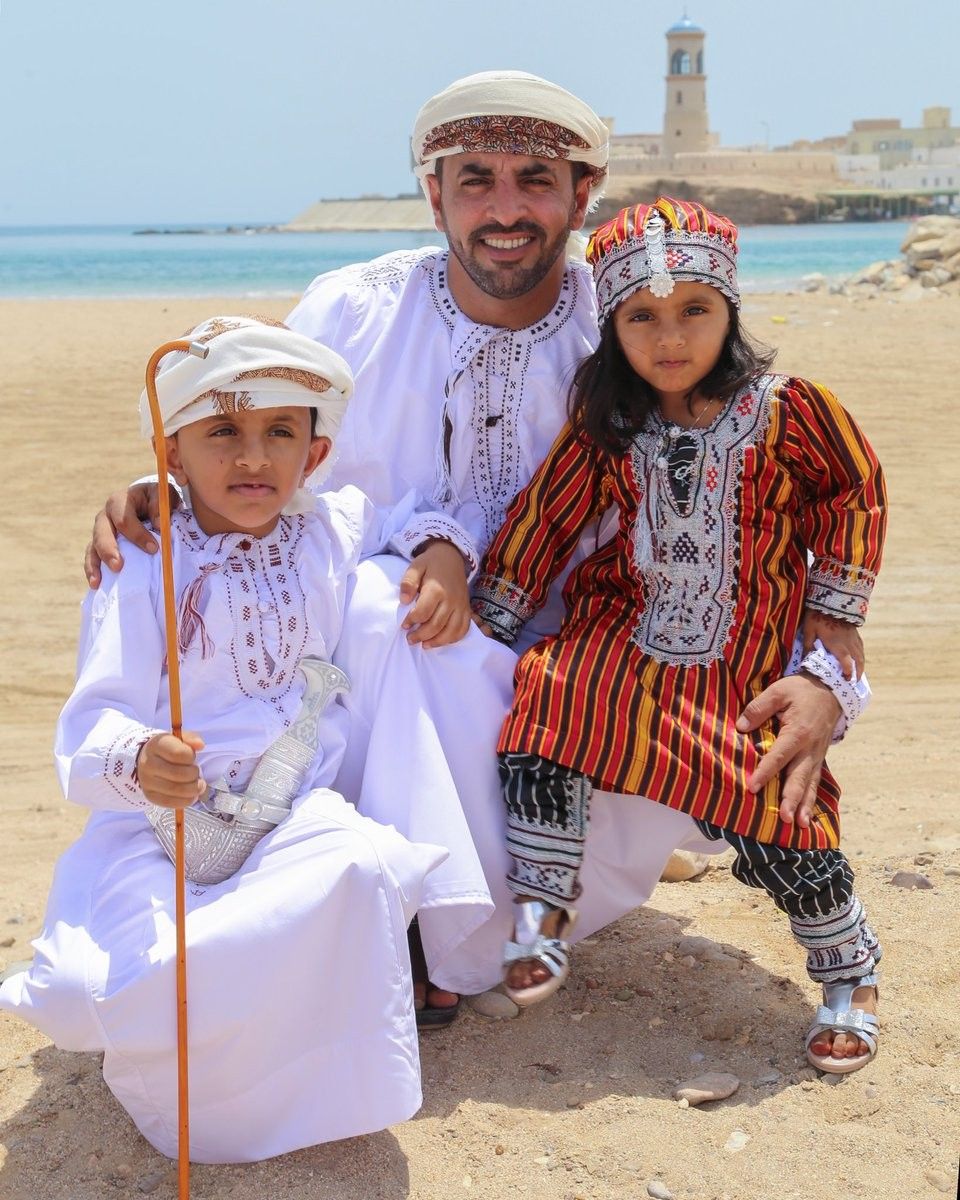
Omani-Inspired Robes in Zanzibar: African Memory of Arabian Rule
Zanzibar’s ceremonial robes still carry the imprint of Omani governance and settlement. Arabian cuts, layered garments, and formal styling remain visible, especially in weddings and religious events. Yet local fabrics, Swahili tailoring, and African aesthetics ensure these robes speak to Zanzibar’s blended identity, African at its core, shaped by Arabian history.
Each of these garments reflects exchange rather than imitation, proof that African fashion has never been passive. It absorbed Arabian influence, reshaped it, and produced clothing that continues to carry history, belief, and identity in every stitch
ALSO READ:
- Arabian Influence on Hausa and Sahelian Fashion
- The Arabian Sandal and Its Quiet Influence on African Fashion
- Top Powerful Afro-Arab Fashion Symbols and Their Cultural Meanings
As dusk settled over Kano, the market did not simply close; it exhaled. The last calls of traders softened into murmurs, and the wide robes I had admired earlier drifted homeward, their hems brushing red dust polished smooth by centuries of footsteps. In that moment, it became clear that these garments are not relics preserved in museums. They are moving classrooms, worn daily, taught quietly, and passed on without footnotes.
Each fold carries geography. Each stitch holds memory. The flow of the fabric echoes caravan routes that once linked West Africa to the Arabian Peninsula. At the same time, the patterns record how African societies interpreted what arrived, selecting, reshaping, and giving it meaning of their own.
Arabia did not dress Africa.
Africa studied, adapted, and responded using needles, dye, climate knowledge, and cultural philosophy.
At Omiren Styles, we document fashion not as surface beauty, but as evidence of trade, faith, environment, and human exchange across generations. These are not trends that fade; they are conversations that continue, stitched into everyday life.
Discover more deeply researched stories on Afro-Arab fashion, heritage, and lifestyle at omirenstyles. Clothing is not just worn but read, understood, and remembered.
FAQs
1. Is Arabian influence a form of cultural loss in African fashion?
No. It represents adaptation, not erasure. African cultures reshaped external influences into something local and lasting.
2. Are these garments religious or cultural?
These garments can be both religious and cultural, but they are not exclusively religious. Many are worn by Muslims and non-Muslims alike.
3. Can non-Africans wear these clothes?
Yes, when worn with respect and understanding of context.
4. Why do these styles persist today?
These styles persist today because they cater to the climate, community, and ceremony.