It was mid-morning in Kasuwar Kurmi, Kano, Nigeria, the sun already high enough to warm the earth, when I stopped beside a local sandal maker, Arafat, of Sudanese-Nigerian origin. He sat low, almost level with the dust, tools arranged neatly around him: an awl, waxed thread, a curved blade dulled by years of use. There was no signboard announcing craftsmanship. The proof lay in his hands, with tools and equipment around him.
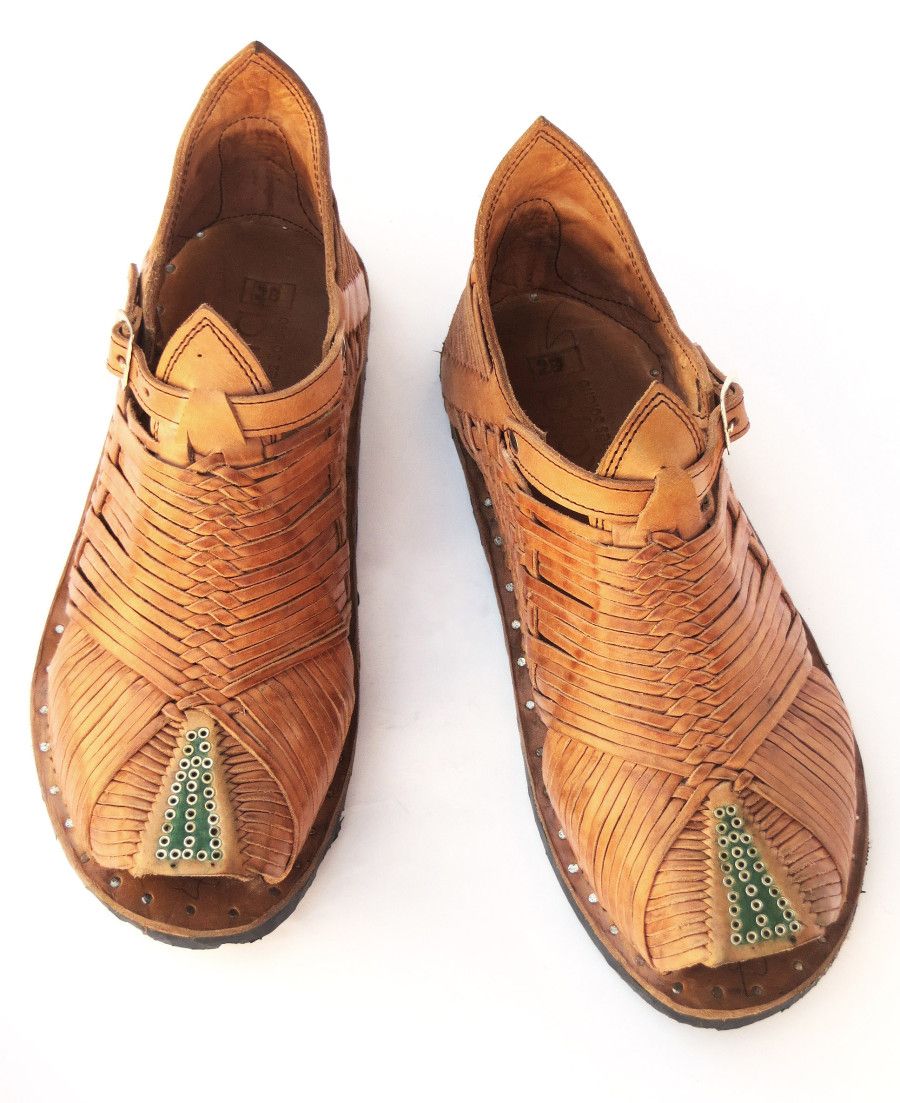
The sandal he was making was unassuming: a flat leather sole, wide straps, and nothing decorative. Yet as I picked it up, its weight felt familiar. I had encountered this exact form before in the narrow streets of Muscat, outside mosques in Jeddah, in archival photographs of pilgrims walking toward Mecca, and in old Swahili port towns, where Indian Ocean winds still carry the scent of salt and history.
The leather was thick but breathable. The stitching is imperfect in a way only handwork allows. This was not footwear chasing attention. It was footwear shaped by necessity.
In that moment, it became clear that the Arabian sandal is not a fashion item Africa adopted late; it is a design language Africa has spoken for centuries, quietly, without naming it.
From then, I realised that Arabian-African influence is not just limited to faith, language, fashion, or lifestyle; it also influenced our craftsmanship and creativity.
In this article, I will show you how Arabian sandals influenced African footwear.
Often overlooked and rarely documented, the Arabian sandal travelled across deserts and centuries, becoming an everyday cornerstone of African style, faith, and craftsmanship through Afro-Arab exchange.
How the Arabian Sandal Became Afro-Arab
Environmental Origins: When Climate Designs Clothing
To understand the Arabian sandal, one must first understand the environment that shaped it.
The Arabian Peninsula is defined by heat, sand, and distance. Historically, closed footwear trapped heat and caused injury during long journeys. The solution was logical: open sandals made from durable leather, allowing airflow while protecting the foot from rough terrain.
This same environmental logic exists across vast regions of Africa, North Africa, the Sahel, the Horn of Africa, and coastal East Africa. When Arabian traders and travellers entered African spaces, their footwear did not appear foreign. It appeared functional.
A cultural writer I once interviewed in Sudan put it plainly:
“Design follows climate long before it follows identity.”
The sandal’s minimalism was not aesthetic minimalism; it was environmental intelligence. Africa did not adopt the sandal because it was Arab. Africa adopted it because it worked.
Trade Routes: How Footwear Travelled with Civilisation
From the 7th century onwards, Africa and the Arabian world were interconnected by three major systems:
- The Trans-Saharan trade routes, linking North and West Africa
- The Red Sea corridor, connecting Arabia with the Horn of Africa
- The Indian Ocean trade network, binding East Africa with Arabia, Persia, and South Asia
These routes moved more than gold, salt, and spices. These routes facilitated the exchange of lifestyles, fashion, and food.
Footwear, unlike luxury textiles, was not traded as a finished product. Instead, the concept of footwear, along with the necessary skills and talent, spread. African craftsmen observed the structure of Arabian sandals, the cut of the sole, and the placement of straps and reproduced them using local hides and techniques.
This explains why similar sandals appear across regions without being identical. Each version reflects:
- Local leather quality
- Regional walking habits
- Cultural preferences
The result was not imitation but parallel evolution.
Faith and Daily Life: Islam’s Role in Normalising the Sandal
Religion played a central role in embedding the sandal into African society.
Islam requires repeated daily prayer, ritual cleanliness, and ease of movement. Footwear must be simple to remove, practical for walking, and modest in appearance. The Arabian sandal met all these needs effortlessly.
As Islam spread across Africa from North Africa into the Sahel and along the Swahili Coast, lifestyle practices adapted to religious rhythms.
In cities such as Timbuktu, Kano, and Kilwa, sandals became standard daily wear for scholars, traders, farmers, and pilgrims alike.
A Hausa Islamic teacher once told me:
“A shoe that delays prayer is a bad shoe.”
The sandal endured because it respected spiritual life.
African Craftsmanship: From Adoption to Ownership
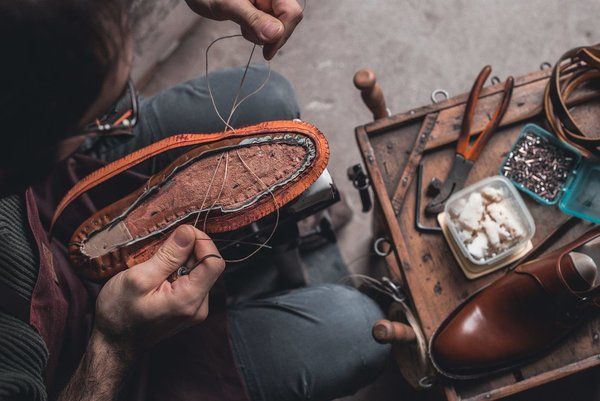
Over generations, African artisans transformed the Arabian sandal into something unmistakably local.
In the Sahel, soles grew thicker to endure rocky ground. In coastal East Africa, leather became lighter and more refined and in North Africa, sandals evolved into polished urban wear, suitable for markets and mosques alike.
African shoemakers introduced:
- reinforced stitching
- broader straps for stability
- decorative elements tied to ethnic identity
By the 18th and 19th centuries, these sandals were no longer perceived as foreign. They were African objects shaped by Afro-Arab history.
This is a crucial educational distinction:
Cultural influence is not cultural erasure.
Africa did not lose its identity through contact with the Arabs; it expanded it.
RECOMMENDED:
- Arabian Influence on Hausa and Sahelian Fashion
- Turbans and Headwraps: How an Arabian Headpiece Found a Second Home in Africa’
- The Jalabiya: How a Desert Robe Became a Global Summer Staple
The Most Popular African Arabian Shoes
Madas Sharqi (aka Zubairi / Saudi Arabian Sandals)
- Madas Sharqi means “sandal from the east,” originally from the eastern/central region of Saudi Arabia.
- Made often from camel or cow leather, they have a distinctive design: a leather ring around the big toe and straps/leathers wrapping the foot.
- Historically worn by people across social classes, from everyday folks to wealthy men and even royalty.
Today, they remain popular for both traditional outfits and everyday wear, especially in hot climates, because leather sandals breathe better than closed shoes.
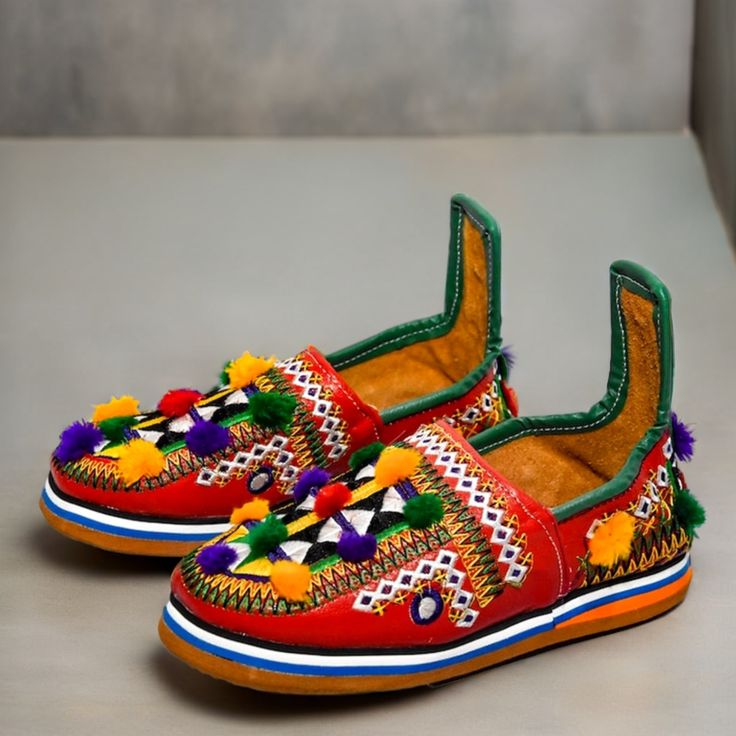
Balgha (a.k.a. Babouche, North Africa / Maghreb)
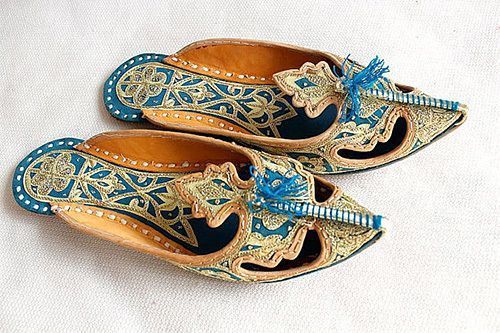
- Balgha are heelless, soft leather slippers traditionally worn across North Africa (Maghreb) and Egypt.
- They can come in simple neutral leather or elaborate embroidered and decorated versions, for everyday wear or special/cultural occasions (e.g., weddings, festivals).
- Because of their flexibility, lightness, and craftsmanship, Balghas are valued both as part of cultural/traditional clothing and as comfortable footwear, bridging traditional style and practicality.
Modern/Contemporary Arabic-Inspired Leather Sandals (Slide/Slip-On Designs)
- Over the years, traditional Arabic sandals have been adapted with slip-on styles, cushioned soles, and rubber outsoles, merging heritage with modern comfort.
- Such designs tend to use premium leather and ergonomic soles, making them practical for daily wear (especially in hot, dry climates) while retaining a classic, timeless look.
- They are now worn by a broader audience, not just in the Arab world but globally, as fashionable yet functional sandals suitable for both casual and semi-formal wear
At the end of the day, the shoemaker packed his tools. The sandals beside him bore small imperfections, uneven stitches, and subtle curves. They were human.
Watching a young man slip them on and walk away, I was struck by how little had changed over centuries. The same leather. The same purpose. The same quiet confidence.
The Arabian sandal’s influence on African fashion is not loud, branded, or seasonal. It is structural. It exists beneath trends, beneath headlines, embedded in how people move through heat, prayer, work, and distance.
Fashion often tells us what is new.
History teaches us what has endured.
And in the case of the Arabian sandal in Africa, endurance is the truest measure of style.
For more deeply researched stories on fashion, heritage, and Afro-Arab cultural connections, visit Omirenstyles, where style is treated not as spectacle, but as history you can walk in.
FAQs
1. Are Arabian sandals African or Middle Eastern?
Middle Eastern in origin, these sandals became Afro-Arab through centuries of trade, faith, and craftsmanship, adapted to African life, terrain, and daily use.
2. Why are similar sandals found across Africa?
Because shared desert climates, trans-Saharan trade, and Islamic daily practices made these sandals a practical and enduring part of Afro-Arab life..
3. Are modern designer sandals authentic?
Some are inspired; few engage deeply with historical context.
4. Why do these sandals feel modern today?
Because modern fashion is rediscovering principles that traditional societies never abandoned.
5. Were these sandals ever considered “fashion”?
Historically, they were tools of daily life; fashion came much later.