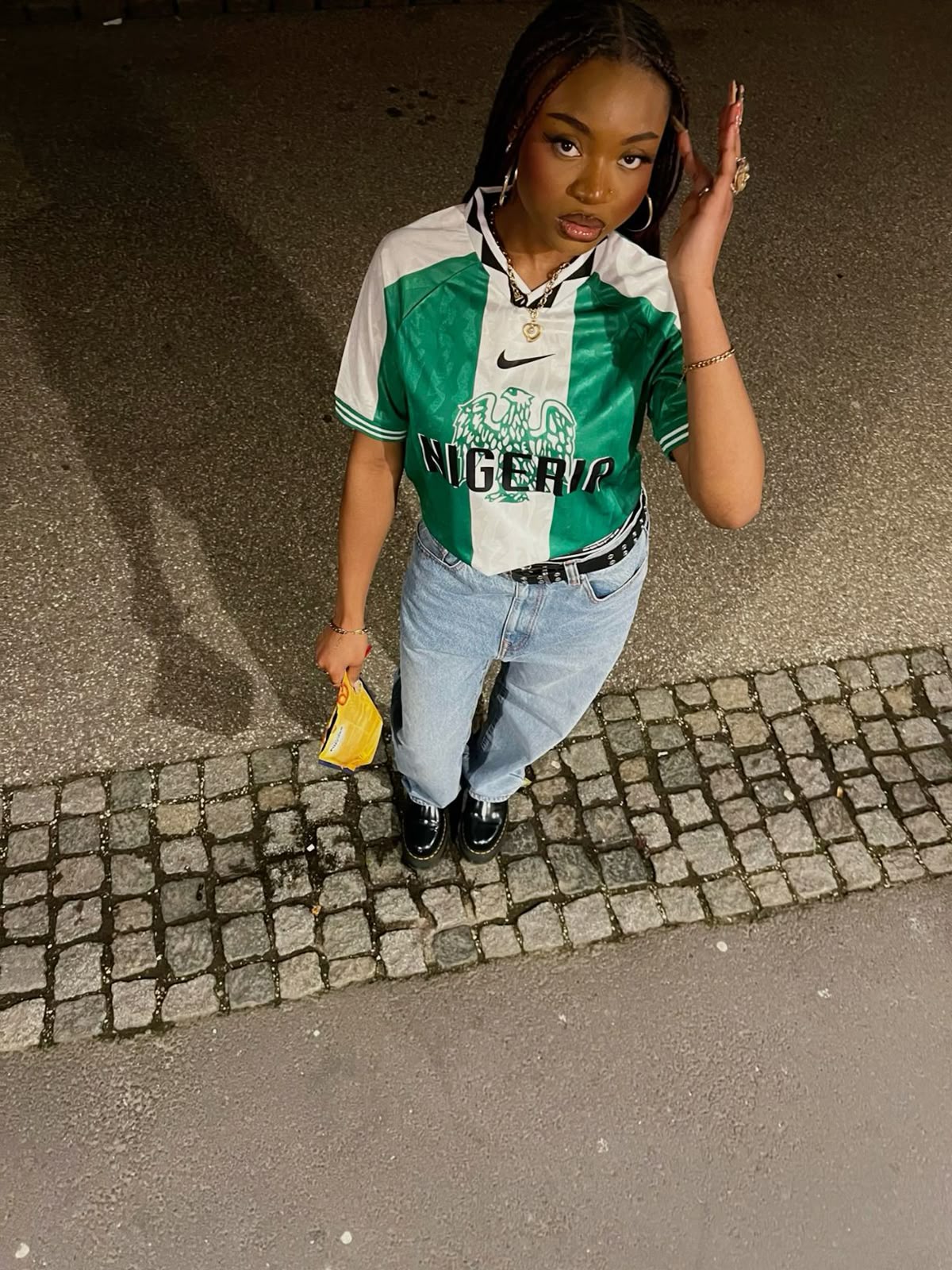
In Nigeria, a person’s jersey tells you exactly who they support on match days, so you don’t need to ask. Jerseys are now more than just clothing, whether they are the green of the Super Eagles, the royal blue of Chelsea, the white of Madrid, or even the uniform of a neighbourhood street league team. They are cultural proclamations, emotive flags, and personal assertions. In Nigeria, a jersey is worn to demonstrate identification, allegiance, and belonging more than just for a game.
Walking through Lagos on a Saturday afternoon, you’ll see traders, bike riders, students, office workers, gym bros, and even church boys wearing jerseys as everyday outfits. Some wear them tucked into jeans. Some rock them oversized with chains and bucket hats. Some wear them as a uniform of friendship, a way of saying, “We are in this together.”
However, why do Nigerians have such a strong bond with jerseys?
Why does a piece of cloth become sentimental?
Why is Jersey culture so deeply ingrained in our social interactions, attire, events, and even our recollections?
This narrative explores the feelings, identity, style, and experienced significance of why jerseys are essential in Nigeria today.
Discover how fans across the country wear their favorite team colors with pride, from the streets to the stadiums.
Cultural Roots: Fashion, Identity, and the Joy of Showing Up
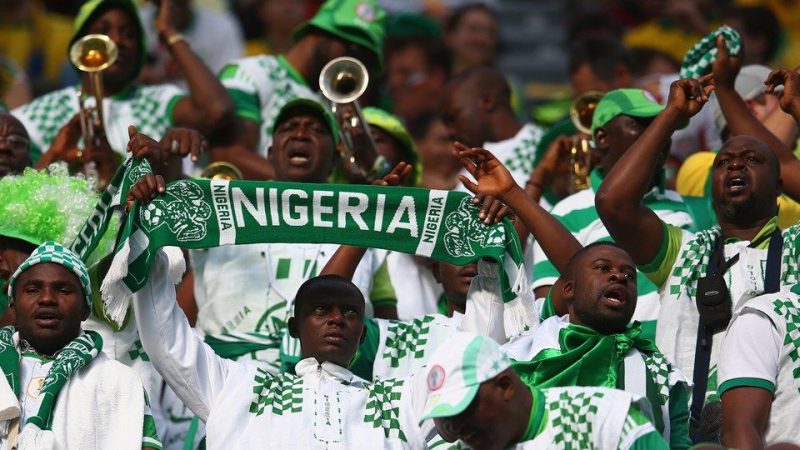
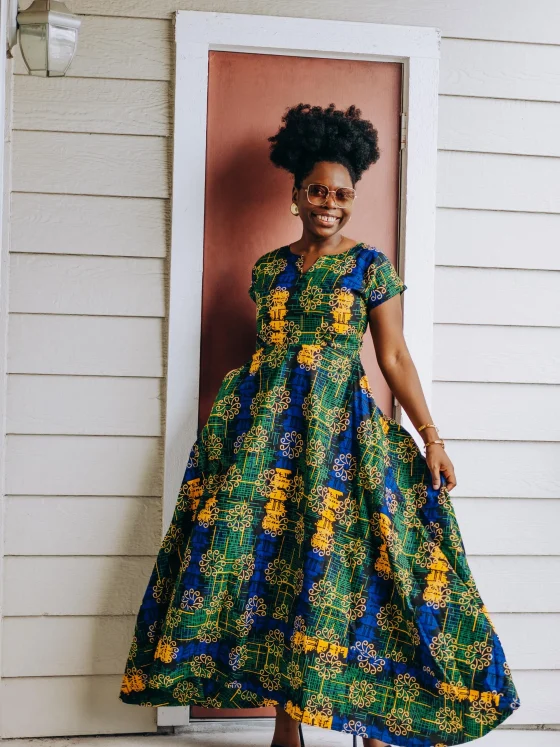
Nigerian culture has long instilled in its people the idea of dressing for the occasion, even before stadium fashion became a social media spectacle. Clothing has served as a language and communicator of identity, status, and belonging in various contexts, including politics, worship, music concerts, traditional events, and even daily social interactions. Fabric is never just fabric in Nigeria. It conveys message, meaning, and memory. Therefore, when football fans started showing up to stadiums dressed in coordinated Aso Ebi, Ankara, and lace, they were doing more than just dressing “nicely”; they were bringing an established cultural custom to a new social arena.
For many Nigerian ethnic groups, clothing has traditionally served as a significant cultural symbol. The Yoruba embrace “ṣé ẹ wò ni,” (Do you notice how I look?) meaning grace and visual presence. The Igbo are renowned for wearing apparel that conveys wealth, status, and camaraderie. The Hausa wear flowing clothing that exudes pride, modesty, and respect. Nigerians have always dressed purposefully, whether during weddings, naming rituals, church gatherings, political rallies, or village market days, even before the days of Instagram and TikTok. To honour the occasion, one should dress appropriately.
On the other hand, jerseys, face paint, and club scarves used to define football stadiums were extremely Western, traditional, and highly uniform. However, Nigerian supporters have reflected Ghana-Must-Go levels of cultural identification in the stadium environment. Instead of letting football dictate their appearance, they infused the area with their unique style. The stadium was transformed into a different kind of cultural venue, such as a music festival, a street carnival, or a wedding celebration. It evolved into another location where participation is contingent upon appearance.
This also has a social psychology component. In Nigeria, football is more than just a sport; it’s a theatre of shared joy, emotion, and narrative. Strangers brought together by adrenaline and club colours; the audience turns into a family. Wearing synchronised Aso Ebi to the stadium reinforces this sense of community. Fans became a visible unit as a result: we came together. Together, we provide help. Together, we celebrate.
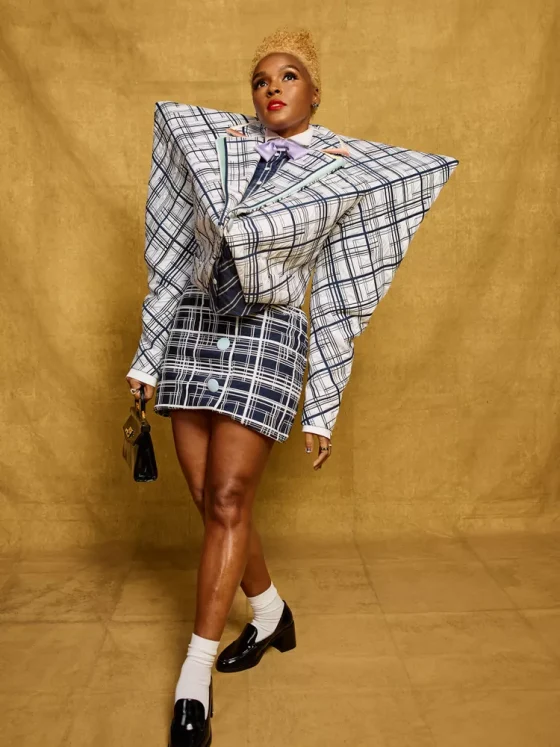
The emergence of youth-led reinterpretations of tradition is also associated with this trend. Instead of giving up on culture, today’s youth in Nigeria are remixing it. They now wear Ankara to concerts, galleries, beach parties, and yes, football games, rather than just weddings and naming rituals. This type of attire is part of a larger cultural trend that combines tradition and streetwear, legacy and hype, and old and new. Examples of identity reimagining include Ankara jackets, lace corsets, bomber jackets in the agbada style, and gele fashioned like baseball caps.
Social media significantly amplified this. The stadium is now a location to be seen rather than just a place to watch the game. Viewers become performers thanks to smartphones. Within minutes, a well-planned Aso Ebi group shot can become viral on Instagram, TikTok, and Twitter, influencing designers, creating trends, and encouraging others to follow suit. The ultimate score is no longer as significant as the stadium attire.
In this sense, joyful show is a very Nigerian aspect of stadium dress. Not conceit, but the delight of living, enduring, and choosing beauty in the face of adversity. To demand dignity is to dress elegantly. Coordinating Aso Ebi with friends is a sign of solidarity and camaraderie. To arrive at the stadium in Ankara is to declare, “We are here.” We take pride in it. We’re all together.
Therefore, the cultural origins of stadium fashion are not coincidental or superficial. They have their roots in history, community, identity, and the developing inventiveness of young Nigerians who are turning everyday places into platforms for artistic expression.
ALSO READ:
- The Rise of Aso Ebi in Nigerian Sports
- The Unspoken Relationship Between Sports Fashion and Nigerian Royalty
- Why Grassroots Football is the Pulse of Nigerian Sport
The Fabric of Loyalty: Why Nigerian Fans Wear Identity, Not Just Jerseys
In Nigeria, matchday has always been about more than just the game. It is about community, a common language expressed through presence, colour, and fabric. Nigerians view football as a sense of community, while others view it as a 90-minute game. Fans’ attire becomes an extension of who they are, and the stadium turns into a festival venue. As a result, the Aso Ebi tradition, once associated with birthdays, weddings, naming ceremonies, and rites of passage, has now found its way into the realm of sports culture.
Aso ebi is fundamentally a statement of solidarity. Families, friends, and entire communities choose a fabric to express “We are one here” rather than just “match.” Groups of supporters donning synchronised Ankara designs, Adire scarves, gele headwraps, or personalised Agbada-inspired jerseys are examples of how the same logic manifests itself in the stadium. Support becomes something you wear, rather than something you yell.
Local football fan groups, university supporters’ clubs, and neighbourhood league communities have increasingly adopted this practice. For instance, a group wearing matching blue adire to a game is more than just supporting a team; they are expressing their identity, cultural heritage, and sense of pride. Clothing serves as an emotional language, and fashion as a narrative. Dressing together instantly fosters a sense of community, even for supporters who may not be familiar with the player histories or chants.
This tradition has grown, especially in local football fan groups, university supporters’ clubs, and neighbourhood league communities. When a group attends a game wearing matching blue attire, for example, they are not only showing their identity, cultural history, and sense of pride, but also supporting their team. Fashion is a story, and clothes are a language of emotions. Even for fans who might not be familiar with the player histories or chants, dressing up immediately creates a sense of togetherness.
These days, Nigerian fashion shines as a daily sign of identity, rather than something reserved for high society or special occasions. The stands, which are brimming with textiles, personalities, haircuts, face paint, beads, and designs, communicate the accurate tale even if the pitch is the focal point of the action. This is the foundation of allegiance. We applaud in this manner. This is how we fit in.
Jerseys as Symbols of Belonging
A football jersey is rarely just an outfit. It is a symbol of belonging that unites individuals who might not share any other characteristics, such as language, background, or age. A fan enters a shared narrative when they put on their team’s shirt. The shirt becomes a signal: this is my clan, whether it is worn by a Chelsea fan in Nairobi or a Barcelona fan in Lagos. The jersey conveys the wearer’s loyalty even before a word is said.
Stadiums demonstrate this power. When thousands of fans wear the same colour on match days, the crowd unites as a single entity, singing the same songs, celebrating the same victories, and experiencing the same heartache. The jersey unites strangers, binding them together by memory and passion. A simple gesture between two supporters wearing the same team’s colours might start a conversation, a chuckle, or even a lasting friendship, even outside the stadium, on the street, or in a bar.
No matter how worn they become, many fans refuse to discard their old jerseys due to their sentimental importance. Every shirt contains memories of where you were, who you celebrated with, and how the game made you feel. It turns into something intimate, akin to a fabric diary. For many fans, their jersey serves as a personal history book in addition to being a replica of what athletes wear.
And this is the power of jerseys: they transform football from a sport into a collective identity. They provide fans the opportunity to be a part of something greater than themselves, something that transcends boundaries and backgrounds. The jersey symbolises the intersection between individual pride and group identity. It is more than simply style; it is a community woven together with colour and thread.
Clothes continue to be a potent language of identification, whether on the football field or at a family gathering. The jersey and the aso ebi cloth, despite their disparate origins, share a human need to fit in, stand out, and unite. “These are my people,” they both declare. Tradition and contemporary athletics coexist harmoniously in this common expression.
Jerseys are becoming much more than just matchday attire as football culture develops. They are exhibited online as symbols of pride, worn to events, and styled for streetwear. Similarly, Aso Ebi does not want to be limited to ceremonies. It permeates daily existence as a reminder of connections, memories, and shared happiness.
Ultimately, the emotion woven into it is more important than the fabric or colour. Whether we’re dancing at a wedding or supporting in a packed stadium, our attire serves as a statement of solidarity. We dress to celebrate who we are and who we belong to, which is a straightforward but timeless statement.
FAQs:
1. Why do African fans often wear matching jerseys to football games?
Matching jerseys are a symbol of unity, belonging, and shared identity. They show loyalty to a team or community and help create a strong collective presence, whether at stadiums, neighbourhood viewing centres, or street tournaments.
2. How are jerseys becoming part of African fashion culture?
Football jerseys are increasingly styled with everyday outfits and traditional fabrics. Young people mix jerseys with jeans, kaftans, wrappers, sneakers, and accessories, making the jersey a lifestyle piece rather than just sportswear.
3. Is the matching jersey culture only popular in Nigeria?
No. While Nigeria is one of the most expressive places for jersey fashion, coordinated fan outfits are also everyday in Ghana, Senegal, Cameroon, Kenya, and South Africa. The trend reflects broader African pride and community celebrations.
4. Do local fashion designers influence jersey trends?
Yes. Many designers now produce custom fan editions and Ankara-infused replicas, blending traditional African patterns with sports aesthetics. This makes jerseys more personal, stylish, and culturally meaningful.
5. Why is matching jersey culture significant beyond fashion?
Beyond appearance, it strengthens the connection. Wearing the same jersey reminds people that they’re part of something bigger: a family, a neighbourhood, a region, or a cause. It represents identity, memory, and shared passion.