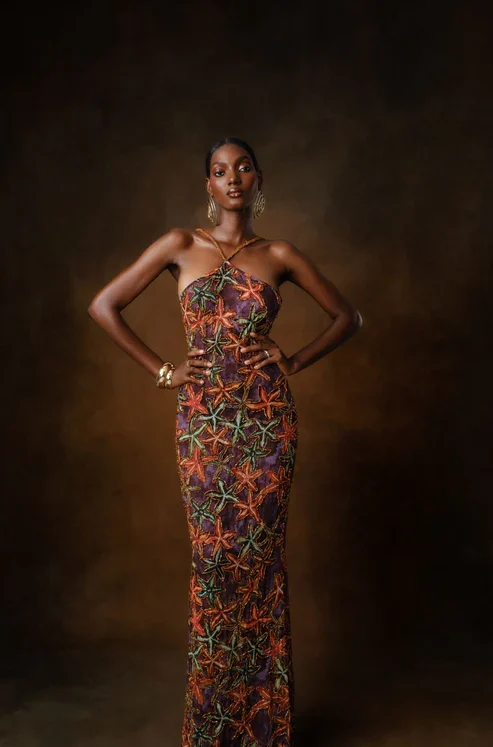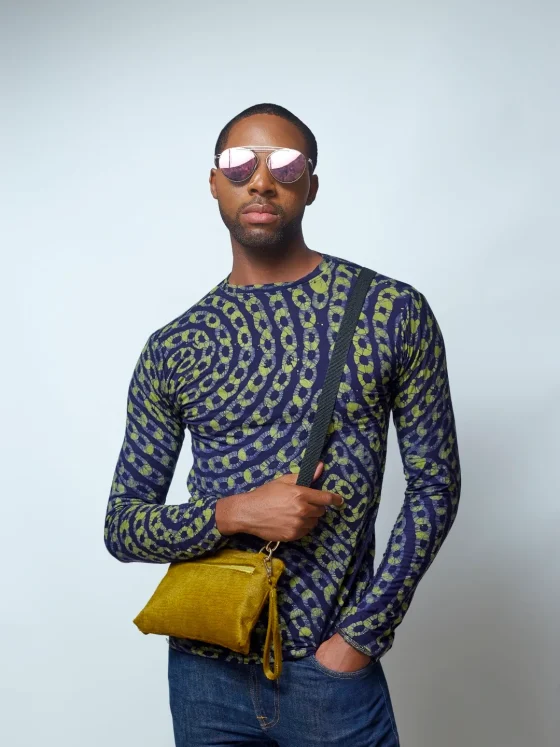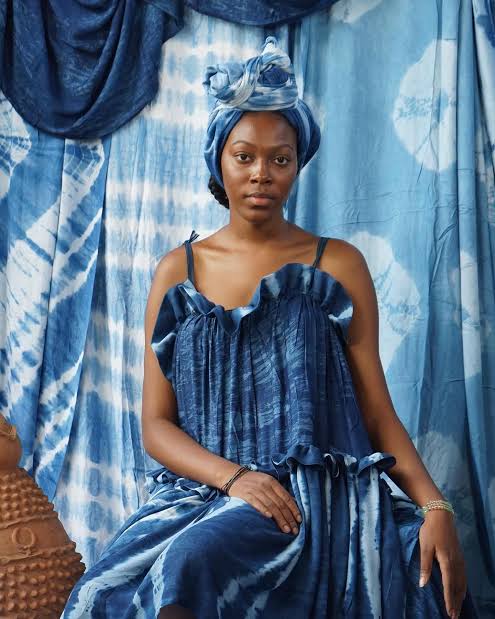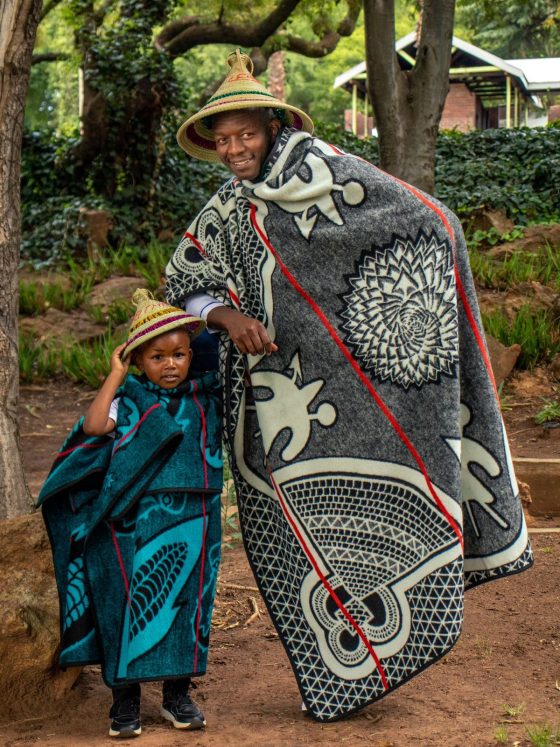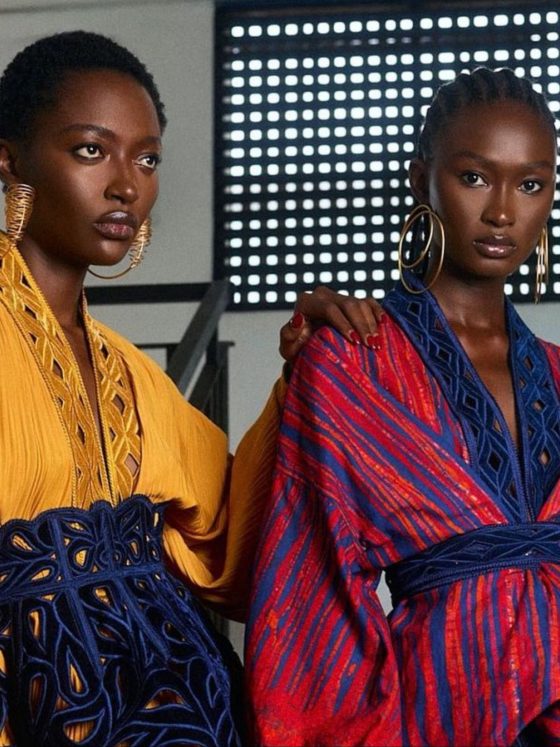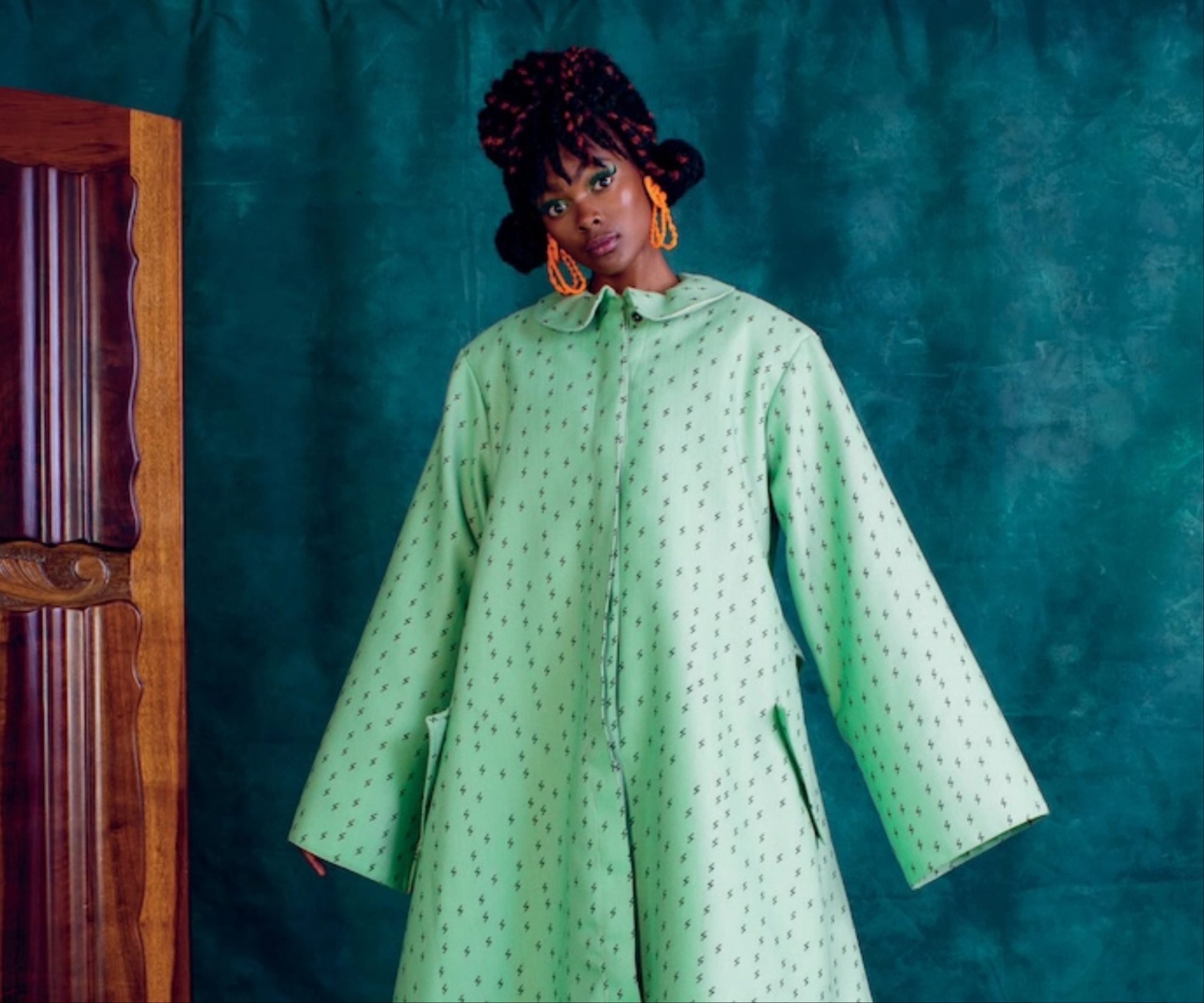
In Johannesburg, fashion is not passive.
It does not decorate. It defines.
For Thando Ntuli, design begins with control. Not a trend. Not a spectacle. Control.
Through her label, Munkus, she designs garments that hold their own. Pieces that resist collapse. Clothing that does not simply follow the body, but challenges it. Shapes that insist on being acknowledged before they are understood.
This is not about styling.
It is about structure, applied with precision.
And in that precision, something shifts. The body is no longer just dressed. It is positioned.
A fashion-forward profile on Thando Ntuli, exploring how Munkus redefines modern style through structure, discipline, and intentional design.
Designing Beyond the Surface
Ntuli does not design for ease.
Her garments resist immediacy. They refuse to be consumed in a single glance or reduced to visual shorthand. Every line is deliberate. Every proportion was resolved. Nothing is left to chance.
There is an insistence on clarity in her work.
Volume is controlled. Movement is considered. Even fluidity, when it appears, feels measured rather than spontaneous. The result is clothing that operates with discipline rather than excess.
In an industry driven by acceleration, this restraint becomes disruptive.
Because it forces the viewer to slow down.
To look again.
To understand that what appears minimal is, in fact, highly constructed.
Form as Identity
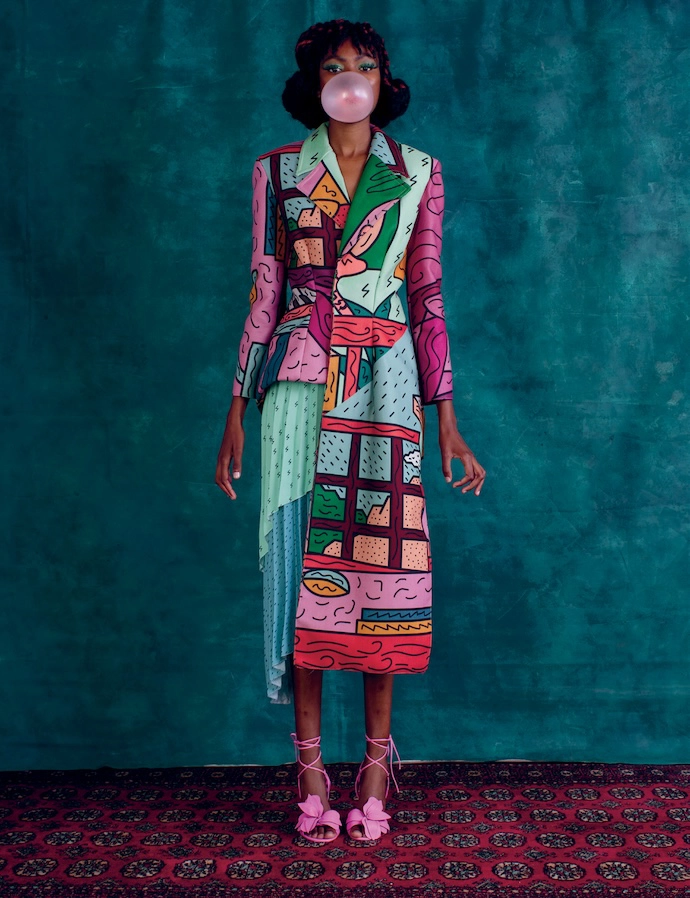
At the core of Munkus is a principle that refuses compromise.
Clothing is not neutral.
It shapes how a body is read, how it moves through space, and how it is received before it speaks. Ntuli designs with this awareness at the forefront, constructing garments that do not passively adapt to the wearer but actively engage with them.
Her work sharpens her presence.
It does not impose identity, but it frames it so precisely that it becomes impossible to ignore. The wearer is not hidden within the garment. They are amplified by it, defined through structure rather than surface.
This is where her design becomes more than aesthetic.
It becomes positional.
Structure, Balance, and Control
There is a discipline running through Ntuli’s work that is difficult to replicate.
Balance is not decorative. It is engineered. Each element exists in relation to another, creating a system where nothing feels excessive and nothing feels incomplete.
This is what gives the work its authority.
It does not rely on exaggeration to command attention. It holds itself.
In a fashion landscape that often confuses volume with impact, Ntuli’s restraint reads as confidence. The garments do not need to compete. They are already resolved.
And that resolution is what allows them to last beyond a single moment.
The Place of Headwraps
Its headwraps often recognise Munkus.
But recognition is not a definition.
The wraps exist within a broader design system, operating alongside garments rather than above them. They follow the same logic. The same discipline. The same attention to proportion and control.
They do not dominate the look.
They complete it.
This distinction is critical.
Because it prevents the work from being reduced to a single visual marker, the garments carry their own weight. The wraps extend that weight, reinforcing the composition rather than carrying it.
Nothing is isolated.
Everything is connected.
Garment as Construction
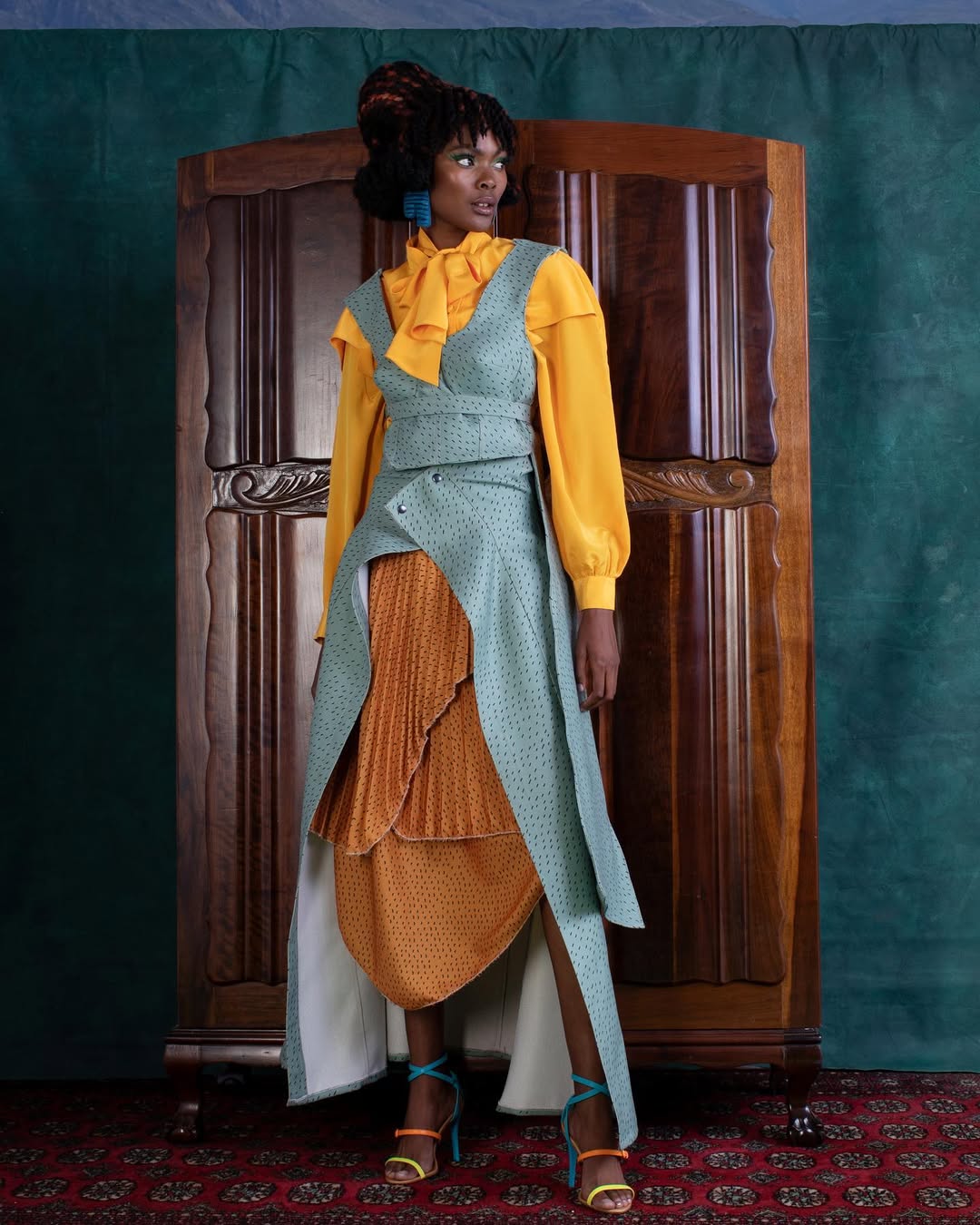
To fully understand Ntuli’s work, it is necessary to look beyond individual pieces and consider construction itself.
Her garments are not simply designed. They are built.
There is an architectural quality to the way fabric is handled. Structure is not applied superficially but embedded within the form. Seams, folds, and volume operate as part of a larger framework rather than isolated details.
This approach creates a different relationship between clothing and the body.
The garment does not disappear into movement. It holds its own shape. It negotiates space rather than yielding to it.
And in doing so, it shifts the balance of control.
A Modern Design Language
Ntuli does not replicate tradition.
She interrogates it.
References exist, but they are never literal. Familiar forms are broken down, reworked, and reconstructed until they function within a new context. Scale changes. Proportion shifts. What was once fixed becomes fluid.
This is not preservation.
It is authorship.
The past is not treated as something to be maintained but as material to be reconfigured. And in that reconfiguration, something new emerges. Something that feels grounded, but not constrained.
Visibility and Intention
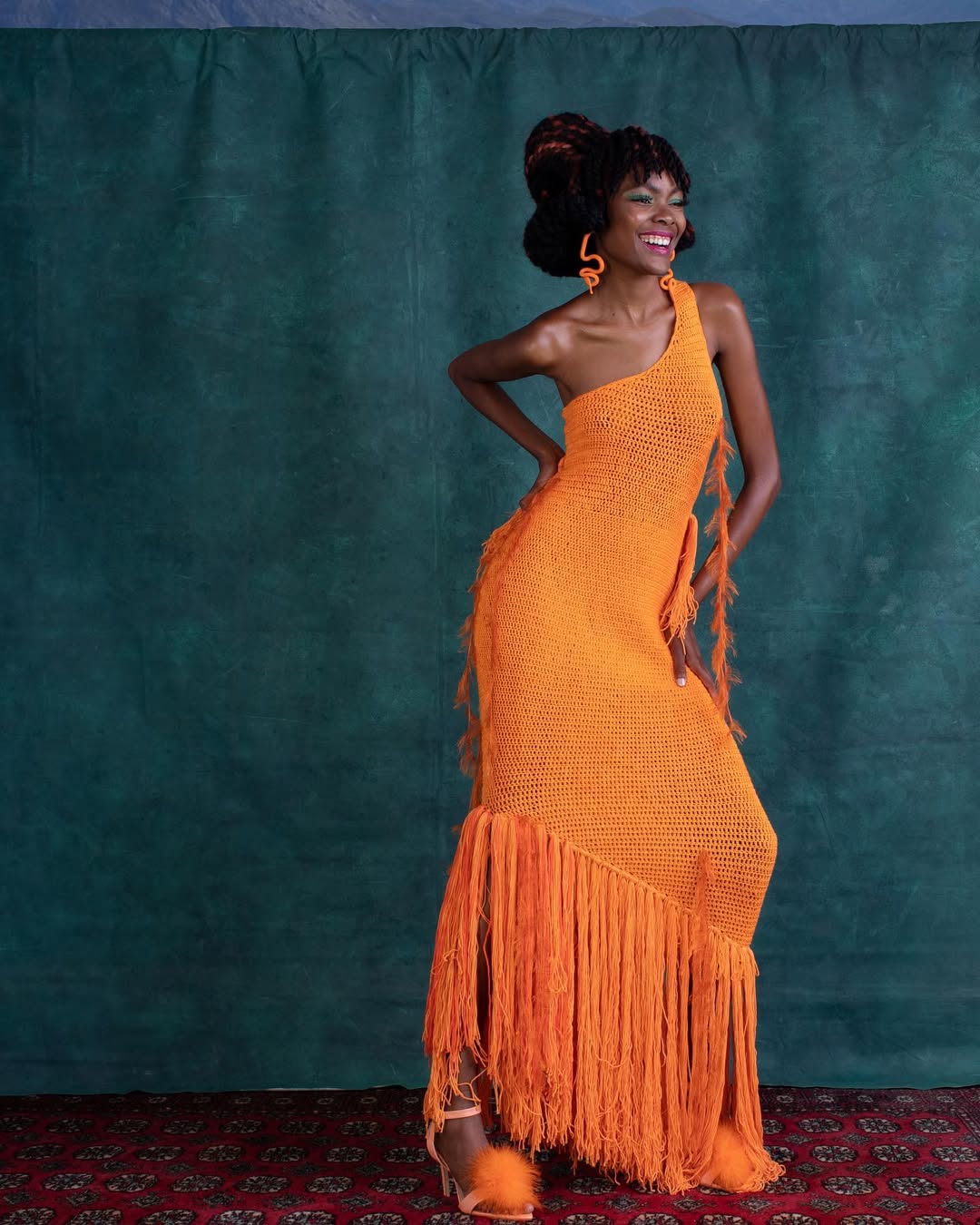
We exist in a culture of relentless visibility.
Images are produced, circulated, and consumed at a speed that leaves little room for reflection. Fashion, in response, often amplifies itself, becoming louder, faster, and more immediate.
Ntuli resists this.
Her work does not chase attention. It controls it.
This creates a different kind of visibility.
One that is not dependent on excess but on precision.
ALSO READ:
- Natasha Museveni Karugire: The Designer Who Builds Identity Through Cloth
- Diaspora Couture: Beyond Borders, Designers Reshaping Global Style
The Discipline of Restraint
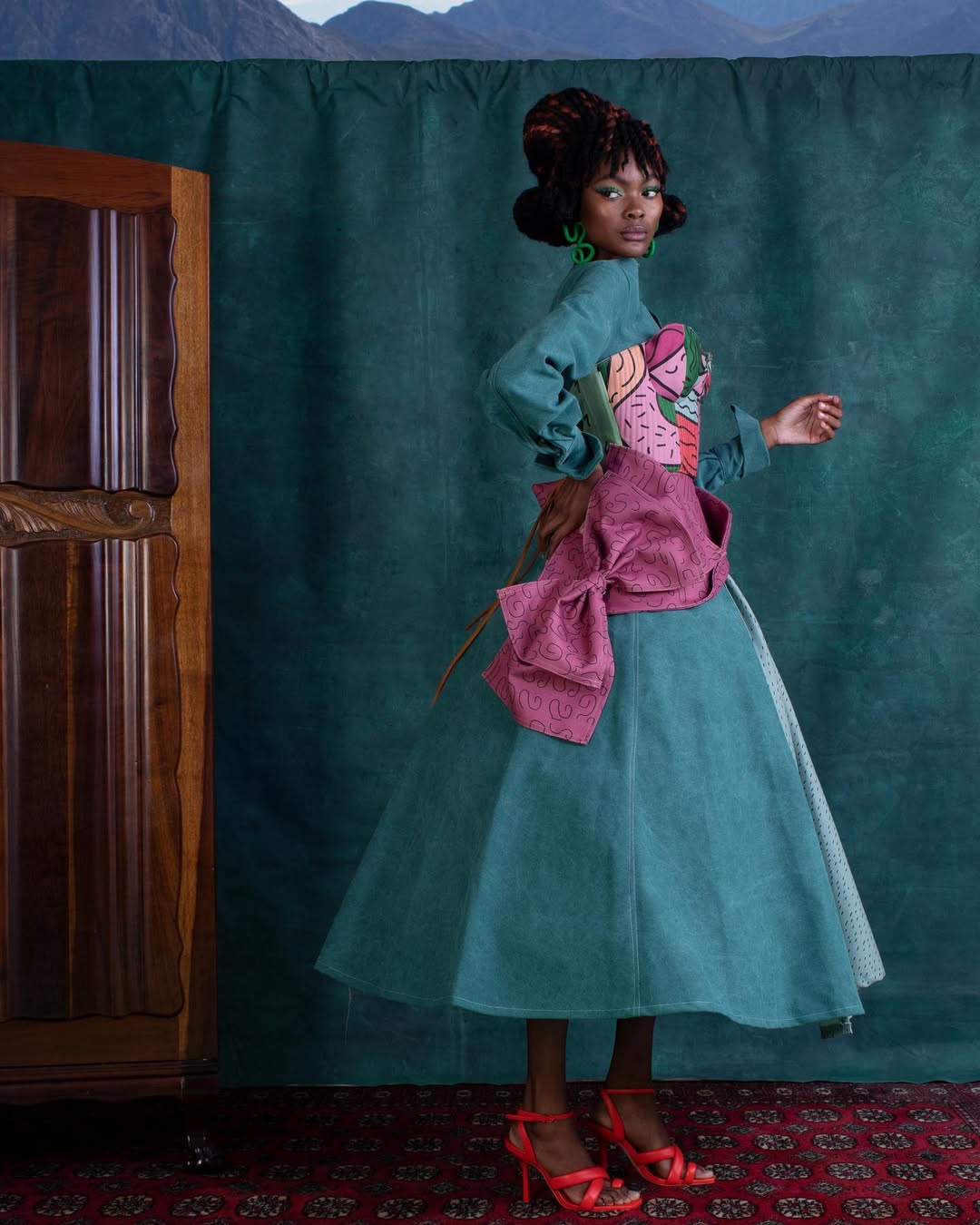
Restraint, in Ntuli’s work, is not absent.
It is a decision.
Every omission is deliberate. Every reduction is considered. Nothing feels removed for the sake of minimalism alone. Instead, what remains is what is necessary.
This is where the work gains its sharpness.
Because without excess, every detail becomes more visible. Every line carries more weight. Every proportion matters more.
There is no distraction.
Only focus.
The Future of Munkus
Munkus does not need reinvention.
It needs continuation.
The foundation is already exact—a system built on structure, discipline, and clarity. As the brand expands, its strength will lie in maintaining that system without dilution.
Growth, here, is not about change.
It is about refinement.
Deepening what already exists. Extending it without compromising its core.
Conclusion
Thando Ntuli is not designing around aesthetics.
She is designing around control.
A system where garments, headwraps, and structure operate with the same internal logic. Where nothing is incidental. Where everything is resolved before it is seen.
The headwrap is visible.
But it is not the centre.
The centre is formed.
And form, when handled with this level of precision, does not fade. It holds. It defines. It endures.
FAQs
- Who is Thando Ntuli?
Thando Ntuli is a designer behind Munkus, known for her structured, form-driven approach to fashion.
- What is Munkus?
A fashion label built on garments, headwraps, and a disciplined design language centred on structure and intention.
- Are headwraps the main focus of her work?
No. They are part of a broader system that prioritises garments and overall design.
- What defines her design style?
Precision, balance, and a refusal to rely on trend-driven aesthetics.
- Is her work considered luxury?
Yes. It aligns with modern luxury through craftsmanship, restraint, and design clarity.