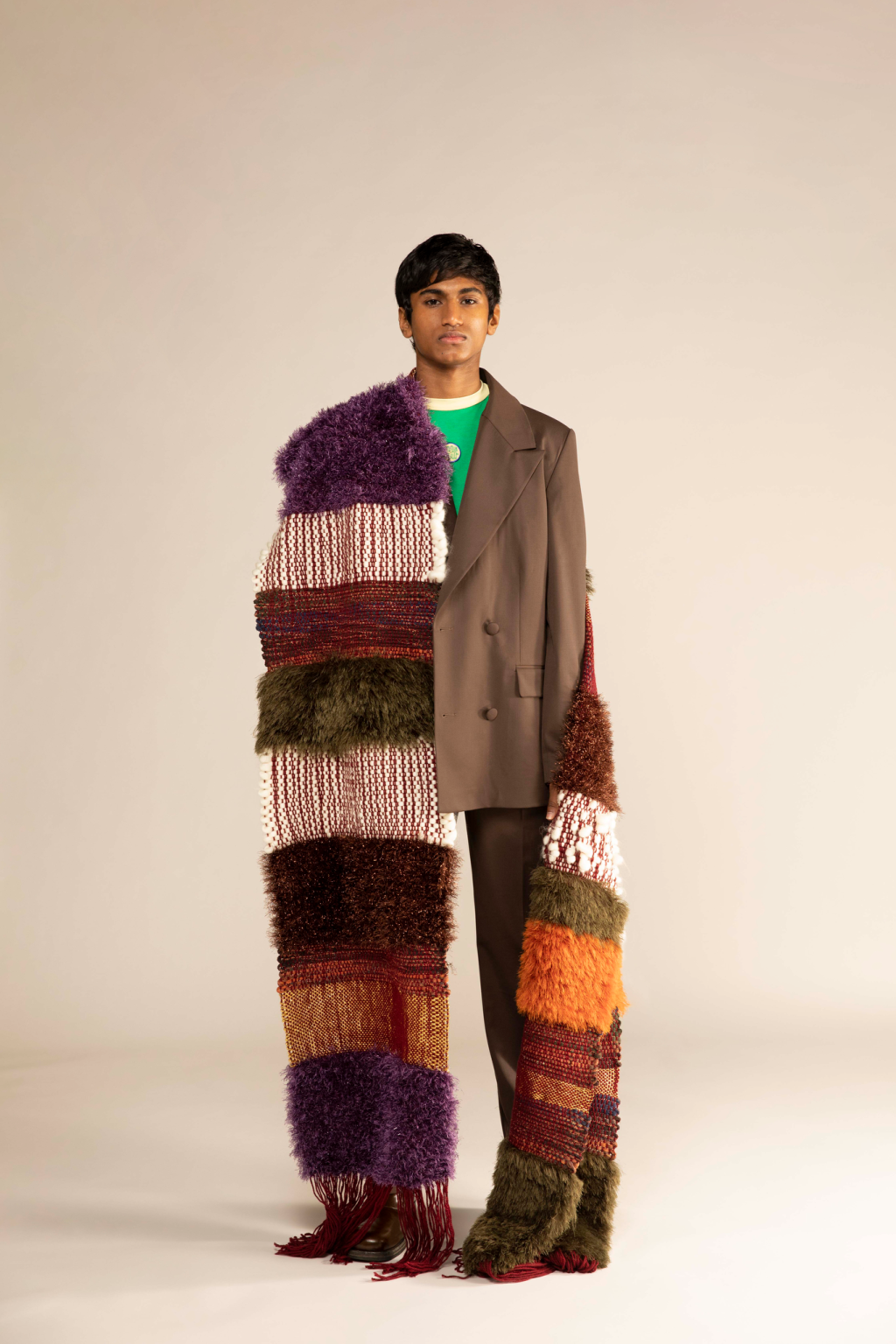
The clothes arrive before dawn.
At ports, at warehouses, at the edges of cities where commerce and survival meet, bales are unloaded, compressed, anonymous, and uninvited. Cotton, polyester, denim, synthetics. Garments that have already lived one life, sometimes barely worn, are often discarded too soon.
They are labelled as secondhand.
But the scale tells a different story.
This is not circulation.
It is overflowing.
Across markets like Kantamanto in Accra, traders sort through tonnes of imported clothing each week, with only a fraction resold. The rest lingers, deteriorates, or is discarded again, only to be absorbed into environments that did not produce it.
And yet, within this excess, a different system is emerging.
Not in disposal.
But of design.
An in-depth investigative feature on how designers across Africa are transforming textile waste into high fashion, reshaping sustainability, craft, and the future of global style.
The Market as Material
For designers like Yayra Agbofah, the market is not just a site of trade.
It is a site of intervention.
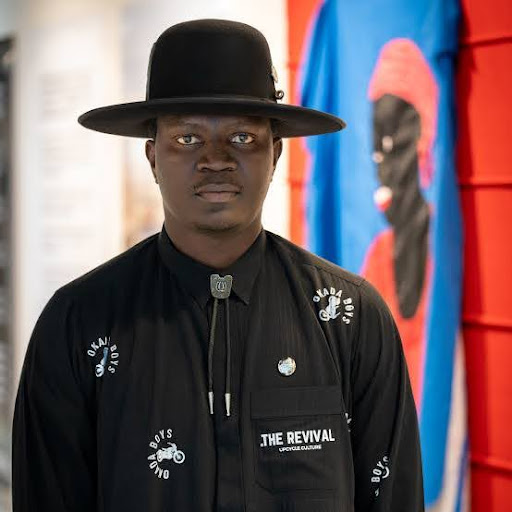
As the founder of The Revival, Agbofah works directly in Kantamanto, one of the largest secondhand clothing markets in the world, salvaging materials that would otherwise be lost. But his work extends beyond garment-making. It is infrastructural.
Clothing is collected, sorted, and redistributed. Artisans are trained. Systems are built around what already exists, rather than importing newness.
This is not about rescuing fashion.
It is about reorganising it.
Designing From What Remains
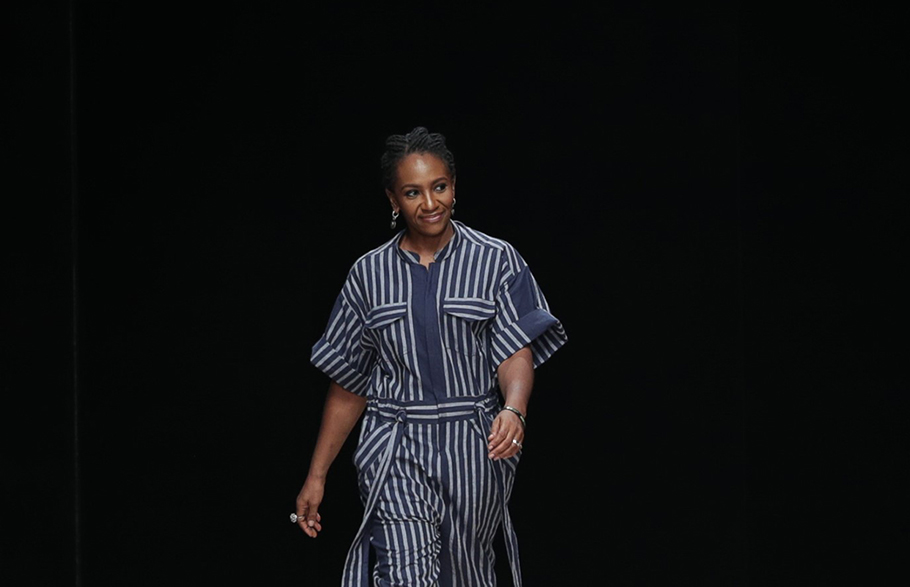
If Agbofah’s work operates at the level of the system, Nkwo Onwuka approaches it from the material.
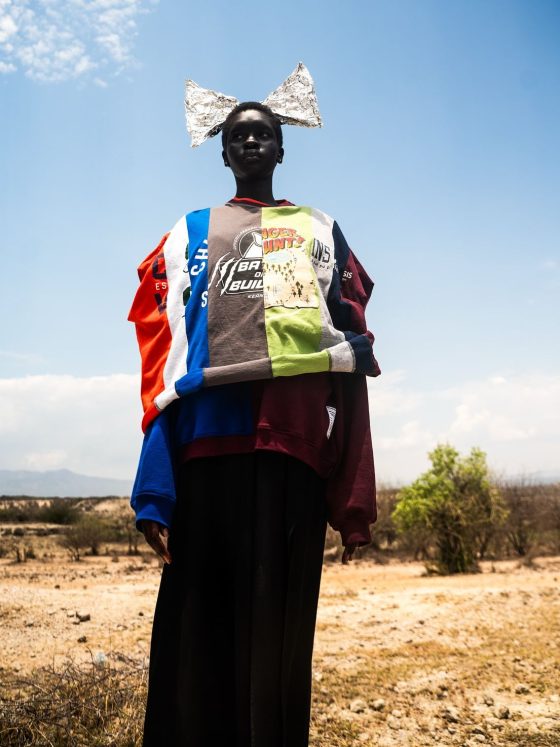
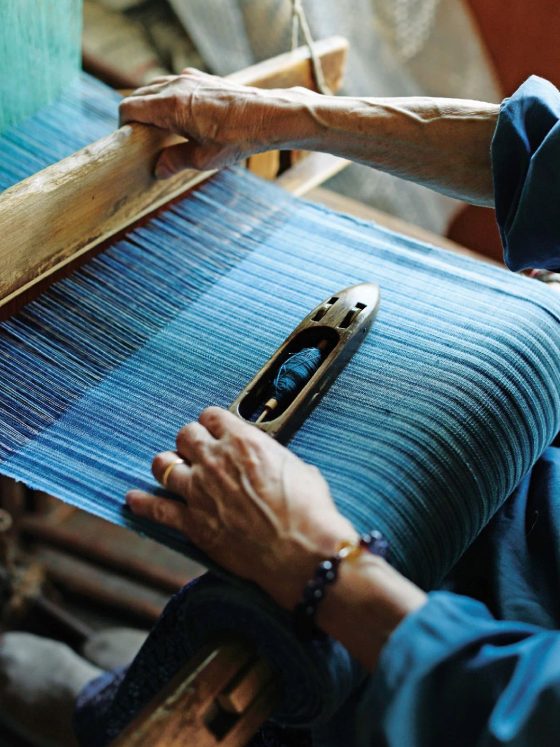
Through her label NKWO, Onwuka has developed Dakala Cloth, a textile made from strips of discarded fabric, woven together into something entirely new. The result is not patchwork in the decorative sense, but reconstruction at the level of fibre.
Each piece carries visible irregularity.
Frayed edges. Uneven textures. Variations that resist standardisation.
But within that irregularity is control.
The fabric is designed and not found. Built and not assembled. It challenges the idea that sustainability must mimic perfection to be taken seriously.
Beyond Garments: Systems, Not Statements
What connects designers like Yayra Agbofah and Nkwo Onwuka is not just material choice.
It is an approach.
Upcycling, in its most visible form, often exists as a statement, with limited collections, conceptual pieces, and runway gestures. But here, the work moves beyond symbolism.
It asks:
Can waste be integrated into production, not just highlighted within it?
Can design operate inside existing economies rather than positioning itself above them?
These questions shift the conversation.
From sustainability as branding to sustainability as structure.
Collective Practice and Local Ecosystems
In Kenya, collectives like Mafi Mafi extend this thinking further.
Rather than centring individual authorship, their work distributes design across community networks. Waste textiles are sourced locally, transformed collaboratively, and reintroduced into circulation through decentralised production.
This model resists the hierarchy of traditional fashion systems.
There is no singular designer figure.
Instead, there is a process—shared, iterative, grounded in place.
It suggests a different future for fashion.
One less dependent on scale and more responsive to context.
Luxury, Reconsidered
At the higher end of the fashion spectrum, designers like Lukhanyo Mdingi offer another perspective.
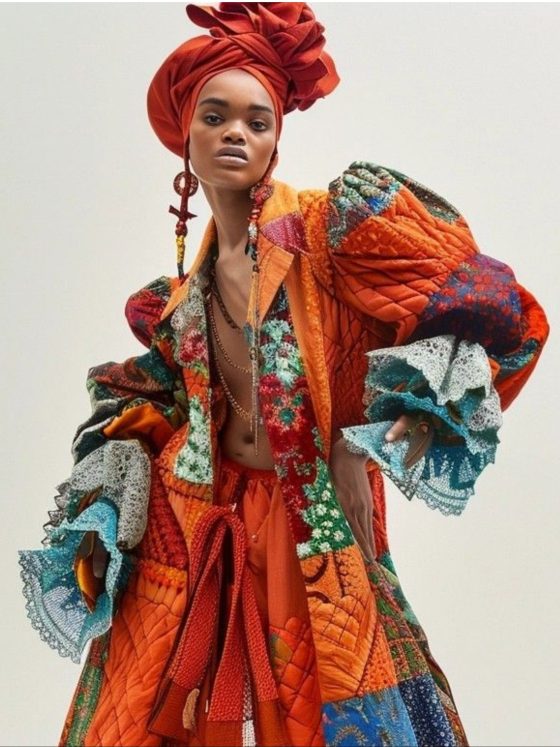
Mdingi’s work is not framed explicitly as upcycling, yet it engages deeply with material reuse, surplus textiles, and artisanal production. His garments, often seen on international runways, carry a quiet complexity—layered textures, hand-finished details, and an emphasis on process over spectacle.
Here, sustainability is not foregrounded.
It is embedded.
The effect is subtle but significant.
It reframes the conversation around luxury—not as excess, but as attention.
The Politics of Overflow
To understand why this work matters, it is necessary to return to the system that makes it possible.
Textile waste does not appear randomly.
It is produced through cycles of overproduction, accelerated consumption, and globalised distribution. Fast fashion generates more than it can sell. Unsold inventory is redirected. Secondhand markets absorb what remains.
But absorption has limits.
And when those limits are reached, the burden does not disappear.
It shifts.
Markets like Kantamanto become saturated. Local industries struggle to compete with imported clothing sold at lower prices. Environmental consequences accumulate.
Designers working with waste are not separate from this system.
They are responding to it in real time.
INTERESTING READS:
- What Truly Sustainable Fashion Looks Like Beyond the Marketing Buzzword
- Sustainable Ethiopian Fashion: Handwoven Heritage Meets Global Responsibility
Aesthetic Versus Ethics
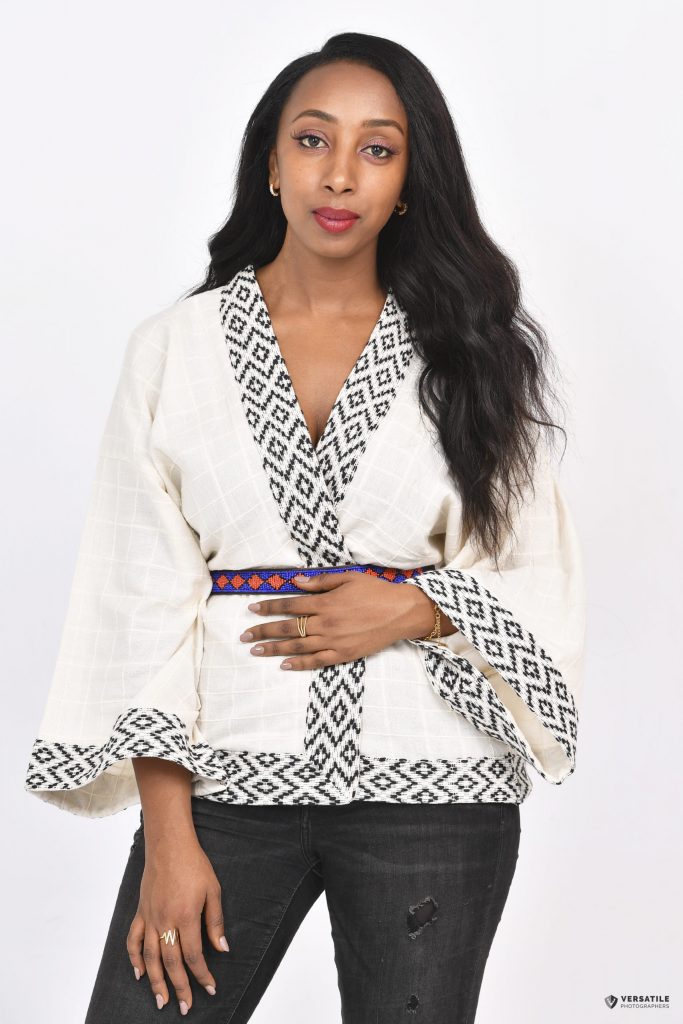
There is an ongoing tension within sustainable fashion.
Between aesthetics and ethics.
Garments made from waste must still function within a fashion context. They must be desirable, wearable, and relevant. But in doing so, there is always the risk of aestheticising the very conditions from which they emerge.
This is where the work becomes complex.
Designers must navigate visibility without exploitation. Transformation without erasure. Innovation without detachment from origin.
The most compelling work does not resolve this tension.
It holds it.
Why Upcycling Remains Niche
Despite increasing attention, upcycling remains a relatively small segment of the global fashion industry.
There are reasons for this.
Scale is difficult. Materials are inconsistent. Production timelines are unpredictable. Profit margins are often lower than those of mass manufacturing.
But there is also a deeper issue.
Upcycling challenges the foundations of fashion itself.
It disrupts the idea of endless newness. It questions standardised production. It resists the speed that defines the industry.
In doing so, it exposes limitations that many brands are not willing to confront.
The Future of Waste as Design
The designers emerging from this space are not positioning themselves as alternatives.
They are positioning themselves as indicators.
Of where fashion might move when forced to account for its own excess.
Whether through systemic interventions like Yayra Agbofah, material innovation like Nkwo Onwuka, collective models like Mafi Mafi, or refined craftsmanship like Lukhanyo Mdingi, the direction is clear:
Waste is no longer outside the design process.
It is central to it.
Conclusion
Fashion has always depended on transformation.
But rarely has it been forced to confront what it transforms from.
The new generation of designers working with textile overflow is not simply creating garments. They are engaging with the conditions that necessitate those garments.
They are designing within an imbalance.
And in doing so, they are redefining what fashion can be—not as a system that produces endlessly, but as one that learns to work with what already exists.
Waste, in this context, is not the end of fashion’s story.
It is the material from which the next chapter is being written.
FAQs
- What is textile waste?
Discarded clothing, often exported in large volumes, creates environmental and economic strain.
- What is upcycling in fashion?
Turning existing garments or fabrics into new, higher-value pieces.
- Who are the key designers in this space?
Yayra Agbofah, Nkwo Onwuka, Lukhanyo Mdingi, and Mafi Mafi.
- Why is the upcycled fashion niche?
It’s hard to scale due to inconsistent materials and labour-intensive processes.
- Is upcycled fashion luxury?
Yes—when defined by craftsmanship and intentional design, not newness.
- Why is Kantamanto Market important?
It’s a major global hub for secondhand clothing and textile overflow.