Before literacy, there was colouring.
Long before fashion houses codified identities into logos and monograms, the Maasai of East Africa had already perfected a visual system capable of communicating age, status, courage, fertility, and belonging without a single written word.
Maasai beadwork is often photographed. It is rarely decoded.
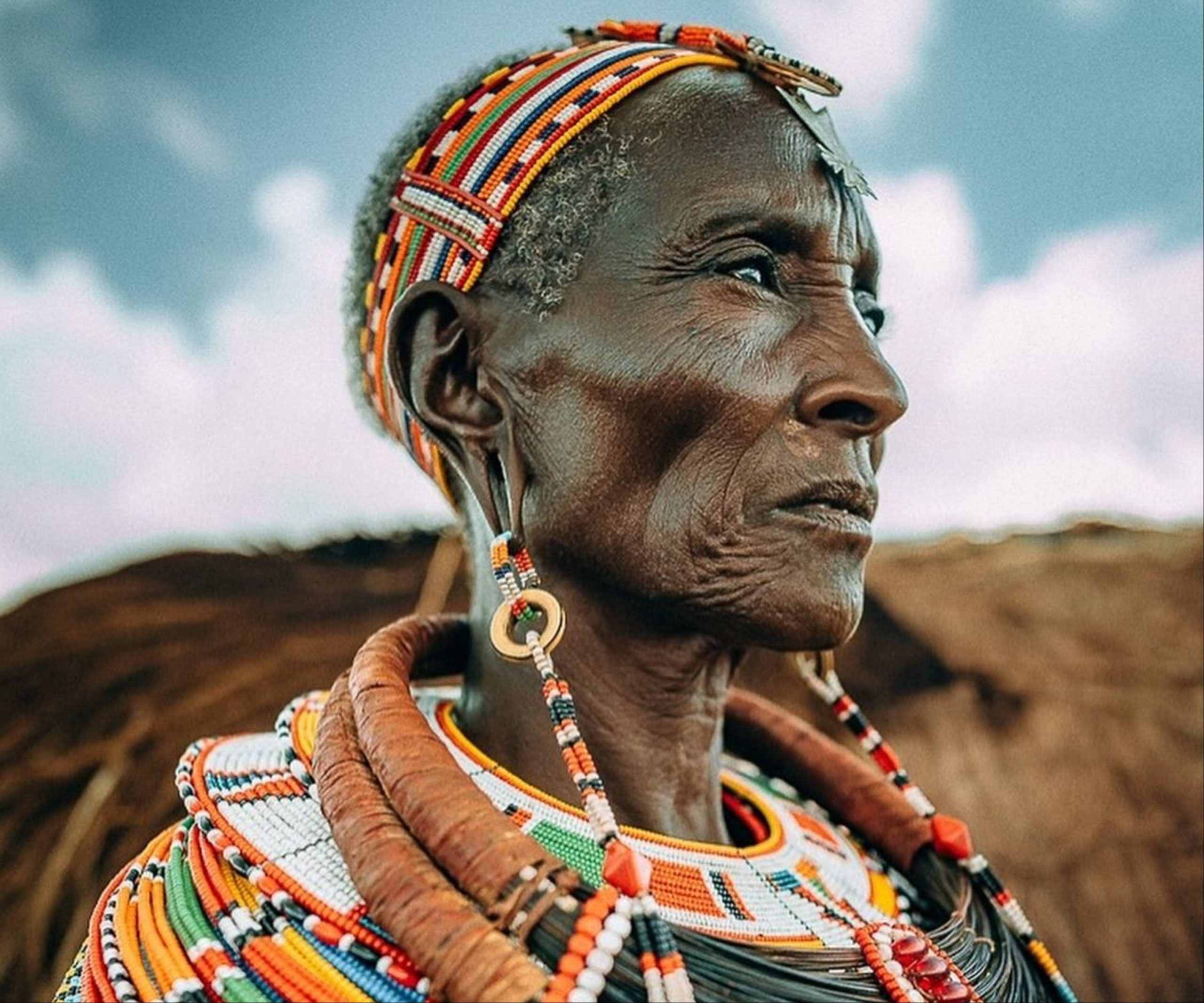
To the untrained eye, the layered collars and stacked necklaces appear arresting: red, cobalt, white, and orange arranged in symmetrical bursts, precise and bold against ochre-toned skin. But Maasai beadwork is not decoration. It is governance. It is a biography. It is cosmology translated into geometry.
Every bead is placed within a cultural grammar. And that grammar has been designed, maintained, and transmitted by women for generations, making Maasai beadwork one of the most sustained examples of female intellectual authority in the history of design.
Maasai beadwork is a complete language. It encodes who you are, where you stand in your community, and what you have passed through. Every colour is a word. Every pattern is a sentence. The women who make it are not craftspeople. They are authors.
Colour as Code, Not Aesthetic
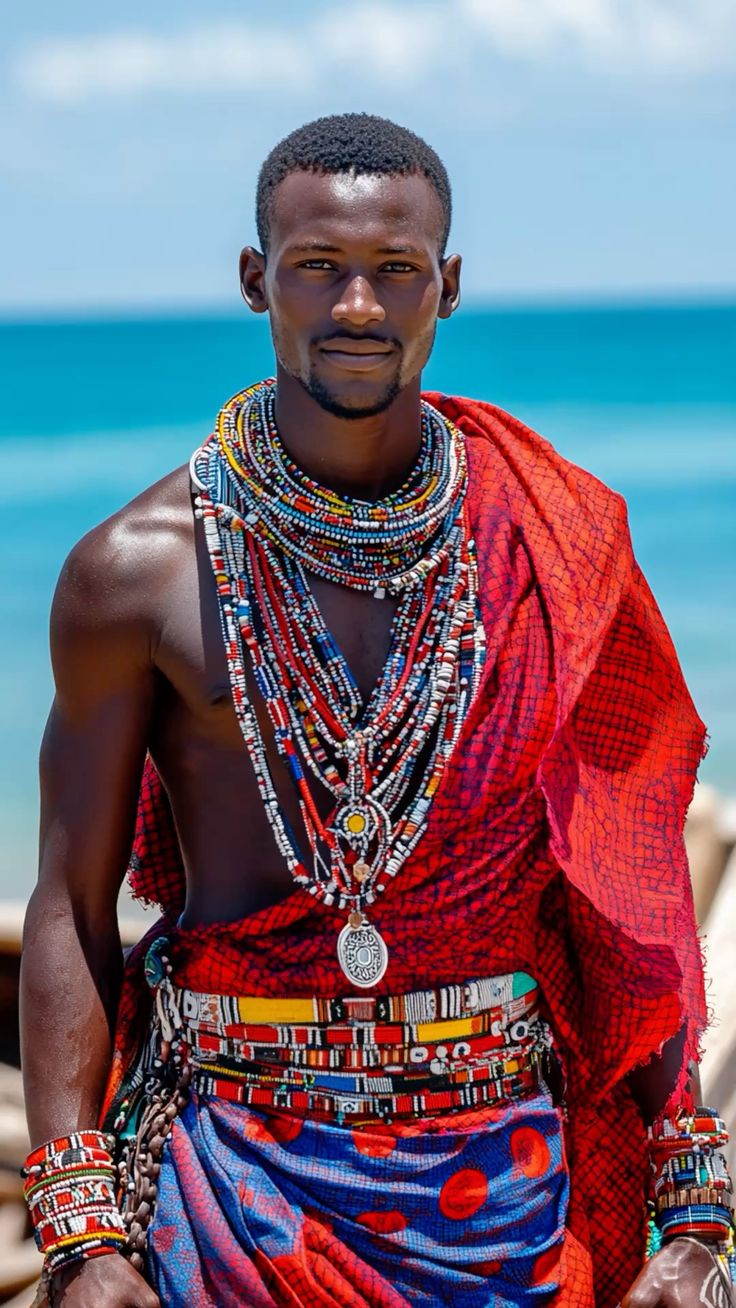
In Maasai cultures across Kenya and Tanzania, colour is not chosen solely for visual pleasure. It encodes meaning.
Red signals bravery and unity, which is historically linked to cattle blood, protection, and warriorhood. Blue references the sky and water — sources of life and energy in semi-arid landscapes. White represents purity and the health of cattle, central to the Maasai livelihood. Green suggests pasture and growth. Orange and yellow indicate hospitality and warmth.
These are not abstract associations. They are ecological.
The Maasai are pastoralists. Cattle are wealth, sustenance, and a social anchor. The land dictates survival. The sky determines rain. Therefore, colour reflects lived reality.
When a Maasai woman layers red against blue, she is not “colour blocking”. She is balancing concepts, protection against life force, earth against sky.
The palette is philosophical.
Women as Archivists of Identity
Women primarily produce Maasai beadwork. From childhood, girls learn bead-stringing techniques, pattern logic, and symbolic structure from mothers and grandmothers. Knowledge is transmitted orally and visually — through repetition and correction, not textbooks.
This matters.
In many global craft systems, women’s labour has been valued for its aesthetic appeal, while their intellectual role has been minimised. In Maasai culture, beadwork is not simply a handicraft. It is authorship.
Through bead placement, women document:
- Age sets
- Marriage transitions
- Initiation rites
- Community status
- Personal milestones
A collar worn at marriage carries a different pattern density than one worn during adolescence. A mother’s beadwork may signal fertility or alignment with lineage. Ornament becomes archive.
The body becomes text.
Geometry as Social Order
Look closely at a traditional Maasai collar.
The structure is radial. Concentric circles expand outward from the neckline. The colour bands are arranged in a deliberate sequence. White often anchors the design, stabilising the vibrancy of red and blue. Thin black lines may divide colour blocks, creating contrast and rhythm.
This geometry is not accidental.
It reflects order, the ordering of society into age grades, clans, and ceremonial roles. The symmetry reinforces cohesion. No bead dominates. No colour overwhelms.
Even exuberance is disciplined.
This is what makes Maasai beadwork visually powerful. It appears explosive, but it is mathematically contained.
Ornament and Authority
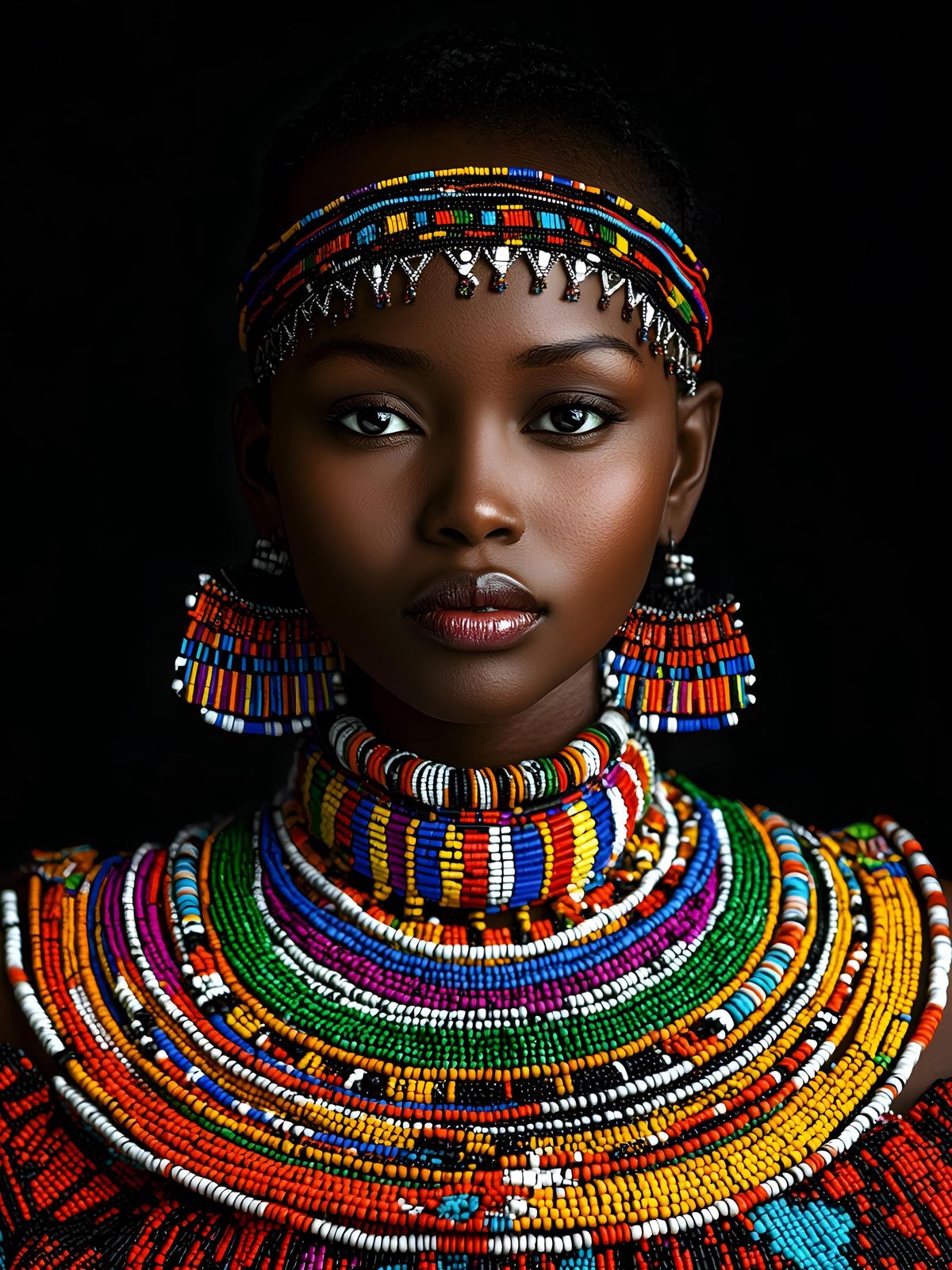
Adornment in Maasai culture is not superficial. It confers authority.
During rites of passage, particularly for warriors (morans), the beadwork becomes more elaborate. Women construct pieces that signal a transition from one life stage to another. The community reads these signals instantly.
A necklace can announce readiness for marriage. A belt can signify ceremonial participation. Earrings, often elongated and beaded, frame the face to emphasise maturity and dignity.
There is no separation between fashion and social structure.
The bead is political.
Colonial Disruption and Material Adaptation
Historically, Maasai beadwork has incorporated natural materials such as seeds, bone, and clay. During the 19th century, through colonial trade routes, glass beads from Europe and Asia entered East Africa. Rather than displacing tradition, these materials were absorbed into it.
The glass bead became central, valued for its brightness and durability. But the symbolic language remained intact.
This concept is critical to understand.
The material evolved.
The meaning did not.
Maasai beadwork demonstrates how African craft systems adapt externally sourced materials without surrendering internal logic. The system absorbs; it does not dissolve.
READ ALSO:
- The Biography Of Indigo: From Colonial Currency To Blue Gold
- Mud Cloth as Fine Art: The Cultural Authority of Bogolanfini
From Ceremony to Global Runway
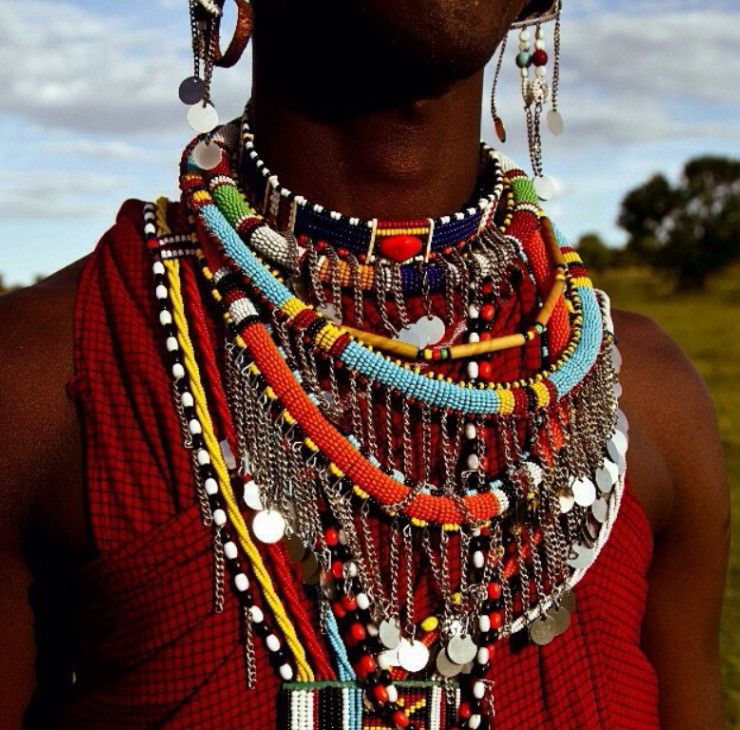
In recent decades, Maasai beadwork has entered global fashion consciousness. Jewellery designers reinterpret circular collars into contemporary statement pieces. Luxury brands reference the radial geometry in accessories. Collaborative initiatives between Maasai women’s collectives and fashion labels have introduced beadwork into international markets.
This shift presents tension.
On one hand, collaboration generates income for artisans and amplifies visibility. On the other hand, detaching beadwork from its symbolic system risks aesthetic extraction.
When bead collars appear in global editorials without context, the visual impact remains — but the language is muted.
The challenge isn’t modernisation. It is a translation with integrity.
A Living Language
What makes Maasai beadwork extraordinary is that it is not museum-bound. It is still worn and still produced. Still evolving.
Young Maasai women experiment subtly with scaling and layering while maintaining colour symbolism. Contemporary adaptations may introduce new combinations, but the grammar persists.
The system lives.
Because it lives, it resists fossilisation.
Unlike heritage crafts preserved solely for tourism, Maasai beadwork remains embedded in community life. It marks births, marriages, and transitions. It frames dance. It catches sunlight during the ceremony.
It does not exist solely for display.
Beyond Ornament
In Western fashion discourse, ornament has often been framed as excess — something applied after structure is complete. Modernism famously stripped it away.
Maasai beadwork challenges that hierarchy.
Here, the ornament is structured. It defines social space. It clarifies identity. It regulates belonging. If it is removed, the context is removed as well.
What global fashion calls “statement jewellery” is, within Maasai society, informational design.
The difference is profound.
The Stakes of Recognition
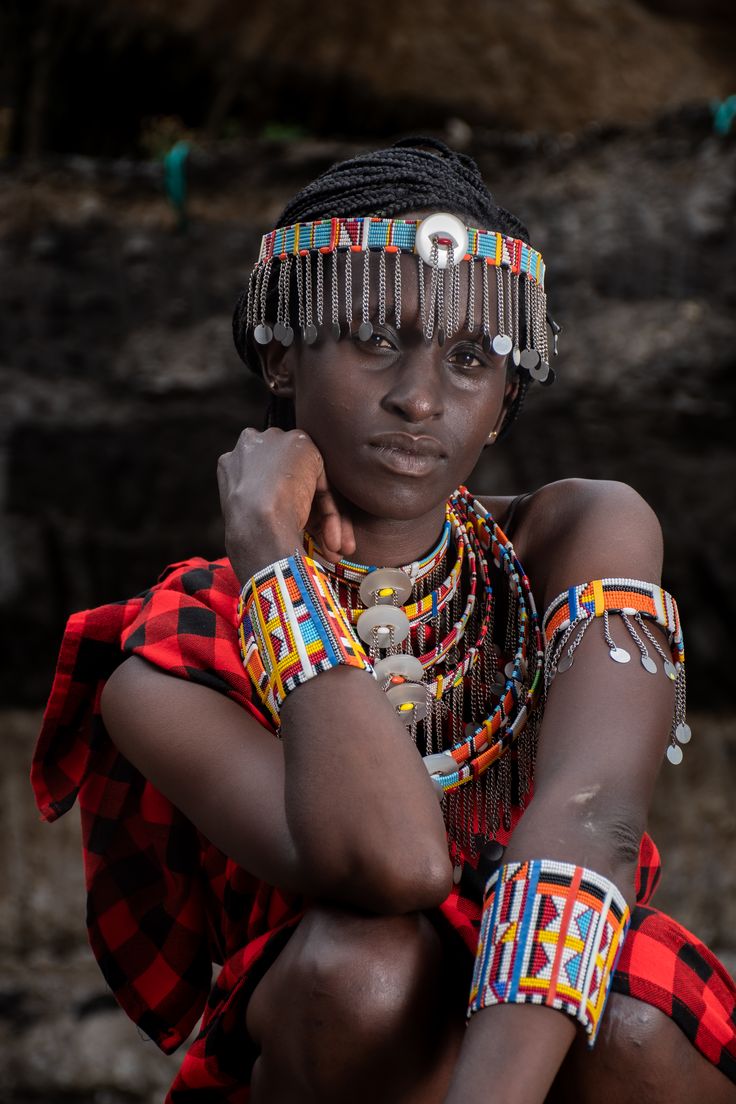
As contemporary fashion increasingly seeks “authentic craft,” Maasai beadwork is frequently cited as an inspiration. But recognition must extend beyond visual admiration.
To honour Maasai beadwork is to acknowledge:
- The women who sustain it
- The symbolic system embedded within it
- The ecological realities it reflects
- The social architecture it maintains
Without that acknowledgement, the bead becomes a motif.
With it, the bead remains language.
FAQs
- What does Maasai beadwork represent?
It encodes age, marital status, rites of passage, and community identity.
- What do the colours mean?
Red symbolises bravery, blue represents water and energy, white represents purity, green represents pasture, and so on.
- Who makes Maasai beadwork?
Primarily, Maasai women learn the craft from childhood.
- Is Maasai beadwork still worn today?
Yes. It remains central to ceremonies and daily cultural life.
- Has it influenced modern fashion?
Yes. Designers and jewellery brands reinterpret their geometry and colour symbolism globally.