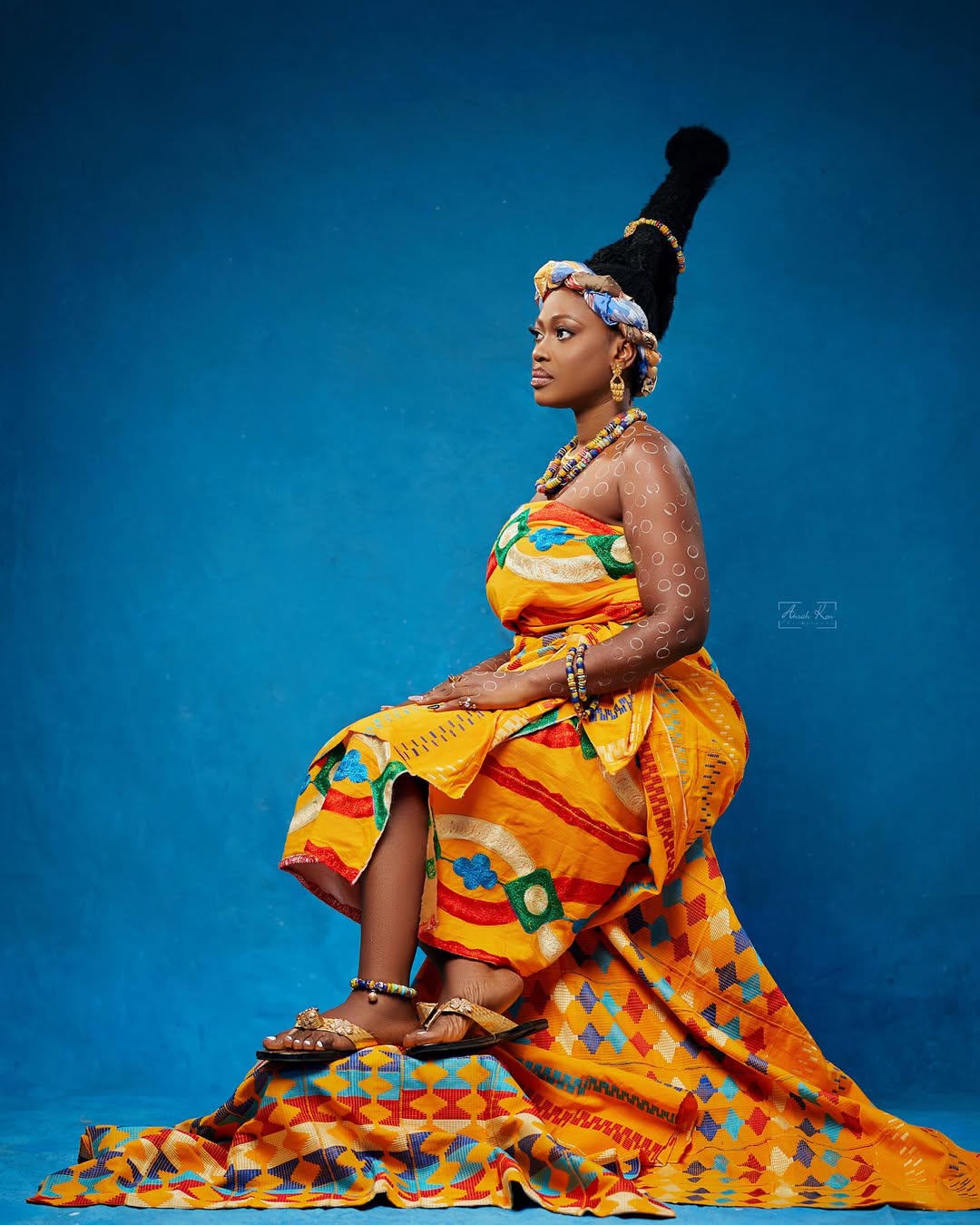
There is a story told in Bonwire, the weaving capital of the Ashanti Region, about two friends who went into the forest and found a spider at work. They watched for two days. They said nothing. Then they went home and built a loom. What they created, using raffia at first and then silk thread when Portuguese traders brought it to the coast in the 17th century, became Kente, the cloth that now belongs not to one people but to an entire cultural world.
The Fante, a coastal Akan people of Ghana’s Central Region, have their own relationship with that cloth. As Art of the Motherland documents, the Fante have distinct Kente designs and patterns used in their ceremonial contexts, patterns imbued with values of bravery, unity, and loyalty that function as non-verbal communication. The Fante were among the first African groups to engage with European traders along the Gold Coast, beginning in the 15th century. That coastal exposure shaped their trade, their politics, and, with characteristic Akan sophistication, their aesthetic vocabulary. Fante Kente carries that history in its warp and weft.
In December 2024, UNESCO recognised Kente cloth as an Intangible Cultural Heritage of Humanity, a formal acknowledgement of what Ghanaians have known for centuries: that this fabric is not decoration. It is a living archive. For Fante women, the recognition changed nothing about the way they select and wear it. They have always known what it means.
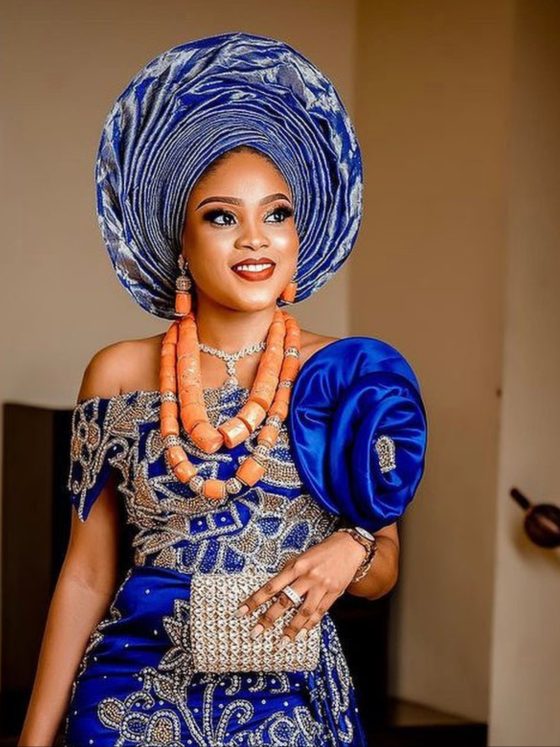
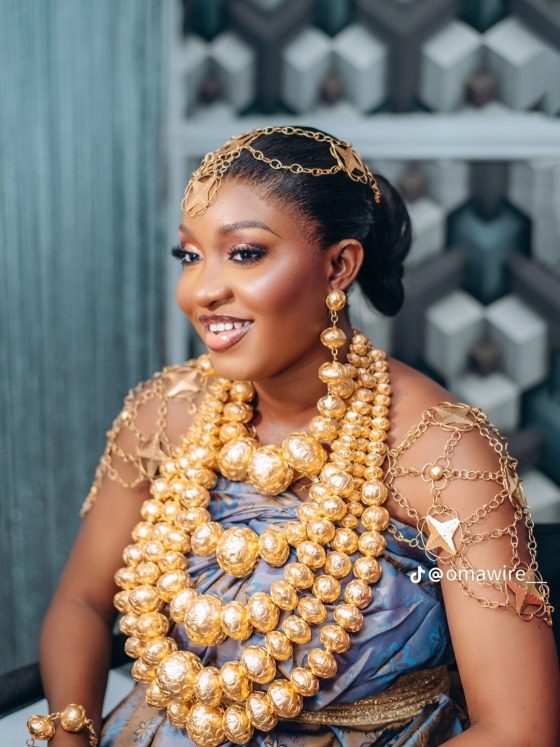
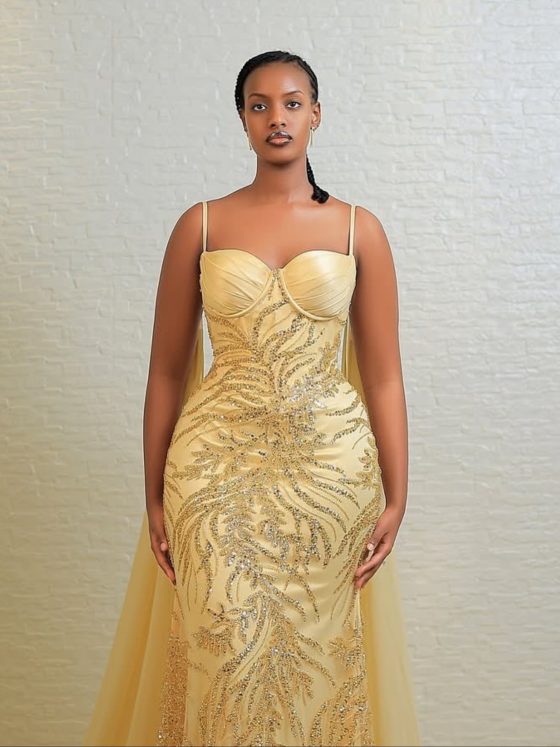
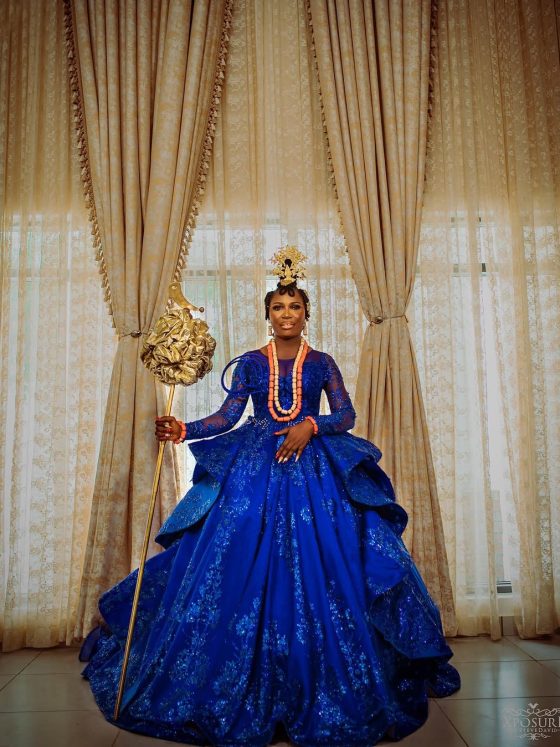
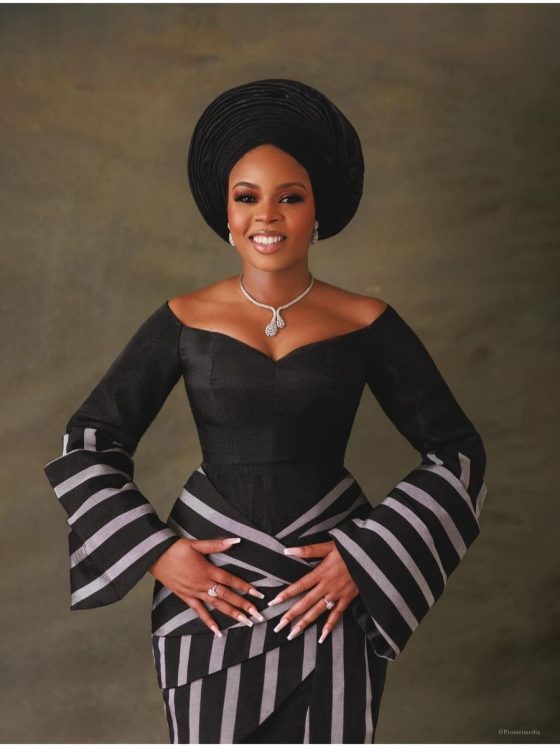
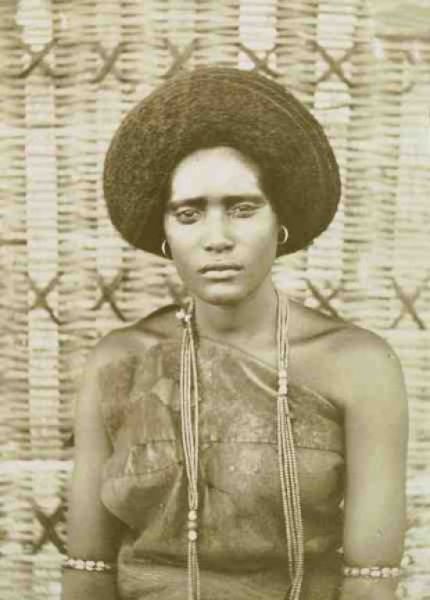
Five Kente styles: Fante women wear Kente from bridal draping to queen mother ceremony dresses, and each one carries its own history and colour grammar.
The Grammar of the Cloth
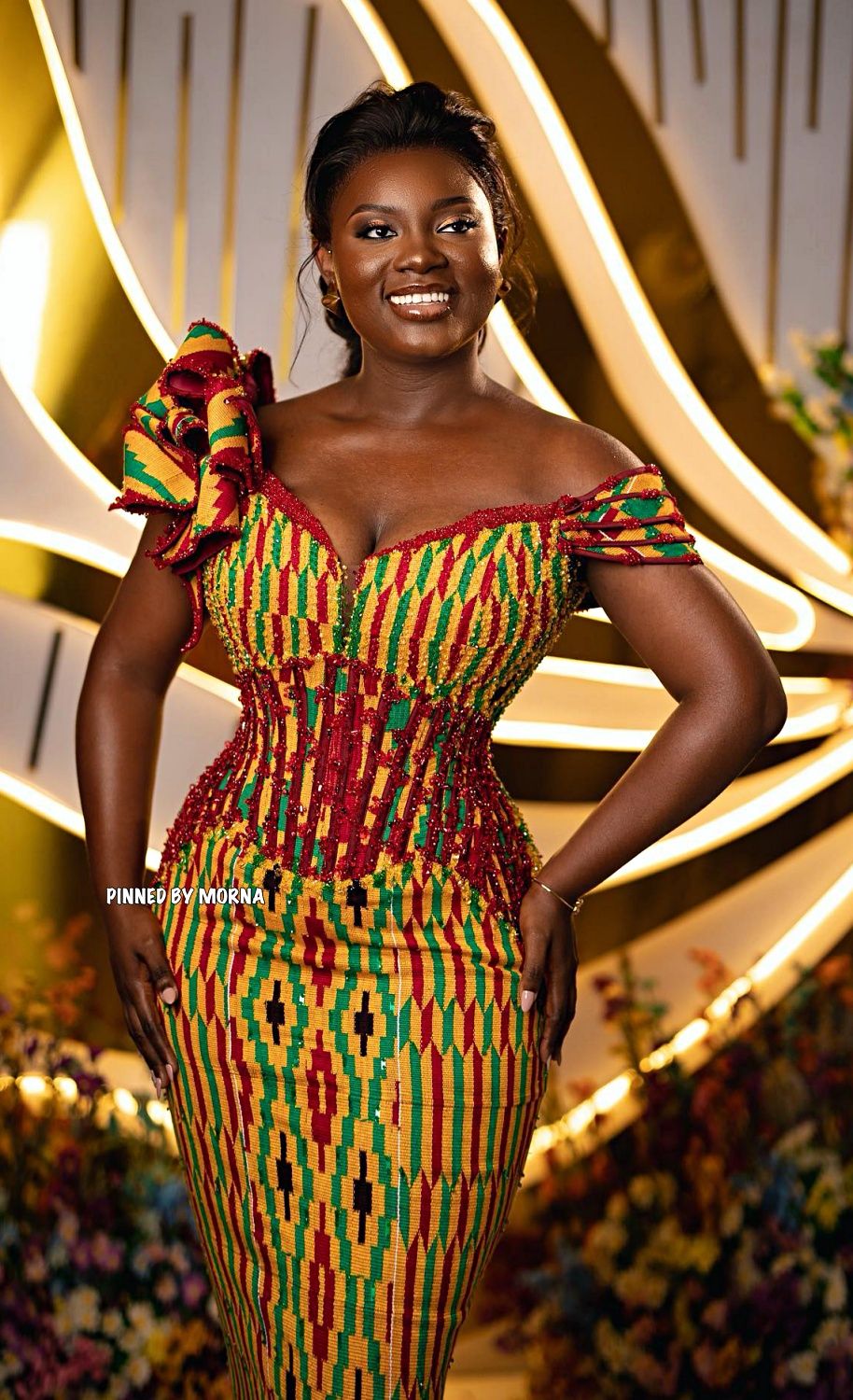
Before the five styles can be read, the colour grammar of Kente must be named. Every colour in a Kente cloth is a word in a sentence that an Akan wearer constructs deliberately. Gold carries royalty, wealth, spiritual purity, and high status. Green expresses life, growth, and renewal. Red speaks of political and spiritual passion, sacrifice, and blood. Blue signals wisdom, patience, and heaven. White holds purity, innocence, and peace. Black, often misunderstood by those outside the culture, represents union with ancestors and spiritual awareness.
The patterns are similarly precise. The square represents the earth, femininity, and the cosmos, a direct reference to the Akan matrilineal social structure through which the Fante trace descent, inheritance, and political authority. The diamond is worn by royalty, signalling the dual role of ruler as both human and chief. As Dr Gifty Afua Benson explains in her study of Kente’s legacy, each Kente has a name, a meaning, and a story to tell. Ghanaians choose their cloth as much for the name as for the colour. For Fante women, choosing a cloth is composing a statement.
And Kente is not worn lightly. According to tradition, it is reserved for occasions of weight: naming ceremonies, puberty rites, graduations, engagements, marriages, funerals, and ancestral remembrance. The Fante woman who drapes herself in Kente is not dressing for an occasion. She is dressing for a moment in time that she recognises as carrying historical and cultural consequences.
1. The Two-Piece Bridal Drape: The Original Sentence
The most traditional form of Kente worn by women in Ghanaian ceremonial culture is the two-piece configuration: one cloth forms a wrap-around skirt, and the other is draped as a shawl over one shoulder or across the body. A plain-coloured blouse is worn underneath, allowing the Kente’s pattern and colour to command the visual field entirely. This is the configuration that predates fashion industry intervention, and for Fante brides, it remains the gold standard of ceremonial authority.
For an engagement or traditional wedding, the Fante bride and her family choose the pattern of this cloth with the same care that other cultures choose vows. The cloth they select will be read by every elder in the room. The pattern’s name will be known. If it is Adweneasa, meaning ‘I have exhausted my skills’, a highly intricate weave covering every available block of plain weave, it signals the family’s investment and aspiration. If it is Owia, a simpler cloth of narrow stripes, it may mark a solemn or spiritually serious occasion. The choice is never arbitrary.
The two-piece drape is also the style worn by Fante queen mothers at formal ceremonies, seated as institutional figures within the matrilineal governance structure that defines Akan society. The queen mother, known as Ohemaa, is not merely the king’s consort. She is the head of the female lineage, the custodian of succession, and one of the most powerful political figures in any Akan community. When she wears Kente in this configuration, she is not adorned. She is installed.
2. The Kente Kaba and Slit: Structure That Speaks
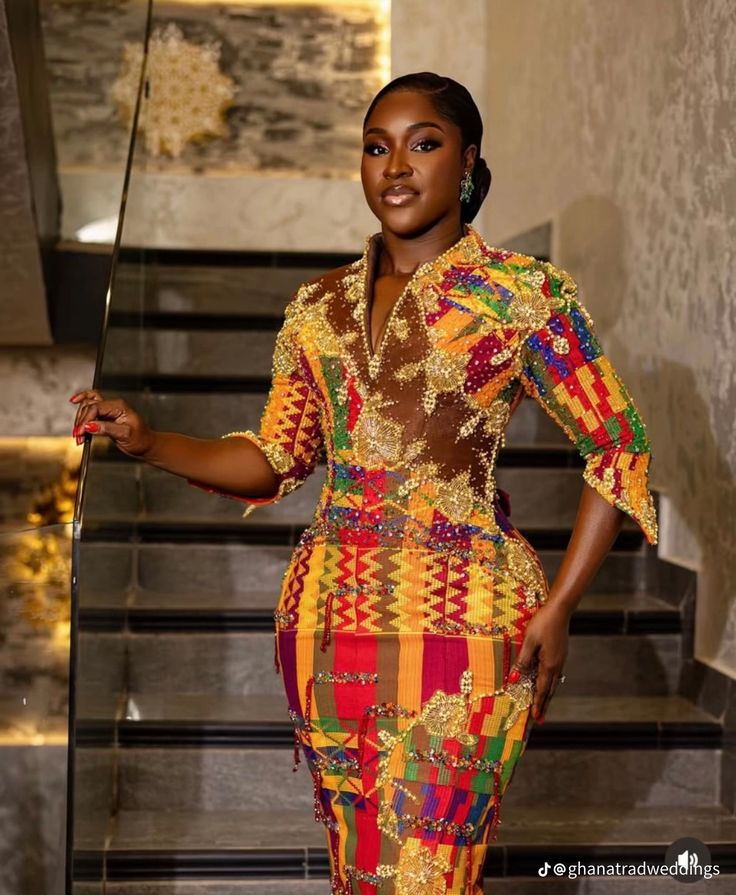
The Kaba and Slit, also called the blouse and wrapper in its wider Niger Delta iteration, is, in the Ghanaian context, a fitted blouse cut from Kente or a complementary fabric, worn with a Kente wrapper or lappa tied and draped at the waist. For Fante women, this style is the ceremonial middle register: formal enough for church thanksgivings, naming ceremonies, and community meetings, and distinctive enough to communicate the wearer’s knowledge of the cloth’s correct use. As Omiren Styles has argued in their analysis of clothing as cultural identity, the garments most deeply respected across cultures are those that reflect care in how they are made and worn and how they connect the wearer to a larger story. The Kaba and Slit do exactly this.
Contemporary Ghanaian designers have worked within this structure with increasing sophistication. Fitted corseted bodices, peplum details, and tailored sleeves now appear in Kente Kaba constructions that honour the cloth’s pattern vocabulary while extending its silhouette possibilities. The critical constraint is that the Kente pattern must remain legible. A cloth reduced to a design element has lost its grammar. Designers who understand this produce work that amplifies the cloth’s meaning. Those who treat it as textile-by-the-metre produce something else entirely.
For Fante women, the kaba and slit at a funeral carry specific colour responsibilities. A cloth heavy in black and deep tones signals mourning and ancestral connection. The same silhouette at a naming ceremony would demand gold and green, wealth and life entering the world together. The silhouette is fixed. The statement shifts entirely with the pattern selected.
3. The Kente Gown: When the Cloth Becomes Architecture
The floor-length Kente gown is the most formally evolved expression of Fante women’s ceremonial dress. It emerged as Ghanaian designers began working with Kente not as a draping cloth but as a tailored material, constructing structured gowns with fitted bodices, flowing skirts, and architectural details that give the woven strips a silhouette they could not achieve when simply draped.
For Fante brides in particular, the Kente gown has become the dominant ceremonial form at traditional weddings and engagement celebrations. The challenge it presents is significant: Kente is woven in narrow strips that must be sewn together before tailoring, requiring a designer who understands both the textile’s construction and its symbolic grammar. The most skilled designers ensure that the strip joins are invisible, that the pattern reads coherently across the body, and that the specific cloth chosen by the bride reflects the cultural statement her family wishes to make.
The ente gown is also the form in which Fante women most visibly participate in the contemporary global conversation about African fashion. When Ghanaian brides appear in structured Kente gowns in the international press, what is being seen is not trend adoption. It is the continuation of a practice of cultural self-presentation that the Fante have maintained since they first engaged European traders on the Gold Coast six centuries ago. As Omiren Styles has documented in its analysis of cultural resistance and style, the most enduring style movements began as acts of correction: communities using dress to reclaim dignity and assert authorship over how their bodies are read in public. The Fante woman in a Kente gown is continuing that practice, on her own terms, in every room she enters.
|
4. The Kente and Lace Combination: Fluency Without Compromise
Kente and lace are one of the most visually arresting combinations in contemporary Ghanaian women’s dress. A Kente skirt or wrapper paired with a lace blouse, or a Kente bodice paired with a lace-overlay skirt, produces a garment that carries two registers simultaneously: the formal cultural weight of the woven cloth and the refined elegance of intricate lace construction.
For Fante women, this combination became particularly prevalent at church ceremonies, graduations, Thanksgiving services, and formal family gatherings where the full traditional drape would be considered overly formal, but plain Western dress would be culturally insufficient. The lace-and-Kente combination solves this calibration problem with precision. The Kente is present and legible. The occasion is acknowledged and dressed appropriately. The woman wearing it has demonstrated fluency in both registers simultaneously.
This is exactly the form of identity dressing that Omiren Styles examines in its argument that culture is the foundation of style: styles grounded in tradition and cultural values endure because they carry meaning, reflect community identity, and are tied to rituals and symbols that give them substance beyond trends. The Kente and lace combination endures because it is not a hybrid of convenience and tradition. It is a solution that respects both the cloth’s cultural heritage and the social context of the woman who wears it.
5. The Queen Mother Ceremonial Drape: When Kente Becomes a Title
Within Fante society, the Ohemaa, or queen mother, is the single most important figure in the management of lineage, succession, and community governance. In the Akan matrilineal system, identity, inheritance, and political legitimacy pass through the female line. The queen mother is not merely a ceremonial figure. She is an institution. And the way she wears Kente at formal events is itself a form of governance.
The queen mother’s ceremonial Kente configuration is the fullest and most deliberate expression of the cloth’s capacity to communicate authority. The cloth chosen will be of the highest quality available, often Adweneasa, the most intricate of all patterns. It will be worn in the full traditional drape, not tailored or adapted, because the configuration itself is part of the statement. Gold beads, often elaborately constructed headpieces, and ceremonial accessories complete the ensemble. Nothing is casual. Nothing is accidental.
For the Fante community, seeing a woman dressed in this configuration at a ceremony is itself a political act. It announces the presence of institutional authority in the room. The cloth’s pattern, colour, and configuration together constitute a statement that the elders present read immediately and completely. Outside observers see elegance. Those inside the culture see governance. The difference is precisely the point.
Also Read on Omiren Styles:
- When Dressing Becomes Declaration: Clothing as Cultural Identity
- Why Culture Is the Foundation of Style in African and Global Fashion
- How Cultural Resistance Shaped the World’s Most Powerful Style Movements
- Maasai Beadwork: Meaning, Symbolism, and the Language of Identity
Five Styles. One Cloth. An Unbroken Argument.
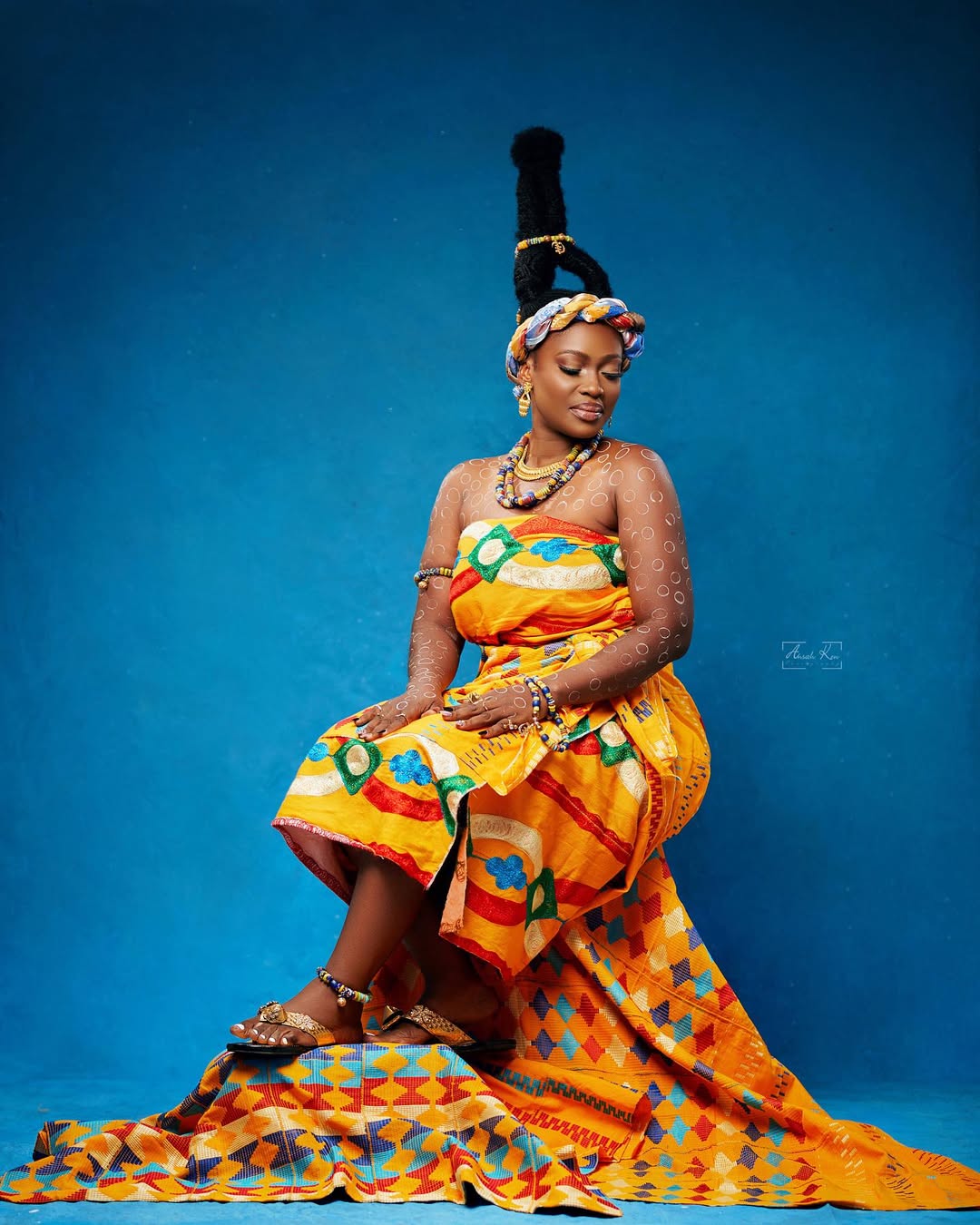
Kente belongs to the world now, in the way that all powerful things eventually travel beyond their origin. It has been worn in the United States Capitol, on graduation stoles across the African diaspora, and on fashion runways from Paris to Lagos. None of that changes what it means when a Fante woman in Cape Coast chooses her cloth for her daughter’s engagement ceremony, selects the pattern whose name carries the family’s aspiration, and drapes it in the configuration that her mother and her mother’s mother knew how to read.
The five styles above are not menu options. They are positions in a language that has been spoken continuously on the Gold Coast for centuries. The bridal two-piece drape, the structured Kaba and Slit, the Kente gown, the lace-and-Kente combination, and the queen mother’s ceremonial configuration are each a distinct sentence in that language. Every Fante woman who wears them is making a statement. She is always speaking to those who can hear it.
Frequently Asked Questions
1. What is Kente cloth, and where does it come from?
Kente is a hand-woven Ghanaian textile made from silk and cotton strips, woven on a horizontal strip loom and sewn together into a cloth. It was developed by the Akan people, including the Asante and the Fante, and originates from the Ashanti Region of Ghana. In December 2024, UNESCO recognised Kente as an Intangible Cultural Heritage of Humanity.
2. How do Fante women traditionally wear Kente?
Fante women wear Kente in several configurations depending on the occasion. The most traditional is the two-piece drape, where one cloth forms a wrap-around skirt, and another is used as a shawl. Contemporary styles include the Kaba and Slit, structured gowns, and Kente and lace combinations, all of which maintain the cloth’s pattern and colour grammar.
3. What do Kente colours mean for Fante women?
Each colour in a Kente cloth carries a specific meaning in Akan cultural grammar. Gold signifies royalty and spiritual purity. Green expresses life and growth. Red carries political passion and sacrifice. Blue means wisdom and patience. White holds purity. Black represents union with ancestors and spiritual awareness. Fante women select colours according to the specific occasion and the statement they wish to make.
4. What is the role of the Fante queen mother in the Kente dress?
The Ohemaa, or queen mother, is the head of the female lineage in Fante society and one of the most powerful political figures in the Akan matrilineal system. At formal ceremonies, she wears the highest register of Kente, typically the Adweneasa pattern in a full traditional drape with gold accessories. Her Kente configuration is itself a form of governance and institutional authority.
5. What occasions call for Kente in Fante culture?
Kente is traditionally reserved for occasions of cultural weight: naming ceremonies, puberty rites, graduations, engagements, traditional weddings, funerals, and ancestral remembrance ceremonies. The specific cloth chosen, including its pattern, name, and colour combination, is calibrated precisely to the occasion.
6. Is Kente worn differently by Fante and Ashanti women?
While both the Fante and Ashanti are Akan people and share the Kente tradition, Fante Kente patterns include designs that reflect specifically Fante values, history, and coastal cultural identity. The wearing configurations are broadly similar, but the specific cloth choices and pattern names used for ceremonies may differ. The cultural literacy required to read Kente correctly belongs to the specific community from which the cloth comes.