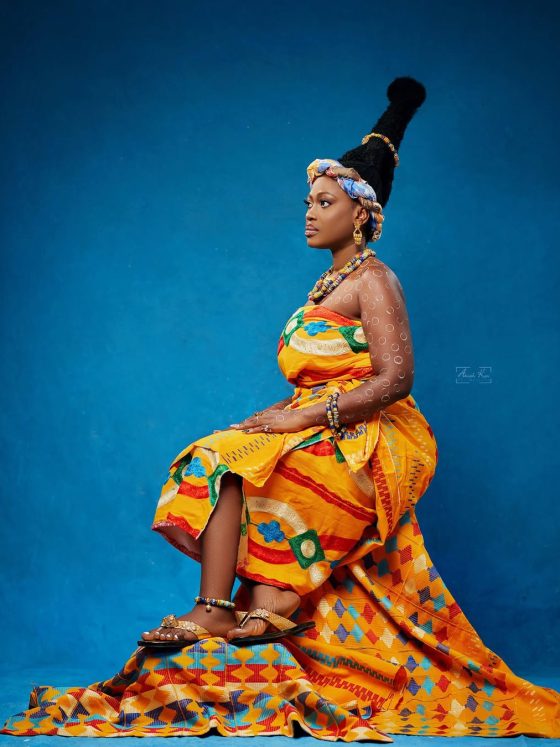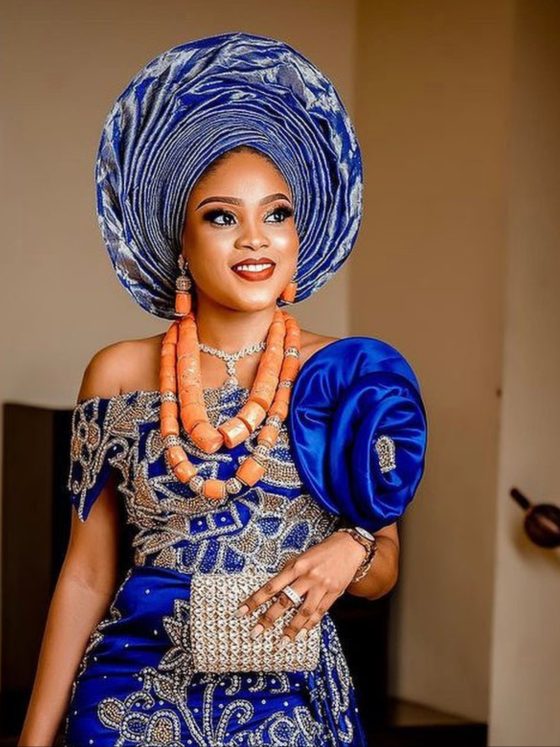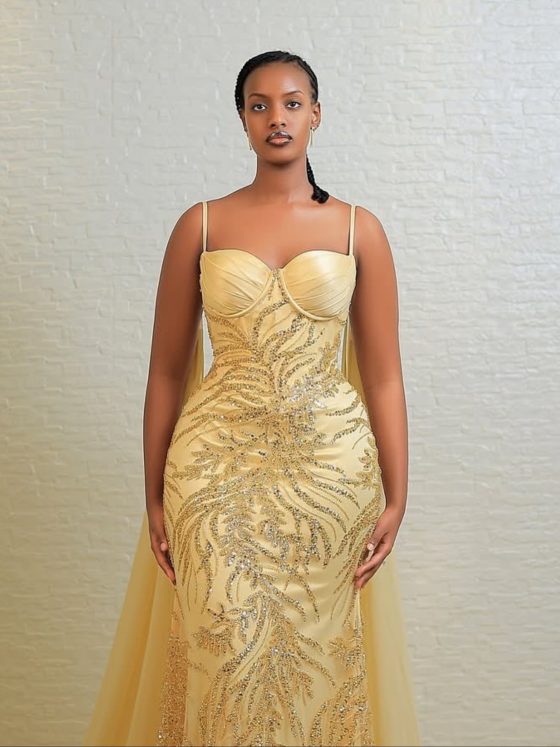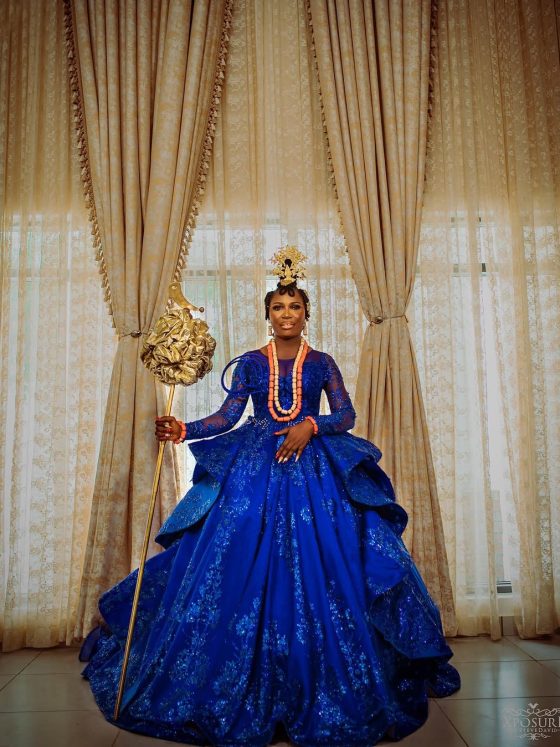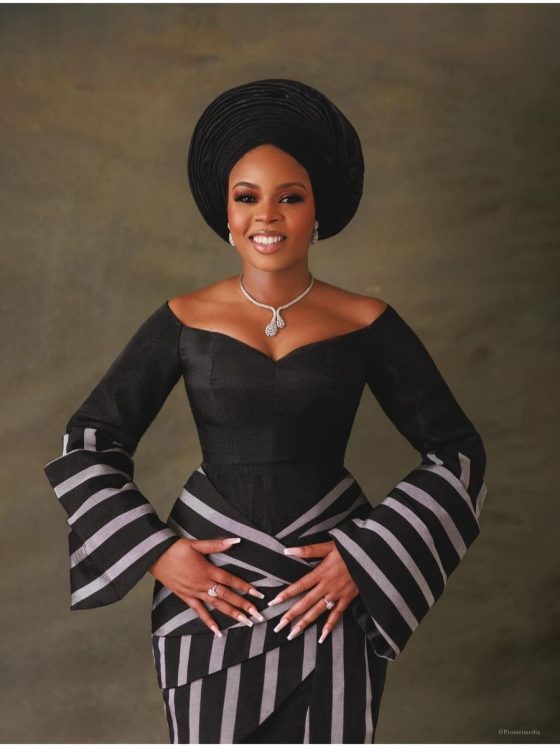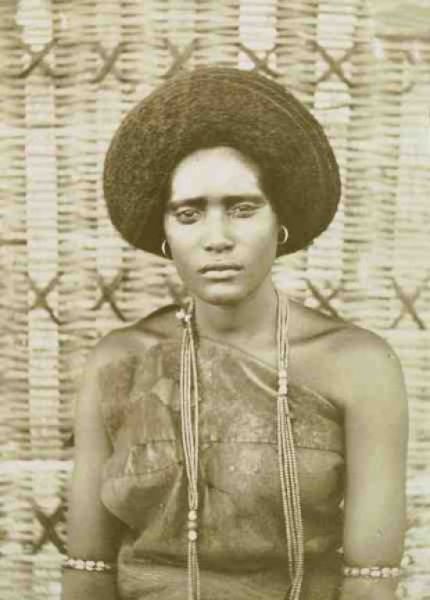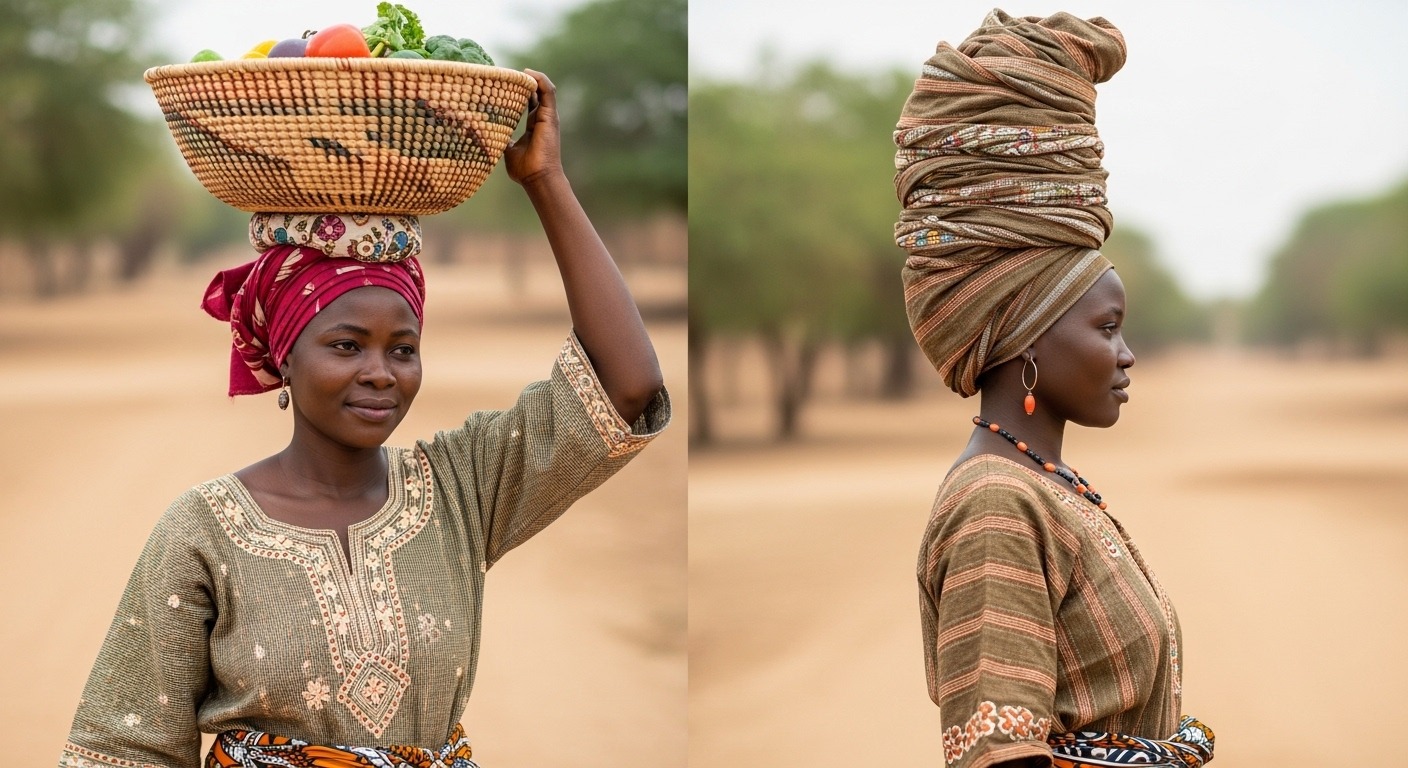
There is a kingdom in the dry savannah of northern Ghana that has been governing itself since the fourteenth century. The Kingdom of Dagbon, ruled by the Yaa Naa from his court in Yendi, is one of the longest-standing unbroken political institutions in West Africa. Its history is carried not in books alone but in drums, in oral tradition, and in cloth. Before an elder arrives at a ceremony, before a chief takes his seat on the skins that constitute the Dagbon throne, before a young woman presents herself at the Damba festival, their dress has already told the community everything it needs to know.
The Dagomba are the dominant ethnic group of northern Ghana. They speak Dagbani, the most widely spoken language in the region, and they are organised under one of the most hierarchical chieftaincy systems on the African continent, with the Yaa Naa as paramount king and a tiered structure of chiefs extending through every community in Dagbon. As Encyclopaedia Britannica documents, the Dagomba kingdom was founded by northern invaders in the fourteenth century; the population is divided into commoners and chiefly families; and patrilineal descent governs most inheritance, while matrilineal descent is recognised as contributing to an individual’s spiritual attributes. Both lines matter. Both are visible in how people dress.
The Dagomba are one of the few African peoples who reserve royal titles specifically for women. The Gundo Naa is the head of all female chiefs in Dagbon, holding regal lands and presiding over female royals with male subordinates. The princess Yennenga, daughter of Naa Gbewaa, is regarded as the founding mother of the Mossi kingdoms that now constitute a significant portion of Burkina Faso. As World History Edu’s study of the Kingdom of Dagbon records, Dagbon’s rise brought significant contributions to education, health, and craftsmanship. The University of Moliyili was established in 1700. Dagomba women have never been peripheral to the story of their kingdom. Their dress reflects that centrality.
Five traditional styles for Dagomba women are explained through the history of Dagbon, the smock, the Damba festival, and centuries of royal dress culture.
The Cloth Behind the Styles: What the Smock Carries
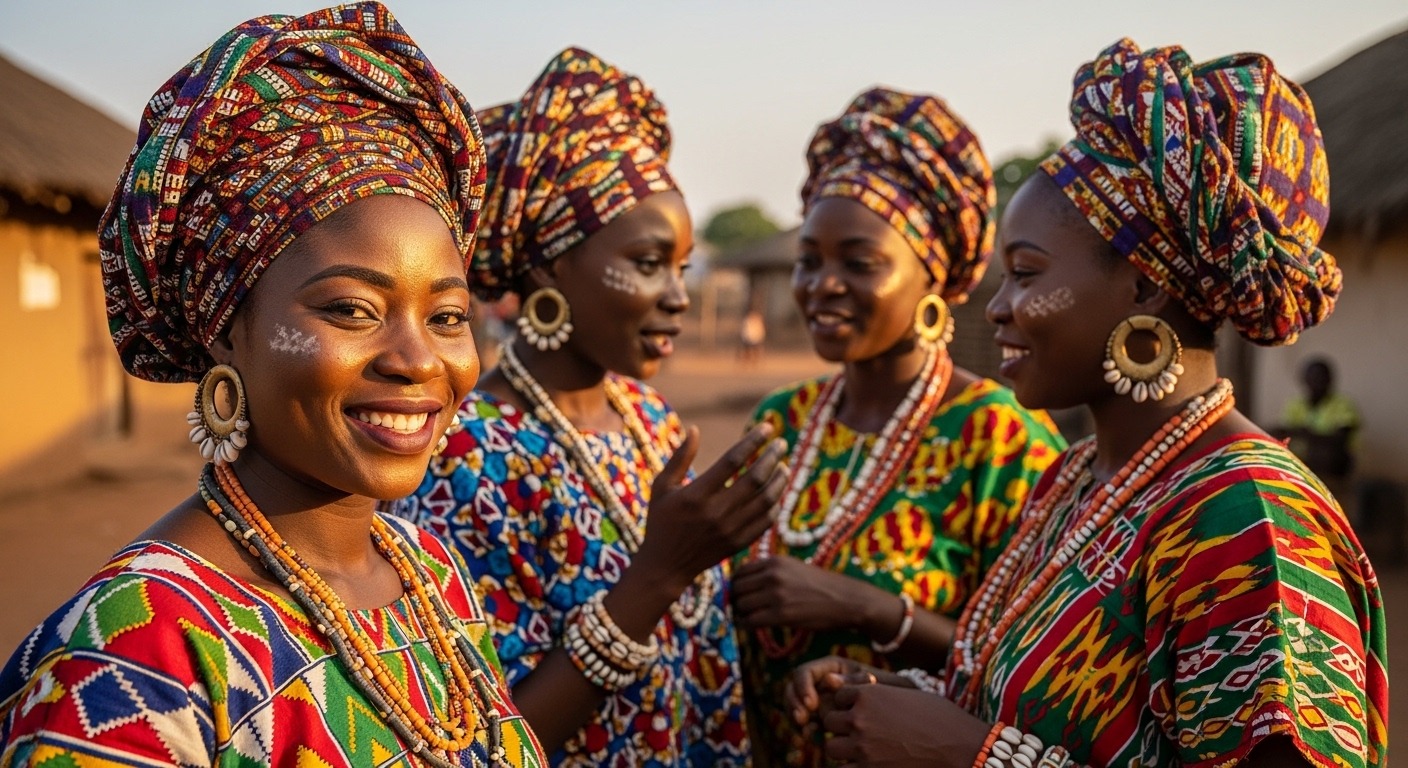
The traditional garment of Dagbon is the smock, known in Dagbani as Tani, with the male version called Bin’gmaa and the female version Bin’mangli. As documented in 101 Last Tribes, the Dagomba people, Dagomba women wear the Bin’mangli on special occasions, including festivals, funerals, and weddings. The smock is woven from cotton threads that are stretched, dyed in different colours, dried, and then woven into four-inch strips on handlooms by men, sewn together into the distinctive striped cloth that signals northern Ghana to anyone who encounters it. Before the introduction of trade networks, the Dagomba dressed in animal skins. The smock arrived with the trade. They made it theirs completely.
The smock’s shape is itself a cultural reference. As the peer-reviewed study in MedCrave Journal of Textile Engineering and Fashion Technology documents, the smock is designed to mirror the shape of the dondon drum of the Dagomba: two broader ends and a trimmer middle stitched together into a loose, flowing garment. The cloth speaks the culture before it is worn. Its production is a shared community act: women spin and dye the cotton threads; men weave the strips on handlooms. The smock was introduced to Dagbon during the reign of Yaa Naa Zanjina, the first Muslim ruler of the kingdom, having arrived from royal and warrior contexts, where it served as ceremonial dress and battlefield protection.
The headgear worn with the smock is also a precise form of communication. As Dagbon Kingdom’s documentation of traditional hats explains, the type of hat a person wears depends on their social status, and certain hats are reserved for specific individuals. Wearing the wrong hat, or wearing a hat incorrectly, signals either ignorance or defiance. Women use the bobga headscarf as their primary head covering with the smock. How it is tied and at what angle communicates its own register of meaning to those within the culture.
1. The Bin’mangli: The Full Female Smock and What It Declares
The Bin’mangli is the foundational garment of Dagomba women’s traditional dress and the one that most clearly declares cultural belonging. It is the female version of the smock: a loose-fitting, short-sleeved top constructed from hand-woven striped cotton strips, worn over a long wrapper or paired with wide-leg trousers called kurugu. It is completed with a bobga headscarf and footwear called ‘mugri’. When all elements are present and correctly worn, the outfit communicates cultural fluency, respect for the occasion, and belonging to Dagbon’s social order.
The Bin’mangli is not a garment of restraint. Its looseness is deliberate, providing movement and breathability in the dry savannah heat, while the distinctive stripe pattern immediately and unambiguously identifies the wearer’s cultural home. A Dagomba woman who appears at a gathering in her Bin’mangli is placing herself precisely within Dagbon, claiming her identity in the language her community has used for generations.
The colour combinations of the smock carry social information. Darker, more complex stripe combinations signal higher occasions. Embroidery around the neckline, which is more common in more formal versions, communicates the wearer’s investment in the event. As Omiren Styles has argued in its analysis of clothing as cultural declaration, garments in African cultural contexts carry social, spiritual, and communal weight that mainstream fashion discourse is only beginning to acknowledge. The Bin’mangli has carried that weight for centuries.
2. The Kpargu Gown: Royal Weight in Every Thread
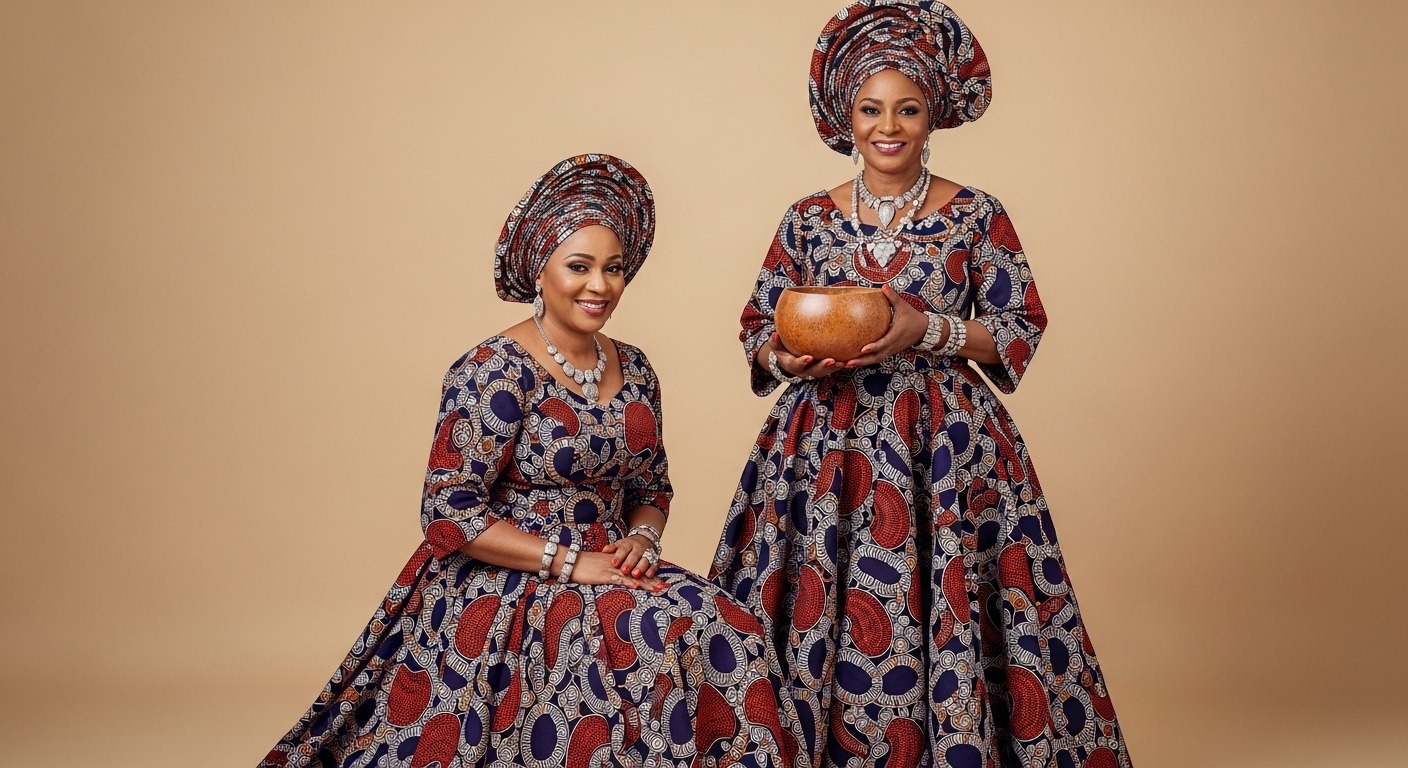
Where the Bin’mangli is the everyday register of Dagomba women’s dress, the Kpargu occupies ceremonial territory. The Kpargu is a long gown with extended, broad sleeves that cover the full length of the arms, with a hem that sweeps close to the floor. It is worn at occasions of significant social weight: chieftaincy installations, royal gatherings, formal ceremonies at the Yaa Naa’s palace, and events where the full register of Dagbon’s formal culture must be present.
There are two categories of Kpargu. The Nam-Kpargu is sewn from plain white fabric, without any embroidery or decoration. It serves two purposes: it elevates a person from commoner or prince into the Nam, the chieftaincy, and it functions as the burial shroud of a deceased chief. The Nam-Kpargu cannot be purchased in any market. It is presented, not bought. As the MedCrave Journal study on smock aesthetics in northern Ghana documents, the Nam-Kpargu is a purely ceremonial gown made from plain white fabric and cannot be purchased on the open market. The ordinary Kpargu carries embroidery around the neck, pockets, and back and can be made from any fabric.
Women who wear the Kpargu at formal Dagbon events invoke this entire register of royal meaning. Even when the gown they wear is not the Nam-Kpargu, the silhouette and the occasion together create a frame of reference that every Dagomba present can read. Length communicates authority. The sweeping hem says, ‘I am here for something that matters.’ The extended sleeves say, ‘This occasion deserves my full presentation.’
3. The Damba Festival Smock: Identity as Celebration
The Damba festival is the largest cultural celebration in northern Ghana, observed annually by the Dagomba and related peoples. Its name derives from the Dagbani language and corresponds to the third month of the Dagomba lunar calendar, which aligns with the Islamic month of Rabia al-Awwal. The festival began as a commemoration of the birth and naming of the Prophet Muhammad. Still, over time, its central function shifted to glorifying the heritage, history, and chieftaincy of Dagbon and related kingdoms. Dressing during Damba is not incidental. It is obligatory.
The smock is the dress code of the Damba festival. As 101 Last Tribes documents, the Damba festival content tends to glorify the chieftaincy rather than Islamic motifs, and the smock is the garment through which that cultural glorification is expressed. Women who appear at Damba in full Bin’mangli dress are performing their position within Dagbon’s ceremonial calendar. They are not spectators. They are participants in an institution.
The Binchera Damba is one of the festival’s most distinctive events: a smock showcase for young people held at various palaces across Dagbon, where participants wear fashionable or deliberately worn smocks in a torn-couture tradition that blends heritage with self-expression. The Yila Bohambu, nightly musical rehearsals led by court ladies across Dagbon’s major palaces during the festival’s first ten days, also require specific dress. Court ladies who lead these rehearsals appear in full traditional smock dress, their headwear and accessories communicating their position in the palace hierarchy. Every element is read. Nothing at Damba is worn without awareness of what it says.
|
4. The Smock Kaba and Slit: Dagbon Speaks a Wider Language
It is in the women’s domain that much of the innovation in smock fabric is realised. Women in northern Ghana wear the smock material in multiple configurations: as a blouse over a cloth tied round the lower half of the body, as a Kaba-and-slit ensemble, and as a one-piece flowing dress from shoulder to heel. Each configuration extends the cloth’s cultural authority into a new context without altering what it communicates to those who can read it.
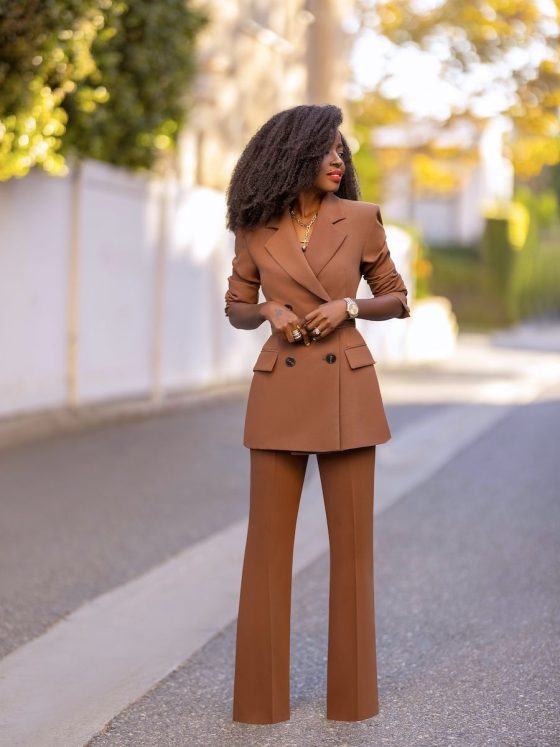
The Kaba is a fitted or semi-fitted blouse sewn from smock fabric, worn with a slit skirt in the same material. The result is an outfit that is immediately identifiable as northern Ghanaian in origin while using a construction format that moves across formal mixed-cultural settings: urban offices, national events, diaspora gatherings, and ceremonies where not everyone present shares fluency in Dagbon’s dress grammar. As Omiren Styles has argued in its analysis of why culture is the foundation of style, social identity in African dress is communicated through the precise combination of garments, accessories, and occasion-reading. The smock Kaba and slit compress all of that precision into a silhouette that travels further than the traditional full smock, without losing what it carries.
Women who wear this configuration are performing a specific kind of cultural intelligence: dressing for two audiences simultaneously. Those from Dagbon read the smock pattern and understand. Those from outside read the formality of the Kaba silhouette and respond to that. The cloth carries both messages at once because it has always carried more than one thing.
5. The Bridal and Ceremonial Ensemble: Arrival Made Visible
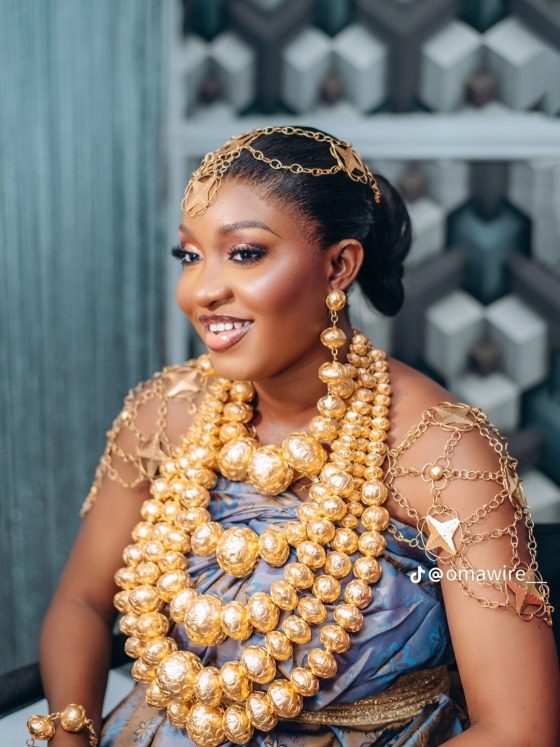
At a Dagomba traditional ceremony, whether a wedding, a naming, a chieftaincy installation, or a festival durbar, the woman who is most fully dressed is the woman at the centre of the occasion. The bridal and ceremonial configuration combines the finest available Bin’mangli or kpargu with layered beadwork, a precisely tied bobga headscarf or formal headwrap, and accessories that convey the social standing of both the wearer and her family to all present.
Beads in northern Ghanaian ceremonial dress carry meanings similar to those found across West Africa: they signal wealth, readiness, and the seriousness of the occasion. A Dagomba woman at her traditional wedding is adorned with care. Her dress, her beads, and her headwear are selected together as a complete argument. This is who I am, this is who my family is, and this occasion deserves all of it.
The Dagomba royal structure gives this dress additional weight when the woman at the centre holds or is connected to a royal title. The Gundo Naa and other female title holders appear at ceremonies in configurations that signal their rank to those who can read them. The headgear, the embroidery of the Kpargu, and the quality of the smock fabric itself all communicate position within the kingdom’s hierarchy. As Omiren Styles has documented in its analysis of cultural resistance and style, communities use clothing to protect dignity, assert identity, and contest the power of outside forces to define them. Dagomba women at the ceremony have been doing this since the kingdom was founded.
|
Also Read on Omiren Styles:
- When Dressing Becomes Declaration: Clothing as Cultural Identity
- Why Culture Is the Foundation of Style in African and Global Fashion
- How Cultural Resistance Shaped the World’s Most Powerful Style Movements
- The Art of Dressing Well Across Cultures: What Global Style Actually Teaches Us
Five Styles. One Kingdom. Centuries of Dressing with Intent.
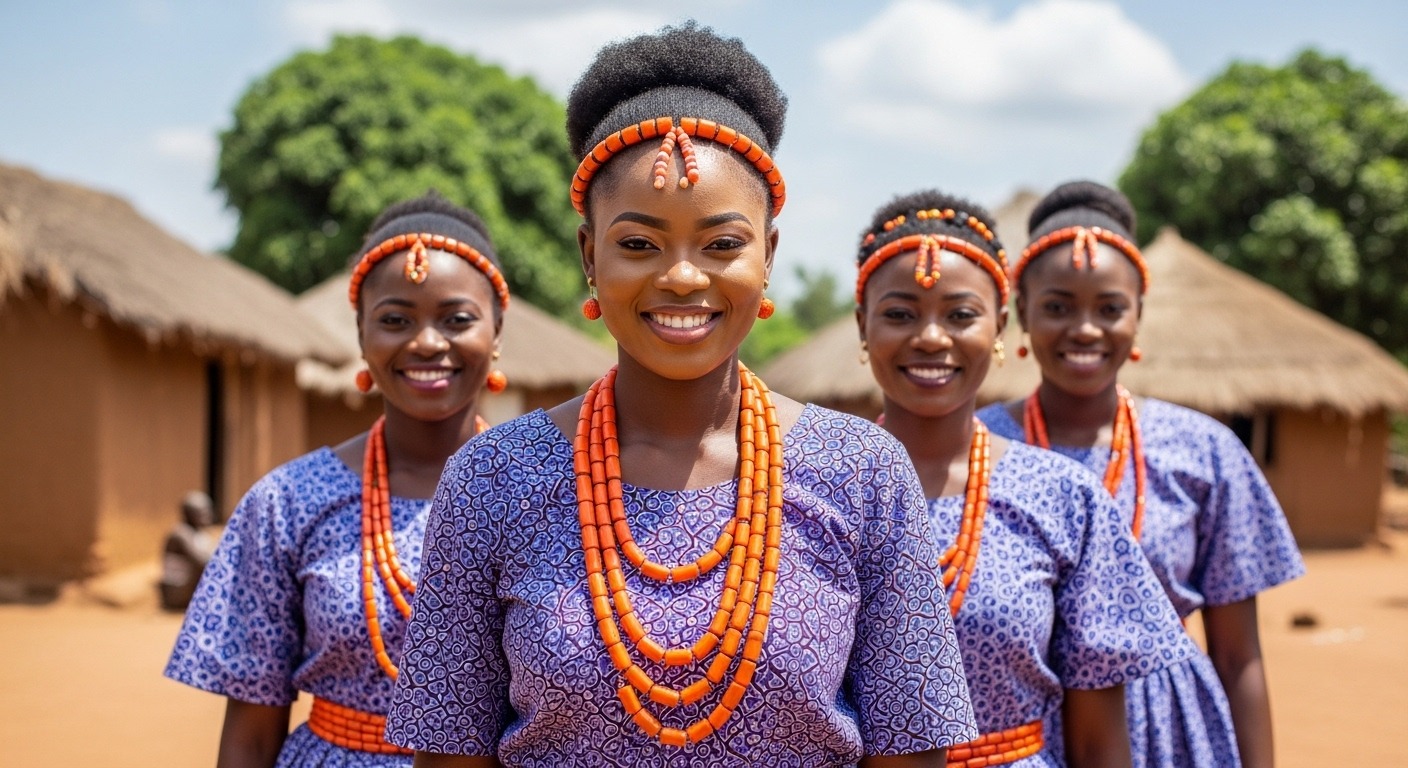
The Dagomba have been governing northern Ghana since the fourteenth century. They established the University of Moliyili in 1700, reserved royal titles for women long before most of the world was having that conversation, and produced in Yennenga a figure whose legacy stretches across Burkina Faso into the present. Their dress has always been as organised as their political system: hierarchical, communicative, and rooted in a cultural logic that operates on multiple levels simultaneously.
The five styles examined here are five registers of that logic. The Bin’mangli declares cultural belonging in everyday life. The Kpargu invokes royal authority at formal occasions. The Damba festival smock places the wearer inside Dagbon’s living ceremonial calendar. The Kaba and slit translate northern Ghanaian identity for wider audiences without diluting it. The bridal and ceremonial ensemble makes a woman’s arrival at a significant occasion fully visible. Each one is a Dagomba woman’s dress doing what a Dagomba dress has always done: saying exactly who a woman is, exactly where she stands, and exactly what the occasion demands of her.
Frequently Asked Questions
1. What is the traditional dress of Dagomba women?
The traditional dress of Dagomba women is the Bin’mangli, the female version of the smock known in Dagbani as Tani. It is a loose-fitting garment made from hand-woven striped cotton strips, worn with a wrapper or trousers, a bobga headscarf, and footwear called mugri. The Kpargu, a long ceremonial gown, is worn at formal occasions and royal events.
2. What is the Bin’mangli?
Bin’mangli is the Dagbani name for the female smock worn by Dagomba women in northern Ghana. It is the female equivalent of the bingmaa worn by men. Both are versions of the Ghanaian smock, known variously as fugu or batakari, which is one of Ghana’s two national traditional garments, alongside Kente cloth.
3. What is the Damba festival, and how does dress feature in it?
The Damba festival is the largest cultural celebration in northern Ghana, observed annually by the Dagomba and related peoples. The smock is the festival’s dress code. At the Binchera Damba, young people display fashionable smock styles at palace events. Court ladies who lead the nightly Yila Bohambu rehearsals at major palaces appear in full traditional smock dress throughout the festival cycle.
4. Who is the Gundo Naa?
The Gundo Naa is the head of all female chiefs in the Kingdom of Dagbon. The title is reserved exclusively for women, who rule with male subordinates and own regal lands. The Dagomba are one of the few African peoples with reserved royal titles for women. The Gundo Naa appears at ceremonies in a dress that communicates her position within Dagbon’s royal hierarchy.
5. What does the smock represent in Dagomba culture?
The smock represents cultural identity, social status, and belonging to the Dagbon community. Different stripe patterns, colours, and embroidery communicate the formality of the occasion and the wearer’s standing. The Nam-Kpargu variant in plain white is reserved for chieftaincy installation and the burial of chiefs. The smock is never worn casually at important events. Its appearance signals that the occasion demands full cultural presence.
How do Dagomba women adapt the smock dress for modern contexts?
Dagomba women have developed the smock Kaba and slit, in which smock fabric is sewn into a fitted blouse and skirt, and into a full-length smock gown from shoulder to ankle. These adaptations maintain the cultural authority of the smock fabric while creating silhouettes that travel across urban, professional, and diaspora settings without requiring the wearer to abandon northern Ghanaian identity.