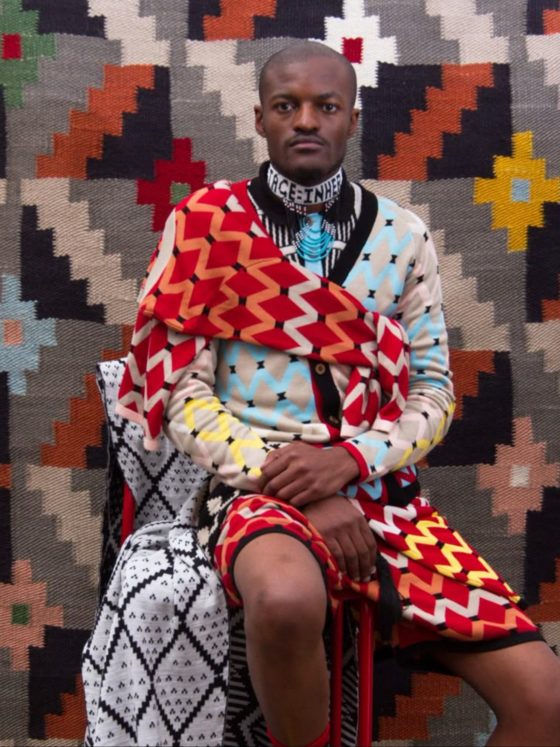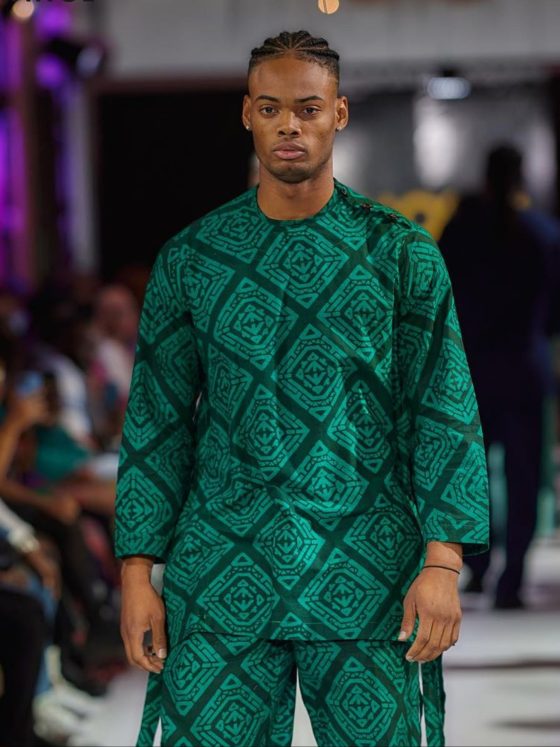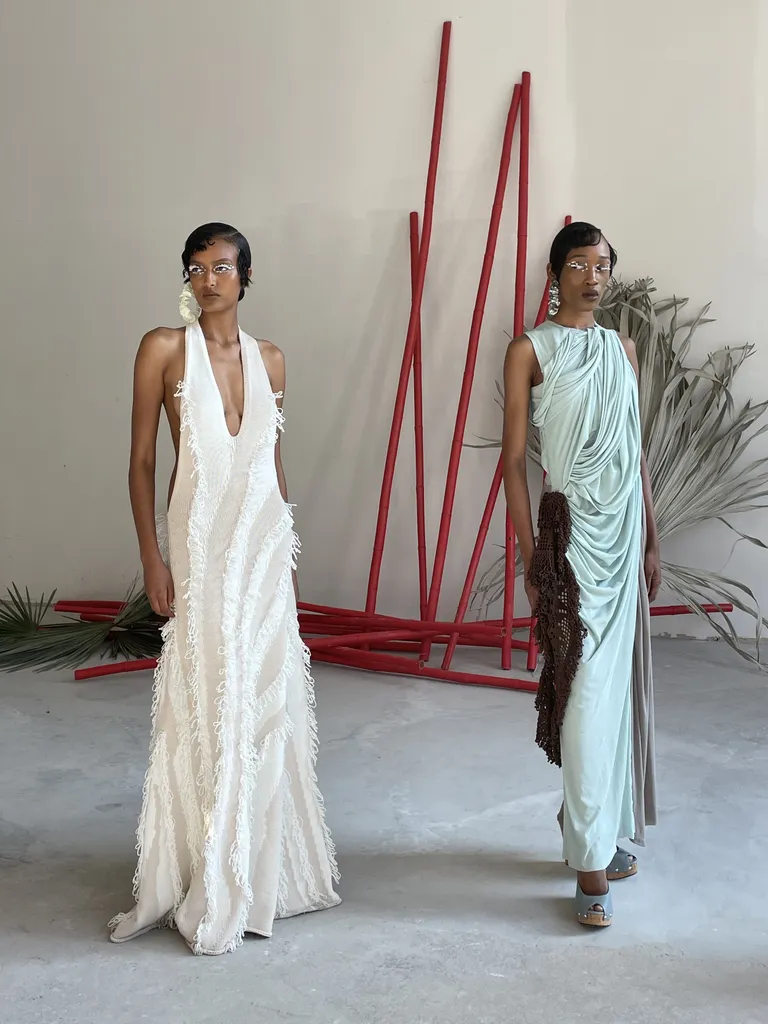
For decades, the Caribbean has functioned as fashion’s mood board. The fantasy of colour and ease, embodied in linen and feathers, evokes a sense of warmth. Resort collections borrowed their palette. Runway shows imported their atmosphere. The industry took the aesthetic and left the intelligence behind.
Fantasies flatten places. And the Caribbean is not flat.
It is a region of extraordinary intellectual complexity, shaped by Indigenous cosmologies, African spiritual traditions, French and British colonial legal systems, revolutionary politics, and a diaspora that spans every major city in the world. Its dress cultures are not decorative. They are documents. What the global fashion system has consistently extracted is the surface. What it has consistently ignored is the depth.
That is changing. Across New York, London, Paris, and Milan, a generation of Caribbean-rooted designers is not exporting tropical aesthetics. They are translating memory into structure, ritual into cut, landscape into print systems that function as maps of inheritance rather than decorations of origin.
This is not resort wear. This is inheritance, engineered by people who understand exactly what was taken and have chosen to build something irreducible in its place.
Guyana as Blueprint: Marrisa Wilson
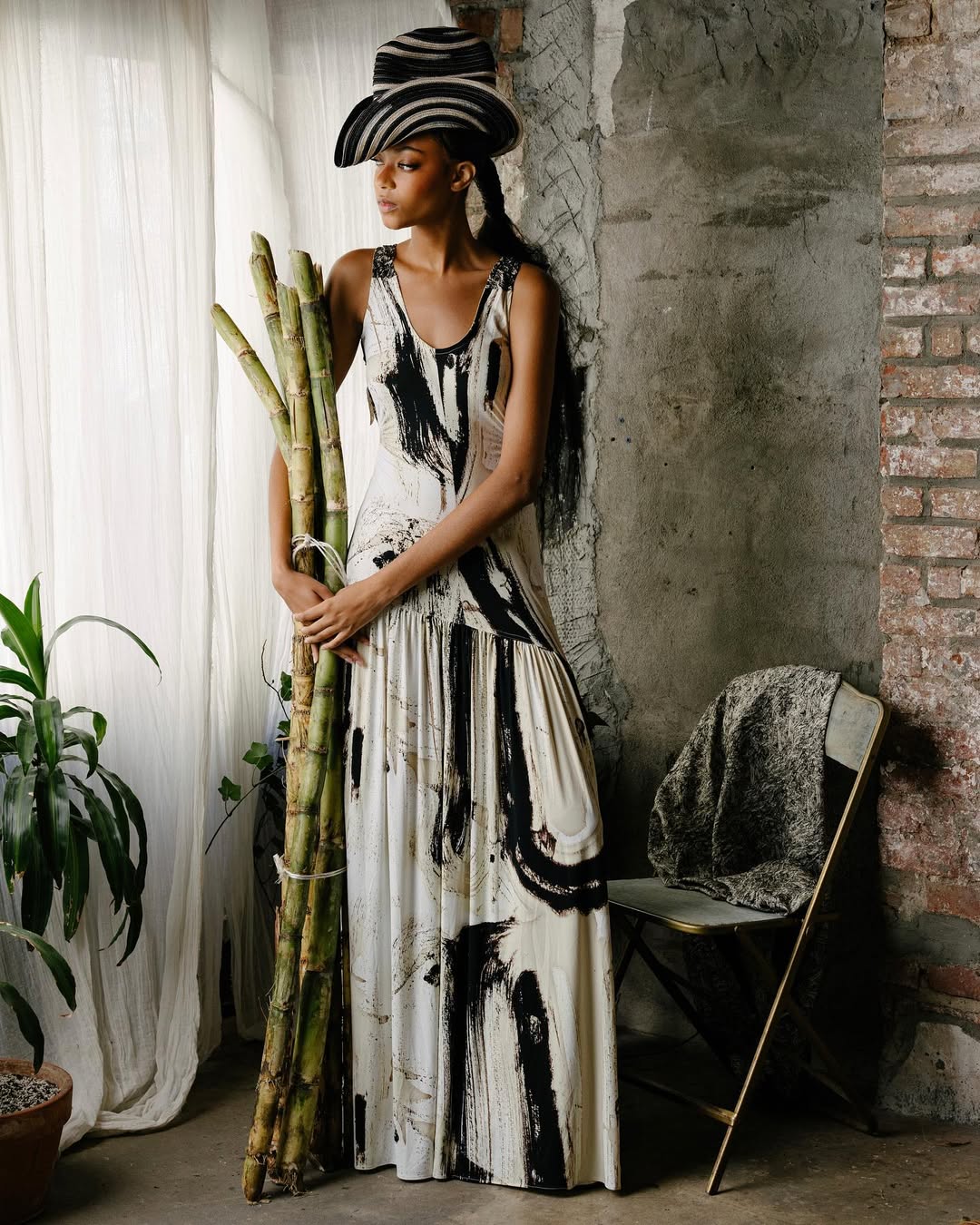
Marrisa Wilson, the CFDA-recognised, first-generation Guyanese-American designer who founded her New York label in 2016, approaches Guyana not as nostalgia but as active geography. Her collections begin with hand-painted prints developed entirely in-house, each one an original work that translates landscape, music, and cultural memory into textile before a single pattern piece is cut.
Her Spring/Summer 2024 collection, Wild Coast, drew from two specific Guyanese geographies: the Rupununi savannah in the country’s south, a remote grassland of Indigenous cowboys and cattle culture, and the coastal plain where the Atlantic meets the tropics and the Guyanese cast-net fishing tradition has defined daily life for generations. These are not metaphors. Wilson developed garment-dyed cotton netting specifically to honour the cast-net technique, translating a fishing practice into a construction method. The structural reference is not applied. It is built into the fabric itself.
The prints did not decorate the collection. They mapped it. Terrain became pattern. Shoreline became silhouette tension. The meeting of savannah and sea produced cuts that held the opposition between sharp tailoring and fluid movement without resolving it, because the landscape that inspired them does not resolve that tension either.
Wilson has spoken directly about what this practice requires and what it resists. “The Caribbean is not one monolithic culture,” TheGrio she has said. Her work refuses the flattening that the fashion industry’s appetite for Caribbean imagery consistently demands. The colours are saturated. The construction is architectural. The garments carry the specific weight of a place rendered with precision rather than sentiment, and that precision is what separates cultural authorship from cultural borrowing.
Wilson won the 2023 FGI Rising Star Award for Ready-to-Wear, one of the few Black women designers to present regularly at New York Fashion Week. That positioning matters not as biography but as context: her presence at the table the industry built is not incidental to her work. It is the condition her work directly addresses.
Ritual as Couture: Rachel Scott and Diotima
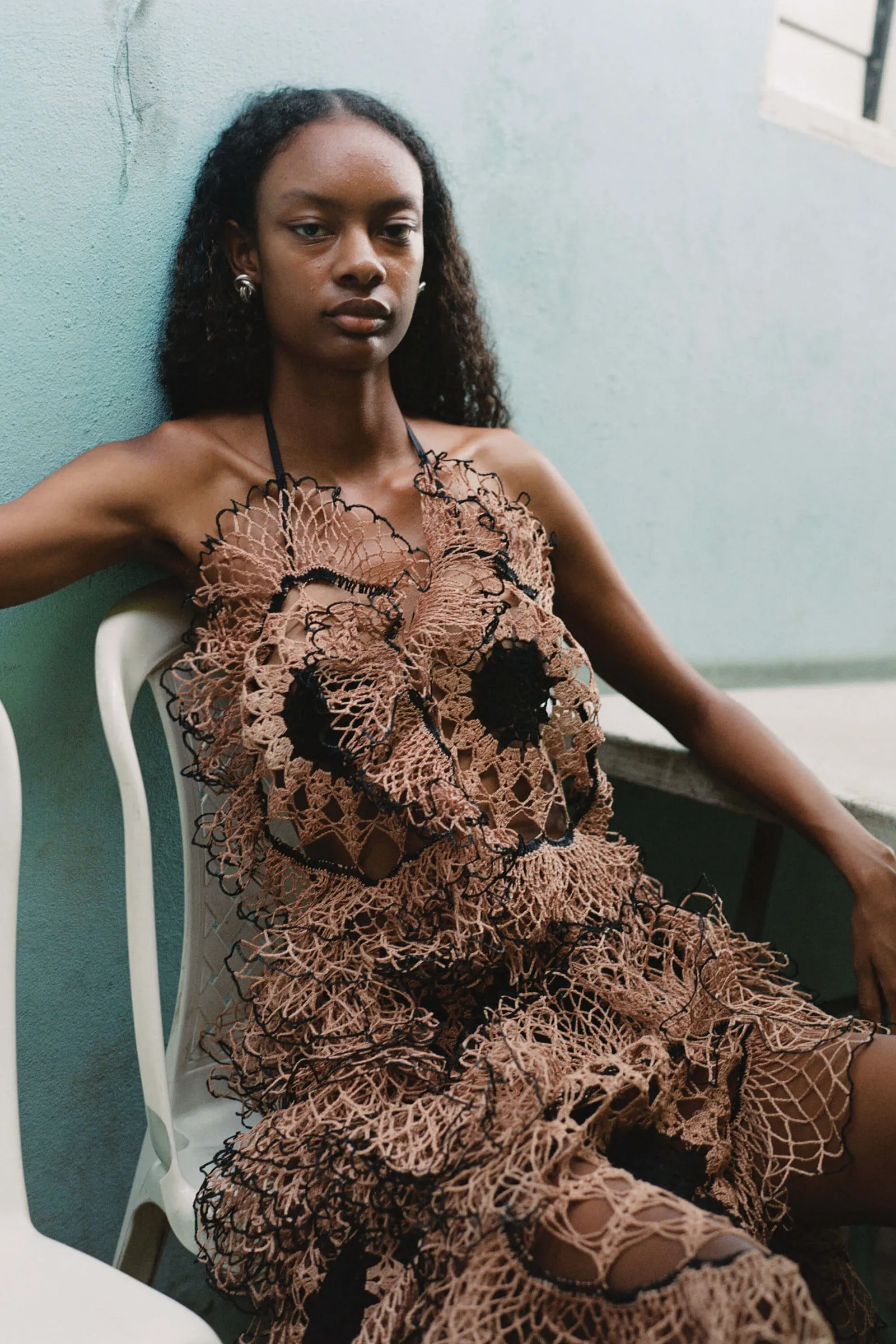
Jamaican-born designer Rachel Scott, founder of Diotima, approaches heritage through ceremony.
Her collections reference the Jamaican Nine-Night wake, a mourning ritual blending African spirituality and Caribbean cosmology. This is not a superficial aesthetic nod. The garments carry emotional density.
Crochet has long been associated with domestic labour across the Caribbean, becoming a high design in Scott’s hands. Hand-crocheted black dresses appear on global runways with an authority that repositions craft as canon.
Openwork lace reads as vulnerability. Structured black silhouettes suggest dignity and control. Grief is not stylised. It is respected.
Scott does not exoticise Jamaica.
She structures it.
Haiti: Architecture, Survival, and Haute Form
If Jamaica offers ritual, Haiti offers resilience rendered in line.
Haitian designers and diaspora creatives increasingly draw from the nation’s layered visual culture, from ironwork balconies in Port-au-Prince to Vodou symbolism and revolutionary history.
The Caribbean’s first Black republic carries architectural drama that translates powerfully into fashion. Ornate curves become corsetry lines. Iron latticework becomes cut-out patterning. Indigo references echo artisanal dye traditions.
Haitian-rooted design does not whisper. It asserts.
In diaspora ateliers, Haiti is no longer framed solely in terms of political hardship. It is framed as a source of artistic rigour and revolutionary imagination.
Trinidad: Carnival Beyond Spectacle
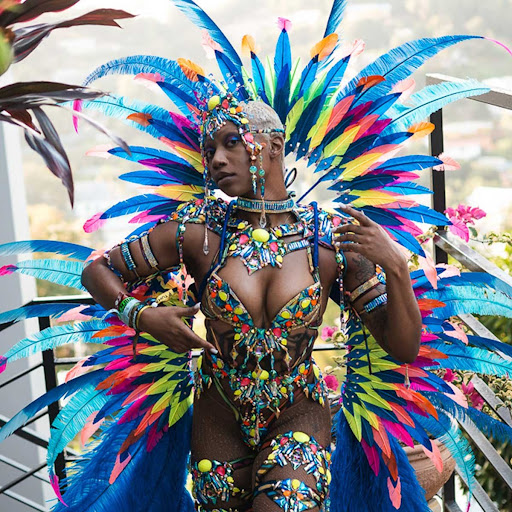
Trinidad and Tobago’s Carnival is one of the most visually explosive cultural events in the world. Feathers, wire bending, beadwork, and sequins are all crafted with extraordinary care.
But contemporary Trinidadian designers are separating Carnival technique from spectacle and integrating it into luxury frameworks.
Wire structures become avant-garde silhouettes. Feather placement becomes a matter of architectural balance rather than maximalist excess. Beadwork is scaled down into precision detailing.
The disciplines behind Carnival costumes are engineering, physics, and endurance, which translate seamlessly into high fashion once spectacle is recalibrated.
Trinidad offers more than festivity.
It offers structural experimentation.
Barbados: Minimalism with Depth
Barbadian designers often move in a different register — one less overtly performative, more restrained.
Barbados, with its layered British colonial history and Afro-Caribbean identity, produces designers who merge classic tailoring with subtle island codes. Linen suiting carries unexpected cut-outs. Hand-finished edges interrupt clean silhouettes, referencing artisanal technique.
The Caribbean is quiet here.
It is embedded.
This quieter expression is equally radical. It refuses the expectation that Caribbean design must perform vibrancy to be recognised.
Beyond Resortwear
Global buyers still attempt to categorise Caribbean fashion as seasonal, which is ideal for vacation wardrobes and summer capsules.
Diaspora designers are dismantling that limitation.
A black crochet gown from Diotima belongs in a museum archive. A Marissa Wilson tailored coat belongs in a boardroom. The Caribbean is not a climate.
It is culture.
And culture does not expire at the end of summer.
Dual Identity as Design Advantage
Diaspora designers navigate multiple systems simultaneously. They understand Western luxury codes to be fabric weight, tailoring precision, and runway pacing, while carrying Caribbean visual memory internally.
This approach produces design tension.
Garments feel international but not generic. They carry specificity without insularity.
The Caribbean becomes a blueprint, not branding.
READ ALSO:
- Maasai Beadwork: Meaning, Symbolism, and the Language of Identity
- Cultural Confidence Is the New Luxury: Why Identity-Driven Dressing Defines 2026
Craft as Infrastructure
Another shift is economic.
Designers rooted in the Caribbean are reinvesting in regional crafts such as crochet cooperatives, beadwork ateliers, and textile artisans. Instead of abstract inspiration, they establish material relationships.
This process recalibrates power.
Luxury is no longer built solely in European ateliers with Caribbean reference. It is built in collaboration with Caribbean hands.
Craft becomes infrastructure, not embellishment.
The Atlantic Reimagined
The Atlantic Ocean once symbolised rupture — colonial trade, forced displacement, fractured identities.
Today, Caribbean diaspora designers use that geography differently. Coastlines become metaphors. Migration becomes silhouette logic. The archipelago becomes interconnected rather than fragmented.
The runway becomes the site of reclamation.
The West Indies are no longer peripheral to fashion discourse.
They are shaping it.
What This Signals for Luxury
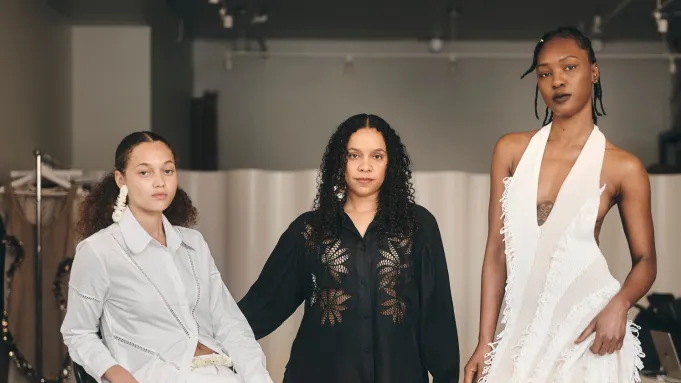
The rise of Caribbean-rooted designers signals a broader shift globally.
Audiences are increasingly literate. They seek depth, not decoration. They recognise when heritage is superficial versus structural.
Caribbean diaspora designers succeed because they do not dilute complexity. They sharpen it.
They treat folklore as the foundation. Ritual as architecture. Landscape as design logic.
They do not soften the Caribbean for consumption.
They strengthen it for canon.
Conclusion
For years, the Caribbean was styled but rarely centred.
Now, from Guyana to Jamaica, from Haiti to Trinidad to Barbados, designers are repositioning the archipelago as a design authority.
The West Indies are not a backdrop.
They are blueprints.
And on the world stage, they are no longer performing paradise.
They are constructing power.
FAQs
- What defines Caribbean diaspora fashion?
It blends Caribbean cultural memory with ritual, landscape, craft, and the structure of global tailoring and runways.
- How is Caribbean design different from resort wear?
Resort wear sells climate. Caribbean diaspora design carries folklore, ceremony, migration, and political history.
- Why is crochet significant in Caribbean fashion?
Crochet is rooted in Caribbean domestic craft traditions and has now been elevated to couture by designers like Diotima.
- Which Caribbean designers are shaping global fashion weeks?
Designers like Marissa Wilson and Rachel Scott are reframing Caribbean heritage on international runways.
- Is Caribbean fashion political?
Yes. Many collections address migration, colonial history, rituals, and identity, turning folklore into contemporary cultural authority.