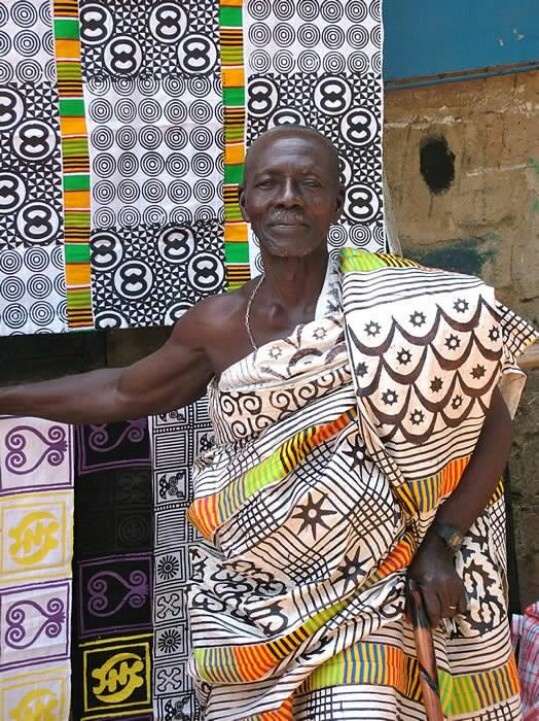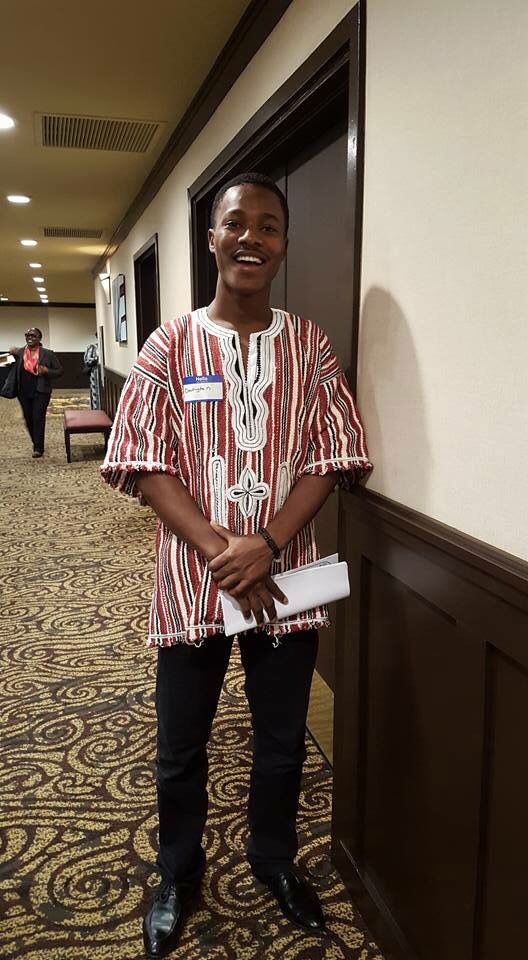
The elder does not announce himself. He walks into the room in country clothes, and the room adjusts. The fabric is white, sometimes the colour of raw cotton, sometimes deepened with indigo to a near-navy stripe along the edge. It moves the way only hand-woven cloth moves: with weight, with intention, with the specific gravity of something made by hand from seed to strip. Everyone in that room knows what they are looking at. Not a garment. A record.
Liberian country cloth, known in some communities as kondi-gulei and in the trans-border weaving tradition as kpokpo cloth, is the oldest continuously produced handwoven textile in West Africa. Woven on portable tripod looms unique to Liberia and Sierra Leone, produced in four-inch strips sewn into broader cloth, naturally dyed with indigo and kola nut, country cloth carries the full weight of Liberian civilisation. Long before Liberia had a name, the Gola, Mende, Vai, Lorma, Kpelle, Gio, and Mano peoples wove this cloth. They traded it across the region as currency. They gave it as dowry. The Chiefs wore it as a declaration. The Republic was formalised in 1847, but the country cloth had already been doing this work for centuries.
This article is the record of how that cloth was made. Who wore it? What it said. And why is it still the most important textile in Liberia in 2026?
Country cloth is Liberia’s oldest handwoven textile. Learn how the Gola, Lorma, Kpelle, and Vai people have used it to dress power, ceremony, and identity for centuries.
What Country Cloth Actually Is
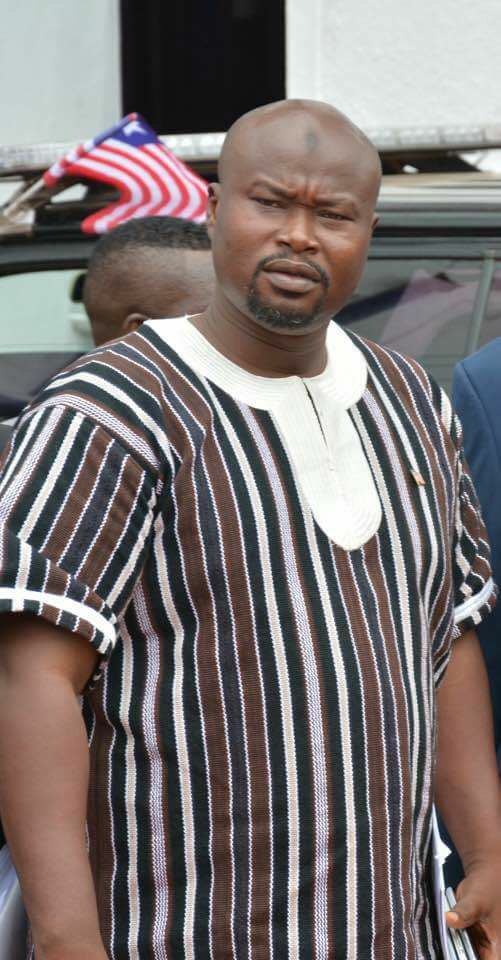
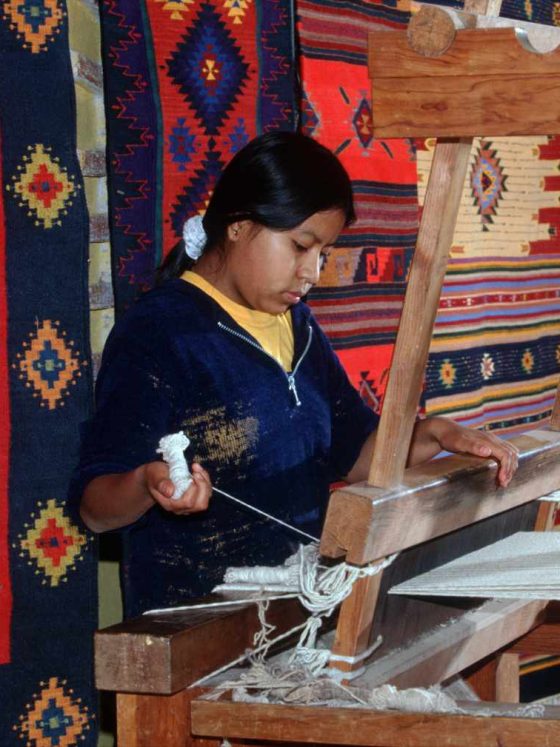
Country cloth is a hand-woven cotton textile produced using the strip-weaving method on narrow tripod looms. Raw cotton is cultivated locally, hand-spun on a drop spindle, then woven into strips approximately four inches wide. These strips are stitched together to form a larger cloth. The base colour is typically white or raw cotton beige. Natural dyes are then applied: primarily indigo blue, kola nut brown, or a combination of both to produce green-black striped effects. The cloth is never printed. Every pattern in country cloth is structural, created by the arrangement of warp and weft threads during weaving. As textile historians document in studies of African handwoven textiles, Liberia and Sierra Leone are among the few places on the continent where the regular use of hand-spun cotton from locally grown crops has continued into the modern era.
The Gola and Mende are credited as the oldest weavers of this tradition, with the kpokpo cloth name preserved in communities across Liberia, Sierra Leone, the Ivory Coast, Burkina Faso, Guinea, and Mali. The Vai, Lorma, Kpelle, Gio, and Mano also maintain active weaving communities. The tripod loom used in this tradition is unique to Liberia and Sierra Leone. No other African weaving community uses this particular loom structure. This makes Liberian country cloth not merely a regional textile tradition but a technically distinct one, with a material fingerprint found nowhere else on the continent.
The Currency That Became a Garment
Understanding country cloth requires understanding its former monetary status. Before Dutch wax prints arrived in the late 19th century and displaced handwoven cloth through sheer price advantage, country cloth circulated as currency across West Africa. Its value was set by the precision of the weave, the depth of the dye, and the consistency of the strip joins. Cloth that was irregular or carelessly dyed held less value. Flawless cloth passed a chief’s inspection and was used in dowry negotiations, trade agreements, and diplomatic exchanges. The weaving process was so labour-intensive that a single full piece of country cloth represented days or weeks of skilled work. That labour was legible in the fabric itself.
This monetary history is not incidental to how men wear country cloth today. It is precisely the reason country cloth carries political weight in Liberian public life. As Omiren Styles has documented across African dress traditions, cloth that encodes accumulated social value functions differently from cloth that is simply purchased. When a paramount chief receives a gown of country cloth, it is not a gift. It is a transfer of accumulated value from one generation to the next. When a public figure is gowned in country cloth by community elders as a call to political office, the garment makes a statement that no wax print or imported suit can approximate: this community’s full labour, history, and expectation now rests on your shoulders.
Who Wears Country Cloth and When
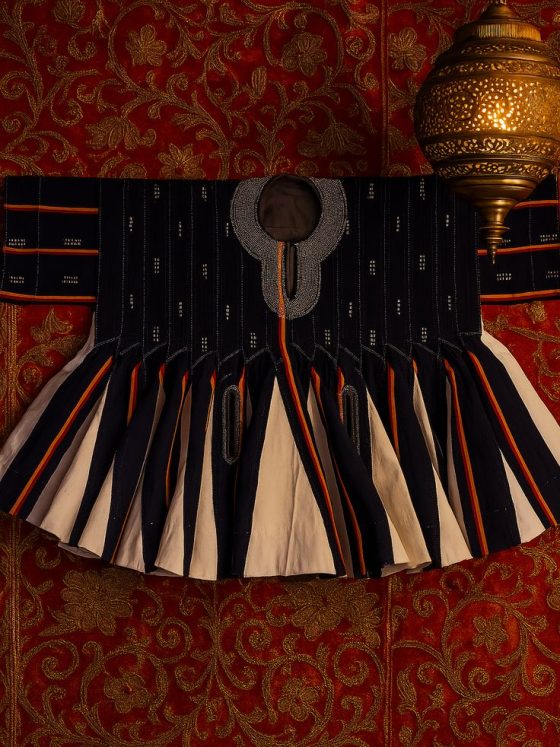
Country cloth is primarily worn by men in formal, ceremonial, and political contexts. Paramount chiefs, elders, public figures, and diplomats are the core wearers. The garment form is typically a loose-fitting gown, constructed with minimal tailoring from cloth panels. Embroidery at the collar and pocket openings is a signature finishing technique: not decorative alone, but practical, reinforcing the areas that receive the most stress. This embroidery signals craftsmanship and attention to detail, and its complexity can indicate the wearer’s status or the occasion.
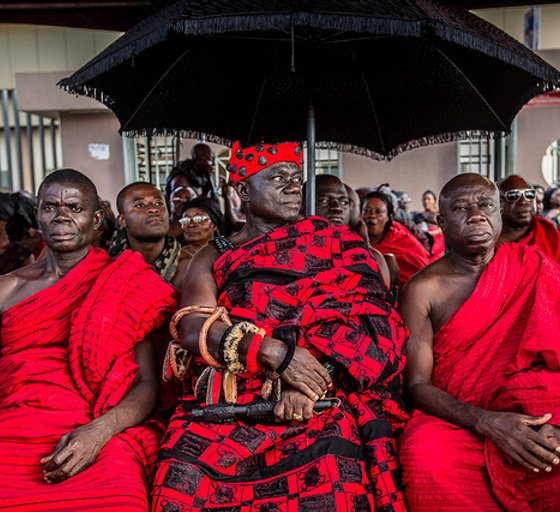
Weddings, elders’ meetings, town hall gatherings, church services, and political ceremonies are all occasions where country cloth appears. The Liberian tradition of gowning individuals to mark elevation in social status is one of the most specific uses of the cloth. When elders gather to petition a respected community member to stand for political office, they arrive bearing country cloth. The act of placing the gown on a person’s shoulders carries the weight of a collective decision. Similarly, diplomats who contribute to Liberia are formally presented with country cloth as recognition. It is one of Liberia’s most significant diplomatic objects, tangible proof that the country’s oldest textile tradition remains its most authoritative cultural currency.
The Lofa County Weaving Tradition
The most active production centre for country cloth today is Lofa County in north-western Liberia. In 2014, the Liberian government established the Lofa Women Weaving Centre through the Ministry of Commerce and Industry, a dedicated weaving facility designed to organise and train women in the region to produce high-quality textiles from locally grown cotton. The project was funded through the Liberia Innovation Fund for Entrepreneurs, with support from the Japanese government, and represents the first formal government investment in the country’s cloth-weaving sector. The centre is located in Kolahun District, the seat of the Lofa weaving community, on 25 acres of land, one acre housing the facility and the remaining 24 allocated to cotton farming. This integration of cultivation and production keeps the entire supply chain within the community.
The Lofa Women Weaving Centre reflects a broader national campaign, the Wear Your Pride initiative, launched by the government in 2015 to promote Liberian-made products. The campaign was announced in the president’s annual message and generated a substantial increase in demand for Lofa cloth in urban markets. Female-led cooperatives in Kolahun now supply both local buyers in Monrovia and diaspora markets in the United States and Europe. The production method remains entirely traditional: hand-spun cotton, natural dyes, narrow-loom strip weaving, and hand-stitched assembly. The Lofa cloth produced here is not a modernised or commercial adaptation. It is the same cloth the Lorma and Kpelle have been weaving for centuries.
How Liberian Men Wear Country Cloth in 2026
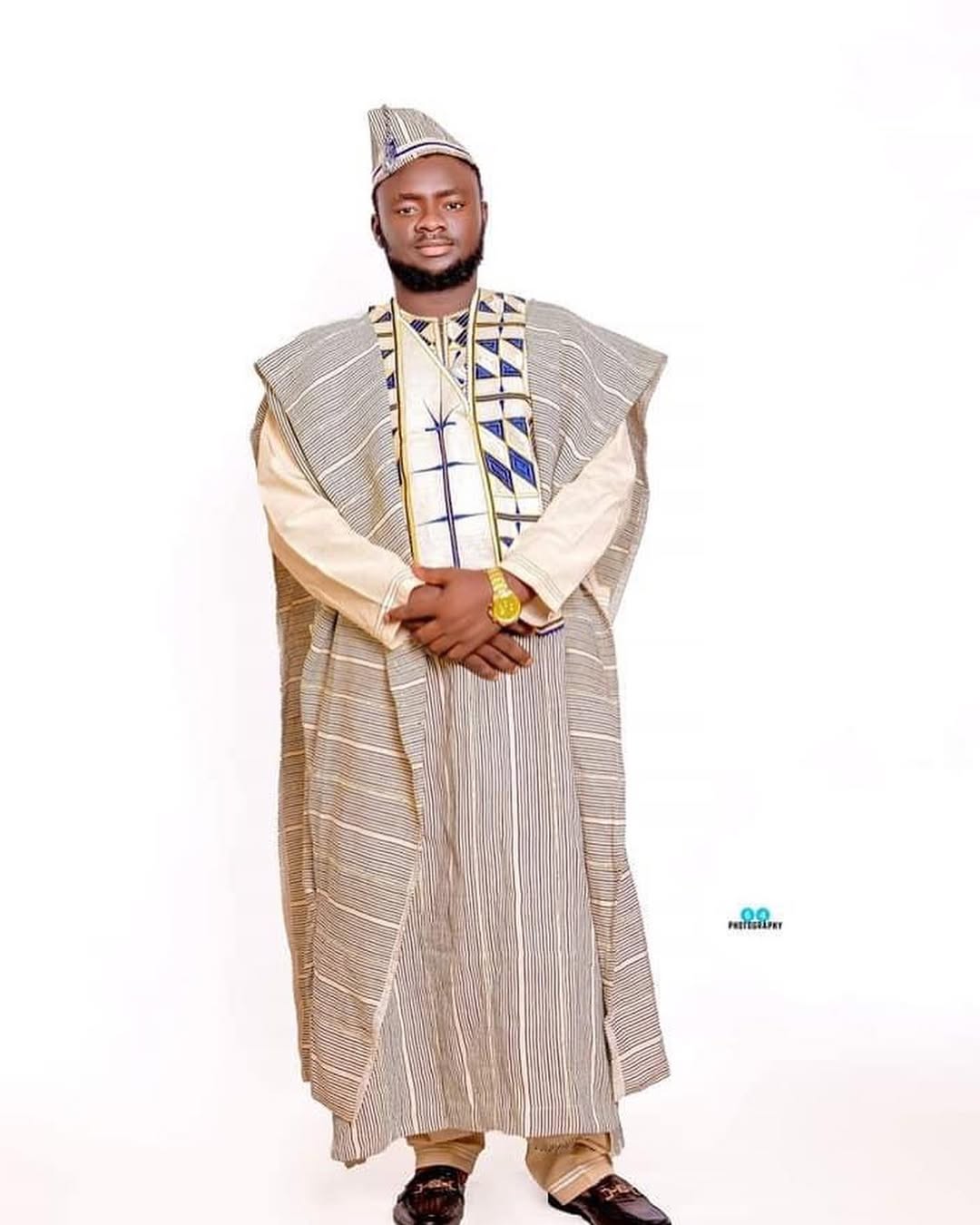
Country cloth in 2026 sits in a clear position in the Liberian wardrobe: it is the formal garment. Urban Liberians who dress in Western clothing during the working week return to country cloth for occasions that require cultural declaration. The parallel is instructive. As Omiren Styles has noted in examining how African dress functions as cultural authority, the most enduring garments in any tradition are those that retain a specific social register. Country cloth is worn with country sandals, a matching cap, and in formal contexts, a staff. Women wear country cloth as head ties when men wear it as gowns, keeping the fabric’s presence shared across the occasion without the garment forms competing.
The contemporary fashion movement around country cloth is small but deliberate. Designers in Monrovia and in the Liberian diaspora have begun incorporating country cloth into modern women’s wear, accessories, and home textiles. The cloth’s sustainability credentials, entirely hand-spun, naturally dyed, locally grown cotton, have also drawn attention from international buyers interested in African artisanal textiles. Country cloth is not fast fashion by any definition. A single piece takes days to produce and is expected to last decades. Its durability is not incidental: it is part of what the cloth communicates.
The Pattern Language of Country Cloth
Country cloth does not carry a fixed iconographic system in the way that Kente does. The pattern language of country cloth is created structurally through the arrangement of threads. Geometric shapes, stripes, and grid formations emerge from the weave itself. Zigzag patterns running through the cloth have been associated in some weaving communities with water and protective spiritual meaning. Diamond formations are associated with strength and social standing. This structural approach to pattern is not unique to Liberia. As Omiren Styles has explored in its coverage of African sacred textiles including Akwete cloth and Kuba raffia, handwoven African textiles consistently use the loom itself as the primary design instrument. The pattern is not applied to the surface. It emerges from the making.
The colour white in country cloth carries specific significance. It is associated with clarity, spiritual connection, and the authority of elders. The addition of indigo stripes brings depth and formality. The darkest country cloth, where indigo and kola overdyeing has produced near-black sections, is typically associated with senior men and elders. A younger man wearing heavily dyed country cloth would be making a statement. An elder wearing plain white clothing is making another one. The cloth communicates before the wearer speaks.
Also Read
- Akwete, Kuba Cloth, Barkcloth, and Kete: The Sacred Textiles the World Is Finally Discovering
- African Print as Modern Armour: Identity, Belonging, and Cultural Authority
- Lemlem: Weaving African Heritage into Global Fashion
- Why Culture Is the Foundation of Style in African and Global Fashion
Why Dutch Wax Print Did Not Replace Country Cloth
The arrival of Dutch wax print in West Africa in the late 19th century displaced the everyday use of country cloth. Mass-produced, brightly coloured, and affordable, wax print cloth offered something country cloth could not: speed. The history of that displacement is well-documented. As the Adire African Textiles resource on sub-Saharan weaving traditions notes, colonial-era interventions and the shift to factory-produced fibres ended hand-spinning across most of the continent. In Liberia, however, the hand-spun cotton tradition held, precisely because the cloth retained a social function that factory-produced fabric could never replicate.
What country cloth retained was its authority register. Wax print democratised African dress in genuinely significant ways. It gave West African women a flexible, affordable medium through which to express identity, status, and occasion. But wax print has never been used in the installation of a paramount chief. It has never been presented to a foreign diplomat as the full weight of Liberian cultural acknowledgement. It is not the cloth in which a man is petitioned to lead. These remain the exclusive territory of country cloth. In a culture that understands dress as language, a cloth that speaks one thing clearly will always have a function.
The Omiren Argument
Country cloth does not compete with fashion. It precedes it. What makes Liberian country cloth singular in the landscape of West African textiles is not its weave structure, its natural dyes, or even its age. The fact is that this cloth never lost its governing logic. In most of West Africa, handwoven textiles survived the Dutch wax print invasion through prestige alone. They became reserved for ceremony, pushed to the edge of daily life by mass production. Country cloth did this too. But it also kept its constitutional role. In Liberia, country cloth is still the garment in which chiefs are installed, diplomats are received, and elders make their case. It is still the cloth in which a man declares himself ready to lead. The intrinsic value of the cloth is not aesthetic. It is political. Country clothes do not mean you dress well. It means you understand what dressing is for.
This distinction has everything to do with how country cloth was made and by whom. The weaving tradition belongs to the Mande-speaking peoples who carried cotton cultivation and loom weaving into the Liberian interior from the north and east between the 12th and 16th centuries. The portable tripod loom, still used today and found nowhere else on the continent, produces strips approximately four inches wide and up to 36 yards long. These strips are then sewn together, the joins so precise they disappear into the cloth. The result is a fabric of unusual density and durability. Country cloth outlasts. It is not laundered into softness like wax print. It is worn into authority. A well-worn piece of country cloth is not old. It is experienced. That is the argument Liberian men have been making with this fabric for centuries, and it is the argument Omiren Styles records here.
Country cloth was not worn. It was conferred. A garment you earned, not purchased.
Frequently Asked Questions
What is Liberian country cloth, and how is it made?
Liberian country cloth is a handwoven cotton textile produced using narrow tripod looms unique to Liberia and Sierra Leone. Raw cotton is hand-spun into thread, woven into four-inch-wide strips, then stitched together to form broader cloth. Natural dyes, primarily indigo and kola nut, produce white, beige, and striped colour effects. It is associated with the Gola, Mende, Vai, Lorma, Kpelle, Gio, and Mano peoples.
Who wears country cloth in Liberia?
Country cloth is primarily worn by men at formal and ceremonial occasions. Paramount chiefs, elders, public figures, and diplomats are the principal wearers. It is the garment used in the installation of chiefs, the gowning of individuals to political office, and in diplomatic gift-giving. It also appears at weddings, elders’ meetings, town hall gatherings, and church services.
Was Liberian country cloth really used as currency?
Yes. Before Dutch wax print displaced handwoven cloth in the late 19th century, country cloth circulated as currency across West Africa. Its value wasThe precision of the weave, the value of the dye, and the consistency of the strip joins. It was used in trade agreements, dowry negotiations, and diplomatic exchanges between communities.
How is country cloth different from the lappa worn by Liberian women?
Country cloth is a specific hand-woven textile. A lappa is a garment form: a wraparound cloth worn as a skirt, tied at the waist. A lappa can be made from country cloth, wax print, tie-dye, or any other fabric. One is the material; the other is how the material is worn. This distinction is frequently confused in popular writing on Liberian dress.
Is country cloth still produced in Liberia today?
Yes. The Liberian government established the Lofa Women Weaving Centre in Kolahun District, Lofa County, in 2014, a government-supported facility where female-led cooperatives produce country cloth using entirely traditional methods: hand-spun, locally grown cotton, natural dyes, and narrow-loom strip weaving. The cloth is sold in Monrovia and exported to diaspora markets. Contemporary designers in Liberia and abroad have also begun incorporating country cloth into modern fashion and home textiles.