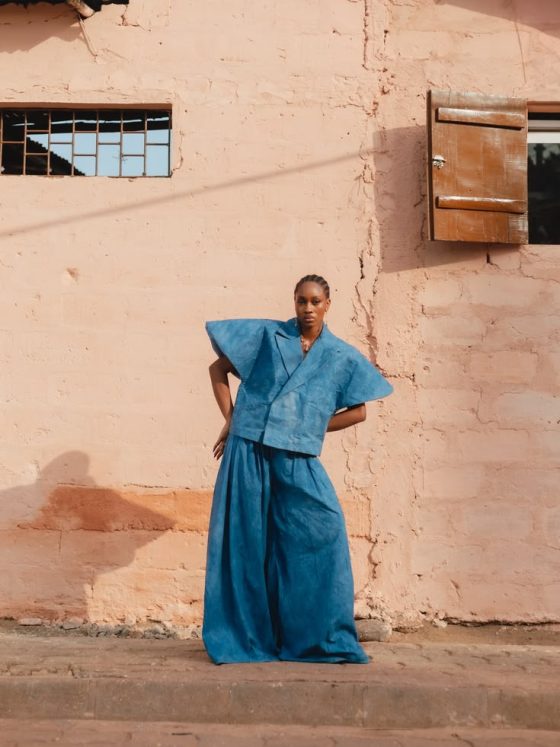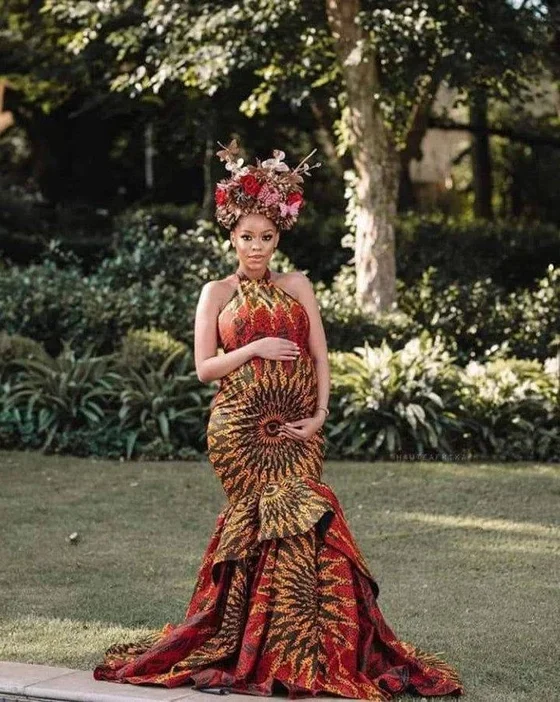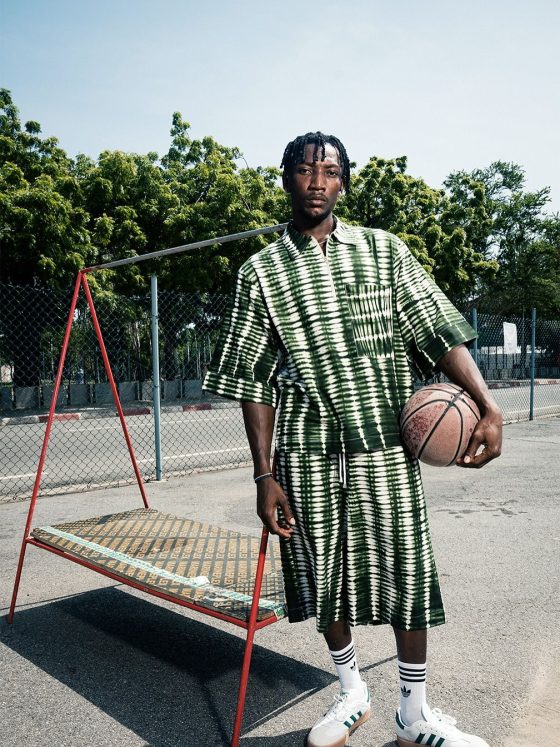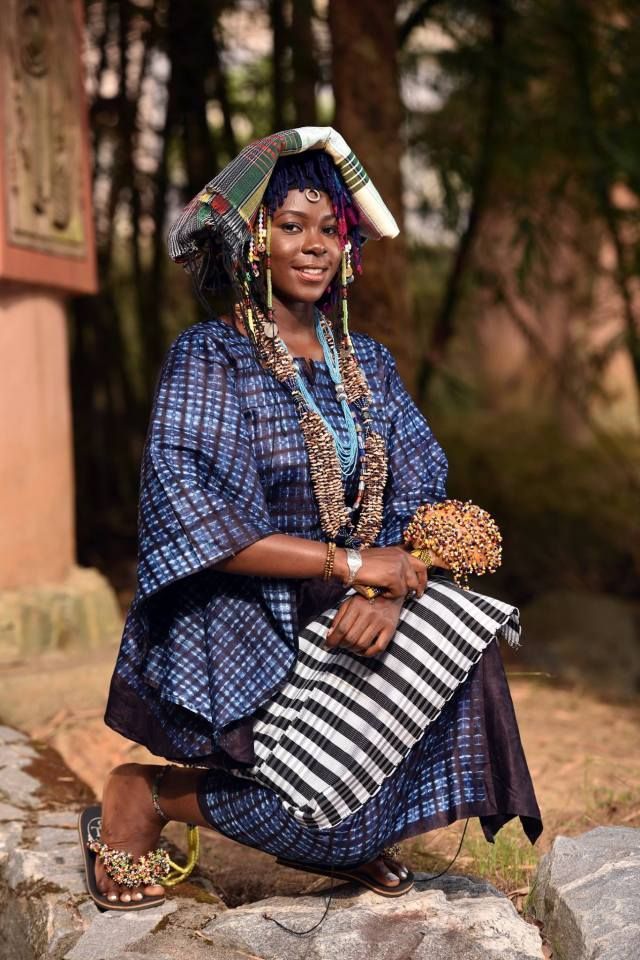
The Western fashion industry did not invent tie-dye. It borrowed it. Long before the 1960s counterculture claimed the spiral and the sunburst, Mandinka women across the Senegambia region were practising resist-dye techniques of extraordinary precision, depth, and cultural meaning. Here are five styles that make that history visible in 2026.
There is a particular arrogance in the way global fashion history gets written. Tie-dye, in most Western accounts, appears as a 1960s phenomenon, a product of Californian counterculture, rock festivals, and the peace movement. The actual history is different. African indigo-dyeing traditions date back at least 700 years, and in the Senegambia region specifically, the practice is inseparable from Mandinka identity, ceremony, and cultural continuity. In 2026, calling Mandinka tie-dye a “trend” is not just inaccurate. It is an erasure.
From deep-indigo stitch-resist boubous to kola-dipped ceremonial wrappers, discover the top 5 tie-dye styles for Mandinka women in 2026 — rooted in 700 years of Senegambian textile tradition and very much alive today.
The Cloth That Carried a Civilisation
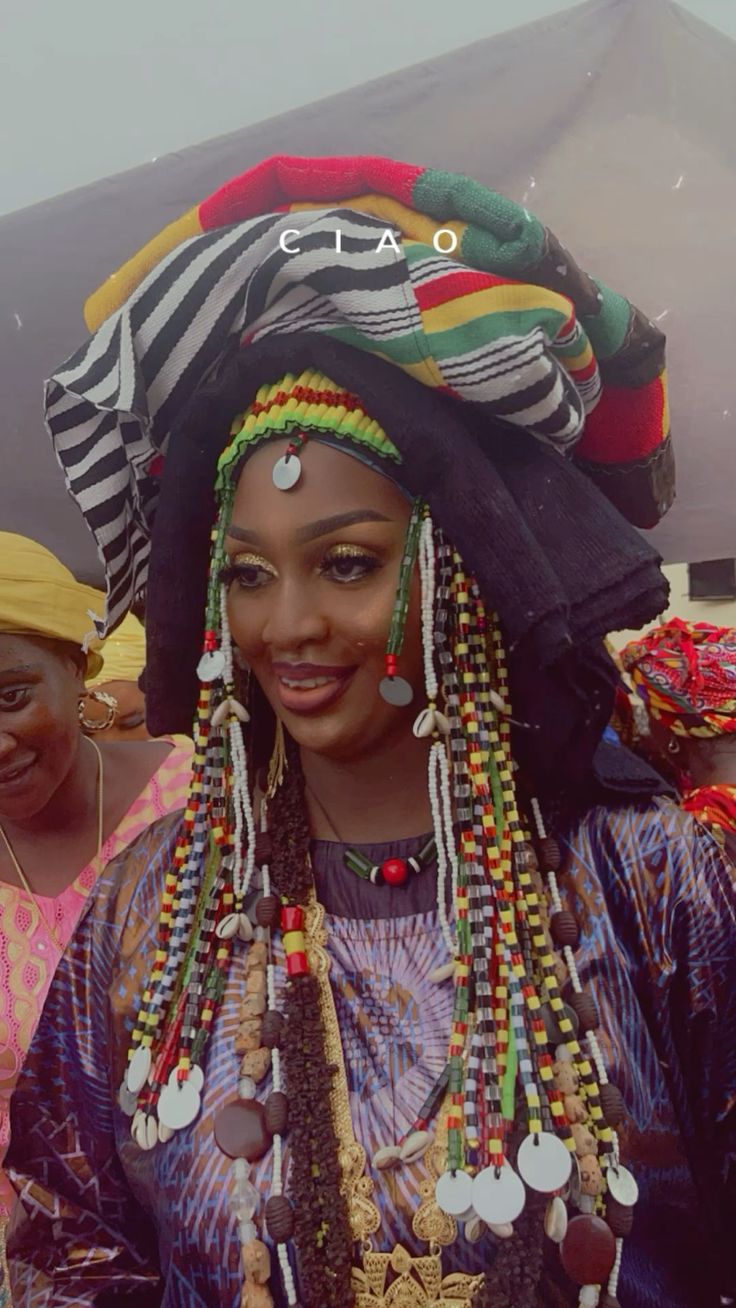
The Mandinka are among the largest ethnic groups in West Africa, spread across The Gambia, Senegal, Guinea-Bissau, Guinea, and Mali, and descended from the Mande people of the medieval Mali Empire. Their textile traditions reflect that geographic and historical depth. Across the Mandinka world, fabric has never been purely functional. It communicates status, ceremony, spiritual affiliation, and social identity. Resist-dye techniques — particularly those using natural indigo and kola nut dye — have been the primary method of marking those meanings onto cloth for generations.
In The Gambia, the tie-dye and batik tradition relies on two signature natural dyes found together almost nowhere else in the world: deep indigo blue and the rich amber-brown of the kola nut. Indigo, derived from locally cultivated indigofera plants, produces cloth that deepens with age and resists fading over decades. Kola nut dye, produced from the tree farmed across the West African forest belt, yields warm terracotta and honey tones that are uniquely Senegambian in character. Both carry centuries of practice. Neither is decorative. Both are purposeful.
The Mandinka groups of southern Mali, eastern Guinea, and the Senegambia region became known across West Africa for producing stitch-resist cloths of extraordinary detail—so intricate that they are now held in museum collections as examples of an important branch of African textile embroidery. Some required weeks of stitching before a single drop of dye was applied. The faano, a wrapped lower garment, is the most common vehicle for tie-dye in everyday life. The boubou, the grand, flowing robe associated with Mande prestige since the Mali Empire, is used in the most elaborate ceremonial contexts. Together, they define the architecture of Mandinka women’s dress, and across these silhouettes, the five styles below operate.
Research documented in the textile industry publication Fibre2Fashion confirms that the global demand for African-dyed cloth has driven the expansion of artisan cooperatives across West Africa, with female dyer networks in Guinea and The Gambia representing a significant portion of that artisan economy. The tie-dye trade is not, for these women, a hobby or a heritage performance. It is a livelihood and a practice that has supported communities for centuries. For the Manding of Mali and the Soninke/Malinke of the broader Mande world, indigo cloth signified wealth, abundance, and prestige. In 2026, it still does.
The fashion conversation about African textiles too often defaults to Kente and Ankara as shorthand for the continent. What Mandinka tie-dye represents is a tradition with its own internal colour philosophy, its own relationship to ceremony and the body, and its own long history that has nothing to do with trends set elsewhere. These five styles are not retro. They are the present, dressed in their rightful name.
The 5 Styles
- The Indigo Checker Faano
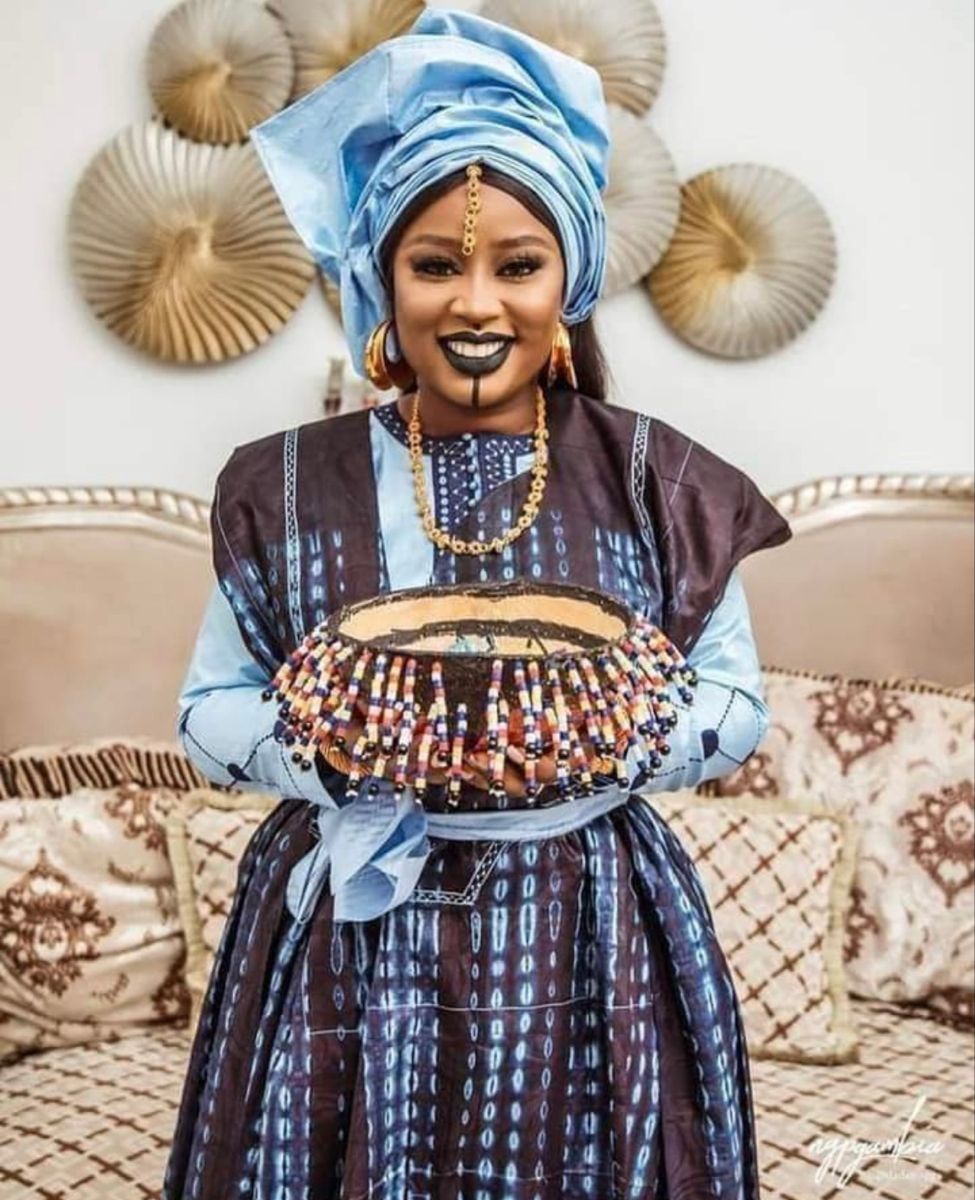
The most visually iconic Mandinka textile is the sky-blue and deep-indigo checkered faano, the wrapper worn by Mandinka brides and women at significant ceremonies. The pattern is created through a fold-and-tie technique: fabric is gathered into a precise grid, each pocket tied tightly with raffia before immersion in the indigo vat. Multiple dips deepen the colour. The Mandinka bride is specifically associated with this attire, with the indigo described as almost smothering the sky-blue ground. In 2026, this checker pattern is being adapted beyond full ceremonial wrappers into tailored midi skirts, wide-leg trousers, and co-ord sets by contemporary designers across the Senegambia region and the diaspora. The foundation remains unchanged: this is a garment that communicates belonging, occasion, and lineage. On a modern silhouette, it does all of that and more.
- The Stitch-Resist Boubou
Of all Mandinka tie-dye techniques, the stitch-resist method applied to the grand boubou is the most labour-intensive and the most prestigious. Cloth is folded into precise symmetrical formations, then stitched with raffia thread in carefully planned geometric patterns. After dyeing, the stitches are removed with a razor, revealing intricate white-on-indigo designs that can take several artisans weeks to produce. The result is a flowing robe with patterns so detailed that ethnographic institutions have documented them as significant examples of African textile artistry. A stitch-resist boubou in 2026 functions exactly as it always has: as a declaration. It suits weddings, naming ceremonies, Eid, and any occasion where the weight of tradition is the point. Nothing else is needed.
- The Kola-Dipped Wrapper
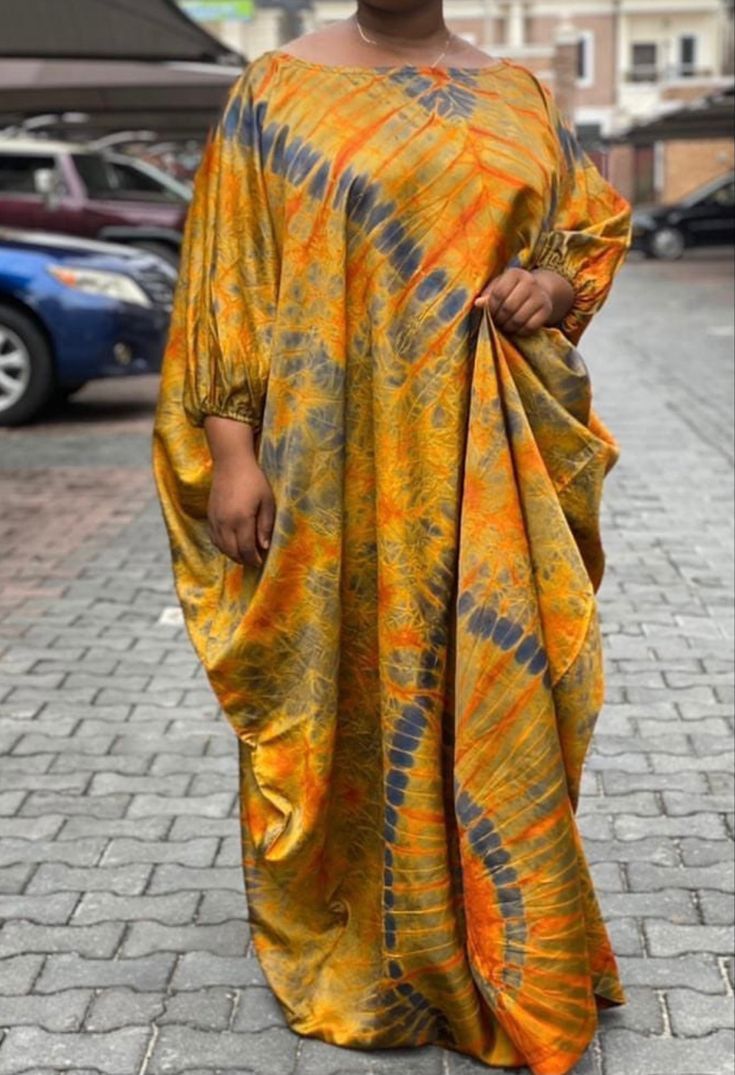
While indigo dominates the Senegambian dye story, the kola nut dye tradition produces results that are wholly distinct and significantly under-documented outside the region. Kola nuts, traded across West Africa for centuries as both a stimulant and a ceremonial gift, yield a rich amber-to-terracotta dye when processed. Fabrics dipped in kola range from pale honey to deep rust, a warm earth palette virtually impossible to replicate with synthetic dye. The kola-dipped wrapper — worn as a faano or draped as a shoulder cloth — carries a warmth of colour that reads as simultaneously ancient and entirely contemporary. In 2026, Gambian artisans and diaspora designers committed to natural-dye practice are recentring this palette, and the international appetite for it is growing. The kola-dipped wrapper is one of the most commercially sustainable and culturally distinct products in the Gambian artisan economy.
- The Multi-Dip Deep Indigo Kaftan
There is a category of indigo cloth that achieves its effect not through pattern but through depth of colour. The multi-dip technique — repeated immersion in the vat, oxidisation in air, and re-immersion — produces fabric so saturated it reads near-black in low light and full indigo blue in the sun. After dyeing, the cloth is beaten with wooden tools in a tradition practised across West Africa for hundreds of years, pressing the fabric and imparting a satin-like sheen. A kaftan made from this cloth needs no embellishment. The depth of the dye is the design. In Senegal, this process is called indigo palmann, describing a cloth so resplendent in its simplicity that decoration would diminish it. For Mandinka women in 2026, this translates into an evening kaftan or prayer robe that is minimal in construction and absolute in presence.
- The Tie-Resist Headwrap
The moussor, or headwrap, has always been the most flexible expression of Mandinka dress. In 2026, it is also the most accessible entry point for women across the Mandinka diaspora who wish to connect with the textile tradition without access to a full ceremonial ensemble. Contemporary tie-resist headwraps apply the same folding and binding techniques as their historical counterparts to lighter cotton fabrics, with colour options ranging from traditional indigo and kola brown to combinations of both. Worn as a large headwrap, a shoulder drape, or a waist sash, the tie-resist moussor carries the visual language of Mandinka textile culture into everyday urban dressing. The style is growing steadily among Gambian and Guinean women in the diaspora, and artisans in Banjul, Serekunda, and Conakry are producing them for both domestic and export markets. As an entry point to the tradition, it is both authentic and wearable in any context.
The Larger Argument
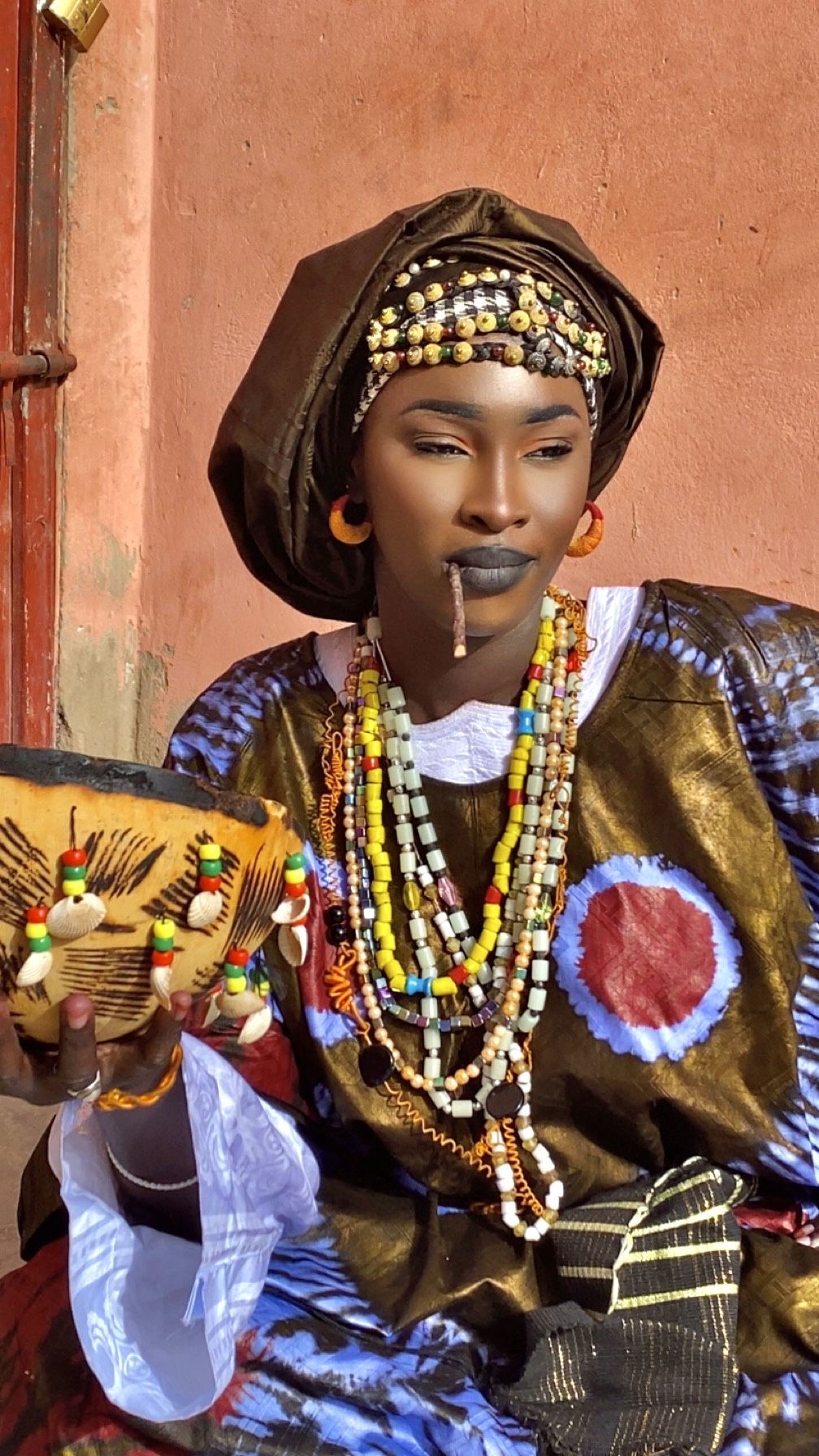
Mandinka tie-dye is not a museum practice. It is worn at weddings this month, at naming ceremonies this week, and on Eid this year. The five styles above are not historical reconstructions. They are current, worn, chosen, and culturally active. That is the distinction that matters. African dress traditions are not finished. They are in use. They are being chosen. And they deserve to be written about with the same seriousness, specificity, and depth that any living tradition demands.
In 2026, the Senegambia region is not waiting for global fashion to discover its textile heritage. The Mandinka women who wear these styles already know their value. The question is whether the rest of the fashion conversation is willing to catch up.
ALSO READ:
- The Fulani Bridal Aesthetic: Dress, Adornment, and the Architecture of Identity
- Ewe Kente: Why the World’s Most Misquoted Cloth Demands a Better Conversation
- Yoruba Adire: When Indigo Became a Language
- Ijaw Women and the Politics of the Wrapper: A Niger Delta Dress Tradition
Frequently Asked Questions
1. What fabric and dyes are traditionally used in Mandinka tie-dye?
Traditional Mandinka tie-dye is applied to 100% cotton cloth, typically plain-weave or hand-woven cotton. The two signature dyes are natural indigo, derived from locally cultivated indigofera plants, and kola nut dye, which produces warm amber and terracotta tones unique to West Africa. Both have been used by Gambian and Guinean artisans for generations and remain in active production today, alongside synthetic dyes used since the 1970s.
2. When do Mandinka women traditionally wear tie-dye garments?
Mandinka women wear tie-dye garments across a range of occasions. The most significant include weddings, naming ceremonies, Eid celebrations, Friday prayer, and rites of passage. The Mandinka bride is specifically associated with a sky-blue and deep-indigo checkered faano. Lighter everyday tie-dye in wrappers and headwraps is also worn for daily activities. The garment worn and the depth of dyework signal the formality and significance of the occasion.
3. What is the difference between the faano and the boubou?
The faano is a wrapped lower garment, essentially a large piece of fabric tied or draped around the waist and lower body, worn by Mandinka women for both daily and ceremonial purposes. The boubou is a full-length, wide-sleeved, flowing robe worn over an inner garment, historically associated with prestige and ceremony across the Mande world. Both carry tie-dye work, but the stitch-resist techniques most associated with elite Mandinka textile culture are more commonly applied to the boubou for high-ceremony occasions.
4. Is Mandinka tie-dye still handmade today?
Yes. While synthetic dyes have replaced natural indigo in some commercial production since the 1970s, hand-dyeing using both traditional plant-based and synthetic dyes remains active across The Gambia and Guinea. Artisan cooperatives supported by female dyers in Banjul, Serekunda, Conakry, and Labe continue to produce tie-dye fabric using hand-binding and stitch-resist methods. For thousands of artisan women in the Senegambia region, the practice is both a cultural tradition and a primary economic livelihood.
For more on African dress traditions across all 54 nations, explore Omiren Styles. Fashion. Culture. Identity.