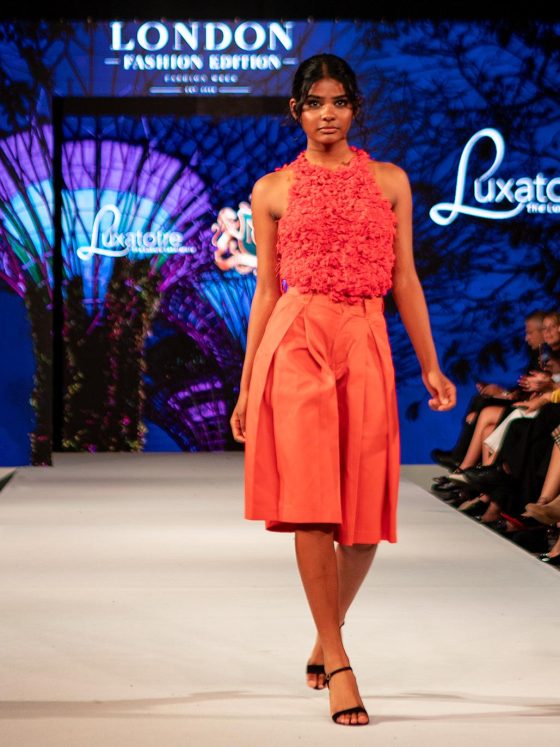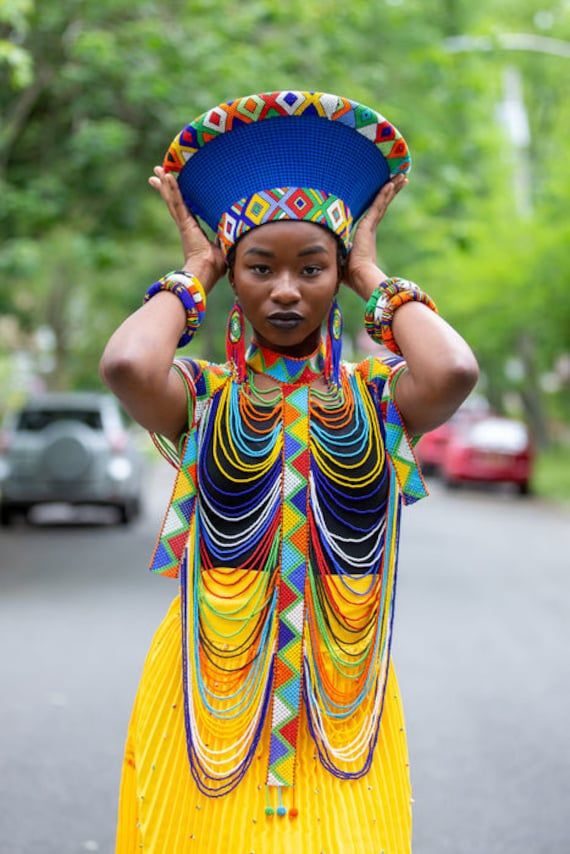
In an era where fashion trends rise and fade with speed, Zulu traditional dress remains rooted in something far more enduring—identity, dignity, and cultural continuity. At the centre of this expression is the Zulu Reed Dance, a ceremony where clothing is not simply worn but understood as a language of heritage.
Today, as global interest in African fashion grows, searches for Zulu traditional dress and Reed Dance outfits continue to rise, revealing a deeper curiosity about the meaning behind the aesthetics. What emerges is a powerful narrative: one in which garments such as the isidwaba, umbhedesho, and umbhaco are not relics of the past but living symbols shaping modern fashion.
Discover the meaning behind Zulu traditional dress, Reed Dance outfits, and the cultural symbolism that shapes South African heritage fashion today.
What Is the Zulu Reed Dance?
The Zulu Reed Dance, known as Umkhosi Womhlanga, is one of South Africa’s most iconic cultural ceremonies. Held annually, it brings together thousands of young women for a ritual that celebrates purity, unity, and respect for tradition.
Participants collect reeds and present them to the Zulu monarch, reinforcing communal values and cultural pride. However, beyond the ceremonial act, the Reed Dance is globally recognised for its striking visual identity. The Reed Dance outfits worn by participants have become symbolic of Zulu culture itself, drawing attention from both cultural scholars and fashion observers.
This visibility has positioned the Zulu Reed Dance as not only a cultural event but also a defining moment in the representation of African traditional dress.
Zulu Traditional Dress as a Cultural Language
Zulu traditional dress is not designed for aesthetic appeal alone. It operates as a cultural language in which every garment, texture, and accessory communicates meaning.
Unlike contemporary fashion, where clothing can often be detached from context, Zulu attire is deeply intentional. It reflects age, marital status, social role, and personal identity. This is why the growing global interest in Zulu traditional dress must be approached with understanding, not just admiration.
Each element within Reed Dance outfits contributes to a broader narrative of belonging and cultural continuity.
The Isidwaba: A Symbol of Womanhood and Status
One of the most recognisable elements of Zulu traditional dress is the isidwaba, a leather skirt traditionally worn by married women. Made from treated cowhide, the isidwaba represents maturity, dignity, and social responsibility.
Its structure is deliberate. The use of leather signifies durability and permanence, reflecting women’s role within the cultural framework. Historically, wearing the isidwaba marked a transition into marriage and adulthood.
Today, while its everyday use has evolved, the isidwaba remains a central piece in ceremonial dress. It continues to symbolise respect, reinforcing its relevance in modern discussions of African heritage fashion.
Umbhedesho and Umbhaco: Youth, Identity, and Transition
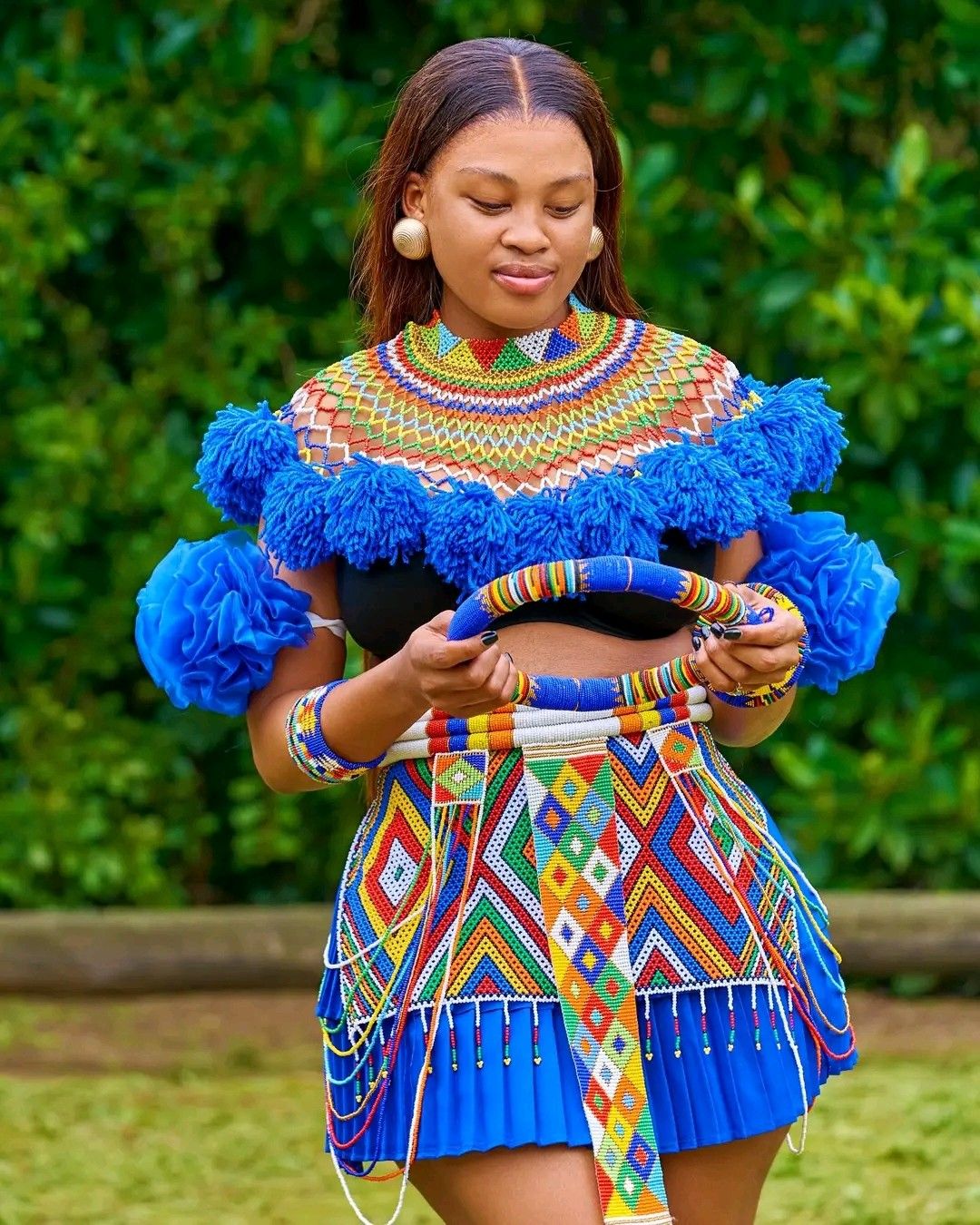
For unmarried women, garments such as umbhedesho and umbhaco hold equal cultural significance. These pieces are commonly worn during the Zulu Reed Dance, forming the foundation of Reed Dance outfits.
Umbhesho, often crafted from cowhide, is worn as a skirt or as a front covering and represents youth and readiness for the transition into adulthood. Umbhaco, on the other hand, is typically made from cotton fabric and is known for its distinctive patterns, often featuring earthy tones and bold stripes.
Together, these garments communicate identity without the need for words. They signal where an individual stands within the social structure, making them essential to understanding Zulu traditional dress.
Beadwork and Symbolism in Zulu Dress
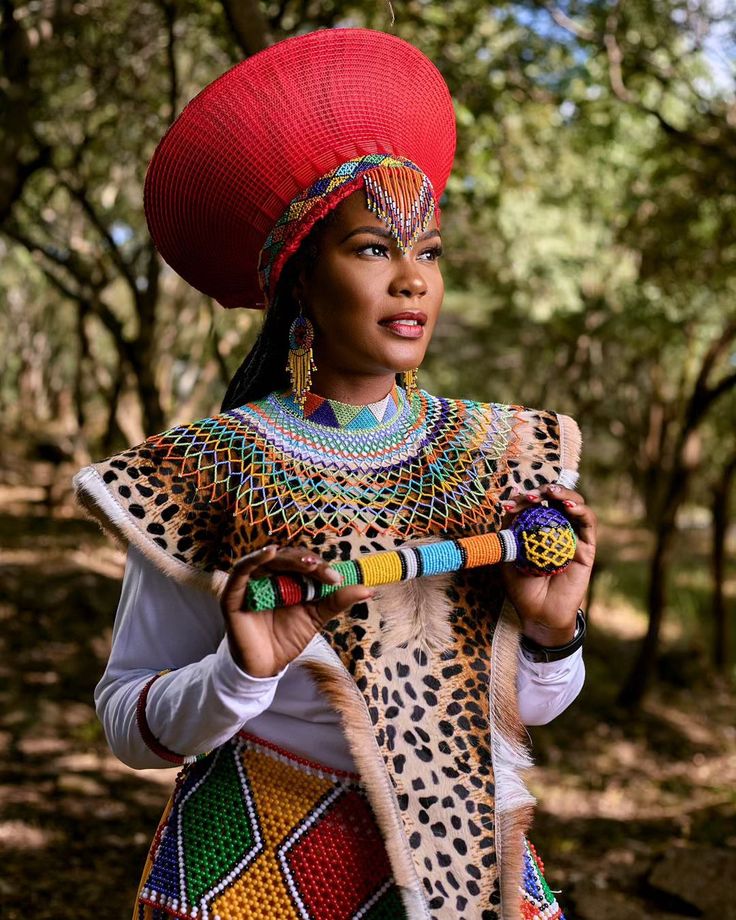
No discussion of Zulu traditional dress is complete without addressing beadwork. Beadwork is not decorative. It is communicative.
Colours and patterns are used intentionally to convey messages. White often symbolises purity, particularly within the context of the Reed Dance. Red can signify passion or emotional intensity, while blue represents faith and stability. Green is associated with growth and harmony.
During the Zulu Reed Dance, beadwork is layered across the body in the form of necklaces, belts, and chest adornments. These elements transform Reed Dance outfits into visual narratives, reinforcing both individual identity and collective culture.
This level of symbolism is one of the reasons Zulu traditional dress continues to attract global interest. It offers depth in a way that modern fashion often lacks.
Zulu Traditional Dress in 2026: Cultural Relevance and Global Influence
In 2026, Zulu traditional dress is experiencing renewed relevance. What was once viewed primarily within a cultural or ceremonial context is now influencing global fashion conversations.
Designers and cultural platforms are drawing inspiration from the structure and materials found in Reed Dance outfits. Leather textures, beadwork, and minimal yet intentional garment construction are being reinterpreted within contemporary design.
However, the difference today lies in authorship. African designers are leading this movement, ensuring that Zulu traditional dress is represented with authenticity and with cultural context. This shift marks an important moment in fashion history, where African heritage is no longer observed from the outside but expressed from within.
The Omiren Argument
There is a question that runs beneath every serious conversation about African dress: who decides what clothing means? In much of the world, that question has been answered by trend cycles, by industry calendars, and by the rotating consensus of fashion weeks built far from the communities whose aesthetics they borrow. Zulu traditional dress refuses that answer entirely.
The isidwaba does not wait for a runway to validate it. The Umbhaco does not adjust its palette to suit a seasonal mood board. The beadwork worn at Umkhosi Womhlanga does not simplify itself for an audience that has not done the work of understanding. This is a dress that has already decided what it means, and that decision was made generations before global fashion discovered it.
That is the distinction Omiren Styles exists to make. Not between old and new, or African and international, but between clothing that carries argument and clothing that carries only aesthetics. The Zulu Reed Dance outfits are a point of contention. Each colour in the beadwork is a sentence. Each garment choice is a declaration of where a woman stands in her community, in her lineage, in her own story. Wearing the isidwaba is not a performing tradition. It is to state, without ambiguity, that some things do not require the world’s permission to be authoritative.
What makes this relevant now is not that global fashion has discovered Zulu dress. It is that African designers and cultural platforms are ensuring that when the world looks, it looks on Zulu terms. Authorship has shifted. The narrative is being written from within. And Zulu traditional dress, precise, layered, communicative, and completely indifferent to external validation, stands as one of the clearest examples of what African fashion intelligence looks like when it has never needed to prove itself to anyone.
That is the Omiren Argument. Fashion as a civilisational statement. Dress is the record a culture keeps of itself.
The Cultural Responsibility of Wearing Zulu Traditional Dress
To wear Zulu traditional dress is to carry more than style. It is to carry meaning.
Each garment represents a connection to ancestry, community, and cultural values. This is why Reed Dance outfits are worn with such intention. They are not altered to fit trends. They are preserved to maintain cultural integrity.
This sense of responsibility distinguishes traditional dress from mainstream fashion. It reinforces the idea that clothing can be a form of cultural preservation.
As global interest continues to grow, it becomes increasingly important to engage respectfully with Zulu traditional dress. Understanding its meaning ensures that appreciation does not become appropriation.
Read also:
- The Silent Dialogue: Zulu Beadwork as an Archive of Intent
- The Geometry of Heritage: Why Shweshwe Still Defines South African Fashion
- MaXhosa Africa: South Africa’s Luxury Knitwear Brand with Global Appeal
Why Global Interest in Zulu Traditional Dress Is Rising
Search trends show increasing curiosity around terms such as “Zulu traditional dress,” “Reed Dance outfits,” and “South African cultural clothing.” This rise reflects a broader shift toward cultural fashion storytelling.
Consumers are no longer interested in fashion that lacks depth. They are seeking meaning, authenticity, and connection. Zulu traditional dress provides all three.
It offers a perspective on fashion that prioritises identity over trend, community over individuality, and history over immediacy. This is why it continues to resonate across different audiences, from cultural enthusiasts to global fashion insiders.
Beyond Fashion: A Living Cultural Archive
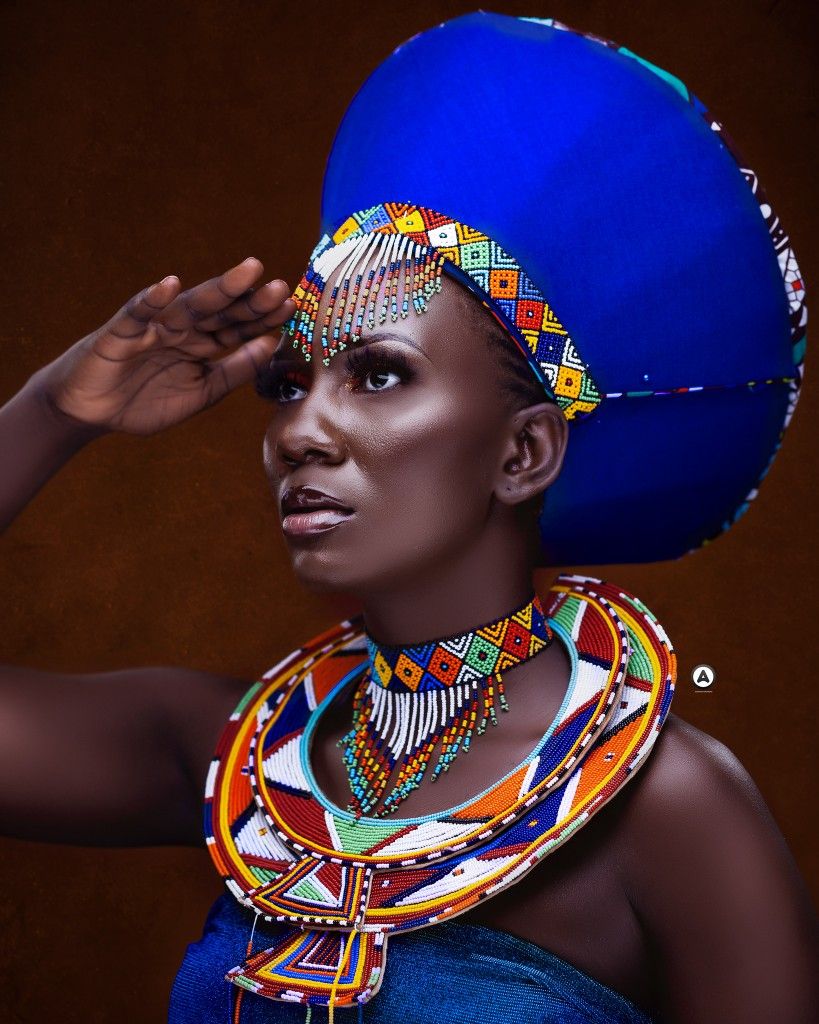
The Zulu Reed Dance is more than an event. It is a living archive.
Through movement, ritual, and dress, it preserves cultural knowledge that might otherwise be lost. Each Reed Dance outfit becomes part of this archive, contributing to a collective memory that extends across generations.
In this sense, Zulu traditional dress is not static. It evolves, but it does so with intention. It adapts without losing its essence, maintaining a balance between preservation and relevance.
Conclusion
The Zulu Reed Dance and its traditional dress represent one of the most powerful intersections of culture and fashion. In a global landscape increasingly drawn to authenticity, Zulu traditional dress stands as a reminder that style can carry meaning, history, and dignity.
As interest in Reed Dance outfits continues to grow, so too does the responsibility to understand what they represent. These garments are not simply beautiful. They are symbolic. They reflect identity, community, and continuity.
To engage with Zulu traditional dress is to look beyond aesthetics and into the deeper narrative of African heritage. It is to recognise that true elegance is not created by trends but by tradition sustained over time.
Frequently Asked Questions (FAQs)
- What is the Zulu Reed Dance?
The Zulu Reed Dance, or Umkhosi Womhlanga, is an annual South African cultural ceremony in which young women celebrate heritage, unity, and tradition.
- What is a traditional Zulu dress?
Zulu traditional dress includes garments such as isidwaba, umbhesho, and umbhaco, each representing different stages of life, identity, and social roles.
- What are Reed Dance outfits made of?
Reed Dance outfits are typically made from materials like cowhide, cotton fabrics, and beadwork, each carrying cultural and symbolic meaning.
- Why is beadwork important in Zulu culture?
Beadwork communicates identity, emotions, and social status through colour and pattern, making it a key element of Zulu traditional dress.
- Is Zulu traditional dress still relevant today?
Yes, Zulu traditional dress remains culturally significant and is increasingly influencing modern African fashion and global design conversations.