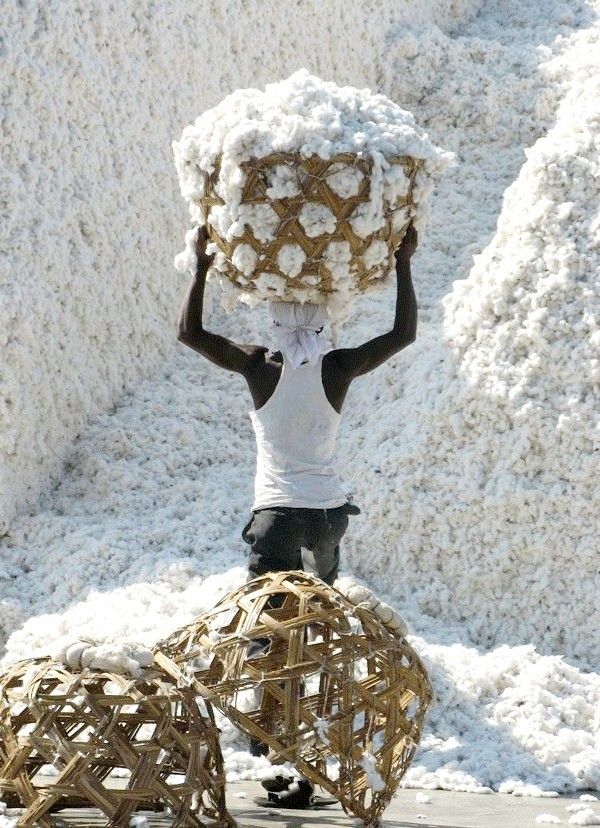
Before oil, before data, before steel, there was fibre.
Cotton did not simply clothe the world. It reorganised it. It shaped trade routes, underwrote empires, fuelled industrial revolutions, and stitched together civilisations that never shared a language but did share a dependency, softness spun into threads. The history of cotton is one of the longest, most contested, and most culturally layered stories in fashion, and most of it has nothing to do with the plantation narrative that has come to define it.
The global history of cotton spans 5,000 years of trade, craft, and cultural exchange across Africa, Asia, and the Americas — and its story is far older than the industry that tried to own it.
A Plant That Refused to Stay Local: Cotton’s Ancient Origins
Cotton is indigenous to multiple regions: Africa, South Asia, and the Americas. Long before globalisation was a business concept, cotton was already global. As early as 3000 BCE, the Indus Valley was spinning and trading fine cotton textiles. In West Africa, hand-spun cotton cloth formed part of local economies and ceremonial dress — woven, traded, and worn within social systems of remarkable sophistication. In Mesoamerica, cotton fibres were woven into ritual garments long before European contact.
When merchants from the Mediterranean encountered Indian cotton fabrics, they were astonished by their softness and the brilliance of their dyes. Calico and muslin entered European markets not as curiosities but as revelations. Cotton did what silk could not: it was breathable, washable, and adaptable. It democratised comfort across class lines and continents.
Its migration was not accidental. It was demanded.
Trade Routes, Power Routes

By the time cotton reached European industrial centres, it had already travelled through layered systems of exchange. Indian textiles moved through Ottoman intermediaries. African cotton circulated across trans-Saharan trade networks. Atlantic economies would later restructure themselves entirely around cotton cultivation.
In cities like Manchester, cotton mills became symbols of modern industry. Mechanical spinning and weaving transformed production speed, but they also reshaped labour. Cotton connected plantation fields in the American South to factory floors in Britain, linking continents through extraction and manufacture.
The fibre was soft. The system around it was not.
Cotton’s migration cannot be separated from the violence that accompanied its scaling. Enslaved labourers in the Americas turned cotton into a global commodity at devastating human costs. The same fibre that symbolised comfort in European drawing rooms represented coercion in plantation fields.
Cloth as Currency
In many African societies, cotton cloth served a purpose beyond mere clothing. It was currency, diplomacy, and inheritance. Strips of woven cotton formed part of dowries. Handwoven textiles marked status and belonging.
In the Sahel and throughout West Africa, locally grown cotton was spun and woven into fabrics that travelled across regions. The cloth did not merely move as trade goods; it moved as cultural language. Patterns, colours, and weaving techniques encode identities.
When imported industrial cotton flooded African markets in the colonial period, it disrupted more than economies. It disrupted textile ecosystems. Yet cotton, paradoxically, remained central. The fibre endured, even when the power structures around it shifted.
The Industrial Acceleration
The Industrial Revolution did not invent cotton, but it intensified its reach. Machines like the spinning jenny and the power loom amplified output. Cotton became synonymous with modernity.
But industrial cotton also introduced hierarchy into fabric perception. Handwoven fabric was relegated to “traditional.” Machine-produced cotton became “standard”. The binary was artificial but effective. It shaped global consumption patterns for centuries.
And yet, in markets across Lagos, Accra, Mumbai, and São Paulo, cotton continued to live double lives, industrial and artisanal, global and local.
Cotton and Climate

Cotton’s migration today is not only geographic. It is ecological. The fibre is one of the most widely cultivated natural textiles in the world, and its water consumption and pesticide use have drawn scrutiny. Entire regions have experienced environmental strain linked to intensive cotton farming.
Yet cotton’s adaptability remains its strength. Organic cultivation practices, regenerative agriculture, and small-scale farming initiatives are reshaping its future. In parts of Africa and India, cotton production is being reimagined through community-led models that balance yield with land stewardship.
The fibre that once symbolised industrial conquest is now being called upon to contribute to environmental accountability.
The Fabric of Everyday Life
Unlike silk or velvet, cotton rarely announces itself as luxury. It is the fabric of shirts, sheets, uniforms, and undergarments. It is intimate. It rests against the skin daily.
This ordinariness is precisely its power.
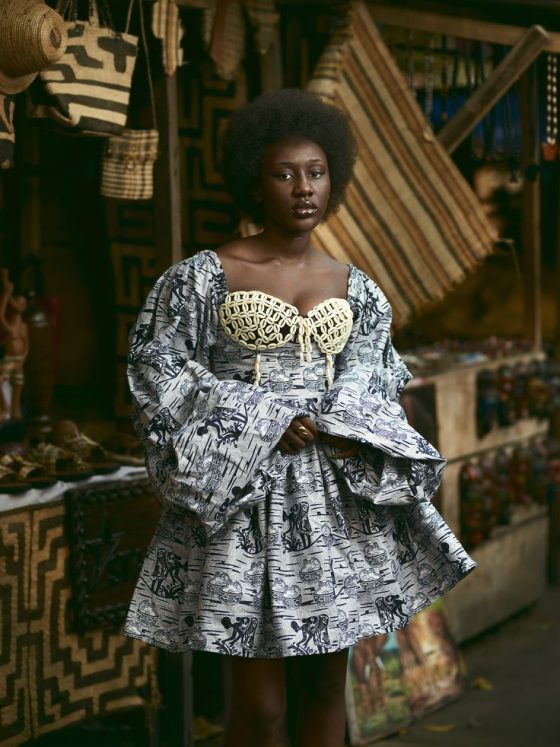
Cotton democratised fashion. It allowed clothing to become washable, reusable, and practical. It bridged the gap between ceremonial dress and daily wear. It is suitable for dyeing, printing, and embroidery. It carried patterns across continents, from block-printed Indian textiles to wax-resistant designs popularised across West Africa.
Even when transformed into Ankara or printed chintz, cotton remains the base note. It is the quiet infrastructure of global style.
Cotton in the African Wardrobe

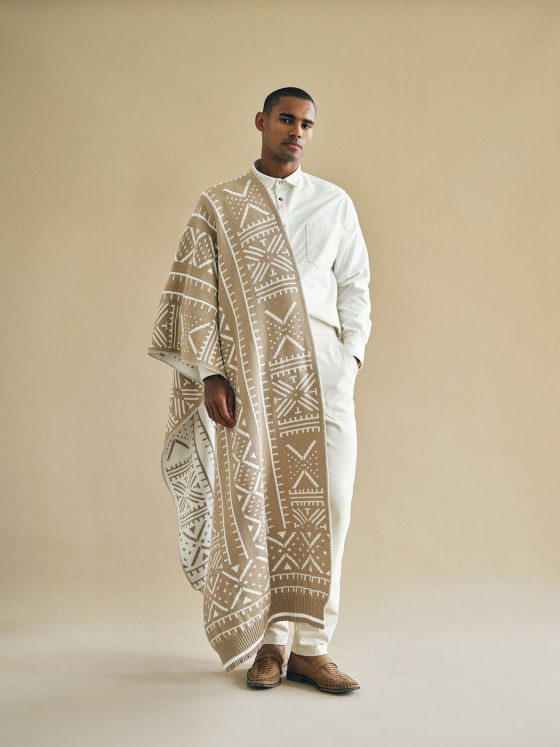
Across the continent, cotton has never been neutral. It absorbs dye deeply, making it ideal for resist techniques and symbolic patterning. It holds structure in tailored garments and breathes in tropical climates.
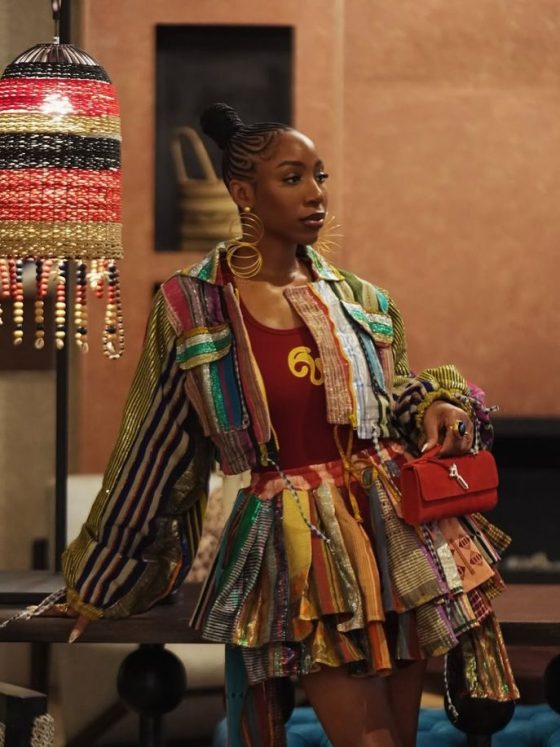
Cotton wrappers, tunics, shirts, and headwraps circulate across generations. The fibre becomes archive. A mother’s blouse becomes a daughter’s house dress. A ceremonial wrapper is resewn into everyday wear. Cotton invites reuse.
In this way, cotton resists the disposability associated with contemporary fast fashion, even as it fuels it globally. Its cultural logic in many African contexts emphasises longevity, alternation, and continuity.
Migration Without End
Cotton’s journey did not end with industrialisation. Today, raw cotton may be grown in West Africa, spun in South Asia, woven in East Asia, cut in Europe, and worn in North America. The fibre crosses borders multiple times before reaching a closet.
This global choreography reveals fashion’s interconnectedness. A cotton T-shirt contains more geography than its simplicity suggests. It carries soil, labour, shipping routes, and factory floors.
READ ALSO:
- African Sacred Textiles: Adire, Kente, Aso-Oke, and Bogolan Reclaim Global Luxury
- Quiet Luxury in Africa: How Aso-Oke, Adire & Craftsmanship Are Shaping 2025 Style
Reclaiming the Narrative
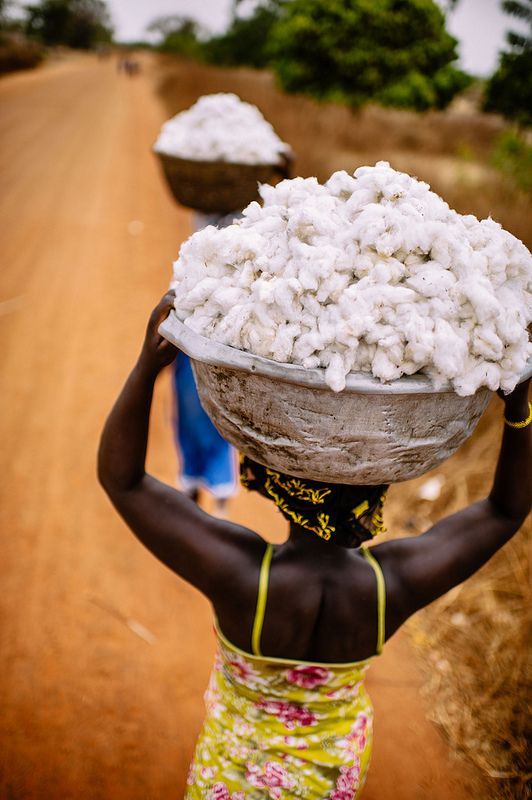
For too long, cotton’s story has been told primarily through Western industrial triumph. But its origins are plural. Its techniques are ancient. Its cultural meanings are diverse.
From Indian muslin so fine it was called “woven air,” to African strip-woven cotton that signified lineage, the fibre’s sophistication predates mechanisation. Industrial power did not invent cotton’s value. It amplified it unevenly.
Recentring cotton’s narrative means acknowledging its African, Asian, and Indigenous American roots alongside its European industrial chapter. It means recognising both innovation and exploitation.
It means understanding that cotton connected civilisations long before it connected supply chains.
Closets as Cartography
Open a wardrobe anywhere in the world, and cotton is likely present. Shirts, denim, dresses, bedding. It is so embedded in daily life that it feels invisible.
But invisibility is not insignificant.
Cotton is evidence that textiles shape history as profoundly as weapons or treaties. It financed expansion, triggered resistance, enabled comfort, and constructed modern consumer culture.
It connected farmers to merchants, merchants to factories, and factories to households. It linked continents through a thread.
And it continues to migrate across seasons, bodies, and generations.
Soft to the touch and vast in consequence, cotton remains the fibre that made the world feel closer, even though the systems behind it kept people apart.
Get the latest in fashion, culture and trends — dive into Cover Stories on OmirenStyles.
FAQs
- Where did cotton originate?
Cotton developed independently in Africa, South Asia, and the Americas, making it one of the world’s earliest global fibres.
- Why was cotton important to the Industrial Revolution?
Mechanised cotton production transformed manufacturing, trade, and labour systems across Europe and the Americas.
- How did cotton affect Africa?
Cotton functioned as cloth, currency, and trade goods, though colonial systems later disrupted local textile economies.
- Is cotton environmentally sustainable?
Conventional cotton farming can strain water and soil resources, but organic and regenerative practices are improving its environmental impact.
- Why is cotton still so widely used today?
Its breathability, versatility, and adaptability to dye and tailoring make it essential in both everyday and ceremonial clothing.