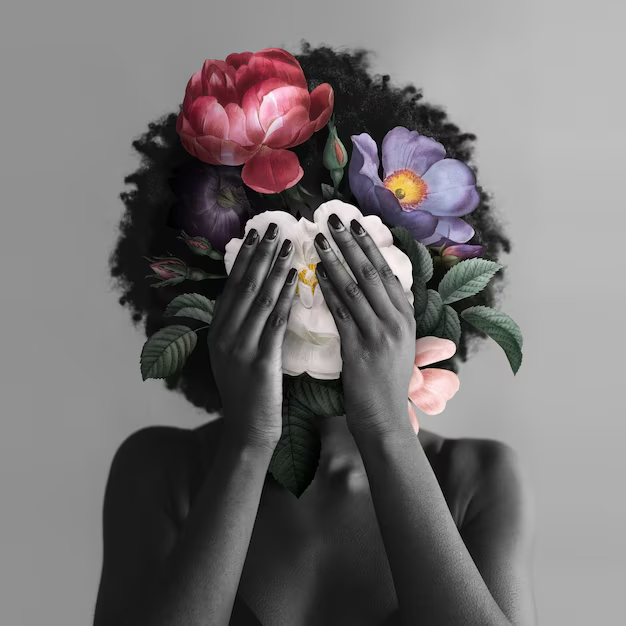
Imagining Black Diasporas: 21st-Century Art and Poetics traces aesthetic links among 60 artists from Africa, Europe, and the Americas, offering one of the first deep dives into nearly 25 years of Black artistic production. What sets today’s Black diaspora art apart is its refusal to stay boxed in by geography. This collection isn’t just African art shipped abroad or African American art kept apart. It’s something new – a visual language that comes out of conversations between Black communities across continents.
This fusion doesn’t stop at the old Atlantic routes. It sweeps in Black British experimentation, Afro-Latinx creativity, and Caribbean visual traditions. These artists shape vocabularies that don’t belong to any single nation; they’re part of a global Black identity. To get why it matters, you have to look at how scattered communities, even without sharing the same space, build a common visual language.
Explore the artistic fusion of the Black diaspora, where global Black communities merge ancestral memory with radical imagination to reshape contemporary visual culture.
The Architecture of Global Black Fusion
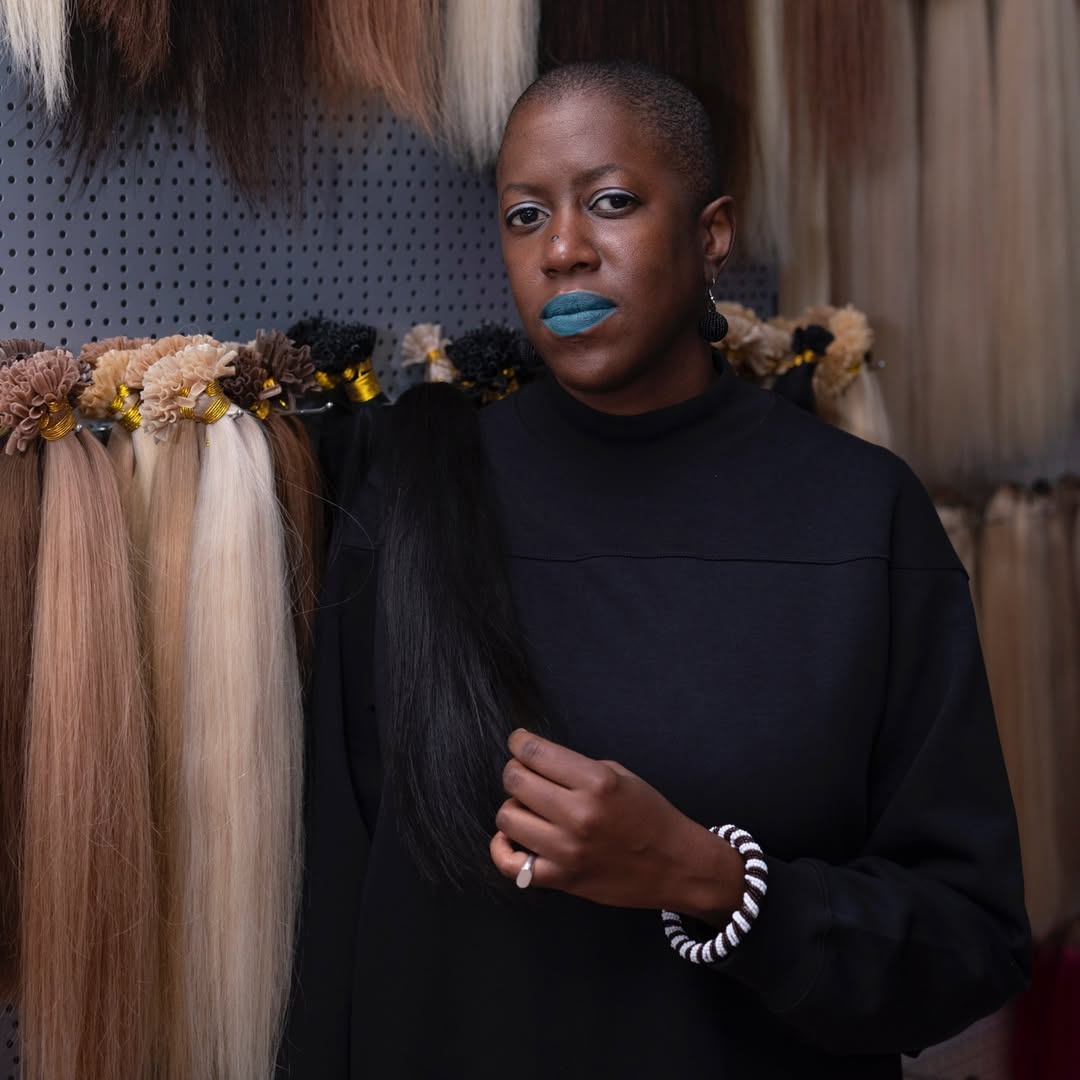
Take Zimbabwean-born artist Nontsikelelo Mutiti. She combines African braiding patterns and hair clips with symbols found in ironwork – motifs first forged by enslaved West African blacksmiths. Those same ironwork patterns still show up in places like South Carolina, Brazil, and the Caribbean, even after centuries apart. Mutiti’s work digs up these threads, remnants of forced migration that still connect people across the diaspora.
Basquiat took things even further. He mixed Yoruban folk traditions, jazz, graffiti, and ‘high art’ into his own visual storm. As a Brooklyn-born artist with Haitian and Puerto Rican roots, Basquiat lived the blend – Vodou symbols, bebop energy, and New York street grit. His art proved you could hang in museums and still keep your street edge. For Basquiat, mixing influences didn’t water down his voice – it made it stronger.
Yinka Shonibare, on the other hand, transforms European art forms through an African perspective. He uses Dutch-wax textiles, hybrid masks, and sculptures like The African Library, which stacks 6,000 books wrapped in those iconic fabrics, each embossed with names of post-colonial thinkers. As a British-Nigerian artist, Shonibare champions Black European perspectives that often remain marginalised. His work cuts through the myth of “authentic” African textiles – most are actually colonial imports. In his hands, the notion of cultural purity dissolves, as all cultures merge in one way or another.
Why Does Afrofuturism Dominate Global Black Art?
Afrofuturism is more than an aesthetic. It’s a philosophy, a history, a way of seeing the intersection of Black culture with science and technology. But why do Black communities around the world keep returning to sci-fi as a creative playground?
Look at George Clinton and Parliament-Funkadelic. Their P-Funk world – think space suits, wild narratives, the “Mothership Connection” – wasn’t just about the music. It was about staking out a place in the universe unmarked by the scars of slavery. Black people no longer had to grapple with the burden of white supremacy in space.
Afrofuturism gives Black artists a way to imagine identity, agency, and freedom beyond the limits of the present. From Sun Ra’s cosmic jazz in the 1950s to Janelle Monáe’s android stories and Ryan Coogler’s vision of Wakanda, Afrofuturism lets Black communities dream together – building futures outside Western blueprints.
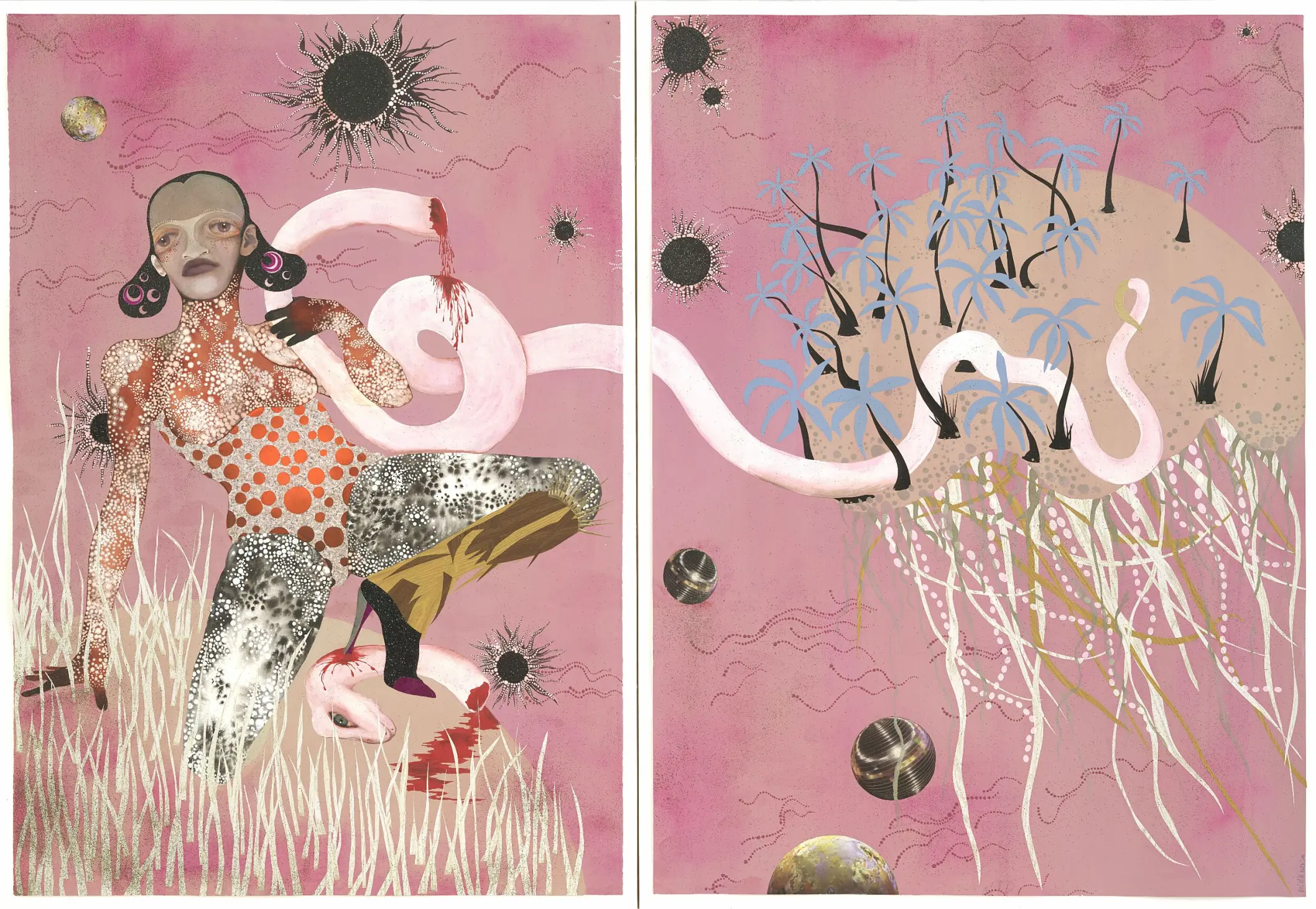
Wangechi Mutu’s art, for example, fuses fantasy, horror, and surrealism to tell new stories about Black bodies. Cyrus Kabiru reclaims junk and turns it into futuristic, steampunk eyewear he calls ‘C-Stunners’. Whether made in Nairobi, New York, or London, Afrofuturist work keeps circling back to the same thing: Black futures, technological know-how, and the freedom to imagine new worlds.
What Makes Afro-Surrealism Stand Out in Global Black Diaspora Fusion?
Scot Miller clearly distinguishes between Afrofuturism and Afro-Surrealism. He says, “Afrofuturism looks to science, technology, and sci-fi to imagine Black futures. Afro-Surrealism? It’s rooted in the present. No need for far-off speculation – things like concentration camps, bombed cities, famine, and forced sterilisation have already happened. For Afro-Surrealists, the Tasers are here now.”
This perspective hits home for Black communities worldwide. The day-to-day reality is already surreal – police violence in Baltimore and Brixton, gun battles in Rio’s favelas, xenophobic attacks in Johannesburg. Leopold Senghor put it like this: European Surrealism is empirical, but African Surrealism is mystical and metaphorical. Jean-Paul Sartre once said Senghor and other African Surrealists revolutionised art because their Surrealism was, at its core, Black.
Take the exhibition “Fragments of Epic Memory”—it was the first show committed to Caribbean and African diasporic art across generations, inspired by Suzanne Césaire’s essay “1943: Surrealism and Us”. The lineup included Suzanne and Aimé Césaire, Betye Saar, Kara Walker, and more. Caribbean Surrealism gets specific about island life – Martinique, Jamaica, Haiti – where being cut off geographically pushed cultures into creative overdrive, mixing and remixing into something totally new.
Black diaspora fusion isn’t about picking sides between Afrofuturism and Afro-Surrealism. Blackness across the globe holds all these timelines at once – remembering African roots, surviving harsh realities in different countries, and dreaming about the freedom ahead. Artists don’t have to restrict themselves to one viewpoint – they use whatever works for the project at hand.
READ ALSO:
- 10 Festivals Where Heritage Becomes Heartbeat
- 10 African Fashion Photographers Shaping a New Editorial Era
- 10 African Filmmakers Dominating Global Cinema with Heritage and Vision
Caribbean, Afro-Latinx, and Black European Contributions
Black diaspora fusion isn’t just an African American or continental African conversation. Caribbean artists have always driven innovation, even when their voices are sometimes sidelined. Wifredo Lam from Cuba mixed Santería with European modernism. Today, Caribbean artists keep island traditions alive – think Trinidad’s Carnival art, Jamaican dancehall, Haitian Vodou.
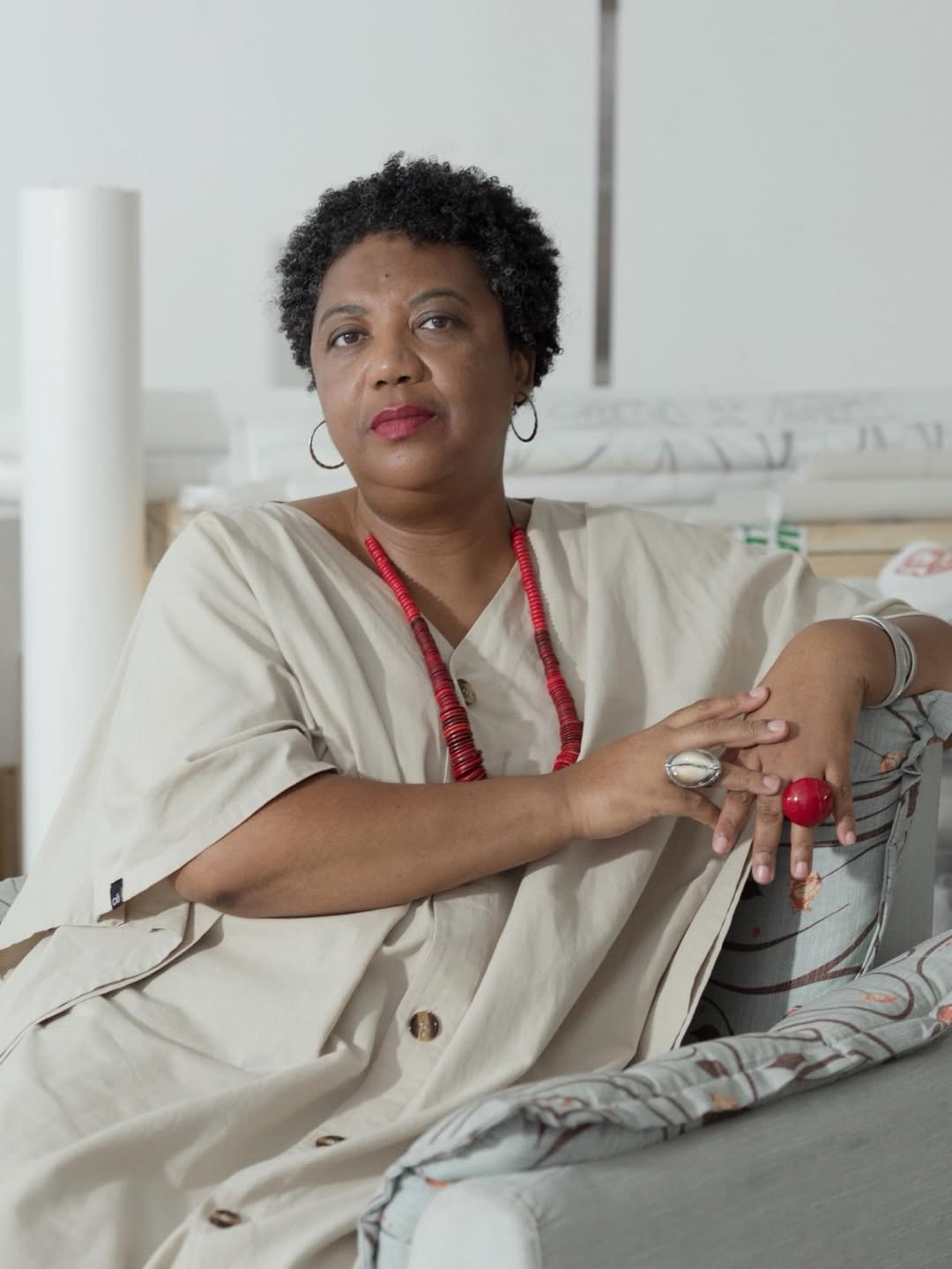
Afro-Latinx artists deal with another layer – Blackness tangled up with Latinidad, in societies where “mixing” often erases Black roots. Brazilian artists like Rosana Paulino show how samba, capoeira, and Candomblé keep Afro-Brazilian culture alive, pushing back against the myth of racial democracy. Their fusion art insists on Afro-Brazilian identity, refusing to blend into the background.
Black European artists – whether British, French, or Dutch – work in places where Blackness still feels out of place in national identity. Their art faces colonial history head-on, looking at how cities like Paris, London, and Amsterdam are still tied to the Caribbean and Africa, often through “development aid” that’s just a new face on old exploitation.
How Are Global Institutions Responding?
MoAD (Museum of the African Diaspora) has spent 20 years celebrating Black cultures, sparking tough conversations, and educating from a global Black perspective. Shows like “Unbound: Art, Blackness and the Universe” and “Continuum” prove that institutions are starting to get it. Black diaspora fusion needs real attention and programming that takes its worldwide reach seriously.
Then there’s “Aṣẹ: Afro Frequencies” at ARTECHOUSE, which brings together London-based Afro-Surrealist digital artist Vince Fraser and the poetry of Ursula Rucker. Named after a Yoruba phrase meaning “so will it be,” the exhibit mashes up British, American, and West African influences, all inside a digital space open to everyone. That’s fusion in action.
This book grew out of frustration with art histories that always spotlight how Black artists survive rather than the real power and beauty of their work. Looking at over 50 Black artists from across the globe, it illuminates how their art connects, not just the pain behind it. More and more, scholars focus on what makes Black diaspora fusion innovative, looking at the art itself rather than just the struggle.
Why This Goes Beyond Just Art
Black diaspora artistic fusion isn’t just about cool visuals – it’s living proof that Black communities around the world share a kind of cultural DNA, no matter how far apart they are. When you spot Afrofuturist styles popping up in blockbuster movies – be it Hollywood, Nollywood, or somewhere else – it flips the script, showing Black talent and tech know-how instead of old, tired stereotypes. And when museums put these fusion works on display, they’re finally admitting that Black artists don’t just sit on the sidelines of culture – they help set the rhythm.
This fusion also hands younger generations – kids in Atlanta, Lagos, London, São Paulo, Paris, wherever – a new toolkit for thinking about themselves. If you’re a second-generation immigrant, mixed heritage, or someone juggling more than one cultural identity, you see yourself reflected. You don’t have to choose a side. This art says it’s fine to be many things at once.
However, the true essence lies in the fact that fusion demonstrates that Blackness is not merely a label on a form, but rather a global network of interconnection. When artists riff on each other’s work across continents, when you see Caribbean vibes in African American paintings, or when Black British photographers capture Afro-Brazilian life, you’re watching global Blackness in action. It’s not just theory – it’s real life, happening right now.
See life through a creative lens — explore Culture & Arts on OmirenStyles.
Frequently Asked Questions
1. What is Black diaspora artistic fusion?
It’s visual art made by people of African descent, mixing styles and traditions from all kinds of Black communities – African American, Afro-Caribbean, Afro-Latinx, Black European, African, you name it. Think of it as artists creating a common language for what it means to be Black, no matter where you are. Movements like Afrofuturism and Afro-Surrealism fit right in, tackling history, identity, and the future.
2. What’s the difference between Afrofuturism and Afro-Surrealism?
Afrofuturism looks forward – imagine Black futures shaped by sci-fi, tech, and space. It’s about claiming a place in tomorrow’s world. Afro-Surrealism, on the other hand, says the present is already wild and strange enough for Black folks. It shines a light on the absurdities and horrors that are here, right now. Both are part of the fusion, just with their sights set on different time frames – future versus radical now.
3. Why does global Black fusion matter?
Because it proves that, even after centuries of forced separation, Black communities still connect and still create together. This art provides a platform for discussing mixed identities, challenges the conventional notion of Western art as the benchmark, and demonstrates how blending cultures generates innovative ideas rather than diluting existing ones. It’s living proof that Blackness is a worldwide network, not just a label.
4. Who are some of the key artists?
You’ve got Jean-Michel Basquiat (Haitian-Puerto Rican American), Wangechi Mutu (Kenyan), Yinka Shonibare (British-Nigerian), Betye Saar and Kara Walker (African American), Wifredo Lam (Cuban), Suzanne and Aimé Césaire (Martinican), Rosana Paulino (Brazilian), and more recent voices like Vince Fraser (British), who’s bringing this into the digital age.
5. How can people get involved with Black diaspora fusion?
Start by checking out museums that focus on African diaspora art – wherever you are. Support Black artists directly by buying their work or following them online. Dive into books and articles about transnational Black art. Go to events —Afrofuturism festivals, gallery shows, whatever’s happening near you. Notice how these styles appear in music, fashion, and even on album covers and street murals. The fusion is everywhere if you’re paying attention.