Cultural festivals serve as places where individuals unwind from their daily routines and unite to commemorate the common bonds that span generations. These aren’t just parties – they’re living stories, handed down and shaped by each new year. Some are massive pilgrimages; others feel like family reunions with art and music at their core. But in every case, these festivals prove that tradition isn’t about freezing time or keeping things exactly as they were. It’s about conversations, old ways meeting new realities, side by side.
Over a billion people gather for cultural festivals around the globe. That’s a wild number when you think about how much of life now happens online. Still, there’s something about being in the same place, at the same time, with the same purpose that screens can’t touch. These festivals matter because they remind us that some experiences – grieving together, marking the seasons, making art- need real bodies, authentic voices, and real presence. No app or livestream replaces that.
Discover 10 cultural festivals across the world where heritage meets celebration; from spiritual gatherings to artistic expressions shaping global identity.
The Global Gatherings That Define Us
From tiny villages to sprawling cities, every festival on this list says something about what a community refuses to let go of. Some survived centuries of suppression. Others sprang up out of sheer joy. What unites them? People keep coming back, year after year, because these rituals make time feel solid and the community feel real.
1. Kumbh Mela – India’s Spiritual Pilgrimage
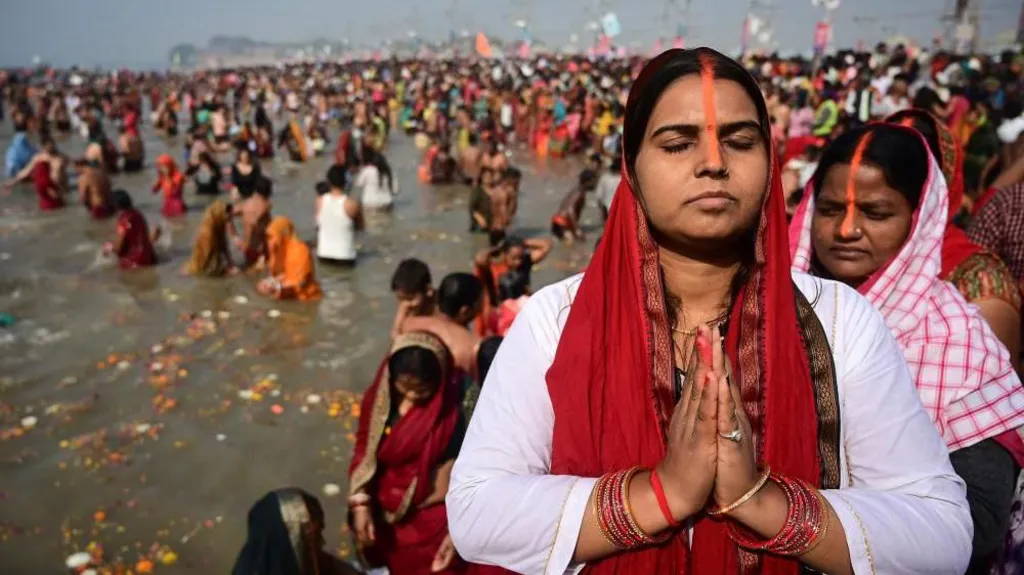
Kumbh Mela isn’t just big – it’s almost impossible to picture unless you’ve seen it. In 2025, over 150 million people will travel to Prayagraj, where the sacred rivers meet. Entire cities pop up overnight just to handle the crowds. People don’t come for a show. They come to bathe in the rivers, believing the water will wash away spiritual burdens. In a world obsessed with the new, Kumbh Mela is proof that ancient faith still pulls people harder than anything else. For millions, being there matters more than anything happening in the secular world.
2. Día de los Muertos – Mexico’s Death as Celebration
Day of the Dead challenges the conventional understanding of death. Instead of fear, there’s laughter, music, and colouring everywhere. Families build altars with marigolds, favourite foods, and sugar skulls, waiting for loved ones’ spirits to return and join the party. People fill the streets with processions, decorate graves, and share stories, all because they believe joy honours the dead better than quiet mourning. The celebration isn’t for show. It’s a profound belief – one that pushes back against the idea that death needs to be a lonely, solemn thing.
3. Rio Carnival – Brazil’s Democratic Expression
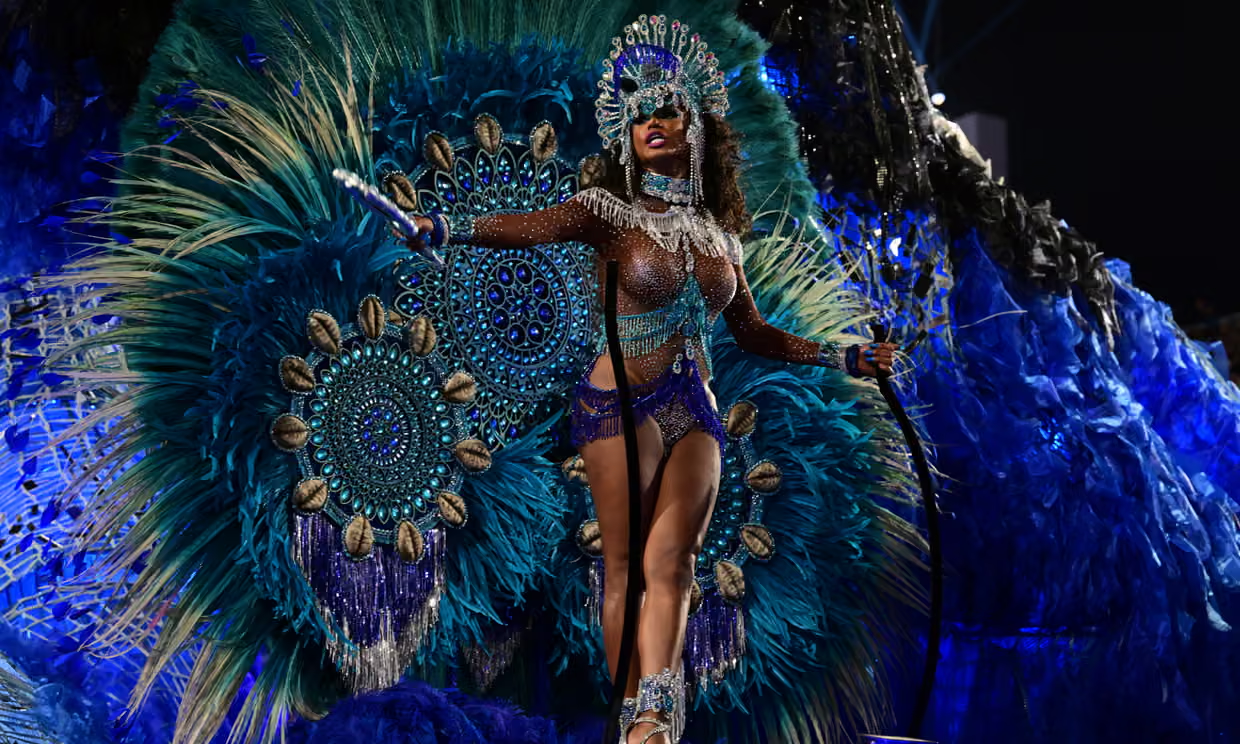
For a few wild days, Rio Carnival turns into the world’s biggest street party. Music blasts, dancers fill the avenues, and the city pulses with energy. But Carnival is more than glitter and parades – it’s where Brazil’s strict social divisions melt away. Wealthy and poor, everyone dances together. Samba schools spend all year getting ready because the festival is their moment to take over the streets and show who they are. For a brief window, creativity and joy matter way more than money or status.
4. Inti Raymi – Peru’s Decolonial Reclamation
High in the Andes, Inti Raymi welcomes the sun’s return each winter solstice. It’s ancient, spiritual, and fiercely proud. Colonisers once banned it, but now it’s back—full of music, dance, and rituals that honour the land and the sun as life-givers. For Indigenous Peruvians, bringing Inti Raymi back isn’t about putting on a show for outsiders. It’s about standing up for their own history and reclaiming the spiritual power colonial forces tried to erase. Every ritual is a statement: these traditions belong here, and they matter.
5. Holi – India’s Egalitarian Colour
The Holi festival isn’t just another festival – it’s pure joy. Every spring, when winter finally gives up, India bursts into colour. People grab handfuls of powder and toss them at friends, family, and strangers alike. For a few wild hours, all those signs that typically divide us – fancy clothes, obvious class markers – just disappear under a mess of pinks, blues, and yellows. It doesn’t matter who you are; everyone looks equally ridiculous and joyful. That’s the whole point: Holi is about belonging, about forgetting, at least for a while, the lines that separate us by race, gender, or class. You see strangers hugging, neighbours laughing, and everyone covered in colours because Holi insists that absolute joy requires letting go of the walls we build every day.
6. Edinburgh Fringe – Scotland’s Democratic Artistry
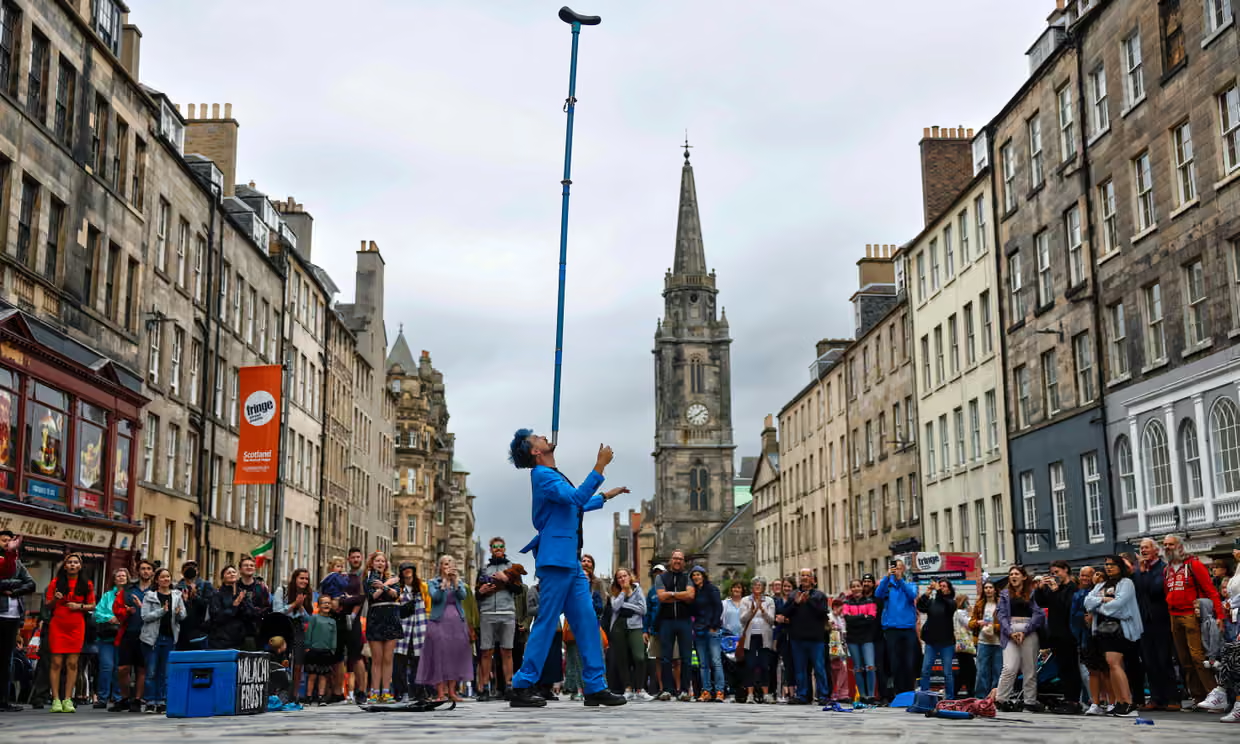
Every August, Edinburgh turns into one giant stage. The whole city – streets, pubs, even alleyways – fills up with stories, music, and wild ideas. Artists pour in from everywhere because anyone can perform at the Edinburgh Fringe. No one stands at the door deciding who’s worthy; if you’ve got a show, you’re in. The risk is real – many performers spend everything they have to get there, chasing the dream that art should be open to anyone, not just the ones with connections or approval from the “right” people. Sometimes, this gamble pays off in significant ways. The Fringe has launched careers exactly because it lets people take chances, experiment, and skip the safe route. It’s messy, unpredictable, and absolutely alive.
7. Yi Peng Lantern Festival – Thailand’s Collective Hope
Yi Peng dates way back – since the 13th century, people have marked the end of the monsoon season by sending thousands of glowing lanterns into the night. It’s a way to let go of the undesirable and make room for better things. But it’s more than just pretty lights. When you look up and see all those lanterns rising together, you realise you’re not alone with your hopes. Your wish floats up with everyone else’s, turning private prayers into something bigger. In a world where we’re all glued to our screens, this simple, shared moment feels rare and grounding. It’s a reminder that authentic renewal needs witnesses – it happens together.
8. Oktoberfest – Germany’s Communal Abundance
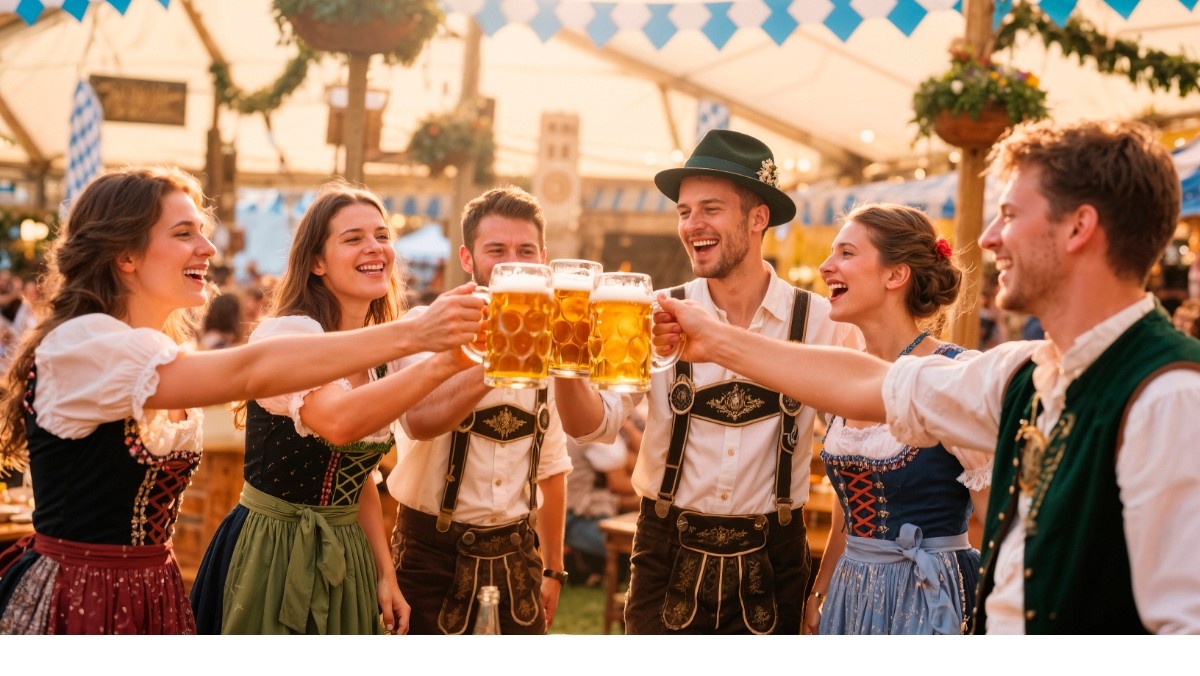
Oktoberfest extends beyond the beer itself—although, admittedly, beer plays a significant role. Every fall, Munich fills with millions of people, all celebrating a tradition that began in 1810 with a royal wedding. It’s the end of harvest, a time to eat, drink, and be grateful. Folks show up in old-school Bavarian outfits, swap stories, sing, and pile their plates high. Initially, these kinds of festivals were about survival – if the harvest was good, you got to live another year. Nowadays, few people worry about running out of food, but the festival still insists that absolute abundance means sharing the good stuff with others, not just keeping it for yourself. It pushes back against the idea that more is always better—sometimes enough is really enough, especially when you’re all in it together.
9. La Tomatina – Spain’s Anarchic Play
La Tomatina started as a random food fight in 1945 – just some friends messing around at a local festival. Now, every year, thousands pack into a tiny town in Valencia to chuck more than a hundred metric tonnes of tomatoes at each other. People from all over the world gather for one glorious, messy hour to unwind. There’s no deep religious meaning or big historical moment behind it. It’s just an hour where playfulness rules, where being ridiculous together is enough. The festival proves that sometimes, you don’t need a reason beyond pure, shared joy – and that’s worth celebrating, no matter what the productivity gurus say.
10. Albuquerque International Balloon Fiesta – America’s Sky Canvas
From October 4 to 12, 2025, Albuquerque transformed its sky into a vibrant explosion of colour for the International Balloon Fiesta. This is the world’s largest balloon festival, with over 500 balloons from 50+ countries. Pilots and crowds show up for the same reason: there’s nothing like seeing hundreds of balloons drift up together. It’s not just a technical feat; it’s art in motion, created by an entire community. Even though hot air ballooning is barely 250 years old, people treat it with a kind of respect you usually see with old traditions. The Fiesta proves that when a community throws its energy behind something, even a newer practice can become tradition. Culture isn’t just about holding on to the past – sometimes, it’s about making something new feel timeless.
What Ties All These Celebrations Together?
On the surface, festivals around the world look different. But they all do a few of the same things: they welcome changing seasons, honour spiritual beliefs, bring people together, and pass on what matters to the next generation. Festivals give everyone a break from the constant grind, letting people connect in ways that don’t always fit into a “productive” schedule. These gatherings remind us that life isn’t just about what you own, but about rituals, remembering ancestors, and playing together. It’s about sharing moments and living out the values that make a community real.
READ ALSO:
- Tomorrow, Forged in Our Vision: Afrofuturism as the World’s New Compass
- How Diaspora Cuisine Became a Tool of Cultural Diplomacy
- How African Dance Took Over the World, From Streets to TikTok
How Do Traditions Keep Going in Modern Times?
Festivals stick around because they offer something you can’t get from a screen or a chat app: real, shared experiences. When people come together in person – feeling the same excitement, reacting in the exact moment – that’s when tradition means something. Festivals also give artists and culture-bearers a reason (and a way) to keep their crafts alive. They pull in the next generation, too, by making even the oldest traditions feel fresh and exciting. Of course, striking a balance is always necessary. Festivals need money, and tourists bring it, but organisers have to make sure locals come first, and visitors respect what they’re seeing. You’re there to witness, not to own the experience.
See life through a creative lens — explore Culture & Arts on OmirenStyles.
Frequently Asked Questions
1. What’s the difference between a cultural festival and just plain entertainment?
A cultural festival isn’t just about having fun. It passes down values, marks essential moments, or fulfils spiritual needs. These events stem from a specific community or tradition, not just a desire to throw a party.
2. How do festivals stay relevant today?
The best festivals mix old customs with new ideas. They work on initiatives like becoming more eco-friendly, making events more accessible, and using technology so people far away can join in. Crucially, they let the community lead – so tradition doesn’t get swallowed up by commercial interests.
3. Why go to a festival that isn’t from your background?
Simply put, it provides you with a fresh viewpoint. Witnessing someone else’s traditions builds empathy and can make you rethink your assumptions. But you’ve got to show up with curiosity, a little research, and respect – you’re a guest, not the star.
4. How do festivals hold off commercialisation?
It comes down to local control. Setting limits on vendors, putting artists ahead of commercial acts, and keeping certain rituals private all help keep things real. It’s about making sure money doesn’t drown out meaning.
5. Can festivals really save endangered traditions?
Festivals shine a spotlight on traditions and can help make them financially viable. But they only truly preserve them if those practices are alive outside the festival, carried on by real communities all year, not just put on show once a year.