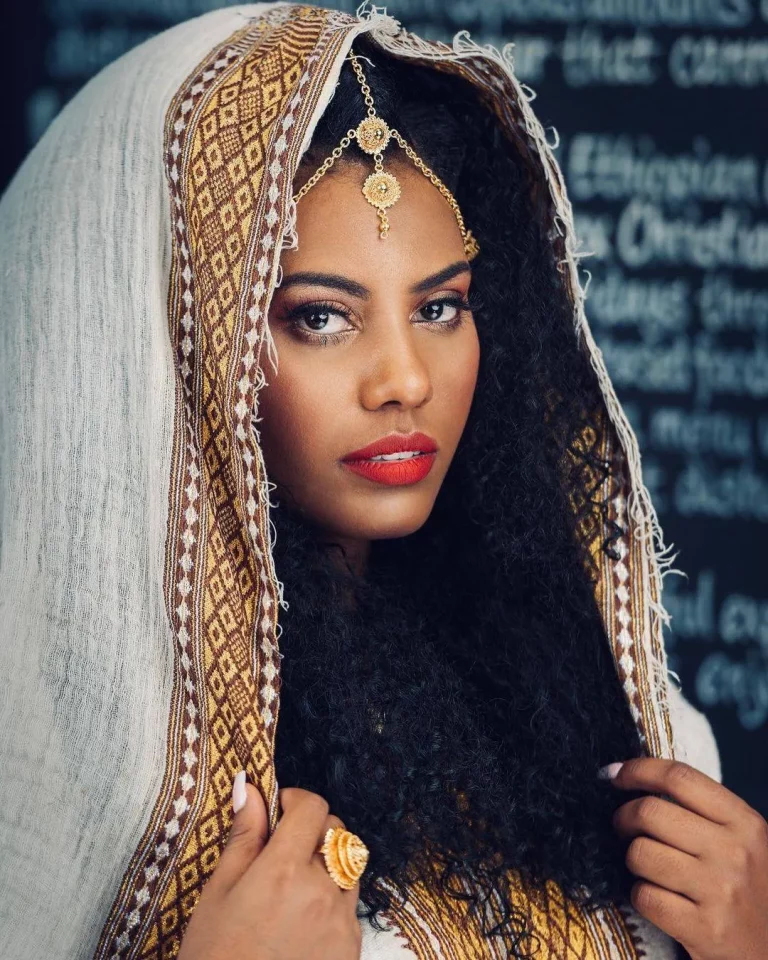
In fashion, the most enduring statements are rarely loud. They are quiet, deliberate, and deeply rooted in meaning. A single piece of cloth has often held the weight of belief, identity, and belonging in many cultures. In Ethiopia, that cloth is the netela, a lightweight shawl that has long occupied a place at the intersection of spirituality, social etiquette, and personal expression.
At first glance, the netela appears simple: a translucent cotton wrap, often white, edged with subtle woven borders. Yet this apparent simplicity is deceptive. The netela is not an accessory in the modern sense; it is a cultural constant. For centuries, it has shaped how bodies move through sacred spaces, public life, and communal memory. Today, as global fashion increasingly values restraint, versatility, and story-driven design, the netela is being rediscovered, not as a relic, but as a timeless design language with global resonance.
For Omiren Styles, the netela represents how heritage can quietly rewrite modern fashion without losing its soul.
Discover the Netela: Ethiopia’s iconic shawl, rich in spiritual meaning and quiet elegance. Explore its journey from a sacred symbol to a global style staple and why its philosophy of layered, sustainable design resonates today.
Ethiopia and the Philosophy of Layered Dress
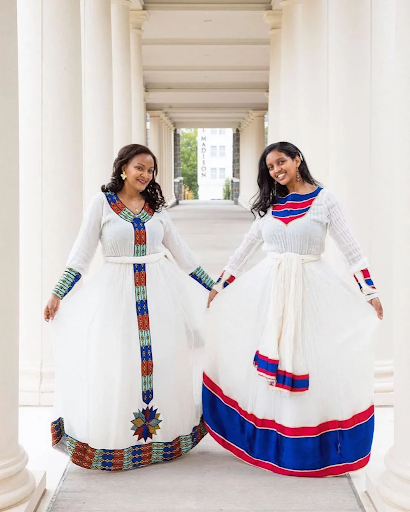
Ethiopian fashion has never been about excess. Rooted in climate, spirituality, and social norms, traditional dress evolved around layering and garments that could adapt to different moments of the day, different spaces, and different meanings. Clothing was designed to move fluidly between the sacred and the everyday, between visibility and modesty.
In Ethiopian culture, layering is both useful and meaningful. A single outfit could be transformed by adding or removing a shawl to signal respect, transition, or readiness. Within this system, the netela became indispensable. It was not seasonal or situational; it was constant, adaptable, and deeply embedded in daily life.
This philosophy of layered dresses now mirrors contemporary fashion’s shift towards modular, versatile pieces, placing the netela unexpectedly at the centre of modern relevance.
What’s the Netela? A Garment of Meaning
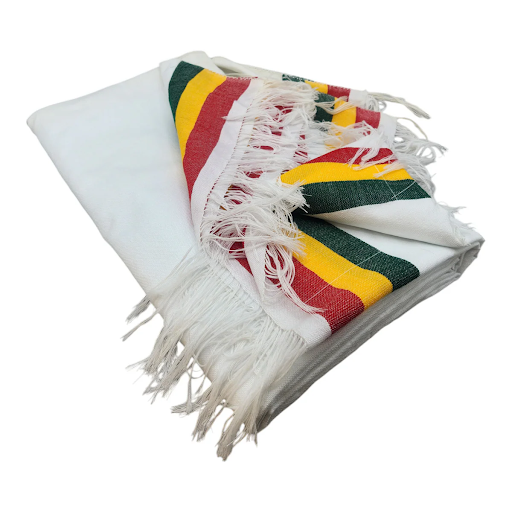
The netela is a hand-woven Ethiopian shawl made from fine shema cotton, traditionally woven on narrow looms and sewn into wider panels. It is lighter and more delicate than the kuta, its thicker counterpart, making it suitable for year-round wear.
The defining feature of the netela is its tibeb, woven borders that frame the garment. These borders are not decorative afterthoughts; they are intentional markers of identity, spirituality, and occasion. The netela’s form allows it to be:
- Draped over the shoulders
- Wrapped around the upper body
- Folded for a head covering
- Styled loosely or formally
Its lack of rigid structure is precisely what gives it power. The netela adapts to the wearer, not the other way around.
Spiritual Life and Sacred Presence
Historically, the netela has been inseparable from Ethiopian spiritual life, particularly within Ethiopian Orthodox Christianity. Worn to church services, religious festivals, and holy days, it functioned as a visual expression of humility, reverence, and collective belonging.
Covering the shoulders or head was not simply a matter of modesty; it was a way of preparing the body for sacred space. The white or ivory tones of the netela reinforced ideals of purity and spiritual clarity, creating a visual harmony within communal worship.
Even today, the netela remains a powerful symbol in religious settings, connecting contemporary worshippers to centuries-old traditions through cloth rather than doctrine.
The Language of Tibeb: Borders That Carry Memory
The tibeb is the netela’s quiet storyteller. When woven using coloured threads, their patterns and hues often reflect layered meanings.
- Gold or yellow symbolises spirituality, honour, and celebration
- Black represents continuity, depth, and seriousness
- Green and red evoke life, sacrifice, and cultural symbolism
These borders frame the body without overwhelming it. In many ways, the tibeb functions like a visual whisper, asserting identity without spectacle. This subtlety is what makes the netela resonate so strongly with contemporary minimalist aesthetics.
Craftsmanship, Community, and Sustainability
The making of a netéla requires patience. Shema weaving is labour-intensive, requiring skilled hands, time, and generational knowledge. Often produced within family or community settings, the process reflects collective effort rather than industrial speed.
Long before sustainability became a global fashion concern, Ethiopian textile traditions practised it out of necessity and as a philosophy. The netela embodies:
- Slow production
- Low environmental impact
- Ethical labour rooted in community
Each piece carries not just material value but also social and cultural labour, making it inherently aligned with contemporary ethical fashion movements.
The Netela in Everyday Ethiopian Life
While deeply spiritual, the netela has never been confined to sacred spaces. It has always been a part of daily life, worn to markets, social visits, and informal gatherings. Its versatility allows it to function as:
- Protection from the sun or the wind
- A marker of respect in social interactions
- A personal comfort object
This everyday presence is key to its longevity. The netela is worn not for performance but for living, an attribute that gives it timeless relevance.
Ethiopian Shawls and the Rastafarian Movement
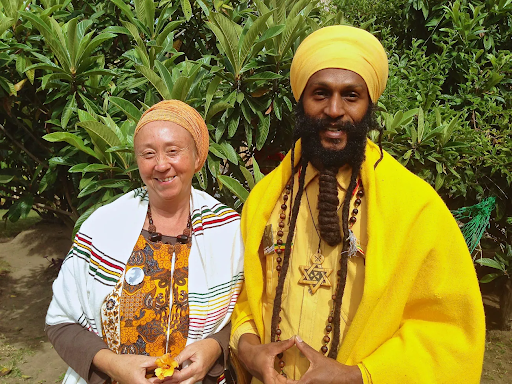
Beyond Ethiopia’s borders, the netela and related Ethiopian shawls hold profound significance within the Rastafarian movement. Rooted in reverence for Ethiopia as a spiritual homeland and symbol of African sovereignty, Rastafarian culture has long embraced Ethiopian garments as expressions of identity, resistance, and spiritual alignment.
Rastafarians often wear white shawls, wraps, and traditional Ethiopian textiles as symbols:
- Purity and righteousness
- Connection to Zion (Ethiopia)
- Rejection of Western material excess
The netela’s simplicity, natural fabric, and spiritual associations resonate deeply with Rastafarian values. Worn during ceremonies, gatherings, and moments of meditation, Ethiopian shawls became visual symbols of Black consciousness, Pan-African identity, and spiritual return.
Because of this connection, the netela became a global cultural symbol that was woven into music, activism, and spiritual expression in the Caribbean, Europe, and the Americas.
The Contemporary Revival of the Netela
In recent years, the netela has been reintroduced to contemporary fashion through thoughtful reinterpretation. Designers and stylists have begun positioning it not as a traditional costume but as a versatile styling element.
Today, the netela appears:
- Draped over tailored blazers
- Styled with evening wear
- Layered with modern silhouettes
The softness of the netela contrasts with the structure of more rigid garments, adding depth without adding heaviness. This balance is what makes the netela particularly compelling in modern fashion contexts.
Colour, Experimentation, and Modern Adaptation
While white remains iconic, contemporary netela designs now explore:
- Muted earth tones
- Coloured bases with traditional borders
- Subtle textural variations
These adaptations allow the netela to move fluidly between tradition and innovation—honouring its origins while engaging new audiences.
ALSO READ
- Kanga Chronicles: The Living Language of East Africa’s Most Iconic Fabric
- Loza Maléombho: Redefining African Fashion for the Global Stage
The Netela in the Diaspora
For Ethiopians in the diaspora, the netela functions as a portable archive. Worn at weddings, cultural festivals, and public celebrations, it reconnects individuals to home through touch and memory.
Diasporic creatives have also introduced the netela into editorial fashion spaces, presenting it as both a cultural artefact and a modern styling piece, bridging heritage and global visibility.
Gender, Fluidity, and Timeless Design
Though traditionally associated with women, the netela’s form transcends gender. Its unstructured design aligns naturally with contemporary conversations around gender-neutral fashion, offering freedom rather than prescription.
In this way, the netela quietly challenges rigid fashion categories—proving that cultural garments often predate and surpass modern debates.
Why the Netela Matters in Global Fashion
As global fashion reckons with questions of meaning, ownership, and sustainability, the netela offers a powerful alternative model:
- Heritage without nostalgia
- Luxury without excess
- Spirituality without performance
It demonstrates that the future of fashion may not lie in constant reinvention but rather in respectful recontextualisation.
The Omiren Styles Perspective
At Omiren Styles, fashion is understood as narrative and memory. The netela tells a story of humility, resilience, and aesthetic discipline, one that moves quietly yet leaves an indelible impression.
It reminds us that elegance does not need to demand attention.
It simply needs to endure.
A Shawl That Carries the World
The netela has survived centuries because it remains functional, meaningful, and adaptable. Its current resurgence in global fashion is not a revival; it is recognition.
From Ethiopian sacred spaces to Rastafarian spiritual life, from everyday wear to modern styling, the netela continues to carry identity across borders and generations.
For Omiren Styles, the netela is not just a garment.
It is a philosophy of fashion, light on the body, heavy with meaning.
Frequently Asked Questions (FAQs)
1. What exactly is a Netela?
The Netela is a sheer, handwoven cotton shawl from Ethiopia, traditionally crafted from fine shema cotton. Delicate and translucent, often white or ivory, it features intricately woven coloured borders called tibeb. It serves as a versatile accessory for spiritual rituals, social customs, and daily use.
2. How is a Netela different from other Ethiopian shawls?
The Netela is lighter and more delicate than the kuta, which is a thicker, warmer woven wrap. The Netela’s finesse and drape make it suitable for all-season wear and for formal or spiritual settings.
3. What is the meaning of the borders (tibeb) on a Netela?
The tibeb are not simple decorations; they are symbolic borders with purpose. Popular colours include gold (spirituality, festivity), black (continuity, solemnity), and green/red (vitality, sacrifice). They frame the wearer, often denoting identity, occasion, or values.
4. Is the Netela only worn in religious settings?
No. While it holds deep significance in Ethiopian Orthodox Christianity as a garment of reverence, the Netela is also an integral part of everyday Ethiopian life. It is worn to markets and social gatherings, as well as for protection from the elements, demonstrating its unusual combination of sacred and practical uses.
5. What is the connection between the Netela and the Rastafarian movement?
For Rastafarians, Ethiopia is a spiritual homeland. Ethiopian shawls, such as the Netela, are embraced as symbols of African identity, purity, and resistance to Western materialism. They are worn in ceremonies and as expressions of Pan-African consciousness and spiritual alignment.