Cultural Night at the AMVCA is not a costume event. It is not a themed party. It is not an opportunity for celebrities to play dress-up in their grandmother’s fabrics. This distinction matters because misreading what it is leads to misreading what it does.
On May 8, 2026, the Balmoral Convention Centre in Victoria Island, Lagos, held the 12th edition of the AMVCA Cultural Night. The room held coral beads and carved staffs, Adire and Aso-Oke, royal brocade and silk capes, Okuku crowns and cowries. None of it was decoration. Every piece was a statement. Every look was a claim. When Nigerian public figures walk into that space in the dress of their people, they are not performing heritage. They are exercising it.
This is what Omiren Styles is here to document: not just what they wore, but what it means to wear it.
The AMVCA 12 Cultural Night on May 8, 2026, was not a fashion event. It was an act of cultural testimony. From Edo royalty to Ijaw brocade, here is what everyone said.
Heritage Is Not a Trend
There is a version of this conversation that reduces Cultural Night to aesthetics. That version asks which look was most striking, which celebrity turned the most heads, and which outfit will go viral. That version is not wrong, but it is incomplete.
The deeper story of AMVCA 12 Cultural Night is one of knowledge. About a generation of Nigerian public figures who not only wore their heritage but could name it. Could explain it. Could place it in the longer story of the communities it came from.
BBNaija Season 10 winner, Imisi, arrived wrapped in Adire and crowned with cowries. She did not describe her look as traditional. She was specific. She said it represented the wealth and identity of a daughter of Yoruba soil. That specificity is significant. Adire is not simply a fabric. It is a Yoruba resist-dyed textile whose production tradition runs through communities in Abeokuta and Ibadan, historically controlled by women, historically tied to female economic independence. As Omiren Styles documented in its Indigo Trail analysis, cowries carried monetary and spiritual value across West African cultures long before colonial currencies replaced them. Imisi was not wearing a look. She was citing a lineage.
Kaybobo brought a different register of Yoruba knowledge into the room. Drawing on the concept of OKIN, the peacock regarded in Yoruba cosmology as the king of birds, he built an entire look around that symbolism. A vibrant green-and-purple Aso-Oke Agbada, paired with green glass beads, made the cultural reference legible to anyone who understood it and visually powerful even to those who did not. Aso-Oke is not a casual textile. It is a hand-loomed cloth woven by Yoruba artisans and reserved for significant moments. Wearing it at Cultural Night is not an aesthetic; it is a declaration of occasion.
The Edo Statement
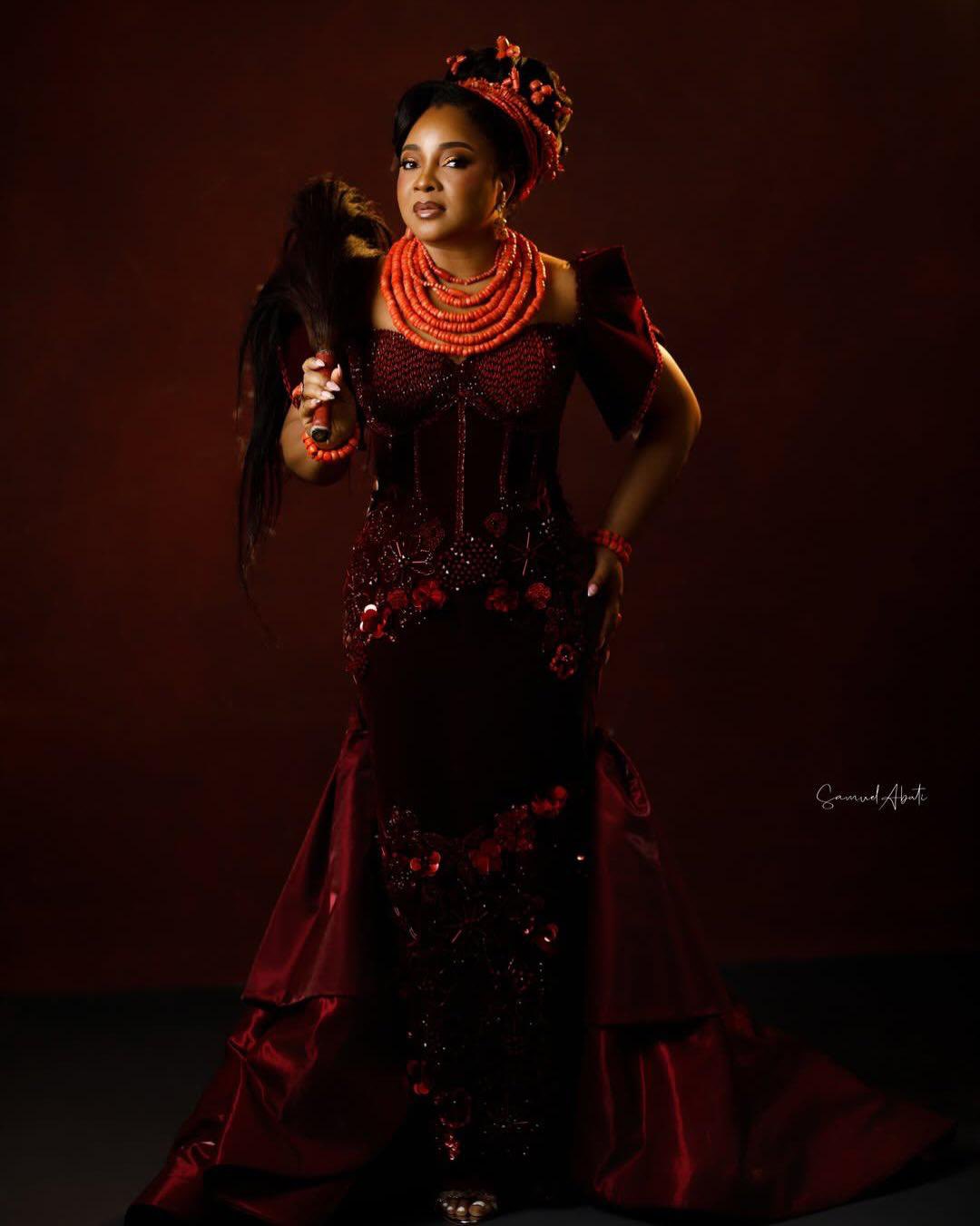
No cultural tradition carried more weight on May 8 than the Edo presence, and it arrived through four distinct voices.
Ibrahim and Linda Ejiofor-Suleiman opened the evening’s Edo chapter in coordinated royal attire. They described the look as Prince and Princess, and nothing about that framing was casual. Ibrahim wore a white long-sleeved robe with dark chest embroidery, an orange-coral velvet cap, a long string of coral beads, beaded bracelets, and carried a carved traditional staff. Linda wore a sequined velvet gown with the Okuku coral bead crown atop her head, a beaded horsetail whisk at her side, and authentic Ivie beads layered throughout the look from the neckline to the wrist. The Okuku is not merely a headpiece. In Edo tradition, it is worn by women of royal or high ceremonial status. The coral, historically traded across the Bight of Benin, marks prestige, spiritual authority, and connection to the Oba’s court. Together, Ibrahim and Linda did not arrive at a party. They arrived as a citation.
BBNaija Season 10 star Shaun Okojie stated his intention before anyone could read it from his clothes. He announced himself as Omo N’Oba, meaning child of the King in Edo. Then the look confirmed it: a white long-sleeved tunic beneath a wine-coloured velvet robe with gold embroidery, completed by a single, carefully placed strand of coral beads. The restraint in that single strand was precise. It did not need to be louder. The phrase had already done the work.
Prince Enwerem arrived in all red. An all-red Edo prince ensemble, richly embroidered, paired with vintage-style accessories. In Edo royal dress, colour is communicative rather than decorative. Red carries specific ceremonial associations in the Benin Kingdom tradition. Prince Enwerem did not choose red because it looked bold. He chose it because it said something. According to Punch’s pictorial coverage of the night, his look was among the most discussed.
Four Edo looks. Four different registers of the same sophisticated royal tradition. One of the most visually codified and historically documented royal cultures on the African continent was represented not once but four times, across different people, silhouettes, and moments in the same evening.
The Niger Delta Speaks
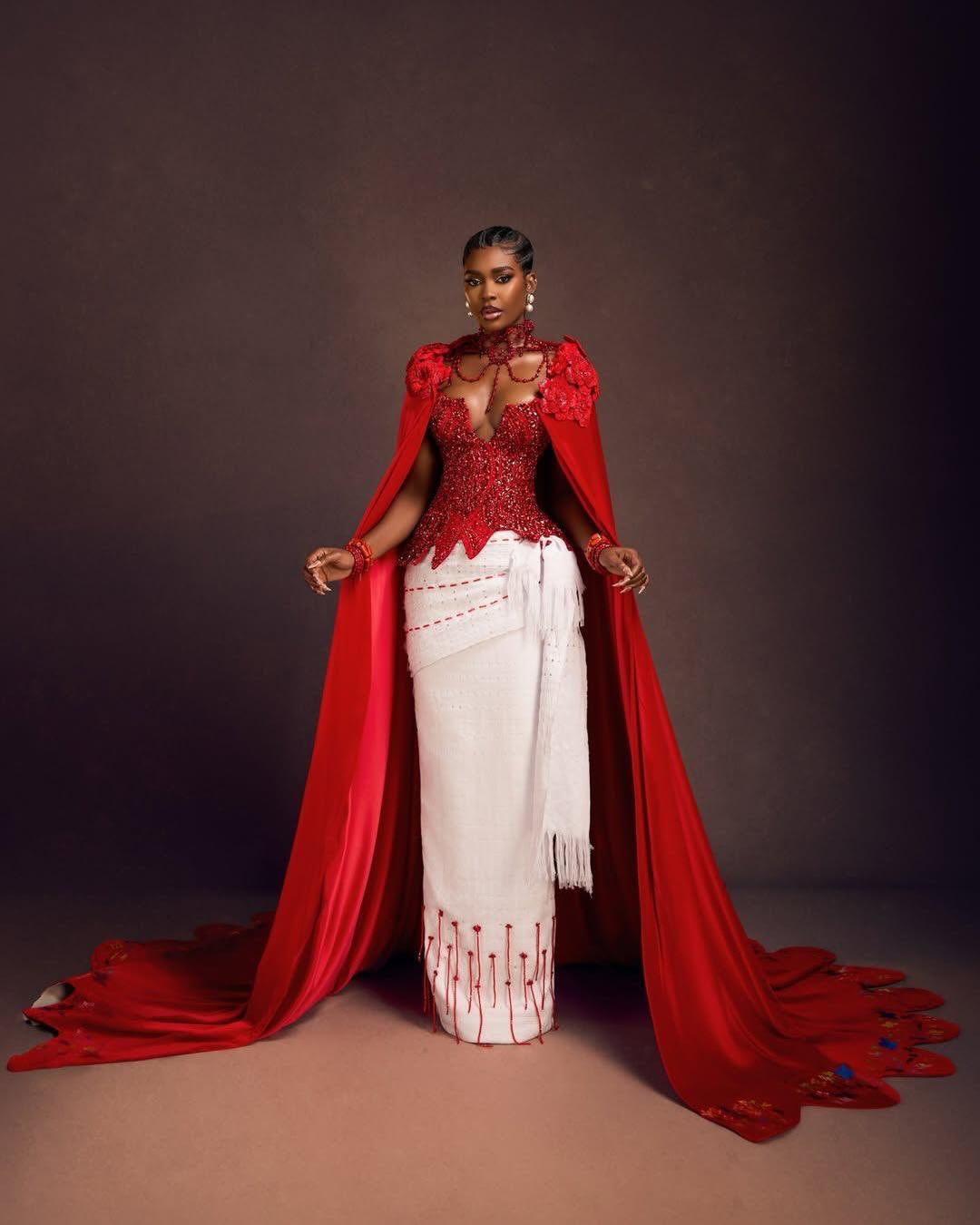
Mensan brought the Ijaw heritage of the Nigerian Delta into the room with full ceremonial weight. His look featured a royal brocade robe, a red-and-gold crown, and authentic coral beads. The Ijaw are one of the oldest and largest ethnic groups in Nigeria, a people whose history of resistance, trade, and maritime culture produced a rich and distinct visual tradition. Brocade in Ijaw ceremonial dress signals dignity and occasion. The crown signals leadership. Mensan wore both without apology.
Dede, BBNaija Season 10’s first runner-up, took a different route into the Delta story. Her sequined corset paired with a floor-length silk cape was a modern interpretation of Delta State heritage, not a reproduction. This distinction matters because it reflects something Omiren Styles has documented directly: African fashion that draws from heritage textiles often resists disposability. Its meaning cannot be reduced to a microtrend because it is anchored in intergenerational memory. Dede’s look asked what it looks like when that memory moves forward.
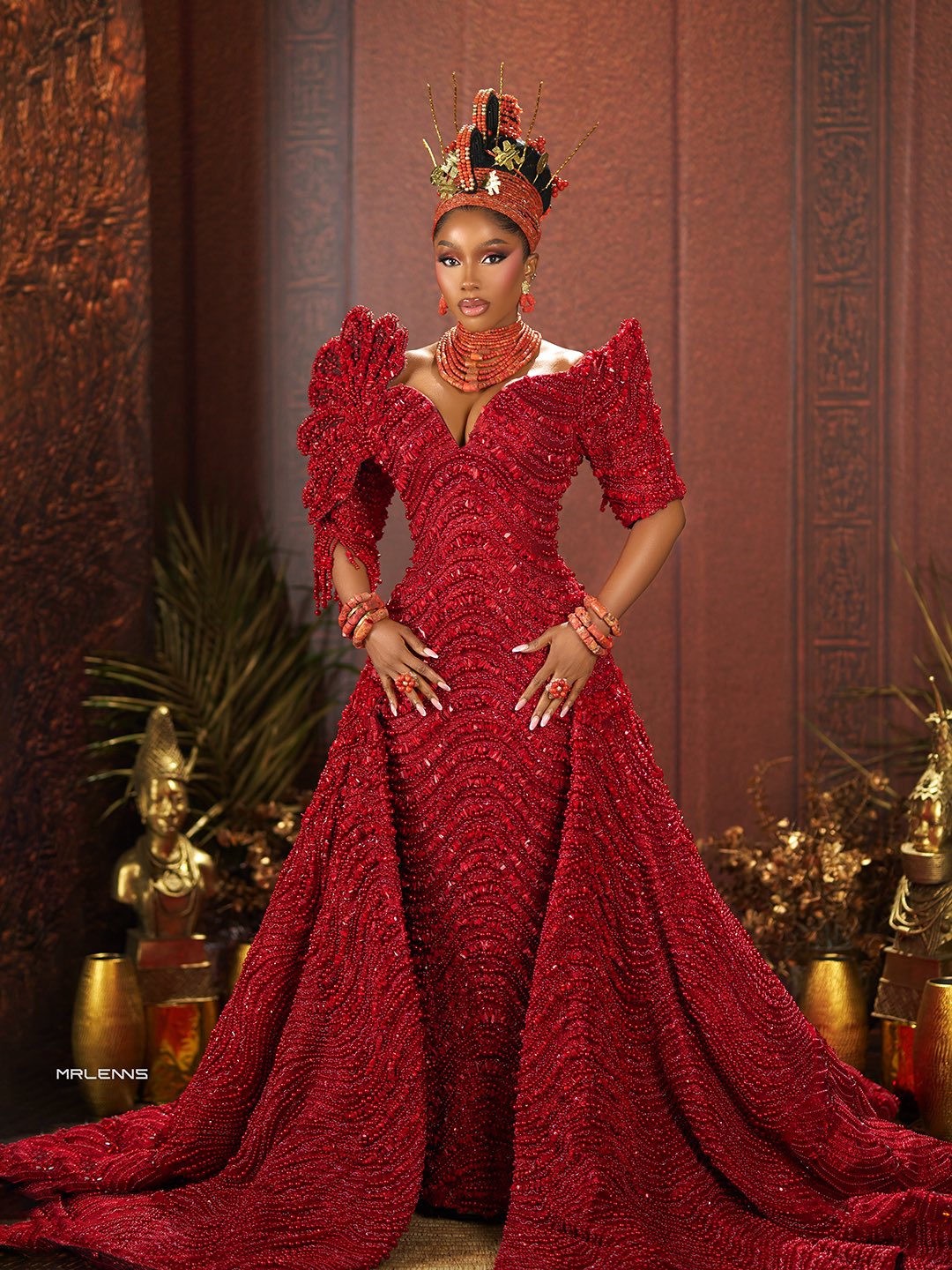
Liquorose, arriving at the Balmoral Convention Centre in an ornate red-velvet-and-gold corseted gown with dramatic sleeves and coral beading, made one of the evening’s strongest fashion statements. The placement of coral beading on a velvet corseted silhouette is not coincidental. It places the weight of the coral’s cultural significance, royalty, spiritual authority, and Niger Delta trade history onto a contemporary structure. The result is a look that is fully of its moment and fully of its history at the same time.
The AMVCA may measure what African creatives have built. Cultural Night measures what they carry.
What Cultural Night Does That the Main Awards Cannot
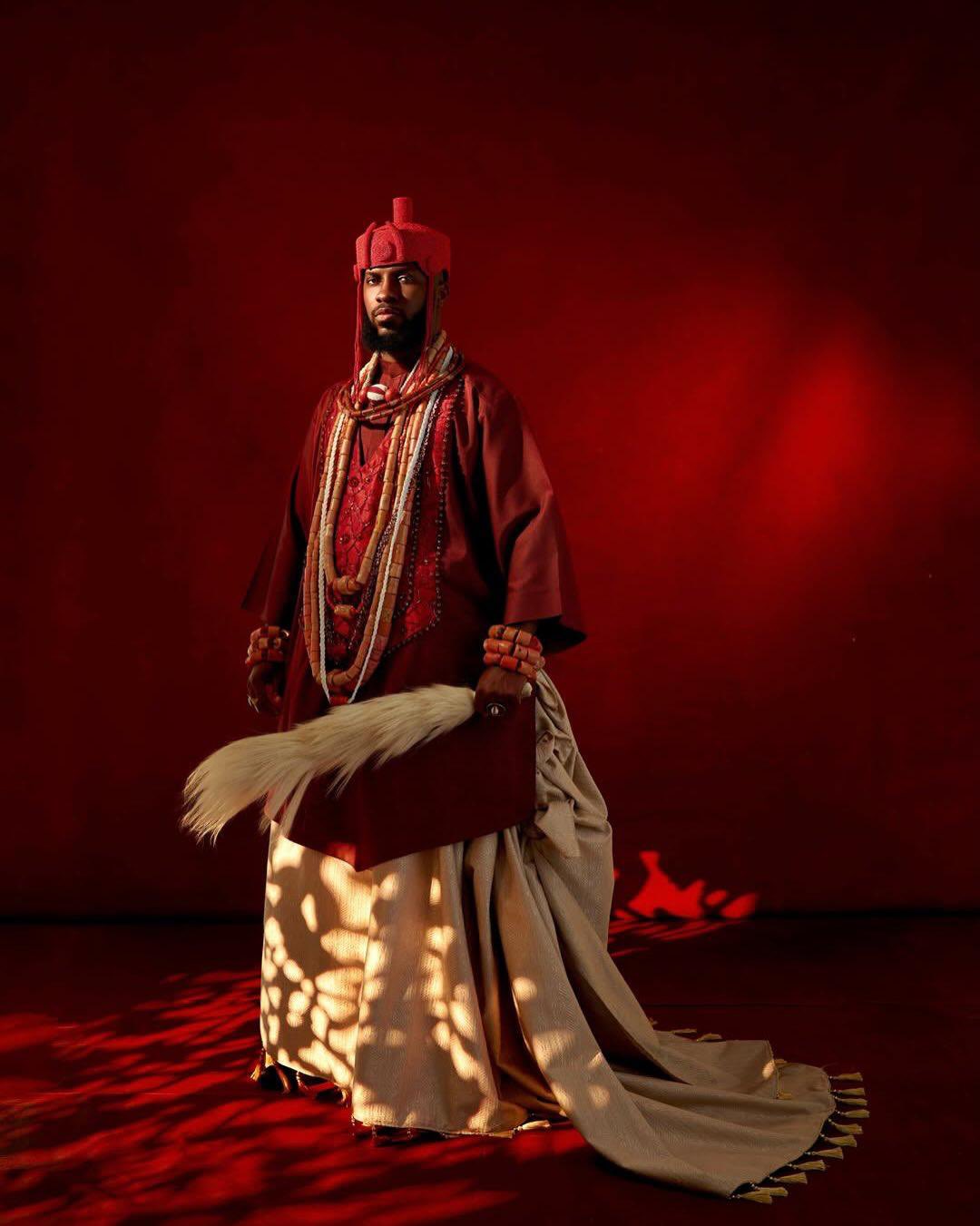
There is a reason the AMVCA weekend begins with Cultural Night rather than ending with it. The awards night celebrates the work. Cultural Night asks where the work comes from.
African storytelling has always been inseparable from the cultures that produced it. From the languages, the rituals, the textiles, the ways communities mark time, celebrate lineage, and mourn the dead. The films and series being celebrated at AMVCA 12, the following evening,g are rooted in those living traditions. Cultural Night makes that rootedness visible. It grounds the entire weekend in something larger than the industry.
Pulse Nigeria described the Cultural Night as the event that sets the tone and refocuses on the roots of African storytelling before the trophies are handed out. That framing is accurate, but the deeper point is this: the trophies are downstream of the culture. Cultural Night puts the source upstream, where it belongs.
The Demand This Places on the Industry
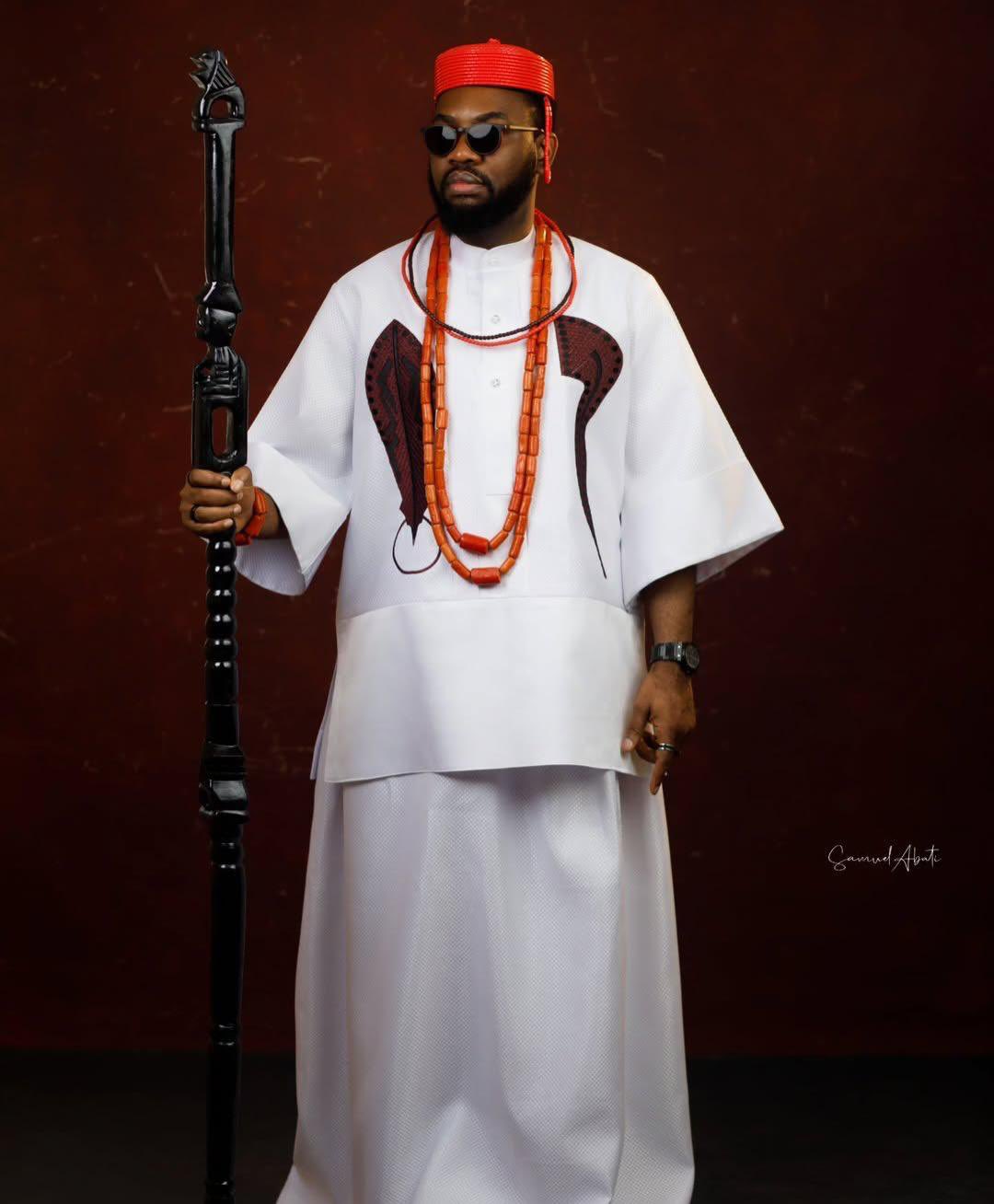
Events like this carry a quiet demand. They ask the broader fashion industry, global buyers, international press, and the algorithm that decides which images circulate to view African traditional dress as a primary language. Not a regional dialect of something else. Not an ethnic influence. Not a reference.
Coral beads are not an ethnic touch. Aso-Oke is not a cultural costume. An Okuku crown is not an accessory. These are the complete vocabularies of civilisations that predate the fashion calendar, the fashion house, and the fashion week by centuries. When they show up at the AMVCA Cultural Night, they are not asking to be included in the global conversation. They are demonstrating that the global conversation has always depended on them. As the Omiren Styles textile heritage investment analysis argued, global interest in heritage textiles is no longer purely aesthetic. Consumers seek origin stories, lineage, and traceability. AMVCA Cultural Night is the proof of concept. When African people dress in their heritage and name what it means, the story is complete. It needs no translation. It needs no Western reference point to be valuable.
The 12th edition reminded the room, and everyone watching, why this night exists. It exists because the culture that produces African stories is worth celebrating before anyone decides which stories are worth a prize.
Also Read:
- The Indigo Trail: How West African Resist-Dyeing Traditions Are Being Reclaimed from Global Trend Culture
- The Aso-Oke Weaver Crisis: What Happens When the Artisans Who Make Nigeria’s Most Important Cloth Can No Longer Afford to Weave It
- Investing in Textile Heritage: The Business Case for Preserving What Western Fast Fashion Cannot Copy
- Who Actually Owns Ankara: The Legal and Cultural Argument the Fashion Industry Has Been Avoiding
Quick Reference: AMVCA 12 Cultural Night Looks
|
Star |
Heritage |
Key Elements |
|---|---|---|
|
Linda Ejiofor-Suleiman |
Edo |
Sequined velvet gown, Okuku coral crown, Ivie beads, horsetail whisk |
|
Ibrahim Suleiman |
Edo |
White embroidered robe, coral velvet cap, coral beads, carved staff |
|
Shaun Okojie |
Edo |
Wine velvet robe, gold embroidery, coral beads (Omo N’Oba) |
|
Prince Enwerem |
Edo |
All-red embroidered Edo prince ensemble |
|
Imisi |
Yoruba |
Adire fabric, cowrie crown |
|
Kaybobo |
Yoruba |
Green and purple Aso-Oke Agbada, green glass beads (OKIN) |
|
Mensan |
Ijaw |
Royal brocade robe, red and gold crown, coral beads |
|
Dede |
Delta State |
Sequined corset, floor-length silk cape |
|
Liquorose |
Niger Delta |
Red velvet and gold corseted gown, dramatic sleeves, coral beading |
The Omiren Argument
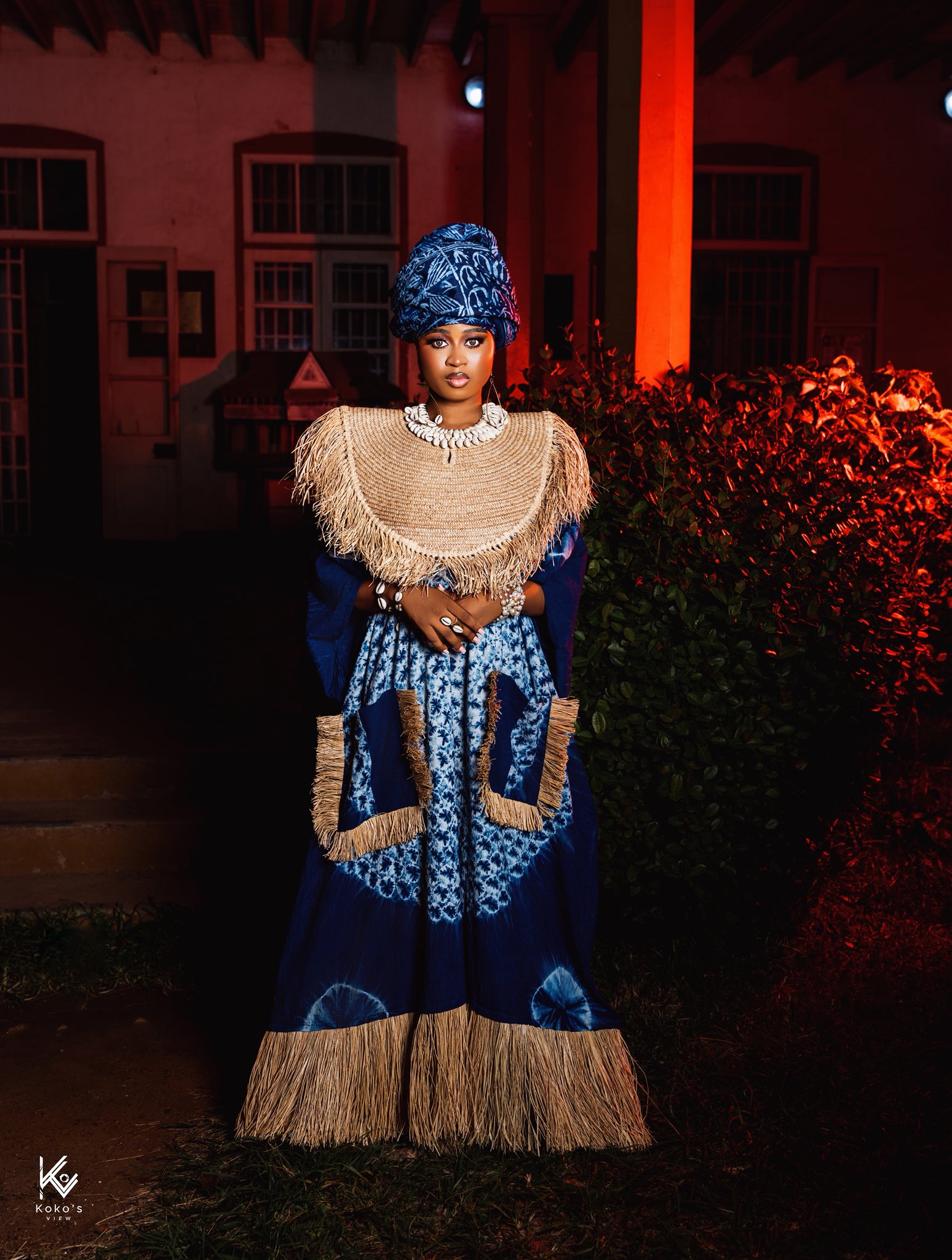
Cultural Night is the most editorially honest event on the Nigerian entertainment calendar because it has only one brief: be specific. Not inspiring. Not aspirational. Not globally legible. Specific. The specificity that showed up on May 8 at the Balmoral Convention Centre, the Okuku worn by Linda Ejiofor-Suleiman, the OKIN symbolism Kaybobo encoded in green and purple Aso-Oke, Shaun Okojie’s single strand of coral against a wine velvet robe, Mensan’s Ijaw royal brocade, Imisi’s cowrie crown over Adire, was not decoration. It was documentation. Each person who arrived in the dress of their people and named what it meant created a public record of a living tradition, demonstrable proof that the knowledge systems behind these garments are intact and in active use by the generation that will carry them forward.
The fashion industry, which has spent the last decade talking about cultural heritage, needs to understand that Cultural Night at the AMVCA is what cultural heritage looks like when it is not being performed for an external audience. The people in that room know what they are wearing and why. The coral on Liquorose’s corseted gown does not need a caption to carry its meaning. The carved staff Ibrahim Suleiman held does not need an explainer. The knowledge is already in the room. The industry’s task is not to translate it. It is to stop requiring translation before it assigns value.
Frequently Asked Questions
What is the AMVCA Cultural Night?
The AMVCA Cultural Night is an annual event held the evening before the main Africa Magic Viewers’ Choice Awards ceremony. Guests attend in traditional attire representing their ethnic heritage. It is not a themed costume event. It is a dedicated space for Nigerian and African public figures to represent their communities through dress, and to name what that dress means.
When and where did AMVCA 12 Cultural Night take place?
May 8, 2026, at the Balmoral Convention Centre, Victoria Island, Lagos, as part of the 12th edition of the AMVCA, which ran from May 6 to May 9, 2026.
Who stood out at AMVCA 12 Cultural Night?
The most discussed looks came from Ibrahim and Linda Ejiofor-Suleiman in coordinated Edo royal attire, Shaun Okojie in a wine velvet Edo robe, Prince Enwerem in all-red Edo dress, Imisi in Yoruba Adire and cowries, Kaybobo in an OKIN-inspired Aso-Oke Agbada, Mensan in Ijaw royal brocade, Dede in a Delta State modern interpretation, and Liquorose in red velvet and gold with coral beading.
What does Omo N’Oba mean?
Omo N’Oba is an Edo phrase meaning child of the King. It carries ceremonial and royal weight within Edo tradition. Shaun Okojie’s announcement of the phrase on arrival at Cultural Night was a deliberate framing of his look as a statement of royal Edo lineage.
Why does Cultural Night happen before the AMVCA main ceremony?
The placement is intentional. Cultural Night grounds the entire awards weekend in the heritage that informs African storytelling. It reminds the industry that the films and series being celebrated are rooted in living cultures. The night sets the tone rather than acting as an afterthought to the trophies.
What is the cultural significance of coral beads at events like this?
Coral beads carry specific ceremonial meaning across Edo, Ijaw, Itsekiri, and Yoruba traditions. In the Benin Kingdom, coral is closely tied to the Oba’s court, spiritual authority, and royal status. Historically, coral was traded along routes connecting the Bight of Benin to North Africa and the Mediterranean, making it a marker of both prestige and global connectivity. Wearing it at Cultural Night is a citation of that history, not an accessory choice.
Explore More
Omiren Styles covers African fashion, cultural identity, and the heritage economies that drive them. Read the full Events coverage at Omirenstyles Events Page and explore the complete Fashion > Textiles archive for in-depth analysis of the traditions that filled the room on May 8.