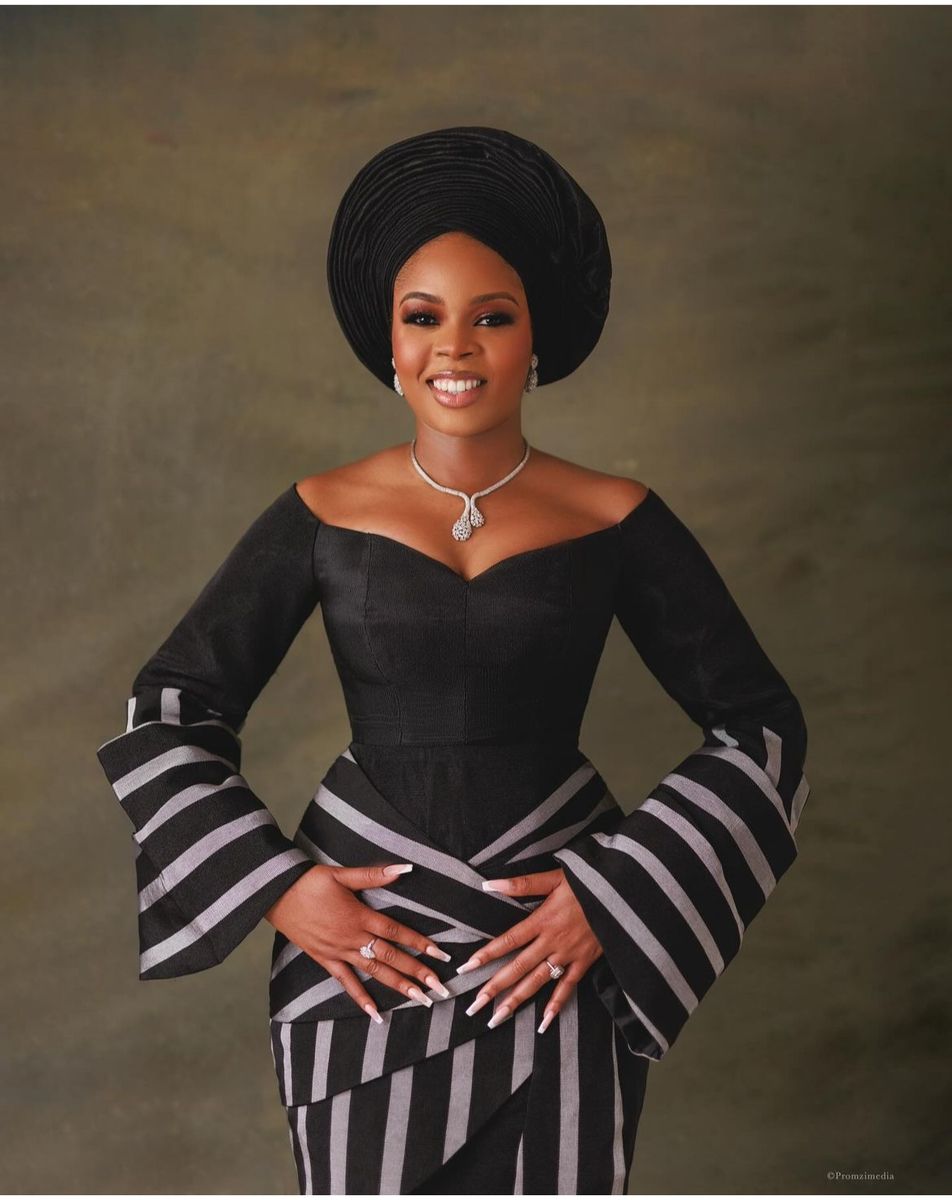
There is a textile in Nigeria that was once used as currency. Not decoratively, not symbolically, but in actual economic exchange, passed between families as part of marriage transactions, accepted as payment, and stored as wealth. That textile is the A’nger, the black-and-white striped handwoven cloth of the Tiv people of Benue State, and the fact that it functioned as money tells you everything you need to know about how seriously the Tiv have always treated cloth. A community that makes its fabric into currency understands something about the relationship between identity and material that most cultures never arrive at. Anger cloth styles for Tiv women in 2026 carry that understanding forward, worn by a people for whom dressing in their native cloth is not a heritage gesture but an act of economic, cultural, and philosophical continuity.
The Tiv are the fourth largest ethnic group in Nigeria, numbering over 6.5 million individuals across Benue, Taraba, Nasarawa, Plateau, and Cross River states, and accounting for approximately 2.4% of Nigeria’s total population. They are the dominant ethnic group in Benue State, the food basket of the nation, known for their agricultural mastery, their deeply egalitarian social structure, their Kwagh-hir theatrical tradition, and, most visibly to the outside world, the A’nger cloth that has been woven in Kwande since cotton cultivation first took hold in the Benue Valley centuries ago. This article covers the five most significant A’nger styles in Tiv women’s dress, the full history and philosophical argument of the fabric, and the ceremonial occasions across which it is worn in 2026.
From the A’nger wrapper and blouse to the contemporary co-ord, discover the top 5 Anger cloth styles for Tiv women. The history of A’nger fabric, its philosophical meaning, and a full ceremony guide rooted in Tiv cultural life in Benue State are presented.
The A’nger: A Cloth with Two Arguments

The A’nger is a handwoven fabric produced from black and white yarns on a traditional loom, creating the distinctive, bold striped pattern that has made it one of the most immediately recognisable indigenous textiles in Nigeria. Its origins lie in the Kwande Local Government Area, widely regarded as the ancestral heartland of Tiv cotton cultivation, where the Dzurgba clan developed and refined the weaving technique over generations. According to Bolakoka Textile Company, children in the Dzurgba lineage are introduced to the art of weaving at age 4 and reach proficiency before adolescence. The family has maintained its mastery in the native cloth business across successive generations, modifying and improving the production method from the days when the primary process began with spinning harvested cotton wool into thread. There are twelve distinct types of Tiv textile, identified by pattern and texture, but the A’nger is the most popular, most respected, and most highly valued. It is the only type used to decorate a non-Tiv person being honoured with a traditional Tiv title.
The symbolism of the A’nger’s black-and-white has been the subject of genuine scholarly debate. A paper published on SSRN by researchers Margaret Tachia-Bai and Ugba Dajo documents two competing traditions. The first holds that the black-and-white stripes are modelled on the body of the zebra, one of the most peaceful and harmless wild animals on earth, representing the Tiv values of peace and harmony. The second argues that the stripes are derived from the body of the Anyam, the tiger, whose strength and ferocity are reminiscent of the bravery the Tiv demonstrated in their long migration from the Cameroon highlands into the Benue Valley. The paper does not resolve the debate, and it does not need to. Both traditions agree on the fundamental point: black and white, typically presented in opposition, coexist in the A’nger in perfect harmony, with each complementing the other. In a cloth, the Tiv found a way to make opposites work together. That is not just weaving. That is philosophy.
Cloth making among the Tiv dates back to at least the 17th century, with the earliest textiles produced from fibrous plants, including the Nyagba, before cotton cultivation took hold in Kwande. As Daily Trust’s coverage of A’nger documents, the fabric has historically served as a medium of barter, functioning as currency in marriage transactions, with its quality and quantity directly communicating a family’s wealth and commitment. Today, the production of cotton by Tiv weavers has declined significantly, and threads are bought from Kano for the commercial cloth, with limited local cotton cultivation continuing to produce special and exotic grades achievable only through traditional spinning. The A’nger faces a genuine threat of extinction if production is not supported and the weaving tradition is not transmitted. Wearing it in 2026 is not a neutral act.
A community that makes its fabric into currency understands something about the relationship between identity and material that most cultures never arrive at.
1. The A’nger Wrapper and Blouse
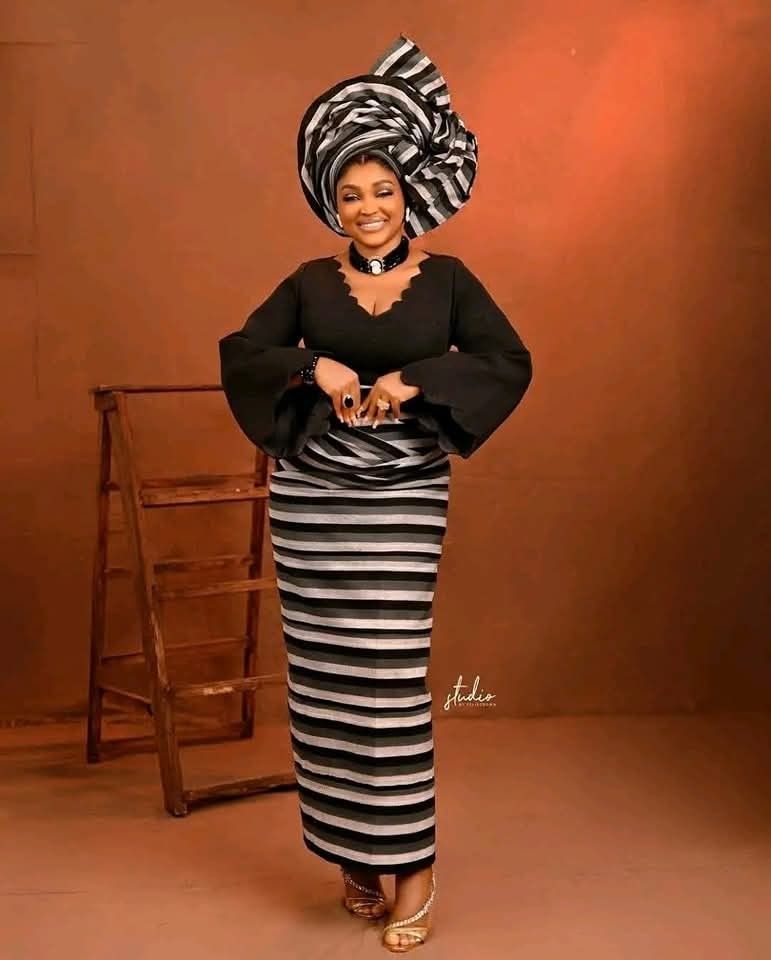
The wrapper and blouse are the foundational style of A’nger dressing for Tiv women, and the one in which the fabric is most legible in its full cultural authority. A length of A’nger cloth tied at the waist and falling to the ankle, worn with a fitted blouse in white or a complementary solid colour, is the standard Tiv women’s dress for celebrations, community gatherings, and ceremonies. The black-and-white stripes of the A’nger against a clean white blouse create the visual contrast that makes Tiv’s dress immediately identifiable across the Middle Belt and beyond. As Eucarl Wears documents, the A’nger is the standard fabric for Tiv traditional marriage attire, worn by both the bride’s and groom’s families at the wedding. The wrapper and blouse are the styles in which most Tiv women are most fluent, most comfortable, and most culturally grounded, because they are the forms the A’nger has taken in daily and ceremonial life across the longest stretch of the fabric’s history.
Contemporary Tiv women styling the A’nger wrapper and blouse in 2026 are working with a fabric whose geometric discipline imposes its own aesthetic logic. The stripes are not the background. They are the design. The blouse is chosen to frame rather than compete, and the headscarf, typically tied in the style particular to Tiv women’s ceremony dressing, completes a silhouette that has been refined across generations of women who understood exactly what the cloth was doing when they wore it.
2. The A’nger Dress Gown
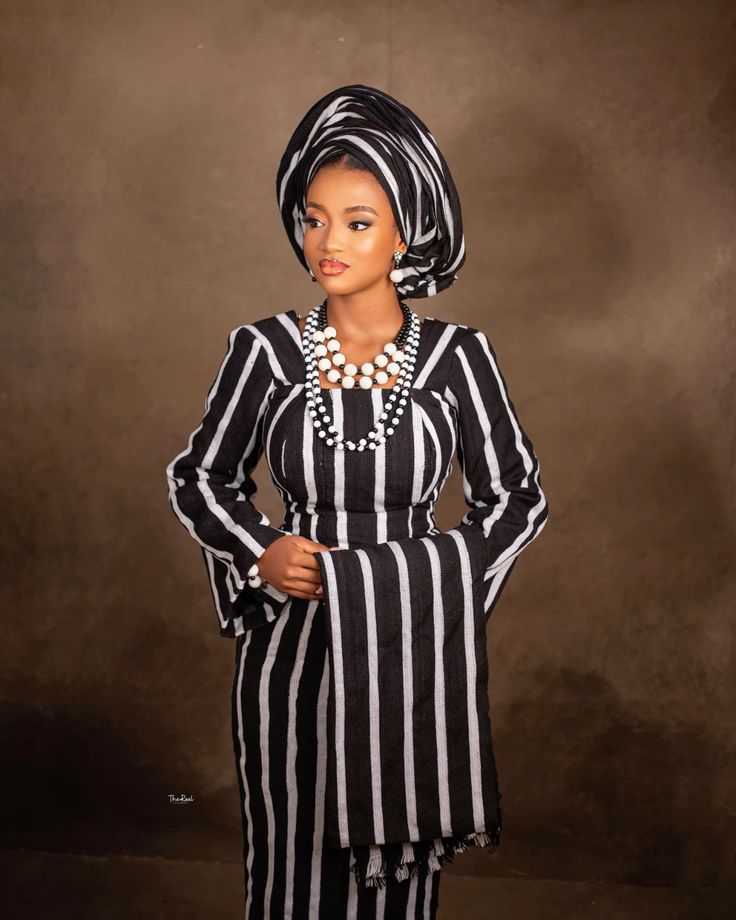
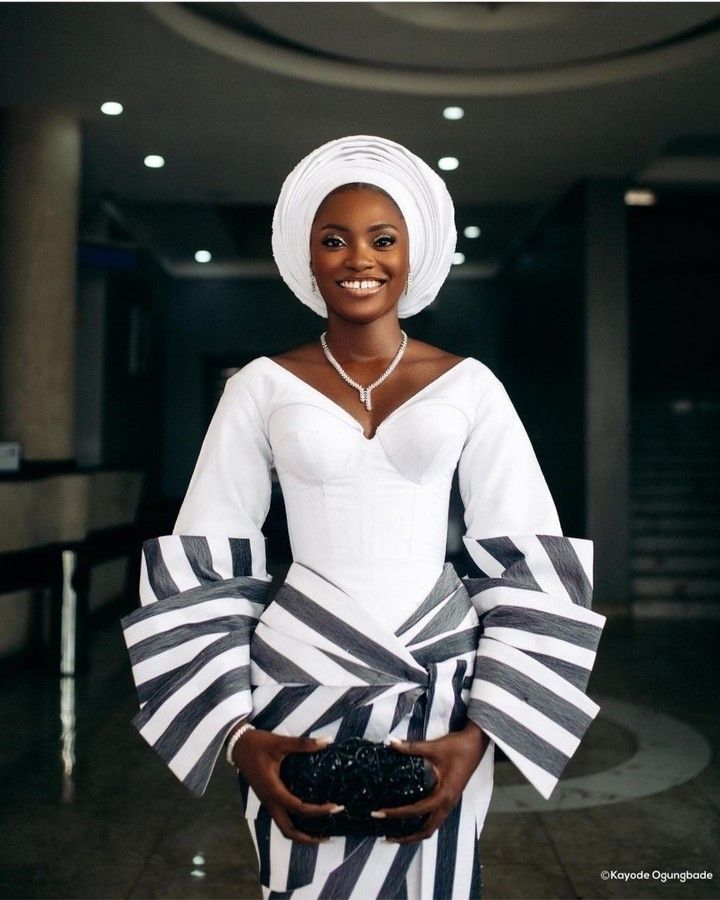
The A’nger dress gown is the style that most directly carries Tiv women’s fashion into formal occasion dressing. A floor-length, fitted or A-line gown cut from A’nger cloth, worn with beaded jewellery and a matching headscarf, is the Tiv woman’s formal statement for weddings, chieftaincy coronations, and significant cultural events. The structural discipline of the A’nger striped pattern means that the cut of the gown must be deliberate: the stripes demand clean seaming, considered direction, and a silhouette that honours the geometry of the fabric rather than working against it.
The A’nger dress gown is increasingly visible at Nigerian fashion events and cultural showcases where Tiv designers and Tiv women are bringing the fabric into spaces it has not historically occupied. Contemporary designers across Benue State, Abuja, and Lagos are cutting A’nger into formal evening silhouettes, the bold black-and-white stripe creating a graphic intensity that needs no embellishment, no additional pattern, and no competing decoration. The fabric is the event. The gown simply gives it a form to inhabit.
3. The A’nger and Ankara Combination Wrapper Set
The Ankara and A’nger combination is the style that most clearly illustrates how Tiv women navigate the relationship between their indigenous fabric and the broader Nigerian fashion landscape. A wrapper in A’nger paired with a blouse or top in Ankara, or an A’nger headscarf worn with an Ankara outfit, creates a visual conversation between the two fabrics: the handwoven indigenous textile and the printed industrial cloth. The combination is worn at Aso Ebi gatherings where the host has chosen Ankara as the coordinating fabric. Still, the Tiv woman brings A’nger into the ensemble as a declaration of cultural specificity within the collective occasion. For more on how African women use cloth to assert cultural identity within shared social occasions, read Clothing as Declaration.
The combination works because A’nger’s black-and-white discipline anchors any Ankara print it pairs with. The geometric clarity of the stripes provides a visual reference point, preventing the more exuberant Ankara patterns from overwhelming the ensemble. Tiv women who wear this combination are making a specific argument: that their indigenous fabric belongs in the same conversation as the most widely worn cloth in Nigeria, and that the two can share a body without either diminishing the other. Given that the A’nger was once currency and Ankara is ubiquitous, the argument carries considerable weight.
4. The A’nger Skirt Suit
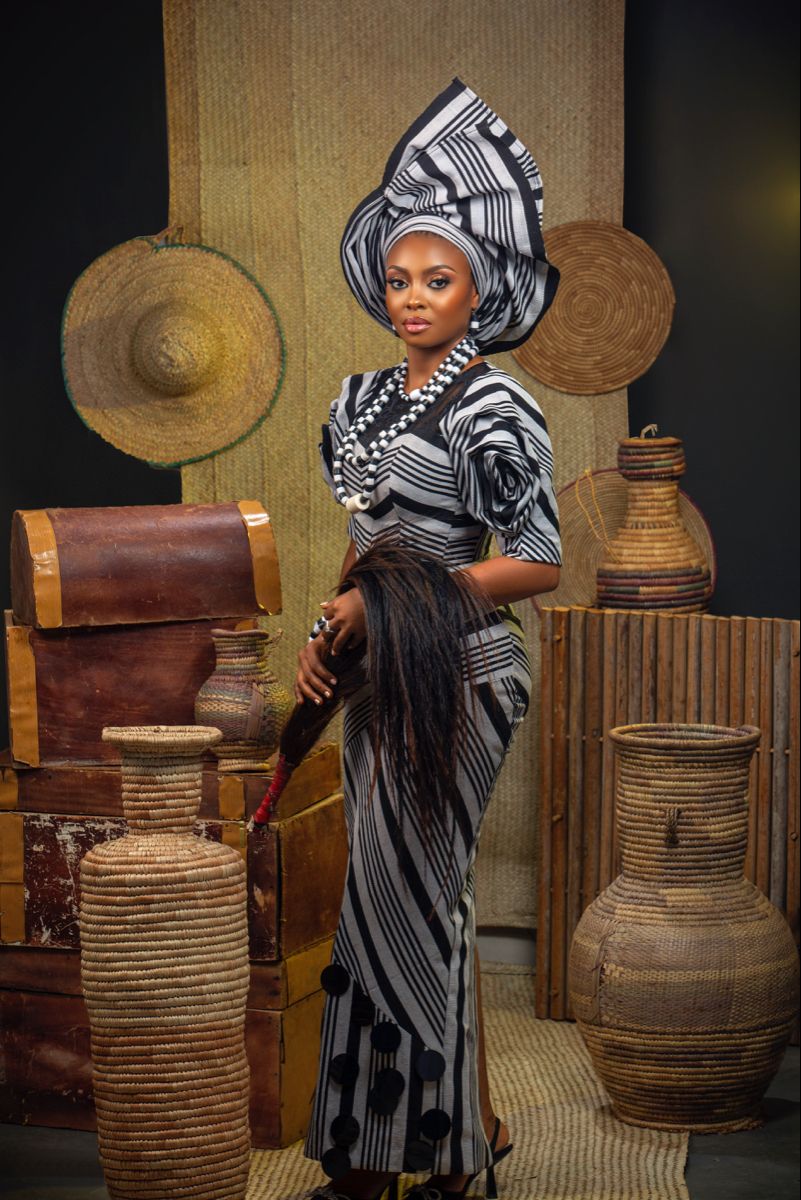
The tailored A’nger skirt suit, a structured jacket and matching skirt cut from the same striped cloth, is the style that carries Tiv women’s fashion into professional and institutional settings with the full force of cultural identity intact. Worn to government offices, university ceremonies, corporate events, and the increasingly visible platforms where Tiv women are asserting their presence in Nigeria’s public life, the A’nger skirt suit makes the argument that heritage dressing and professional authority are not alternatives. They are the same thing. As we explored in Culture as Currency, the most powerful fashion statement available to an African woman in a formal setting is the one that brings her full cultural inheritance into the room and requires the room to meet it on its own terms.
The A’nger skirt suit is technically demanding to produce. The striped pattern requires precise alignment at every seam, and a poorly cut suit in A’nger cloth immediately announces the error. A well-cut suit in A’nger, conversely, is one of the most architecturally precise garments in Nigerian women’s fashion, the black-and-white stripes running true across the jacket and skirt in a geometric discipline that communicates the same values the fabric has always represented: order, harmony, and opposites made to work together.
5. The Contemporary A’nger Co-ord
The two-piece A’nger co-ord, a tailored top and matching wide-leg trouser or midi skirt in a contemporary silhouette, is the style through which younger Tiv women are carrying the indigenous fabric into the settings of 2026: fashion events, social media, creative industry spaces, and the new professional environments of Abuja and Lagos, where cultural identity and contemporary ambition are not in competition. Nigerian fashion designers have begun incorporating A’nger cloth into contemporary co-ord silhouettes with increasing confidence, and the results are appearing at fashion showcases and in editorial shoots across the Nigerian diaspora press. The same principle governs the co-ords covered in our articles on Top 5 Ankara Styles for Nupe Women in 2026 and Top 5 Ewe Kente Styles for Ewe Women in 2026: a contemporary silhouette does not diminish a culturally loaded fabric. It extends the range of rooms in which that fabric can make its argument.
For Tiv women in the diaspora, the A’nger co-ord is particularly significant because it makes the fabric portable across cultural contexts without requiring those contexts to understand it already. The black-and-white striped cloth reads as graphic, bold, and architecturally distinctive in any room it enters. The story behind it, the zebra, the tiger, the Dzurgba weavers of Kwande, the currency function, the philosophical argument of harmonised opposites, travels with the woman wearing it, whether or not the room knows to ask.
When the Cloth Speaks: A’nger Across Tiv Ceremonies
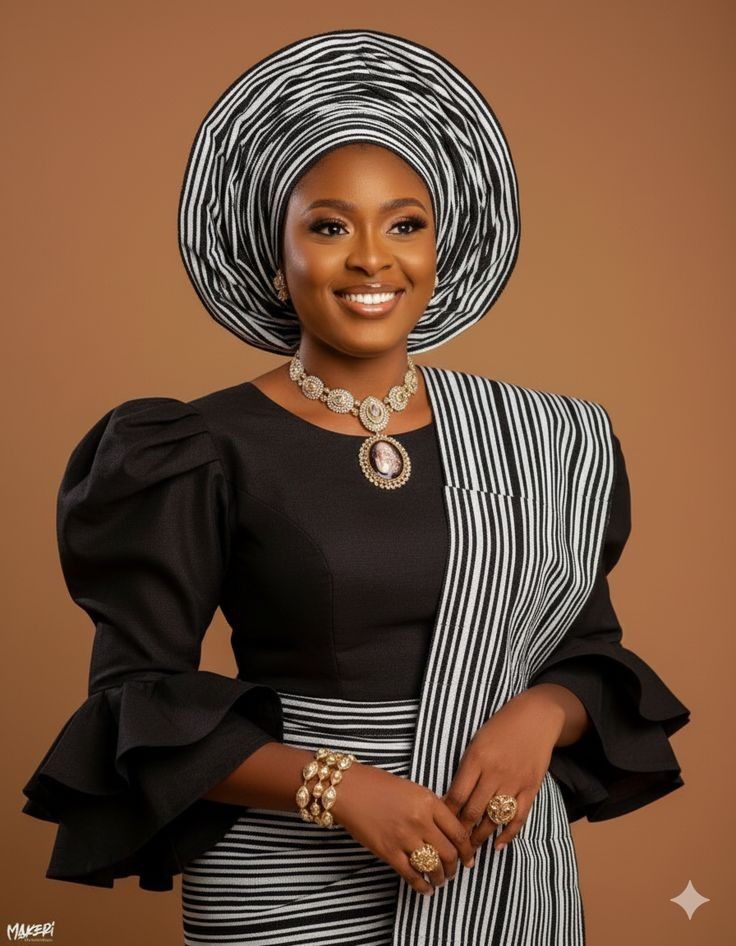
The A’nger is present at every significant occasion in Tiv cultural life. To understand where and how it is worn helps clarify what the fabric is being asked to do at each moment.
The Traditional Wedding
The Tiv traditional wedding is the ceremony most directly governed by A’nger cloth. Both the bride’s and groom’s families arrive in A’nger, the coordinated striped cloth marking their collective identity on the occasion. The bride’s attire is typically the most elaborate expression of A’nger dressing available to Tiv women: the wrapper in the finest grade of cloth, beaded jewellery at the neck and wrists, and a headscarf tied in the style that marks the gravity of the occasion. Contemporary Tiv wedding photography shows the A’nger-clad wedding party as one of the most visually striking collective dress traditions in Nigerian ceremonial culture, the repeating black-and-white stripes across multiple bodies creating a unified geometric statement that no other Nigerian textile produces at the same scale. Eucarl Wears’ documentation of Tiv traditional marriage attire provides detailed coverage of how A’nger is worn across the full wedding ceremony, from the arrival of families to the formal celebration.
The Kwagh-hir Festival
The Kwagh-hir is the Tiv theatrical festival of puppetry, masquerade, music, dance, and social commentary, widely recognised as one of the most sophisticated forms of performance art in West Africa. Its name translates as “something marvellous”, and the performances, which use life-sized puppets, masked dancers, and the sharp satirical wit of the narrator to hold community leaders and social vices to account, draw large communal gatherings across Benue State. A’nger cloth is prominent at Kwagh-hir audiences and among performers, the fabric marking Tiv cultural presence at an occasion that is, at its core, about the community asserting its values publicly. The Kwagh-hir has been recognised by UNESCO for its significance as a form of intangible cultural heritage, an acknowledgement that the theatrical tradition, like the textile tradition, is a living cultural inheritance rather than a museum artefact.
The Swange Dance
The Swange is the urban recreational dance form most associated with Tiv cultural celebrations, a circle-formation dance in which men and women dance together, adapting traditional musical themes to a combination of Tiv and Hausa instruments. As Britannica documents, the Swange is a living adaptation of traditional village dance forms, brought into contemporary urban settings without losing its communal character. Women attending Swange gatherings dress in their finest A’nger, the wrapper and blouse in the best cloth available for the occasion, the geometric stripes moving with the body through the dance, making the fabric’s structure visible in motion. The Swange is one of the occasions when A’nger is most publicly displayed and most photographed. It contributes significantly to the fabric’s growing visibility among younger Nigerian audiences, who encounter it first through celebration rather than ceremony.
Chieftaincy Coronations
The installation of a new Tor Tiv, the paramount traditional ruler of the Tiv people, or the coronation of any significant traditional title holder, is among the most elaborate ceremonial occasions in Tiv public life. A’nger cloth saturates these events, worn by family members, community elders, and the assembled public as a collective declaration of Tiv cultural identity at a moment of historical significance. The finest grades of A’nger, including the Mura U Tiv, the most expensive and most culturally distinctive variety, appear at coronations in a way they rarely do at everyday celebrations. A’nger is also the specific cloth used to decorate a non-Tiv person being conferred with a traditional Tiv title, a use that demonstrates its special status within the full range of Tiv textiles.
Funerals and Mourning
A’nger is worn at Tiv funerals as both a marker of cultural identity and a form of respect for the deceased. The fabric’s black-and-white palette, which in everyday use represents peace, harmony, and the coexistence of opposites, carries additional resonance at funerals, where the community gathers to hold loss and continuity in the same space simultaneously. Elder women arriving in A’nger for a Tiv funeral are making a statement about the life the community is mourning and the tradition to which that life belonged. The cloth, in this context, is both the farewell and the continuity.
In Tiv life, the A’nger is not just what you wear. It is what you mean when you decide to show up as fully yourself.
ALSO READ:
- Top 5 Ankara Styles for Nupe Women in 2026
- Top 5 Ankara Styles for Kanuri Women in 2026
- Clothing as Declaration: What African Women Wear When They Mean Business
- Culture as Currency: Why Traditional Fabric Is the Most Valuable Thing in Your Wardrobe
The Omiren Argument
The A’nger cloth faces extinction. The Dzurgba weavers of Kwande are ageing. Cotton cultivation in Tiv land has declined to the point where commercial production relies on thread bought from Kano. Contemporary designers across Nigeria are incorporating A’nger into their work, and social media is giving the fabric new visibility among audiences who might never have encountered it through traditional channels. But visibility without production support does not sustain a textile tradition. A cloth that is photographed but not woven survives.
Wearing A’nger in 2026 is therefore one of the most politically significant dressing decisions a Tiv woman can make. It is direct economic support for a production tradition under pressure. It is a public declaration that the fabric deserves to continue. And it is a philosophical statement that the values the A’nger has always embodied, the harmony of opposites, the coexistence of black and white, the belief that things that appear to contradict each other can be made to work together in perfect proportion, remain the values the Tiv wish to represent to the world.
Dress accordingly.
Browse the full African Style collection at Omiren Styles.
Frequently Asked Questions
1. What is A’nger cloth, and where is it made?
A’nger is the handwoven black-and-white striped cloth of the Tiv people, produced on a traditional loom using black and white yarns. Its origins lie in the Kwande Local Government Area of Benue State, the ancestral heartland of Tiv cotton cultivation, where the Dzurgba clan developed and refined the weaving technique. There are twelve distinct types of Tiv textile, but A’nger is the most respected and widely worn. It was historically used as currency in marriage transactions. Full details on the fabric’s production and types are available at Bolakoka Textile Company, one of the leading sources for authentic A’nger cloth.
2. What do the black and white colours of A’nger mean?
Two scholarly traditions exist on this question. The first holds that the black-and-white stripes are modelled on the zebra, symbolising peace and harmony. The second argues they are derived from the tiger, representing the bravery and strength the Tiv demonstrated during their migration from the Cameroon highlands into the Benue Valley. Both traditions agree that the black and white, rather than being in opposition, coexist in perfect harmony on the A’nger, each complementing the other. The academic paper that most directly addresses this debate is available on SSRN.
3. Who are the Tiv people?
The Tiv are the fourth largest ethnic group in Nigeria, numbering over 6.5 million individuals and accounting for approximately 2.4% of the national population. They are the dominant group in Benue State and are also found in Taraba, Nasarawa, Plateau, and Cross River states, as well as in Cameroon. Traditionally, without centralised kingship, the Tiv operated a decentralised system of governance led by lineage elders. The Tor Tiv, the paramount traditional ruler, was established during the colonial period. Tiv are known for their agricultural heritage, their Kwagh-hir theatrical tradition, and the A’nger cloth. A comprehensive cultural overview is available at Britannica.
4. Where can I buy authentic A’nger cloth?
Authentic A’nger is available from Tiv weavers in the Kwande Local Government Area of Benue State, and from fabric traders in Makurdi and other Benue State markets. For diaspora buyers, Bolakoka Textile Company is one of the most accessible sources of authentic A’nger cloth online, offering both wool and cotton yarn grades with clear descriptions of quality differences. Buying directly from Tiv weavers and traders supports the production tradition and the Dzurgba family lineages that have maintained it across generations.