Sierra Leone has one of the most sophisticated tie-dye traditions in all of West Africa. It has its own name, its own plant dye, its own patterns, its own city of origin, and its own deep relationship to the women who make it. The fashion world has largely ignored it. That is the fashion world’s loss.
In the canon of African textiles that the international fashion industry has chosen to celebrate, certain names recur. Kente, Ankara, Adire, Kanga. The list is not wrong, but it is radically incomplete. Missing from it, almost entirely, is Gara, Sierra Leone’s ancient, intricate, and still-living tie-dye tradition, centred in the Temne heartland of the Northern Province, practised primarily by women, and producing some of the most nuanced pattern work in West African textile history. In 2026, not knowing Gara is not a neutral position. It is a gap that costs the conversation its honesty.
From the cow yaie lappa to the beaten-sheen gara gele, these are the top 5 styles for Temne women in 2026 — rooted in Sierra Leone’s centuries-old Gara tie-dye tradition and the artisan communities of Makeni.
Gara, the Temne, and the Architecture of the North
The Temne are the largest ethnic group in Sierra Leone, comprising 35.5% of the total population. Their largest concentrations lie in the Northwestern and Northern Provinces, with a significant presence in the capital, Freetown. Their history stretches back to the Futa Jallon highlands of present-day Guinea, from which they migrated south in the 15th century following pressure from Fulani expansion, eventually settling around the Rokel River and the Kolenté in the north of the country. That geography matters for textiles: the Northern Province, and particularly the city of Makeni in Bombali District, became and has remained the historic capital of Gara tie-dye production. Makeni women are, by wide acknowledgement, among the most skilled Gara artisans in the country.
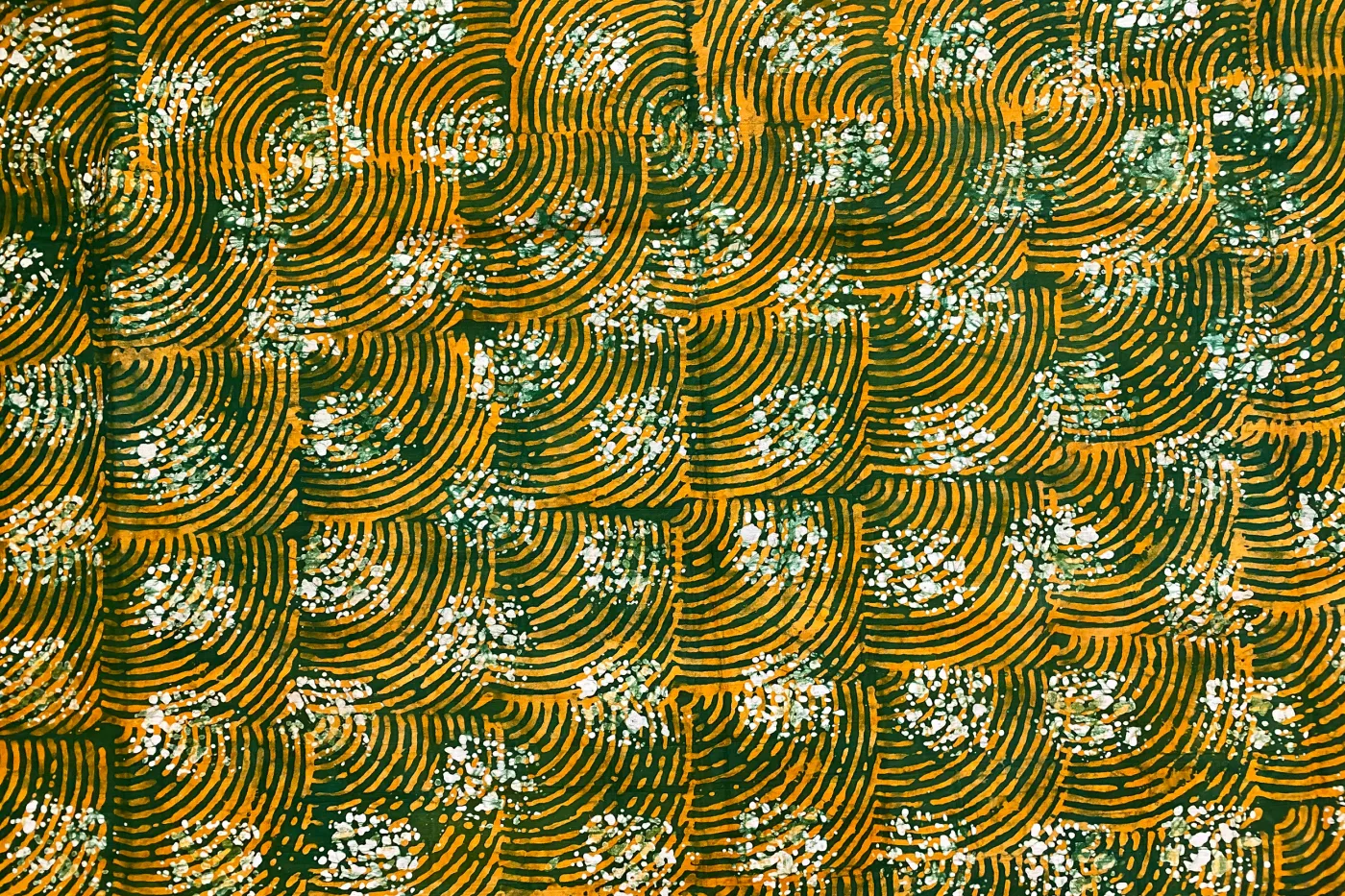
The word ‘Gara’ itself comes from the Sierra Leonean name for the indigo plant, Philanoptera cyanescens, which grows natively across West Africa. Gara is therefore both the plant and the practice: the technique is named after its primary dye source. The two main natural dyes used in the tradition are indigo, which produces a range of blue tones from pale sky to near-black depending on the number of dips, and kola nut dye, which yields warm amber, terracotta, and rust tones. When both are used in sequence — kola applied first, then overdyed with indigo — the result is a distinctive dark green to greenish-black hue found nowhere else in West African dyeing. Britannica specifically notes that among the Temne people, imported cotton or satin is tie-dyed in beautiful patterns with indigo, the red juice of the kola nut, or imported dyes, placing the Gara tradition specifically within the cultural practice of Sierra Leone’s northern, Temne-majority region.
Gara is a women’s craft. It has been so historically, and it remains so today. The artisans who dye, beat, and sell Gara cloth in Makeni and Freetown are overwhelmingly women, and the cooperatives that sustain the trade are female-led. Invest Salone has documented that Sierra Leonean fashion brand IZELIA directly employs 150 women and young people and sources its Gara from women’s cooperatives in Makeni and Freetown, noting that each person employed supports several more family members. In a global textiles and clothing industry worth US$1.5 trillion, Gara sits at one of the most culturally rich and economically underexploited points. The women of Makeni have been holding that value for centuries. The world is, slowly, catching up.
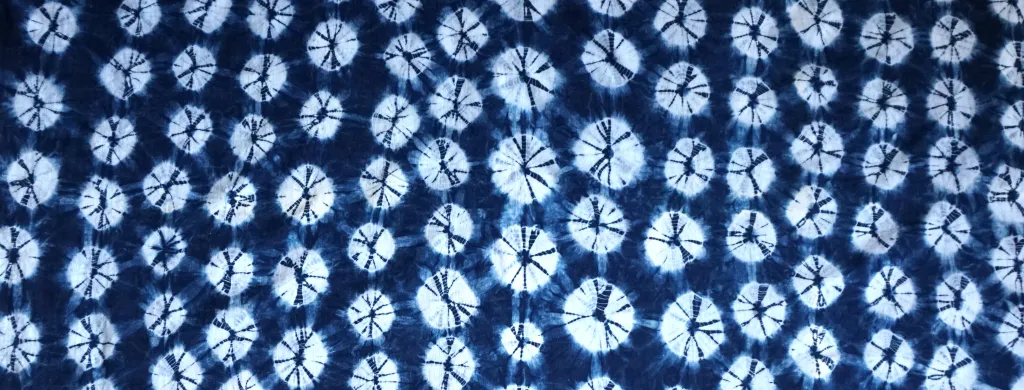
Gara patterns are not arbitrary. Each has a name, a recognised form, and a cultural context. The cow yaie (cow’s eye) pattern creates circular resist forms by tying seeds or stones into gathered fabric before dyeing. The fishbone pattern is stitched into brillian (cotton damask) cloth in a herringbone formation before immersion in the dye vat. Wax-block batik uses carved teak stamps dipped in melted candle wax to create geometric and cone-shaped resist designs. After dyeing, the cloth is beaten with a bita tik (wooden club) to press the fabric and impart the characteristic satin-like sheen that distinguishes finished Gara cloth from undressed material. This post-dye beating process is documented across multiple West African traditions and is a mark of quality, skill, and care. It is not finished. It is part of the craft.
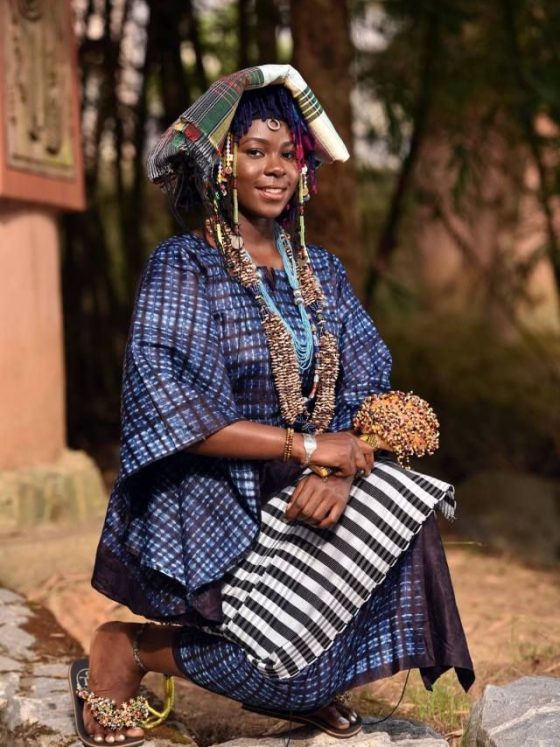
Temne women’s dress revolves around three core garments: the lappa (wrapper), the blouse, and the gele (headwrap). A Temne bride wears a lappa of patterned, colourful fabric paired with a coordinating blouse and a gele tied in a formal style, completed with beaded necklaces, wristbands, and gold or precious-stone jewellery. The Bondo society, the Temne women’s institution that governs female initiation rites and social life, has its own dress and adornment codes that intersect with the Gara tradition. For a Temne woman, the garments she wears to a naming ceremony, a wedding, or a Bondo graduation are not fashion choices in the superficial sense. They are statements of belonging, status, and continuity.
That is the framework within which these five styles operate. None of them is a trend. All of them are living, chosen, and currently worn expressions of a tradition older than Sierra Leone as a political entity and more sophisticated than the fashion industry has been willing to acknowledge.
The 5 Styles
- The Cow Yaie (Cow’s Eye) Gara Lappa
The most iconic of all Gara patterns, the cow yaie is created by gathering small portions of fabric, placing seeds or stones at each gathered point, and tying the fabric tightly below them with raffia thread before immersion in the indigo dye vat. Each tied point resists the dye and emerges as a perfect circle surrounded by concentric rings of graduated blue tone, moving from white at the centre outward into deep indigo at the edges. The pattern is repeated across the full length of the fabric to produce a field of interlocking circles that, on a full lappa, creates a visual rhythm of extraordinary precision. No two cow-yaie lappas are identical, because the spacing, depth of dye, and tightness of each tie are determined by the artisan’s hand. This is the pattern that Abubakarr Koma, Makeni’s most celebrated Gara master with over 40 years of practice, has described as central to the identity of Sierra Leonean tie-dye. For Temne women in 2026, the cow-yaie lappa is worn to weddings, naming ceremonies, and Eid as a wrapped lower garment paired with a coordinating blouse. It is also being tailored into full-length skirts and wide-leg trousers by contemporary Sierra Leonean designers. The circular motif communicates completeness, wholeness, and community in Temne visual culture. It does not need reinterpreting. It needs to be worn.
- The Fishbone Stitch-Resist Blouse Set
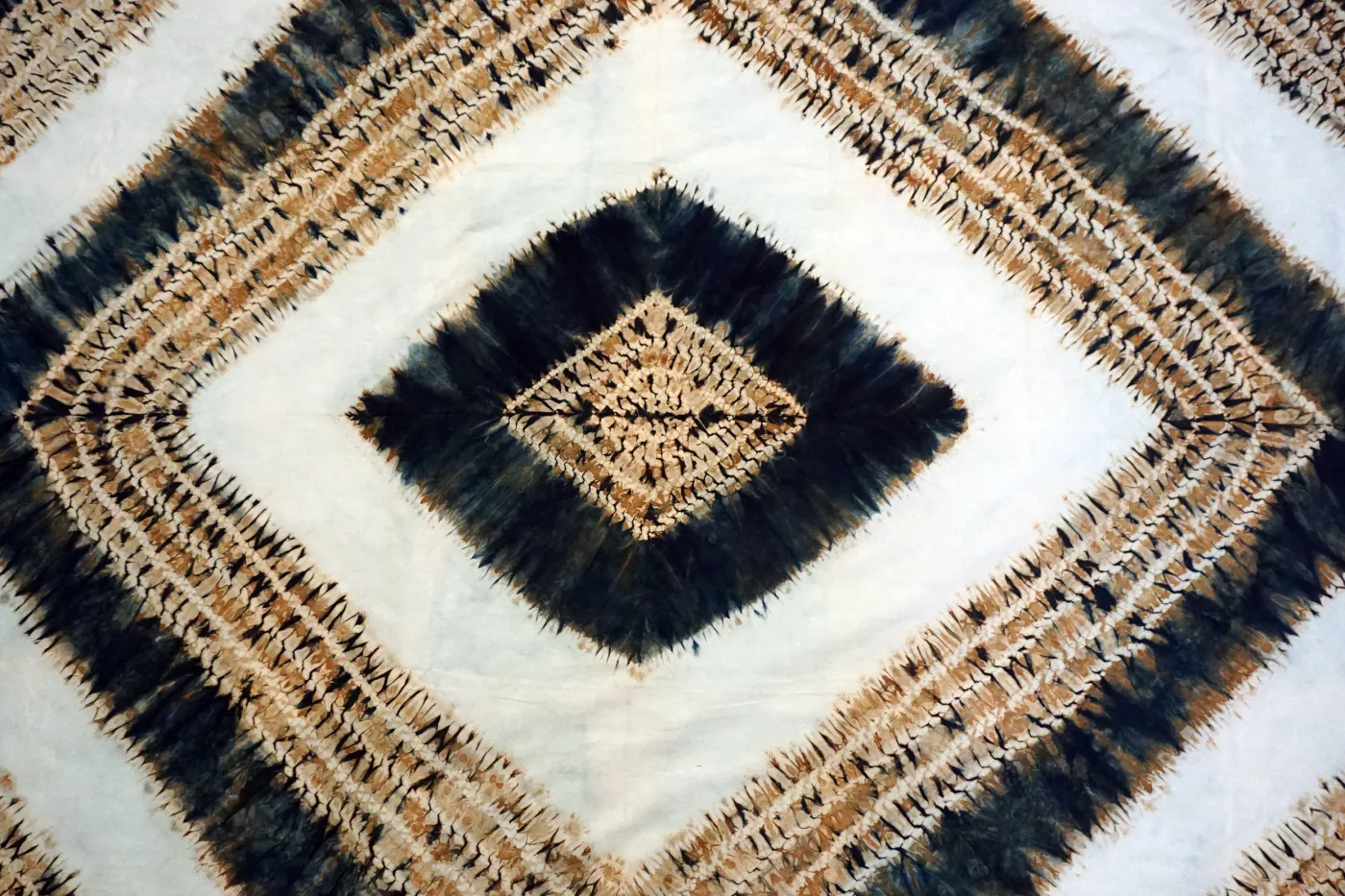
The fishbone is a stitch-resist pattern applied to brillion, the cotton damask fabric woven in a satin weave that is the most prized base cloth for Gara work. Before dyeing, the artisan folds the brillion fabric and stitches through it in a herringbone formation using a needle and thread, creating a dense grid of stitching that resists the dye wherever the thread runs. After the fabric is immersed in indigo and dried, the threads are cut and removed, revealing a complex white-on-blue or white-on-green pattern of interlocking diagonal lines. Documented in the Gara cloth archives, the fishbone is one of the most labour-intensive Gara patterns, requiring sustained precision throughout the pre-dye stitching phase. A fishbone-patterned brillion blouse set, paired with a matching lappa, is the formal dress choice for Temne women at high-ceremony occasions. The satin weave of the brillion base adds a natural lustre to the indigo, and the herringbone pattern moves with the body in a way that plain-dye cloth does not. In 2026, the fishbone blouse set is also being adapted into tailored jackets and structured tops by diaspora designers working with Sierra Leonean Gara cooperatives. The pattern is already of global quality. The storytelling around it is still catching up.
- The Kola-Over-Indigo Double-Dip Wrapper
Among the most technically demanding and visually distinctive styles in the Gara tradition is the double-dye wrapper, in which cotton fabric is first immersed in kola nut dye to absorb the warm amber-to-rust base tone, then over-dyed with Gara indigo to produce a colour range that moves from dark olive green to a deep, near-black greenish tone that cannot be achieved by either dye alone. Kola nut dye preparation is itself a significant physical undertaking: several gallons of kola nuts must be collected, crushed in a large mortar with a heavy wooden pestle, and added to water to create the dye bath. The physical labour of kola preparation is one reason the technique is less commonly practised than single-dye indigo work, which makes the double-dipped wrapper a premium and relatively rare garment. When worn as a full lappa or as a draped shoulder cloth over a blouse, the kola-over-indigo wrapper carries a depth of colour and visual complexity that immediately distinguishes the wearer. For Temne women in 2026, this style is associated with seniority, mastery, and ceremonial gravity. It is not a casual garment. It is a declaration of where a woman stands.
- The Wax-Block Batik Boubou
Sierra Leone’s Gara tradition includes not only tie-dye but also batik, a wax-resist technique using carved teak wooden blocks dipped in melted candle wax and stamped onto cloth to form geometric and cone-shaped resist patterns before the fabric enters the dye bath. Local woodcarvers make the blocks, and each produces a distinct repeating motif. Once the wax-stamped fabric is dyed and dried, the wax is cracked or boiled out, revealing the pattern in the undyed ground colour of the fabric against the dyed background. On a billion base, the waxed areas retain the ivory-white satin of the undyed damask against a deep indigo or kola ground. Applied to the full silhouette of a boubou, the wax-block batik technique produces a garment of considerable visual authority: geometric repeats covering the entire surface of a flowing robe, each motif distinct and precise, the whole composition reading as a coherent design rather than a decorated garment. Temne women wear the wax-block batik boubou for religious celebrations, Eid, and formal receptions. In 2026, several Sierra Leonean fashion brands sourcing from Makeni cooperatives are using wax-block batik boubou fabric for ready-to-wear collections aimed at the diaspora market, with the International Women’s Day recognition of women shaping Sierra Leone’s tourism and textile industry bringing further attention to the craft.
- The Beaten-Sheen Gara Gele
The gele, or headwrap, is the most versatile and accessible expression of Temne women’s dress. What distinguishes a Gara gele from any other headwrap is the characteristic satin sheen of beaten Gara cloth. After dyeing and drying, finished Gara fabric is beaten repeatedly with a wooden bita tik (wooden club), pressing the fibres and imparting a sheen that makes the cloth catch the light in a way that no unbeaten fabric can replicate. This post-dye treatment is documented across Sierra Leonean and West African textile traditions and is both an aesthetic standard and a mark of artisanal quality. A Gara gele tied with beaten indigo cloth sits with a particular firmness and reflects light with a particular depth that sets it apart immediately. In the context of a full Temne ceremonial ensemble, the beaten gele is the crowning detail. In the context of everyday dress, it is also the lowest barrier to entry: a single length of beaten cow-yaie or fishbone. Gara cloth, tied formally over the head, connects the wearer to the full depth of the tradition without requiring a full ceremonial ensemble. For Temne women in the diaspora in the United Kingdom, the United States, and beyond, the beaten Gara gele has become the most visible marker of Sierra Leonean cultural identity in everyday and celebratory dress. In 2026, it is steadily gaining visibility among women of West African heritage who want their dress to convey a specific cultural argument rather than a generic African aesthetic.
ALSO READ:
- Top 5 Tie-Dye Styles for Mandinka Women in 2026
- Yoruba Adire: When Indigo Became a Language
- The Fulani Bridal Aesthetic: Dress, Adornment, and the Architecture of Identity
- Mende Country Cloth: Sierra Leone’s Other Great Textile Tradition
What the Fashion World Keeps Missing
Gara cloth is not a heritage artefact. It is produced today in Makeni and Freetown by women whose skill has been passed down from mother to daughter across generations. It has been practised since the pre-colonial era. A history teacher in Makeni has stated on record that it has existed since before colonisation and that it is a vital part of Sierra Leonean identity. The woman who produced a Gara dress purchased at Freetown’s Cheedonian Boutique in 1994 and donated to the Victoria and Albert Museum in London was not working in a tradition about to disappear. She was working in a tradition that has outlasted every external force that has tried to either erase it or reduce it to souvenir status.
The Omiren argument about African fashion is not complicated. It is this: African dress traditions are not raw material waiting to be refined by outside interpretation. They are refined already. They have their own internal logic, their own aesthetic grammar, their own historical depth. Gara cloth is a case study in exactly that kind of sophistication, and the five styles above are not an introduction to something new. They are a correction to something long overdue: a serious, specific, substantiated account of what Temne women in Sierra Leone have been wearing, making, and choosing, and what it means.
Frequently Asked Questions
1. What is Gara cloth?
‘Gara’ is the name given in Sierra Leone to fabric produced using tie-dye and wax-resist batik techniques with natural and synthetic dyes. The word ‘Gara’ comes from the Sierra Leonean name for the indigo plant, Indigofera tinctoria, which is native to West Africa and is the primary traditional dye source. Gara originated in Makeni, the capital of Bombali District in the Northern Province, which remains the centre of Gara artisan production. Women primarily practise the craft and have done so since the pre-colonial era.
2. What makes Gara cloth distinctive from other African tie-dye traditions?
Several features distinguish Gara from other West African tie-dye traditions. First, the use of kola nut dye alongside indigo creates a uniquely West African colour palette, including the dark greenish-black produced when both dyes are used in sequence. Second, the post-dye beating process using a wooden bita tik gives finished Gara cloth a satin sheen not found in undressed cloth. Third, named patterns with specific techniques, such as the cow-yaie (cow’s eye circular design) and the fishbone stitch-resist, give Gara a distinct pattern vocabulary specific to Sierra Leone.
3. What occasions do Temne women traditionally wear Gara styles?
Gara cloth garments are worn across a wide range of Temne occasions. Weddings, naming ceremonies, Eid celebrations, Bondo society graduations and initiations, Friday prayers and community celebrations all call for Gara lappas, blouse sets, boubous, or geles. The garment chosen and the complexity of its pattern typically signal the formality of the occasion: a full fishbone stitch-resist brillion blouse set or a wax-block batik boubou indicates high ceremony. At the same time, an everyday cow-yaie lappa or gele can be worn for routine observance and community life.
4. Is Gara cloth still handmade in Sierra Leone today?
Yes. Gara cloth is actively produced today by artisan women in Makeni and Freetown, as well as in smaller centres across Sierra Leone. Women’s cooperatives supply fabric to both domestic and international markets. Sierra Leonean fashion brands such as IZELIA source Gara directly from these cooperatives, and the broader Sierra Leonean fashion industry is working with Invest Salone to access Africa’s growing share of the global textiles and clothing market. The tradition is neither dying nor purely ceremonial. It is a working, commercially active, culturally vital practice.
For more on African dress traditions across all 54 nations, explore Omiren Styles. Fashion. Culture. Identity.