No culture on the African continent wears its politics more visibly than the Ndebele. What looks to the outside eye like the most exuberant, geometric, colour-saturated dressing tradition in Southern Africa is, at its foundation, something much more serious. Traditional styles for Ndebele women were never merely aesthetic choices. They were, and remain, a form of resistance, a declaration of identity maintained across centuries of displacement, land dispossession, and cultural erasure. When an Ndebele woman beads her apron, drapes her nguba blanket, or stacks her isigolwani neck hoops for a ceremony, she is not dressing up. She is showing up in full.
This article covers the five most significant traditional styles in Ndebele women’s dress, the histories that give each its weight, the ceremonies where they appear, and what they continue to mean in 2026 for Ndebele women in Mpumalanga, Gauteng, Zimbabwe, and across the global diaspora.
From the ijogolo apron to the nguba marriage blanket, discover the top 5 traditional styles for Ndebele women in 2026: history, beadwork meanings, and a full ceremony guide rooted in Southern African culture.
The Culture Behind the Cloth
The AmaNdebele are a Bantu-speaking people whose history stretches back to the 16th century, when they split from the Zulu nation during the mfecane period. They settled across what are now Mpumalanga and Gauteng in South Africa, and a separate group, the Matabele, moved north into what is now Zimbabwe under King Mzilikazi in the 1830s. The two communities share an ancestry but have developed distinct cultural identities in two countries. The styles covered in this article draw primarily from the Southern Ndebele of South Africa, specifically the Ndzundza Ndebele of Mpumalanga, who are the group most associated with the beadwork, geometric painting, and dress traditions that have made Ndebele visual culture one of the most recognisable on the continent.
In 1883, the Ndzundza Ndebele were defeated by Boer forces after a prolonged siege. The community was broken up, and families were distributed as indentured labour across Boer farms, stripped of land and formal cultural infrastructure. What happened next is one of the most significant acts of cultural resistance in Southern African history. The women painted their homes in bold geometric patterns. They beaded with increasing complexity and deliberateness. They dressed in the full language of Ndebele identity at every available opportunity. The Boers saw decoration. The Ndebele were making an unforgeable record of who they were, a record that could not be seized, taxed, or reassigned.
This continued through the apartheid era, when the government created KwaNdebele as a bantustan homeland, scattering the community further and making economic independence almost impossible. Beadwork moved into the market economy partly as a necessity, with women producing pieces for sale to survive the economic stranglehold of apartheid policy. But the cultural function of the beadwork, its role as an identity marker, life recorder, and ceremonial language, never left. Every piece made for sale still carried the grammar of a culture that had survived because its women refused to let it be erased.
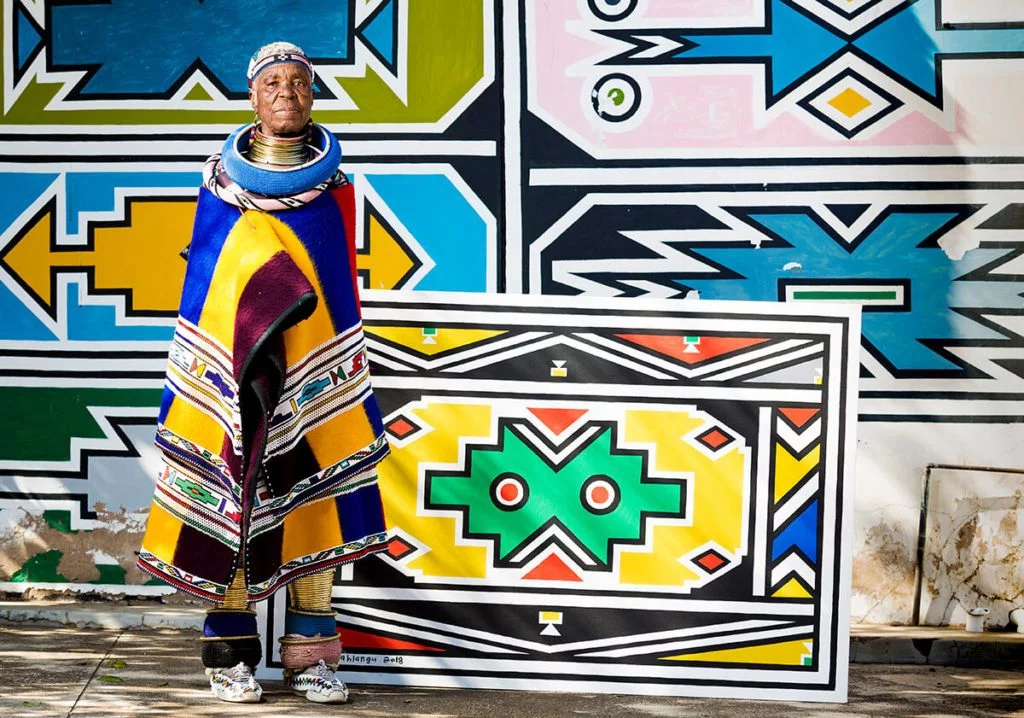
Esther Mahlangu, the Ndebele painter who has put the geometric visual language of her culture on BMWs, South African Airways jets, and museum walls from London to Tokyo, understood this completely. Her work is not decoration abstracted from its origins. It is an argument carried into new spaces. The dress tradition this article covers operates on the same principle.
The Boers saw decoration. The Ndebele were making an unforgeable record of who they were.
Reading the Beads: What Ndebele Adornment Communicates
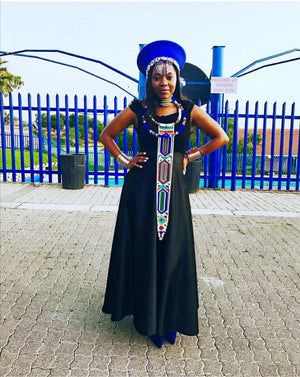
Before the five styles, understand the language in which they are spoken. Ndebele beadwork is not pattern-making. It is a system of social and biographical communication that every member of the community can read. The colours, bead configurations, and garment types together tell the community who a woman is, where she is in her life, and what she has witnessed and survived.
White beads: Purity and the baseline of the tradition. White-dominated Ndebele beadwork until the 1920s and 1930s, when coloured glass beads became widely available through trading stores. The introduction of colour expanded the vocabulary without replacing the foundational grammar.
Colour combinations: Used to communicate the wearer’s clan affiliations, family ties, and life stage. The specific configurations are closely held within communities and not fully shared with outsiders, a boundary that the Ndebele have deliberately maintained since the apartheid era.
Geometric patterns: Symmetrical, angular, defined by bold black outlines. The same design logic that governs house painting governs beadwork. The visual language is consistent across media because it is a language, not a style.
A woman’s beadwork is a running biography. The marriage blanket she receives on her wedding day is added to throughout her life, each significant event recorded in new beaded strips. By the time she is an elder, the nguba she wears carries a complete account of her life in the community. As we explored in
Culture as Currency, the most valuable thing in an African woman’s wardrobe is rarely what the market assigns a price to. In the Ndebele tradition, that truth is literal.
1. The Ijogolo: The Married Woman’s Beaded Apron
The ijogolo is not given at the time of marriage. It comes later, after the birth of the first child, marking the culmination of the marriage in the fullest traditional sense. It is a five-fingered beaded apron worn at the front of the body, the fingers hanging down in elaborately beaded panels of geometric pattern. The ijogolo is among the most architecturally complex garments in all of Southern African dress. It requires exceptional skill and significant time to produce, and its quality conveys the maker’s mastery and the community’s investment in the woman who wears it.
In contemporary Ndebele fashion, the ijogolo remains the centrepiece of formal and ceremonial dressing. South African designers working with Ndebele traditional dress have incorporated the ijogolo silhouette into modern evening wear and occasion dressing, with beaded panels rendered as embroidered or printed fabric equivalents. The most culturally resonant versions are still handmade, still beaded in the traditional geometric language, and still worn with the understanding that this garment announces a woman who has crossed a specific threshold in her life. For Ndebele women in 2026, the ijogolo is both the most traditional thing in the wardrobe and, increasingly, the most photographed.
2. The Nguba: The Marriage Blanket
The nguba is a thick, striped blanket worn across the shoulders of a married woman, decorated with beaded strips added throughout her lifetime to mark significant events. A son undergoing initiation. The birth of a grandchild. A ceremony survived—a loss carried. The nguba is the only garment in any tradition this article covers that is also a journal, a private archive worn in public, readable to those with the cultural knowledge and intentionally opaque to those without it.
The stripes of the nguba are traditionally rendered in green, red, blue, yellow, and brown, and the beaded additions are stitched directly onto this surface throughout the wearer’s life. In contemporary styling, the nguba has become one of the most significant reference points for Ndebele-inspired fashion design. Several South African designers have built full collections around the blanket-as-garment concept, the thick striped textile translated into structured coats, wraps, and occasion pieces that carry the spirit of the nguba without claiming its specific biographical function. The distinction matters. A designer piece inspired by the nguba is not a nguba. The original belongs to one woman and tells one life. For more on how African cloth carries meaning that fashion cannot replicate, read
3. The Isigolwani: Beaded Neck and Leg Hoops
The isigolwani are thick beaded hoops made from twisted grass wound into a coil and covered in tightly packed beads. They are worn around the neck, arms, legs, and waist, most heavily at ceremonies. Newly married women whose husbands have not yet built them a home wear the isigolwani as leg and arm bands. Girls who have completed the initiation ceremony wear them to mark the transition. The hoop is circular and therefore unbroken, a form that carries the symbolism of continuity and completion across many Southern African cultural traditions.
In 2026, the isigolwani occupies a complicated position in Ndebele women’s fashion. It has become one of the most globally reproduced elements of Ndebele dress, appearing in fashion editorials, runway looks, and cultural festival styling across the diaspora. For Ndebele women, this visibility is difficult to achieve. The isigolwani, removed from its ceremonial context and worn as a styling accessory, is a different object from the one that marks a girl’s coming of age in Mpumalanga. Wearing it with the full understanding of what it carries is the only way to wear it with integrity. The
South African Heritage Resources Agency documents the significance of beadwork traditions across Southern Africa as part of the country’s intangible cultural heritage record.
4. The Idzila: Copper and Brass Rings
The idzila are copper and brass rings worn around the neck, arms, and legs of married Ndebele women. Husbands provided them, and the number of rings a woman wore was directly connected to her husband’s wealth and her status in the community. The rings were believed to carry ritual power and were permanent, worn throughout a husband’s lifetime and removed only after his death.
Today, the permanent wearing of idzila is no longer a common practice. Still, the rings remain a central element of ceremonial dress and one of the most architecturally dramatic aspects of Ndebele women’s traditional attire. The stacked copper and brass rings at the neck create a visual effect that has influenced fashion design internationally, though rarely with attribution or financial return to the community. For Ndebele women dressing traditionally in 2026, the idzila worn for ceremony carries the full weight of what it has always represented: fidelity, status, and the kind of permanence that a culture under sustained attack holds on to with particular fierceness. The
Smithsonian National Museum of African Art holds significant examples of Ndebele beadwork and idzila in its permanent collection, with accompanying scholarship on the biographical and ceremonial functions of the adornment tradition.
5. The Iphephetu: The Coming-of-Age Apron
Before the ijogolo, before the nguba, before the idzila, there is the iphephetu. The stiff rectangular apron worn at the coming-out ceremony that marks the conclusion of a girl’s initiation school is the first significant garment in a Ndebele woman’s ceremonial wardrobe. It is beaded in geometric and often three-dimensional patterns, the dimensionality created by the way individual bead strands are layered and structured to catch light and suggest depth. This is technically demanding work, and it is taught during the initiation period itself, the making of the garment inseparable from the ceremony it marks.
After initiation, the iphephetu is replaced by a stiffer, square apron made of hardened leather and adorned with beadwork, which the woman wears as she moves into the next stage of her life. The iphephetu tradition represents the most important aspect of Ndebele women’s dress for a specific reason: it is the point at which a young woman first learns, through making and wearing, that her body is a canvas for cultural record. Everything that comes after, the ijogolo, the nguba, the idzila, the isigolwani, is an extension of that first lesson. The parallel in West African dress culture, where cloth becomes biography through ceremony, is explored in depth in our article on
Top 5 Ewe Kente Styles for Ewe Women in 2026.
When the Dress Speaks: Ndebele Attire Across Ceremonies
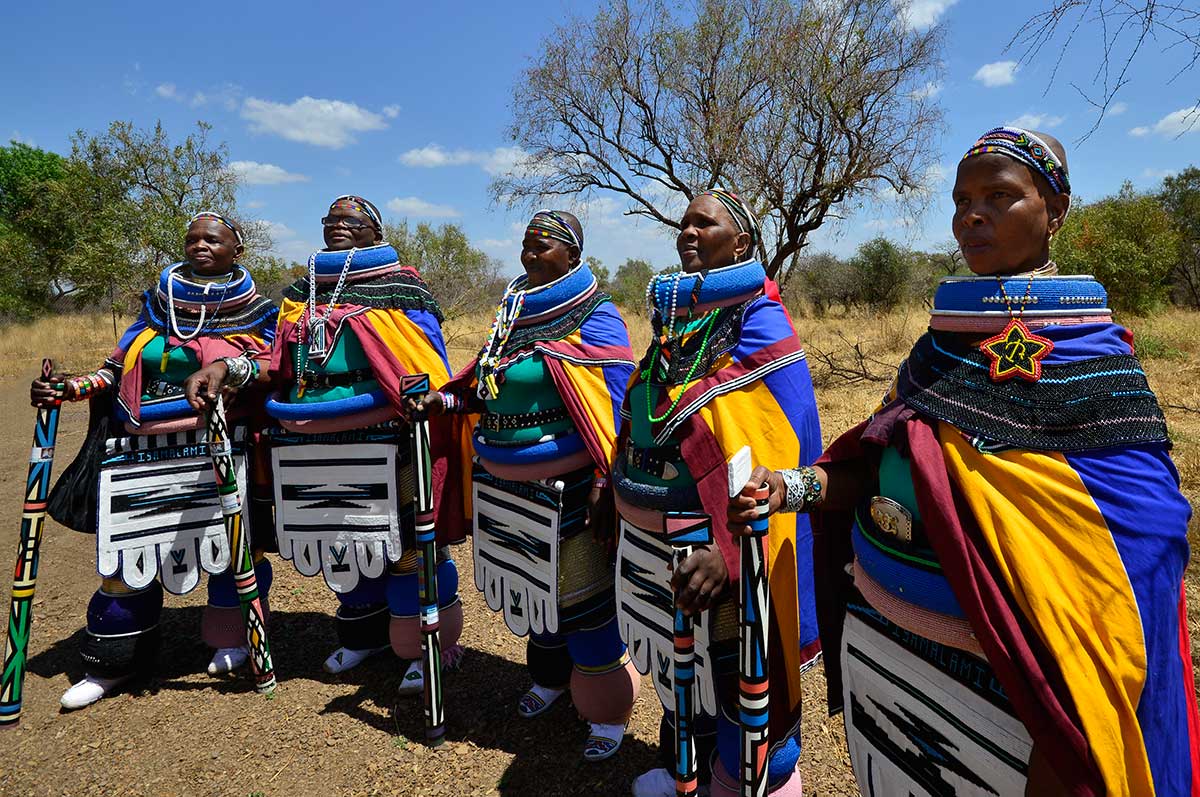
Ndebele traditional attire is inseparable from the ceremonies it marks. To understand the dress is to understand when it is worn and what it is being asked to do at each moment in a woman’s life.
Girls’ Initiation: Ukuthomba
Held every four years, the Ndebele initiation school for girls is one of the most significant events in community life. Girls undergo a period of isolation, taught by grandmothers the arts of beadwork, house painting, and the responsibilities of womanhood. During initiation, they wear colourful beaded hoops around their legs, arms, waist, and neck. The coming-out ceremony that concludes this period is the occasion for the iphephetu to be worn publicly for the first time, as a declaration of transition. The community assembles to witness the girls emerge into their new status. The dress is the announcement.
Boys’ Initiation: The Wela
The mothers of boys undergoing initiation wear beaded garments that signal their son’s transition. Long beaded strips added to the nguba specifically indicate that a woman’s son is in the wela, undergoing the rites of passage into manhood. The mother’s dress carries her son’s ceremony. She wears his transition on her body at community gatherings, a public declaration of the milestone that simultaneously elevates her own status as the woman who has raised a man. The dress of Ndebele women is never only about the woman wearing it.
Traditional Wedding
The Ndebele bride is kept in seclusion for two weeks before her wedding, shielded from view in a specially constructed space within her parents’ home. When she emerges, she is wrapped in a blanket and attended by the ipelesi, a younger girl who accompanies her throughout the proceedings. The bride receives her nguba on this day, the marriage blanket she will carry and add to for the rest of her life. She is dressed in the full ceremonial vocabulary of Ndebele attire: beaded apron, isigolwani at the neck and legs, amacubi headdress, and idzila rings if her husband has provided them. The wedding is the moment the full visual language is worn simultaneously for the first time.
Community Gatherings and Heritage Days
South Africa’s Heritage Day on the 24th of September has become one of the most significant occasions for public expression of Ndebele traditional dress. Ndebele women across Mpumalanga, Gauteng, and the broader diaspora dress in full traditional attire; the geometric beadwork, the nguba, the isigolwani, and the ijogolo are worn together in public spaces, workplaces, and schools. The occasion is simultaneously a celebration and a continuation of the same impulse that drove the women of the Ndzundza community to paint their homes and bead their garments after 1883. The audience has changed. The argument has not.
Funerals and Mourning
Ndebele mourning dress is quieter than the ceremonial palette but carries the same cultural specificity. The nguba is present, worn with restraint rather than display. Elder women arriving to mourn dress with the full gravity of their status, the accumulated beadwork of their nguba marking how much life they have witnessed. The coming together of women in traditional dress at a funeral is a collective act of cultural memory, the living carrying the visual language forward in the presence of loss.
The dress was never a decoration. It was always an argument. In 2026, it remains both.
Traditional Ndebele Dress by Life Stage
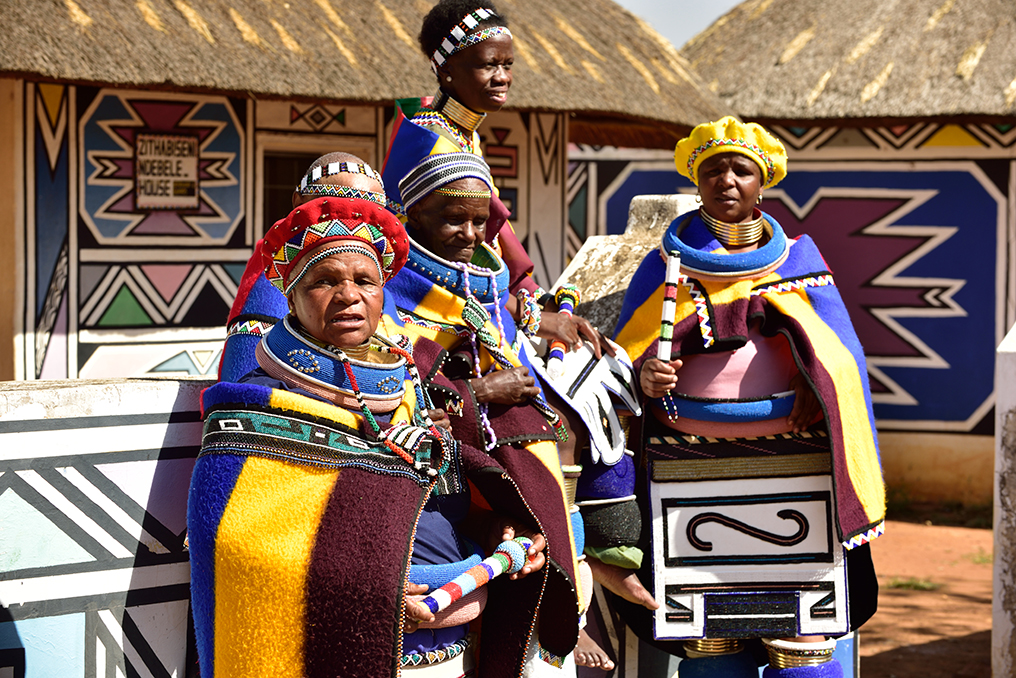
Young girl: Small beaded aprons, minimal hoops
Initiation: Full isigolwani hoops, iphephetu apron at coming-out ceremony
Newly married: Isigolwani as arm and leg bands before the home is built, nguba blanket received at the wedding
After first child: Ijogolo five-fingered apron, idzila rings from husband
Elder: Full accumulated nguba with beaded life record, amacubi headdress, complete idzila and isigolwan
ALSO READ:
- Top 5 Ewe Kente Styles for Ewe Women in 2026
- Clothing as Declaration: What African Women Wear When They Mean Business
- Culture as Currency: Why Traditional Fabric Is the Most Valuable Thing in Your Wardrobe
The Omiren Argument
Ndebele traditional attire is the most politically loaded dressing tradition in this entire series. It was built under occupation. It was elaborated under apartheid. It was maintained by women who had no formal political power and chose the most visible form of resistance available to them: showing up, fully dressed, in a visual language the state could not legislate away because it could not read it.
Esther Mahlangu is in her late eighties. She has painted the geometric language of her culture onto BMWs, jumbo jets, and museum walls across four continents. She continues to teach Ndebele painting and beadwork traditions in her community because she understands that the transmission of a cultural language is as important as the art it produces. The women who learned beadwork during initiation in Mpumalanga and now teach it to daughters in Johannesburg, London, and Harare are doing the same work.
Wearing Ndebele traditional attire in 2026 is not a gesture for Heritage Day. It is a continuation of the longest-running act of cultural defiance in Southern African history. Dress accordingly.
Browse the full African Style collection at Omiren Styles.
Frequently Asked Questions
1. What is the difference between South African Ndebele and Zimbabwean Ndebele dress?
The South African Ndebele, particularly the Ndzundza Ndebele of Mpumalanga, are the community most associated with the geometric beadwork, house painting, and formal dress traditions covered in this article. The Zimbabwean Ndebele, descended from King Mzilikazi’s Matabele, share an ancestry but have developed distinct cultural identities across two countries. Both communities wear traditional attire for the ceremony, but the specific garments, beadwork traditions, and visual grammar differ. This article focuses primarily on Southern Ndebele traditions.
2. What does Ndebele beadwork communicate?
Ndebele beadwork communicates a woman’s age, life stage, marital status, clan affiliation, and biographical history. Different garments signal different thresholds: the iphephetu marks coming of age, the ijogolo marks the birth of the first child, and the nguba records a lifetime of significant events in accumulated beaded strips. The specific colour and pattern meanings are maintained within communities and not fully shared publicly, a cultural boundary that has been deliberately preserved.
3. Can I wear Ndebele traditional attire if I am not Ndebele?
The history of Ndebele visual culture includes a long and painful record of appropriation, from apartheid-era tourism propaganda that displayed Ndebele women as exotic attractions to contemporary fashion houses that extract the geometric pattern without credit or return. Engaging with this tradition as an outsider requires the full weight of that history. Buying directly from Ndebele artisans, explicitly crediting the culture, and understanding what you are wearing before you put it on are the minimum requirements. The pattern alone is not the culture. The story behind it is.
4. Who is Esther Mahlangu?
Esther Mahlangu is a South African Ndebele artist born in 1935 in Middelburg, Mpumalanga. She is internationally recognised for translating the geometric visual language of Ndebele wall painting into fine art, applied art, and public commissions. She has painted BMWs for the
BMW Art Car series, South African Airways aircraft, and works held in major international museums. She continues to teach Ndebele painting and beadwork traditions, understanding the transmission of cultural language as inseparable from the art itself.