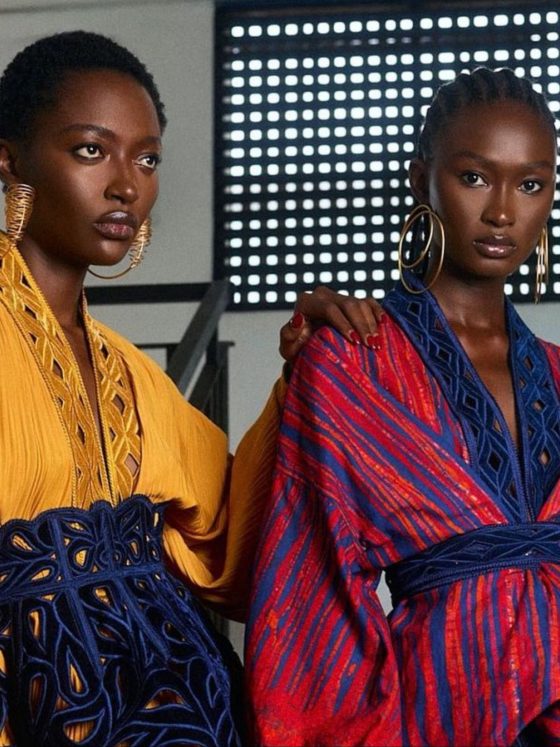
In West Africa, some textiles carry meaning far beyond ornamentation. One such cloth is the hand-dyed “mud cloth” of Mali, known as bogolanfini. For centuries, it has functioned as a symbolic language, a textile that encodes history, status, spiritual protection, and lived narratives into intricate patterns painted on handspun cotton. Its motifs can reference battles, mythological symbols, proverbs, or ecological knowledge, woven into a visual text rather than written on paper.
Within this deeply cultural tradition stands Awa Meité, a Malian textile and fashion designer whose work goes beyond aesthetic appropriation to consciously preserve and elevate the meaning of bogolanfini through contemporary design. Her practice respects the cloth’s ancestral language, engages local artisans, and champions community-based production, transforming fashion into a space where cultural memory remains visible and vital.
This article provides an in-depth profile of Awa Meité, highlighting her use of the historical language of bogolanfini to preserve Mali’s cultural legacy and empower communities through fashion.
The History of Bogolanfini: Mud, Meaning, and Memory
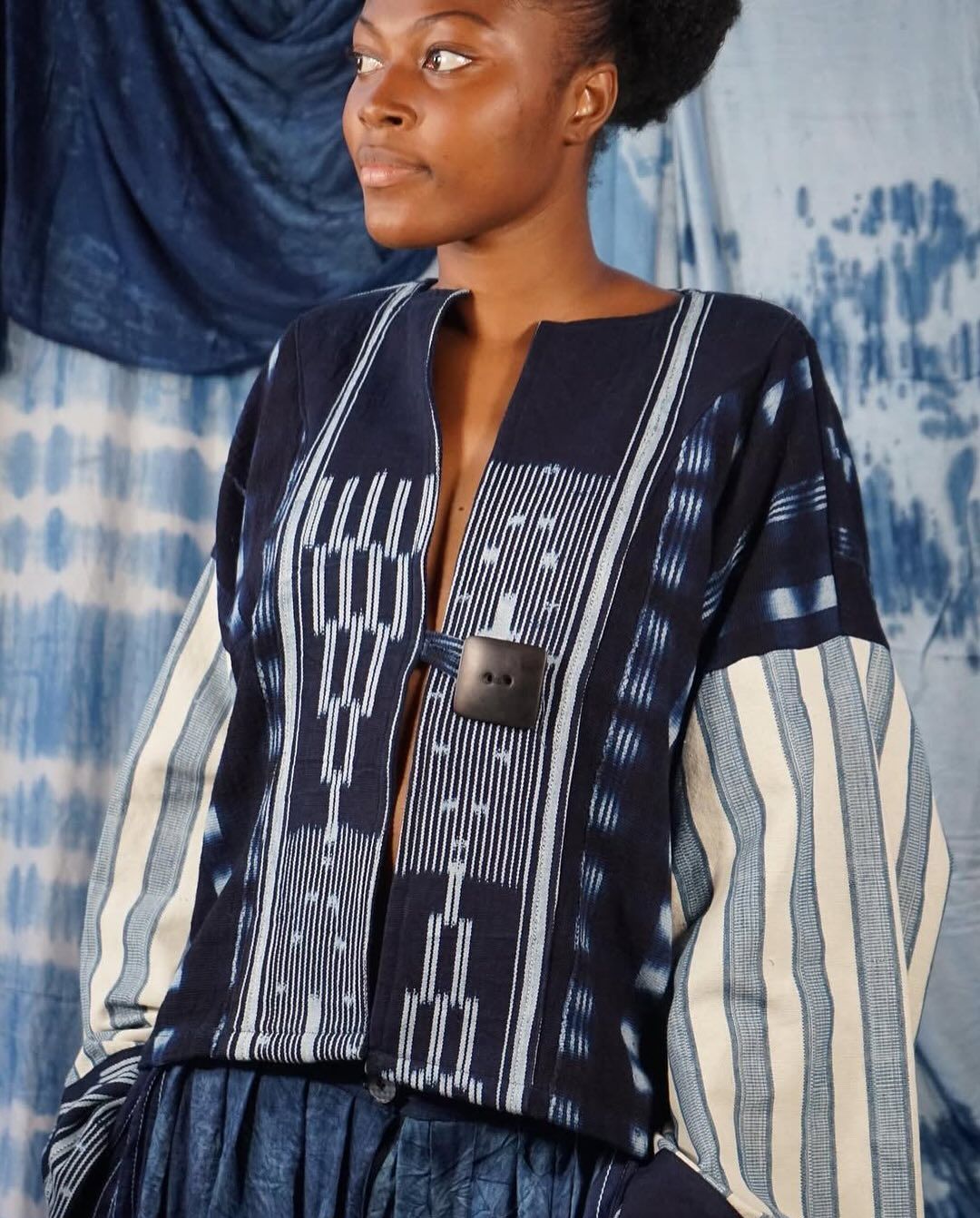
Bogolanfini’s history predates modern fashion by many centuries. The term itself comes from the Bambara language: bɔgɔ meaning “mud”, lan meaning “with”, and fini meaning “cloth.” Its creation involves a technically demanding process of weaving narrow strips of cotton on traditional looms, followed by dyeing and painting the cloth using a fermented mud rich in iron, plant dyes, and resist-dye techniques.
Traditionally, bogolanfini served multiple meaningful purposes:
- Protection and camouflage: Worn by hunters as camouflage and believed to carry spiritual protection.
- Rites of passage: In many communities, women wear bogolanfini after initiation into adulthood or immediately after childbirth, under the belief that the cloth can absorb dangerous spiritual forces released during these transitions.
- Status and symbolism: Motifs painted on the cloth are not arbitrary but represent proverbs, historical events (such as battles between warriors and colonial forces), or mythological references rooted in Bambara cosmology.
The process of creating authentic bogolanfini used to be a long apprenticeship: men would weave the cloth, and women would dye and paint it, passing down the symbolic language across generations.
By the late 20th century, bogolanfini had regained prominence as a symbol of Malian cultural identity, and the government began promoting it accordingly, reflecting its enduring significance in national and ethnic expression.
Bogolanfini in Global and Local Fashion Before Meité
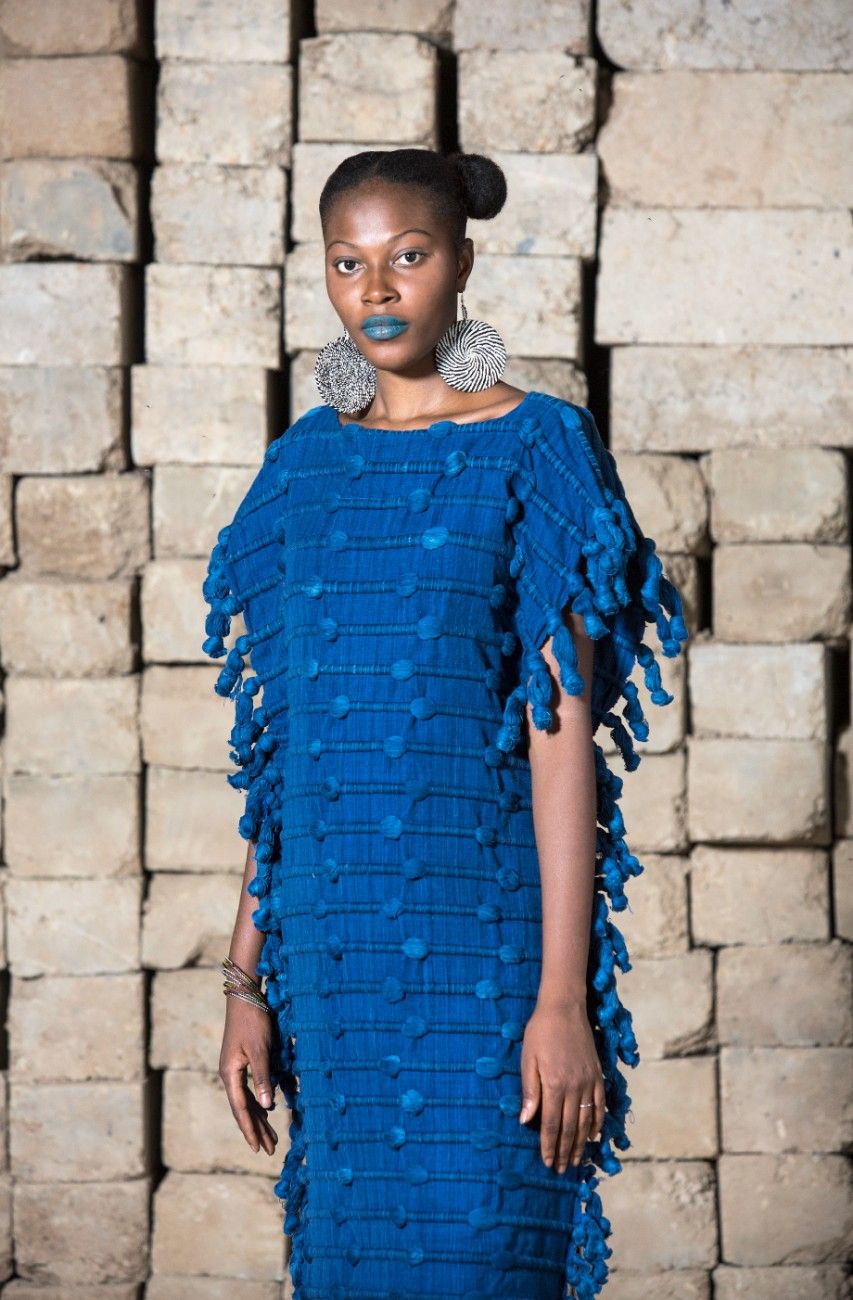
Before Awa Meité’s work gained prominence, bogolanfini had already entered global fashion discourse, most notably through designers such as Chris Seydou, a Malian creator who integrated mud cloth into bold international designs in Western fashion circles.
Yet even as bogolanfini gained visibility, much of its use outside Mali became aesthetic rather than semantic: the cloth’s presence in global markets often lacked context, reducing its symbols to southwestern media exoticism or superficial decoration. Museums and galleries exhibited works for their aesthetic appeal, but the interpretive depth tied to communal memory was frequently overlooked.
This is where Awa Meité’s work begins to diverge: she refuses to treat bogolanfini as a print or motif. Instead, she treats it as text, a language to be respected, translated responsibly, and represented with lineage.
Awa Meité: Craft, Community, and Cultural Continuity
Awa Meité was born in West Africa and later based herself in Bamako, Mali’s cultural heart. While her creative interests span painting, filmmaking, and styling, fashion became her chosen medium for cultural storytelling and socio-economic engagement.
In 2010, she launched her eponymous brand with a mission rooted in both creativity and responsibility: to remodel local cotton and handcraft traditions into wearable art that speaks of Mali’s past and nurtures its future. Her brand’s garments and accessories are produced mainly in Bamako, using local materials and techniques, including handspun cotton and indigenous dyes, leather, and handwoven textiles.
Significantly, Meité’s approach involves intentional community engagement: she works with artisans in cities like Bamako, Ségou, and Mopti, promoting local weaving, dyeing, and finishing practices. Her work is not outsourced; it is locally grounded, ensuring that the craft remains an economic and cultural resource for the communities that have carried it for generations.
Meité’s brand also stems from the Daoula Project, an initiative she founded that advocates for local cotton production and shares knowledge about traditional textiles. This reflects her broader belief that fashion should do more than sell: it should help heal historical inequities, stimulate local economies, and strengthen cultural identity.
Material Meaning in Meité’s Designs
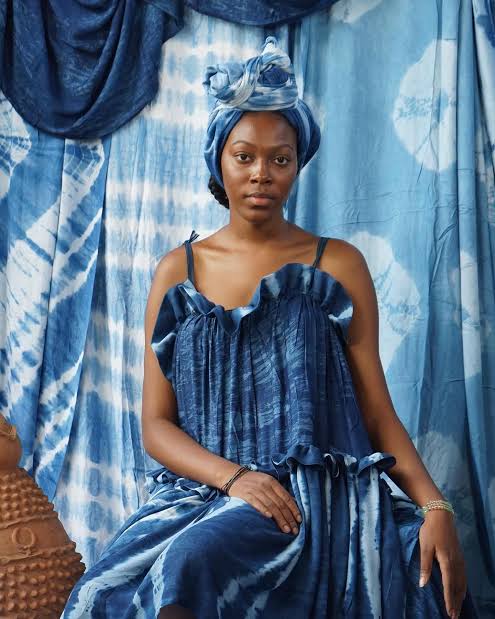
What distinguishes Awa Meité’s work from designers who borrow bogolanfini superficially is her insistence that the cloth retain its ancestral voice in every garment.
Consider pieces such as her “TANA” jacket: this garment is not merely patterned with mudcloth motifs. It is constructed from the same textured cotton and dyed using the same ancestral techniques that have defined traditional bogolanfini for centuries. The cloth’s irregularities—the earthy browns, blackened surfaces, and uneven lines—are not flaws but evidence of human hands, memories, and material stories.
Rather than isolating bogolanfini as a subject, Meité embeds it in forms that allow meaning to persist: the cut, structure, and finish of the textile preserve its cultural grammar, not merely its surface. This aspect is why her work is described as a fusion of handcrafted texture, historical depth, and modern silhouette.
Her fashion does not flatten bogolanfini into a trend. It treats the cloth’s language as foundational ancient codes rendered wearable, not “revived” or refashioned for novelty.
Collections: Material Legacy as Contemporary Narrative
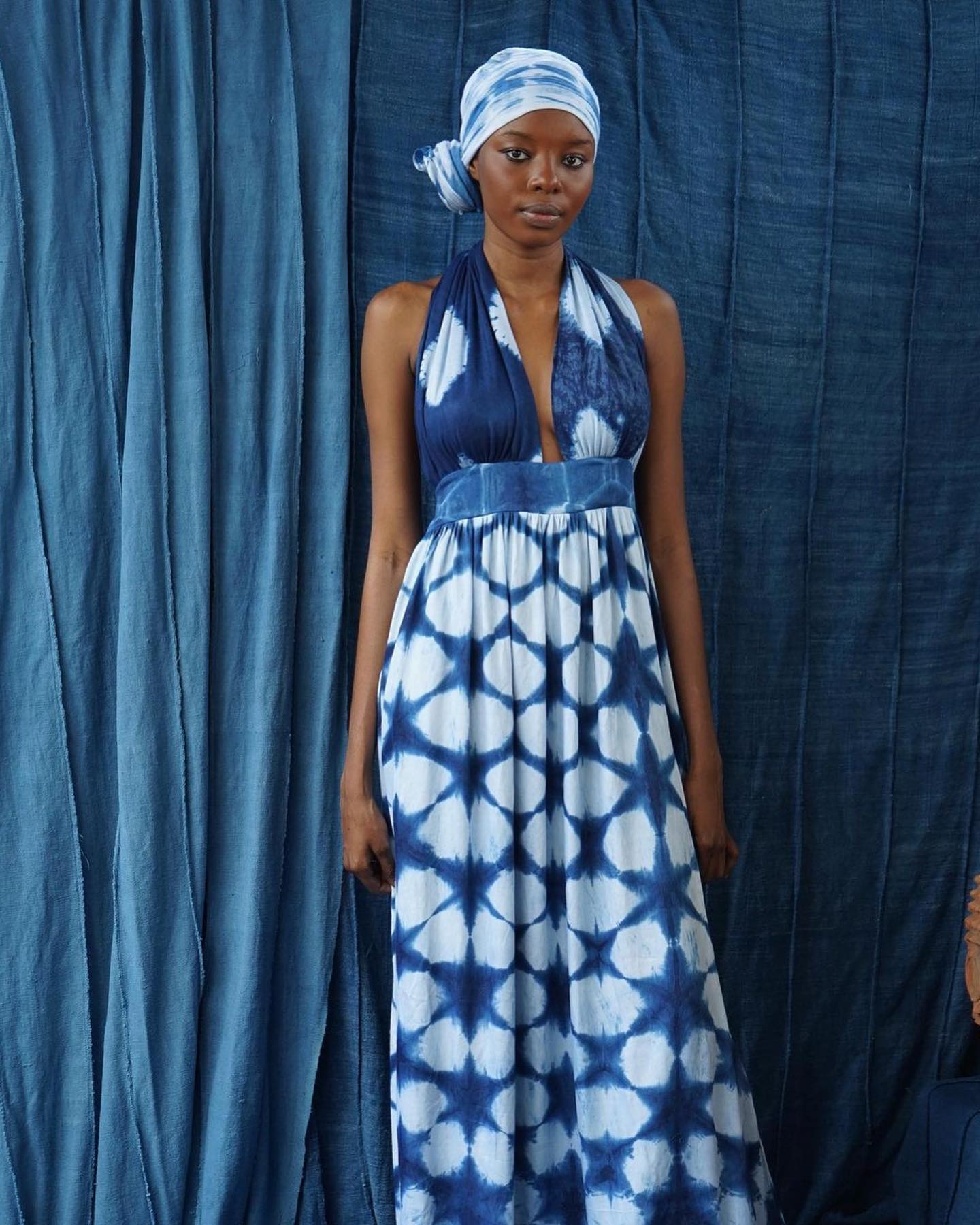
Over her career, Meité’s collections have emphasised textile sculptures, textures, and narratives rather than mere seasonal shifts.
Her debut runway appearances, including Lagos Fashion Week shows from the late 2010s onwards, were lauded for presenting couture that feels materially rooted and ideologically intentional – garments that carry Mali’s textile memory into new contexts.
Media coverage of her S/S 2020 bogolan and indigo collection highlights how reviewers recognised her use of mud cloth as more than a surface aesthetic, describing it as “atypical” and celebrating it as a means of preserving culture through sustainable fashion, with coverage in both African and international outlets.
Beyond Africa, Meité’s artistic presence has expanded to global events such as Shanghai Fashion Week in 2025, underscoring her influence beyond continental platforms. Such engagements reflect both the universal appeal of her work and the need for cross-cultural conversation about ethical design rooted in history.
RELATED ARTICLES:
- Thabo Makhetha-Kwinana and the Basotho Blanket: Sovereignty Woven into Cloth
- Fikirte Addis and the Handwoven Cloth That Carries African Memory
Community Impact and Creative Integrity
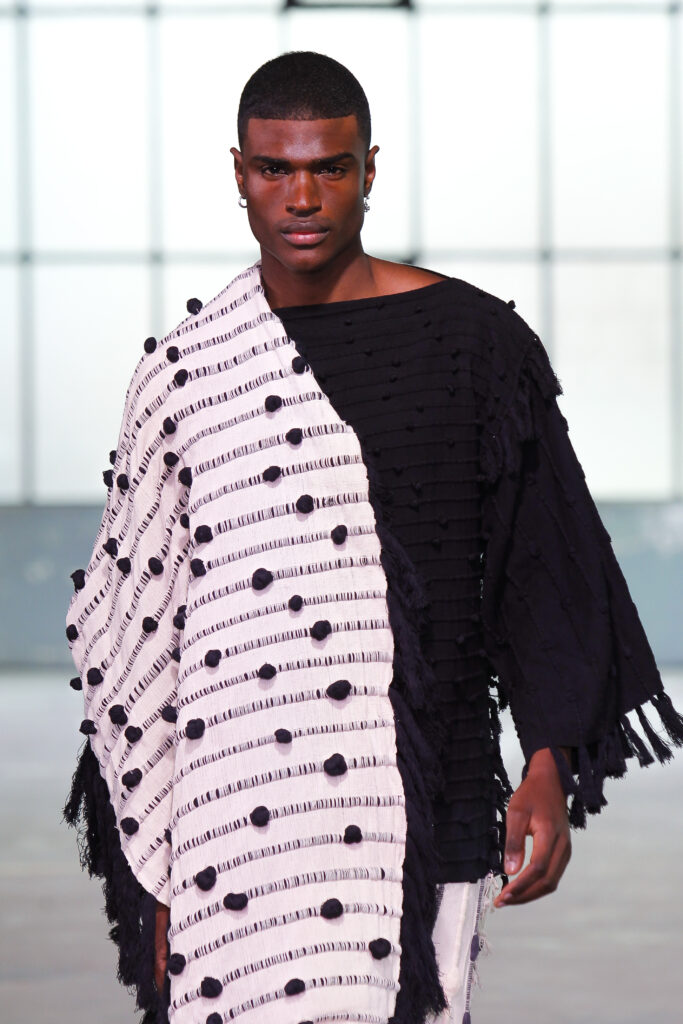
Awa Meité’s work exemplifies a global rarity: her insistence on understanding, rather than merely displaying, heritage cloth.
Her practice supports local artisans materially and socially. By using traditional techniques in limited, high-quality editions, she ensures that:
- Craft remains economically viable for weavers and dyers.
- Cultural knowledge is valued and shared, not extracted.
- Fashion becomes a means of community empowerment, not colonial mimicry.
In doing so, Meité counters the narrative of Western commodification of African textiles. She shows that garments can be both beautiful and repositories of memory that honour their origins.
Why Awa Meité’s Work Matters Today
In an industry where cultural textiles are often reduced to visual motifs or novelty textures, Awa Meité’s work stands out for its material respect and historical fidelity. She demonstrates that textiles, such as bogolanfini, are not merely “fashionable.” They are living texts and visual languages that have passed on meaning from one generation to the next.
Her approach transforms fashion into a space where cultural knowledge remains visible, where artisans are valued as collaborators, and where garments bridge past and present without erasing either.
In her hands, Bogolanfini continues to speak not as decoration, but as archive, identity, and national memory.
FAQs
- What is bogolanfini, and why is it culturally significant?
Bogolanfini, also known as mud cloth, is a traditional Malian textile handwoven and dyed with fermented mud. Its motifs function as a visual language that references rituals, historical events, mythology, and social identity, making it a symbol of Malian cultural heritage.
- How does Awa Meité use bogolanfini in her fashion designs?
Awa Meité incorporates bogolanfini by using traditional hand-dyed cloth in structured garments, preserving its cultural grammar and symbolic patterns while creating contemporary silhouettes grounded in Mali’s craft traditions.
- What makes Awa Meité’s fashion different from others using traditional textiles?
Unlike designers who superficially appropriate patterns, Meité’s work involves local production, artisanal collaboration, and respect for the cloth’s ancestral meaning, ensuring that bogolanfini remains a lived cultural resource.
- What is the historical process of making bogolanfini?
Traditionally, bogolanfini is woven from cotton strips and then dyed with plant extracts. Fermented mud is applied to create symbolic patterns, a complex process passed down through apprenticeships involving both male weavers and female dyers.
- Has Awa Meité’s work reached global audiences?
Yes. Meité’s collections have been showcased at African fashion weeks and international platforms, such as Shanghai Fashion Week, reflecting a global resonance for designs that honour both craft and cultural identity.