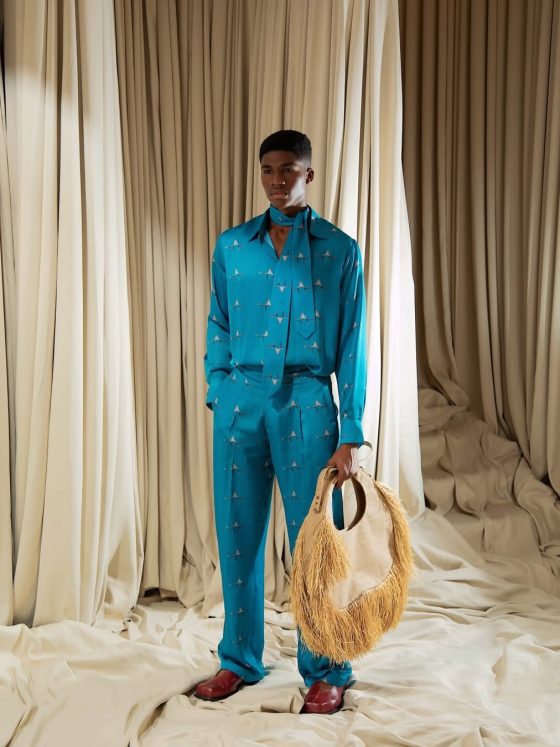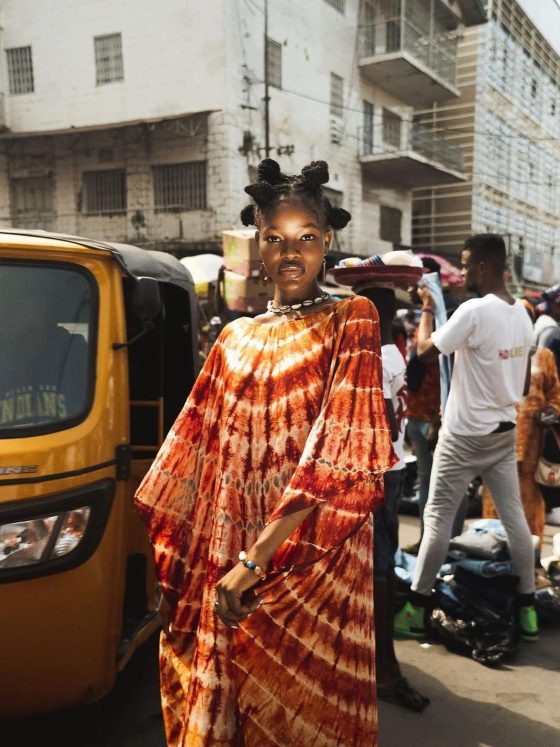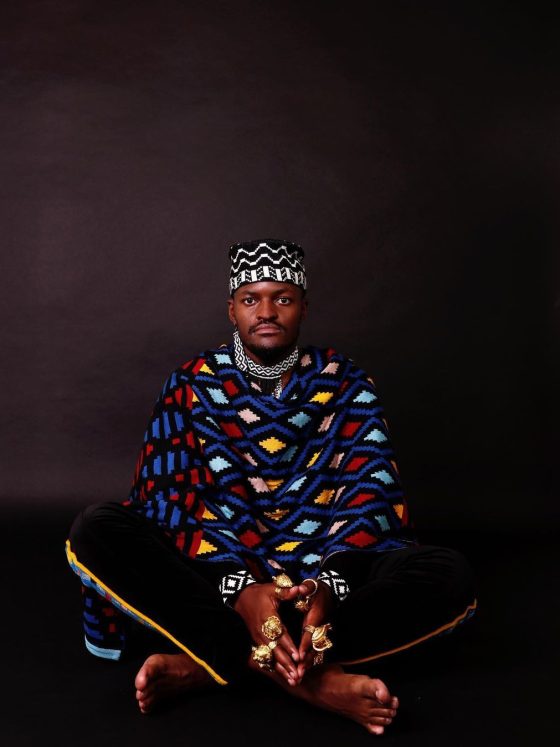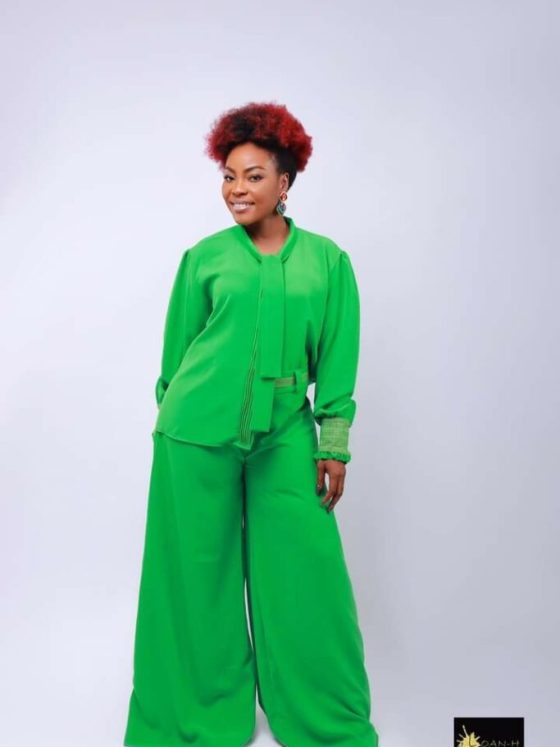
August 2025, and Broad Street in Bridgetown has been closed to traffic. The road that runs from the Parliament buildings down to Bridgetown Duty Free has been turned into a runway. Models are walking in blistering heat, their faces made up in Rihanna’s Fenty line, which has sponsored the production. Designers from Barbados to Nigeria are showing their work at the ISLEstyle Fashion Show, part of CARIFESTA XV, the Caribbean Festival of Arts, which Mia Amor Mottley has brought to Barbados for the third time in the country’s history. The Prime Minister is in the crowd. She is always in the crowd for things like this.
When Mottley steps up to speak, she does not talk about tourism numbers or economic projections. She talks about the ground beneath the runway. She reminds the crowd that Broad Street, that very spot between the monument and the Parliament, is where Africans were once separated, divided, and made instruments for other people’s profit. Then she gestures at the models, at the designers, at the crowd lining both sides of the street, and says, “We have come so far.” Three hundred and ninety-seven years after Bridgetown was established, it is her honour to welcome the people of the Caribbean to this spot. The spot, as she describes it, now carries so many possibilities. That speech, reported by Barbados Today, is not a politician talking about fashion. It is a politician using fashion to make an argument about history, identity, and what the Caribbean can make for itself.
That is what Mia Mottley does. She has been doing it since 2018, and she was building towards it for the twenty-seven years before that.
Mia Mottley wears the Caribbean on the world stage. Here is how Barbados first female Prime Minister uses fashion as cultural and political language.
POLITICAL CAREER
The First, Again and Again
Mia Amor Mottley was born in Bridgetown on 1 October 1965, into a family that had already left its mark on Barbadian public life. Her grandfather, Ernest Deighton Mottley, was the first Mayor of Bridgetown in 1959. Her father, Sir Elliott Deighton Mottley, was a barrister and consul-general in New York. She was educated at Queen’s College in Barbados and later at the London School of Economics, where she read law and graduated in 1986. She was the youngest person ever to be appointed Queen’s Counsel in Barbados.
She entered politics in 1991, losing her first attempt at the St. Michael North East constituency by fewer than 200 votes. She came back in 1994, won the seat, and has held it at every election since. She was appointed Minister of Education, Youth Affairs and Culture that same year, at the age of 29, making her one of the youngest people ever to hold a ministerial portfolio in Barbados. Between 1994 and 2008, she served in the cabinets of three successive Barbados Labour Party governments, progressing from Education to Attorney-General and Minister of Home Affairs, becoming the first woman to hold that position, and then to Minister of Economic Affairs. She became Deputy Prime Minister in 2003.
After the BLP lost the 2008 election, Mottley was elected leader of the party, the first woman to lead it. She led them through a period of opposition, was briefly ousted as opposition leader in 2010, returned to the position in 2013, and then, on 24 May 2018, led the Barbados Labour Party to the most decisive election victory in the country’s history. The BLP won all 30 seats in the House of Assembly and 72.8% of the popular vote. She became Barbados’ eighth Prime Minister and its first female Prime Minister, as documented in the Barbados government’s official record. In January 2022, she led the BLP to a second consecutive clean sweep.
The scale of that record matters to understanding her fashion choices because everything she has done since 2018 has been done from a position of unambiguous democratic authority. She did not dress carefully to seem acceptable. She had already won. She dressed to say something.
The Republic, the World Stage, and the Voice That Went Viral
In November 2021, Mottley oversaw Barbados’s formal transition from a constitutional monarchy to a parliamentary republic, removing Queen Elizabeth II as head of state. It was the most significant constitutional moment in the country’s history since independence in 1966. She did not need to make it dramatic. She made it dignified, deliberate, and Bajan. The ceremony was attended by Prince Charles and included the elevation of Rihanna as Barbados’s eleventh National Hero, a choice that communicated clearly where the country’s cultural confidence now resided. In that same year, Mottley was named a UN Champion of the Earth, the United Nations Environment Programme’s highest environmental honour, for her policy leadership on climate change.
Her speech at the UN General Assembly in September 2021, in which she invoked Bob Marley and asked world leaders to stand up for the rights of her people, was watched around the world. So was her address at COP26 that November, where she warned that those pushing the world towards climate catastrophe were gambling with something they did not understand. Time magazine named her one of its 100 Most Influential People of 2022. She has received the Order of Roraima from Guyana, the Order of the Golden Heart of Kenya, and the First Class Order of Zayed II from the UAE. She has delivered the Nelson Mandela Annual Lecture and co-chaired the Development Committee of the World Bank and the International Monetary Fund.
A woman from a 431-square-kilometre island in the Eastern Caribbean has done all of this. And at every single one of those moments, she decided what to wear.
ALSO READ:
- Heritage Travel in West Africa: The Homecoming Routes That Are Changing Lives
- Cultural Immersion Travel in Africa: A Region-by-Region Guide for 2026
- Ancestry Travel in Africa: How the Diaspora Is Reconnecting with the Continent
THE FASHION
What She Wears and Why It Is Not Incidental
There is a particular pressure that attaches itself to women in high political office, a pressure to dress in a way that signals seriousness without sacrificing femininity, authority without arrogance, national identity without provincialism. Most women in that position resolve the tension by defaulting to the international uniform: tailored blazers, structured dresses, neutral colours. Mia Mottley has never worn that uniform. She has built her own.
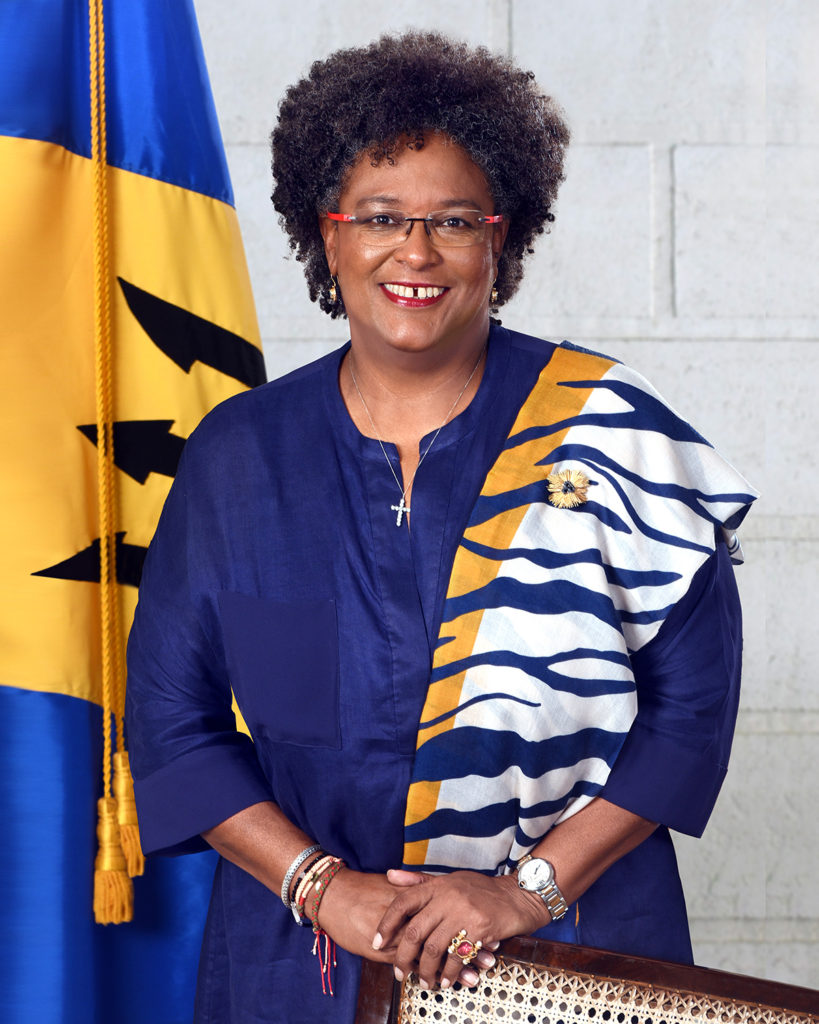
In September 2021, Mottley appeared in the pages of British Vogue, photographed by young Barbadian photographer Kyle Babb for the September print edition. It was not a fashion feature. It was a political profile, written by Gary Younge for one of the world’s most visible publications. But the fact that a Caribbean head of state was photographed for Vogue wearing Caribbean fashion by a Caribbean photographer in Barbados was itself a statement. British Vogue listed her among its forces for change. She was photographed wearing The Cloth, a Caribbean fashion label whose philosophy, as reported by Andscape, is grounded in folk, revolution, restoration and integration. The brand’s own language states that the act of making clothes tastes of resistance from all our battles. Two months after those photographs were taken, Barbados became a republic.
The timing was not a coincidence. It was a coherent statement, made in fabric.
The Cloth: A Caribbean Brand Built for Exactly This Moment
The Cloth is a Trinidad-based label whose creative director, Carlton Young, has spent years weaving the memories and tensions of the Caribbean region into garments. His pieces include starched epaulettes and structured cargo pockets alongside brilliantly coloured fabric, Cuban Guayabera shirts, and visual references to Haitian veve symbols and West African deities. His work has been worn by calypso musician David Rudder, the late jazz pianist Andre Tanker, trumpet player Etienne Charles, and Mottley herself, among others, as documented by Caribbean Lookbook. When Mottley wears The Cloth, she is not wearing it for status. She is taking a specific intellectual and aesthetic position on what Caribbean culture is and what it deserves to look like on the international stage.
Young’s pieces are not decorative. They are argumentative. They carry the region’s contradictions without resolving them, celebrating the complexity of a culture built from African, indigenous, European, and Asian elements, forged under colonialism and continuously reimagined in its aftermath. Mottley understands this. That is why the garments fit her body the way they do. She is not wearing clothes that represent the Caribbean for an outside audience. She is wearing clothes that speak from inside them.
When you think about what Stacey Abrams or Mia Mottley is wearing, the use of colour is a big thing that sets women apart on the political stage. These women are not afraid to use it.
The Signature Elements: Afro, Scarves, Glasses, Colour
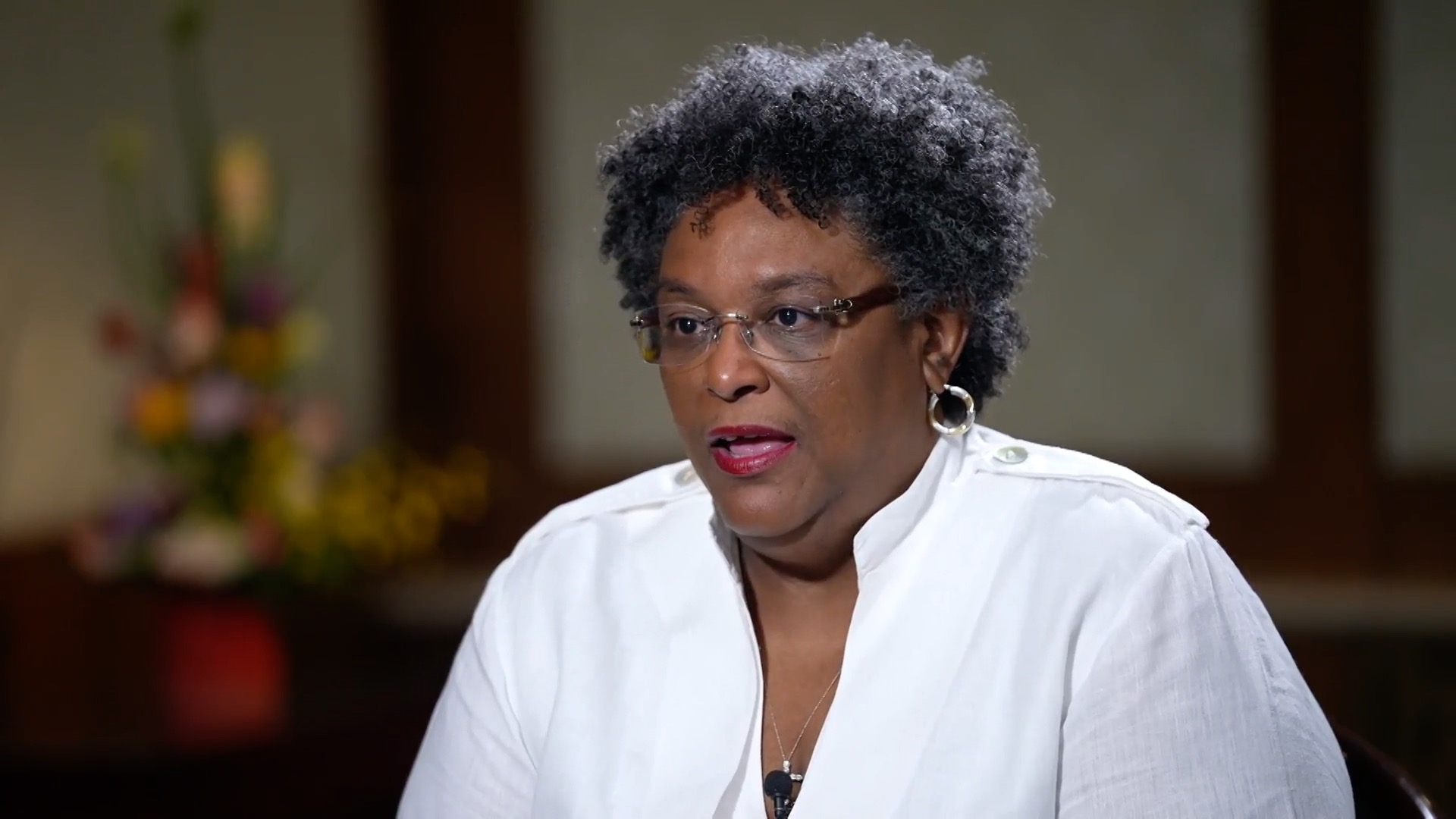
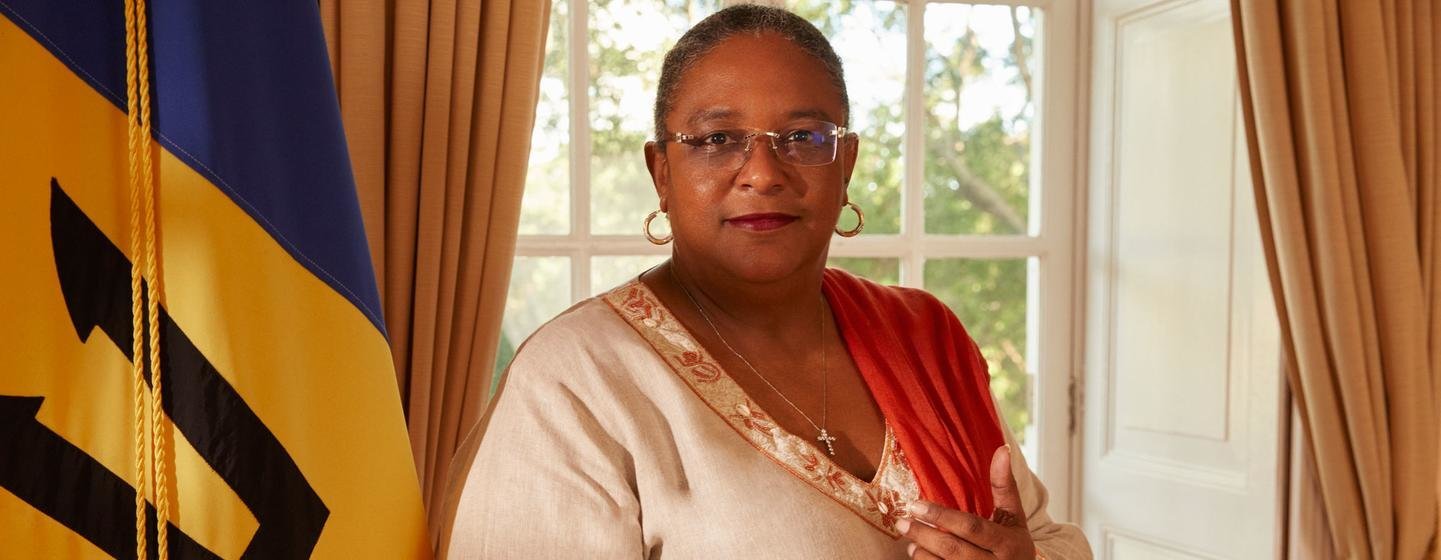
Mottley’s visual identity is consistent enough to constitute a deliberate style philosophy rather than a series of individual choices. As documented by About Her Culture, she is seldom seen without her natural afro, which she has described as an acknowledgement of her African roots. She wears eyeglass frames every day, often in bold colours, particularly red, which have become as much a part of her public image as her voice or her gap-toothed smile. She favours loose tunics, flowing linen trousers, and scarves worn over the shoulder. She wears classic red lips. She rotates between jewel tones and earthy Caribbean palettes with the confidence of someone who has never once considered whether those colours belong in a chamber of government.
The fashion journalist and academic Brenda White, quoted in Andscape’s analysis of Black women in political dress, noted that the use of colour is a significant way women like Mottley set themselves apart on the political stage. White drew a direct comparison with Hillary Clinton’s calculated uniform of tailored suits, arguing that the generation of leaders that followed her, including Mottley, has moved with conviction into colour, cultural reference, and personal expression as deliberate political tools. Mottley’s dress is read this way not because commentators project meaning onto it, but because she herself has never pretended her choices are neutral.
At COP26 in Glasgow in 2021, she delivered a speech that made international headlines while wearing her red frames and a Story and Myth mask chain, a sustainable jewellery piece by Jamaican artisan Kristie Stephenson, whose hand-crafted, 100% sustainable beadwork has been sold to clients including Madonna. At the UN General Assembly, the same frames. At the Nelson Mandela Annual Lecture in South Africa in 2022, the same frames were used. The consistency is the point. She is always recognisably herself, and that self is always Caribbean.
CARIFESTA XV and the ISLEstyle Fashion Show: August 2025
When Barbados hosted CARIFESTA XV from 22 to 31 August 2025 under the theme Caribbean Roots, Global Excellence, Mottley was not simply a patron of the event. She was its political architect. She had personally championed Barbados’s bid to host the fifteenth edition of the Caribbean Festival of Arts, the region’s premier celebration of culture and creativity, for the third time in the country’s history, following editions in 1981 and 2017. Speaking on the CARICOM website ahead of the event, she urged every Caribbean national to attend, saying: “Miss this and blame yourself.”
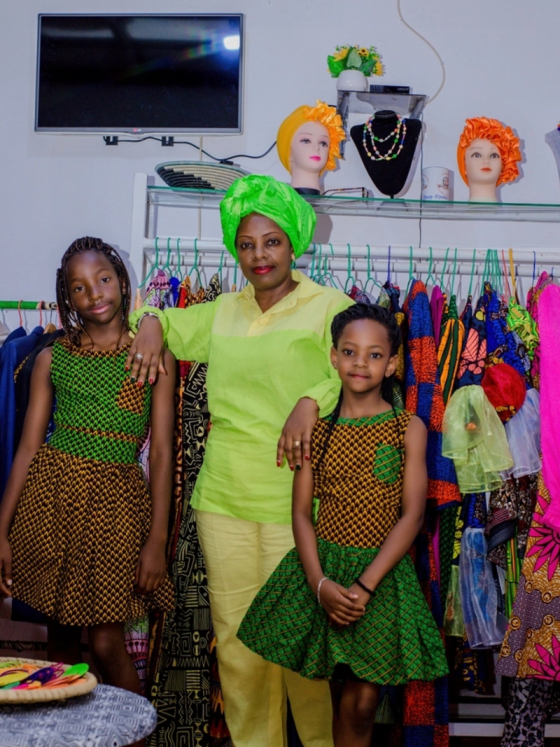
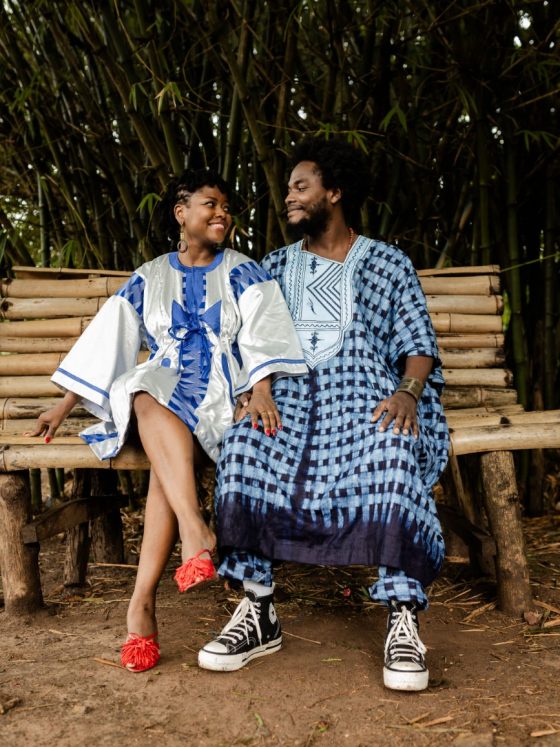
The ISLEstyle Fashion Show on Broad Street was among the festival’s most talked-about events. As covered by Barbados Today, the show brought designers from across the Caribbean and West Africa to a runway that stretched from the Parliament buildings to Bridgetown Duty Free, sponsored in part by Rihanna’s Fenty Beauty line. The idea for staging it on Broad Street came from local designer and fashion enthusiast Greg Williams, a detail Mottley acknowledged publicly in her remarks.
Her speech at the show was one of the most direct articulations she has ever made of the relationship between fashion, history, and political identity. She did not use the occasion to praise the designers in the generic language of cultural promotion. She placed the runway within the four-hundred-year history of that street, where Africans were enslaved, separated, and commodified, and she said: We are here now, making this, and it is extraordinary. That reframing of a fashion show as an act of civilisational continuity is what distinguishes Mottley as a fashion figure from any head of state who simply selects her clothes with care.
ALSO READ
- Homecoming Ceremonies in West Africa: What They Are and How to Attend Respectfully
- African Heritage Routes: Every UNESCO World Heritage Site on the Continent, Mapped
- Off the Beaten Path in Africa: 12 Destinations That Reward the Seriously Curious
LOCAL INSIGHT
A Caribbean Wardrobe as Regional Policy
It is worth being precise about what Mottley is doing when she chooses Caribbean designers for major international appearances. She is not making a sentimental or symbolic gesture. She is making an economic and political argument. The Caribbean creative economy, which includes fashion, music, food, and the visual arts, is one of the most undercapitalised sectors in the region relative to its cultural output and global influence. When a head of state with Mottley’s international profile wears a Caribbean label to a Vogue photoshoot, to a UN General Assembly address, to a COP26 speech, she is generating the kind of visibility that no marketing campaign can purchase.
This is not a new idea in the region. What is distinctive about Mottley is the consistency and the specificity of the choices. She does not wear any Caribbean designer. She wears designers whose work carries intellectual and cultural weight that aligns with her own political positions. The Cloth’s philosophy of resistance and regional identity sits alongside Mottley’s arguments about decolonisation and Caribbean sovereignty. Story and Myth’s commitment to eco-conscious, sustainable production by a Black female artisan sits alongside Mottley’s record as one of the most vocal advocates for small island states on the climate crisis. The alignment is not accidental. As fashion scholar Rachel Scott, the Jamaica-born designer behind New York label Diotima, noted in a different context, the Caribbean and the diaspora remain prescient sources of inspiration in fashion. For Mottley, they are not inspiration points. They are the source.
WHY IT MATTERS
What Mottley’s Style Tells the World About the Caribbean
The international conversation about fashion and political power is almost always conducted in reference to European or North American figures. When it gestures towards leaders from the Global South, it tends to treat traditional dress as the subject of curiosity or as a form of ethnic distinction rather than as a sophisticated aesthetic practice rooted in a specific intellectual tradition. Mottley disrupts this framing simply by existing in the rooms she has entered, wearing what she wears.
She appeared on the cover of British Vogue wearing Caribbean fashion while talking about republicanism. She delivered the Nelson Mandela Annual Lecture in South Africa wearing her afro and her frames. She stood on a Barbadian street and described a fashion show as a ceremony of historical recovery. She has done all of this as the first female Prime Minister of a nation that voted for her with 72.8% of the popular vote, gave her every seat in Parliament, and then gave her every seat again. She has the mandate to dress however she chooses. She has chosen to dress in the Caribbean.
That choice reframes what the Caribbean is in the global imagination. It says: ” This is not a backdrop for other people’s holidays. This is a civilisation with its own designers, its own aesthetic traditions, its own relationship to history and identity, and a Prime Minister who understands all of it well enough to wear it to Geneva.
The act of making clothes tastes of resistance from all our battles. The Cloth, a Caribbean fashion label worn by Prime Minister Mia Mottley at the British Vogue September 2021 feature.
Key Moments in the Mottley Fashion Record
- September 2021: Featured in British Vogue, photographed by Barbadian photographer Kyle Babb, wearing The Cloth, a Caribbean label grounded in regional resistance and cultural identity.
- November 2021: Delivered speech at COP26 in Glasgow wearing Story and Myth mask chain jewellery by Jamaican artisan Kristie Stephenson, alongside her signature red frames.
- November 2021: Oversaw Barbados’s transition to a republic, removing Queen Elizabeth II as head of state, in a ceremony that she dressed for as a Barbadian head of state, not a Commonwealth one.
- May 2022: Named one of Time magazine’s 100 Most Influential People of 2022, having made a series of internationally documented appearances in Caribbean dress at global forums.
- November 2022: Delivered the 20th Nelson Mandela Annual Lecture in South Africa, the first Caribbean head of government to do so, wearing her characteristic natural afro and frames.
- August 2025: Attended and spoke at the ISLEstyle Fashion Show on Broad Street, Bridgetown, as part of CARIFESTA XV, publicly placing Caribbean fashion within a 397-year historical narrative of resistance and recovery.
CONCLUSION
Some politicians happen to dress well, and there are politicians whose dress part of a coherent argument about who they are and what they represent. Mia Mottley is the second kind, and she is rare enough in that category that it is worth naming precisely.
She did not need fashion to build her career. She built it on law, on political strategy, on a quality of oratory that her colleagues describe as a commanding contralto, and her opponents have never found a satisfactory answer to. She won every seat. She made Barbados a republic. She put small island developing states at the centre of the global climate conversation. Fashion is not what got her there.
But fashion is what she uses to say, once she is there, what it means to be there. The loose tunics in the Caribbean palette, the flowing linens, the bold frames, the natural hair, the pieces by The Cloth and the beadwork by Story and Myth. None of it is decorative. It is declarative. It says: this is where I am from, this is what that place has made and continues to make, and I will wear it on every stage the world offers me, because the Caribbean does not need to perform for anyone’s approval.
At CARIFESTA XV in August 2025, standing on Broad Street above the history of that ground, she said exactly that. She just happened to be surrounded by a runway when she said it.
FAQs: Mia Mottley: Fashion, Politics and Caribbean Identity
1. Who is Mia Amor Mottley?
Mia Amor Mottley, born 1 October 1965 in Bridgetown, Barbados, is the eighth and first female Prime Minister of Barbados, a position she has held since 25 May 2018. She is a lawyer and Queen’s Counsel, educated at the London School of Economics, and has served as a Member of Parliament for St. Michael North East since 1994. She is also the Leader of the Barbados Labour Party, which she has led since 2008. In 2021, she oversaw Barbados’s transition from a constitutional monarchy to a parliamentary republic, and in that same year was named a UN Champion of the Earth for Policy Leadership. Time magazine named her one of its 100 Most Influential People of 2022.
2. What is Mia Mottley’s fashion style?
Mottley’s style is built around Caribbean identity rather than international political convention. She wears loose tunics, flowing linen separates, and boldly coloured scarves worn over the shoulder. She favours jewel tones and earthy Caribbean palettes. She is rarely seen without her natural afro and wears eyeglass frames every day, often in bold colours, including red. She wears classic red lips as a signature. Her choices consistently privilege Caribbean designers and makers over international fashion houses, and she has been photographed for British Vogue, Essence, and Time in this aesthetic. The Guardian described her as very rootsy.
3. What is The Cloth, and why does Mia Mottley wear it?
The Cloth is a Caribbean fashion label whose creative director, Carlton Young, designs pieces that draw on the region’s memories, tensions, and cultural traditions. His work incorporates references to Haitian veve symbols, West African deities, and regional craft traditions, combined with bold colour and structural tailoring. The brand’s stated philosophy is grounded in folk, revolution, restoration and integration, and its own language describes the act of making clothes as tasting of resistance. Mottley wore The Cloth for her feature in the September 2021 issue of British Vogue, two months before overseeing Barbados’s transition to a republic. The alignment between the brand’s politics and Mottley’s own positions on decolonisation and Caribbean sovereignty is visible and deliberate.
4. What is CARIFESTA XV, and what was Mottley’s role in it?
CARIFESTA XV was the fifteenth edition of the Caribbean Festival of Arts, held in Barbados from 22 to 31 August 2025 under the theme Caribbean Roots, Global Excellence. It was the third time Barbados had hosted CARIFESTA, following editions in 1981 and 2017. Mottley, as Prime Minister and Chair of CARICOM, was the political champion of the festival and its host. She opened the official ceremony, attended the ISLEstyle Fashion Show on Broad Street in Bridgetown, and used her remarks at the fashion show to connect Caribbean creative expression directly to the history of the ground on which the runway was built. The festival featured delegations from more than 25 countries, including Ghana, Cuba, Brazil, and Colombia.
5. Has Mia Mottley been featured in international fashion publications?
Yes. Mottley was featured in the September 2021 print edition of British Vogue, photographed by Barbadian photographer Kyle Babb. The feature, written by journalist Gary Younge, focused on her political plans for Barbados and her campaign to lead the country towards republicanism. She was wearing The Cloth, a Caribbean label, for the shoot. British Vogue listed her among its forces for change. She has also been featured in Essence magazine. She has been the subject of fashion commentary in The Guardian, Andscape, and other international publications, which have consistently noted her use of Caribbean dress and regional designers as a deliberate political aesthetic.
6. What has Mia Mottley said about Caribbean fashion and creative industries?
Mottley has spoken publicly and consistently about the Caribbean creative economy as an economic and cultural priority. At the ISLEstyle Fashion Show during CARIFESTA XV in August 2025, she argued that Caribbean fashion deserves to be celebrated on the very ground where the history of African displacement began, framing Caribbean design as an act of civilisational recovery rather than entertainment. She has used CARIFESTA and other platforms to argue that Caribbean culture, including fashion, is not peripheral to development but central to it. She has also advocated for stronger links between the Caribbean and the African continent, calling at the Africa-CARICOM Summit for direct flights between the two regions and an end to visa requirements between Caribbean and African countries.
7. How does Mia Mottley’s style compare to other Caribbean political leaders?
Mottley occupies a distinctive position among Caribbean leaders in her consistent, documented use of regional designers and her public articulation of fashion as cultural argument. While other Caribbean heads of government have worn national dress at ceremonial events, Mottley integrates Caribbean fashion into her everyday and international appearances, including at the United Nations General Assembly, COP26, and the Nelson Mandela Annual Lecture. Andscape’s analysis of Black women in political dress specifically named Mottley alongside Colombia’s Francia Marquez and Tanzania’s Samia Suluhu Hassan as leaders who use style as a tool of cultural and political communication, distinguishing them from an earlier generation of women politicians who defaulted to neutral international dress codes.
8. What is the significance of Mottley’s natural afro as part of her public image?
Mottley has worn her natural afro throughout her political career and has described it publicly as an acknowledgement of her African roots. This choice carries particular weight for a Caribbean head of state, given the historical pressure on Black women in public life to conform to Eurocentric standards of professional appearance. Her consistently natural hair, worn without modification on every international stage she has occupied, from the United Nations to the Nelson Mandela Annual Lecture to the pages of British Vogue, is part of a coherent visual identity that publicly roots her in the African diaspora tradition from which Caribbean culture emerged. It is not separate from her fashion choices. It is their foundation.