In 1876, a twenty-eight-year-old Scottish missionary named Mary Slessor arrived at Duke Town, Calabar, and encountered a people who were already among the most cosmopolitan on the African continent. The Efik of Old Calabar had been in active, sophisticated contact with European traders since the 17th century. They had built merchant houses that rivalled European trading corporations in their complexity and reach. They had developed the Ekpe secret society, a graded institution that served simultaneously as the legislature, judiciary, and executive. They had produced Nsibidi, an indigenous writing system predating European contact whose symbols were inscribed on cloth, skin, and walls across the Cross River region. When Mary Slessor arrived in her Victorian dress and changed the lives of Efik communities by ending the killing of twins, she also, inadvertently, changed what Efik women wore. The Onyonyo, the ball gown that is now the most iconic element of Efik women’s formal dress, is directly descended from the Victorian silhouette Slessor and the missionaries brought to Calabar. The Efik took it, made it their own, adorned it with coral beads and an elaborately decorated staff, and produced something so distinctly Efik that no one who sees an Efik bride mistakes her for anything else.
That is the story of Ofod styles for Efik women: a culture so confident in its own identity that it could absorb a Victorian dress silhouette, rename it, coral-bead it, and make it one of the most regal bridal traditions in Nigeria. This article covers the five most significant Ofod styles in Efik women’s dress, the full history of Old Calabar and the dressing tradition it produced, and the ceremonial occasions across which Efik women wear their cloth in 2026.
From the Ofod Ukod Anwang to the Onyonyo ball gown, discover the top 5 Ofod styles for Efik women. The history of Old Calabar, coral bead culture, Efik ceremonies, and the full dressing guide are rooted in Cross River State cultural life.
Old Calabar: A Civilisation That Dressed for the Court
The Efik people inhabit the coastal and riverine zones of Cross River State, occupying the banks of the Lower Cross River and the Calabar River estuary. Their language, which belongs to the Efik-Ibibio subgroup of the Benue-Congo family, became the lingua franca of the entire Cross River region and remains one of four major languages broadcast on Cross River State radio and television today. As Britannica documents, the Efik migrated down the Cross River in the first half of the 17th century and founded the city-states of Creek Town, Duke Town, and Henshaw Town, which together comprised Old Calabar. By the 18th century, Old Calabar had become one of the most active coastal trading polities in West Africa, exporting enslaved people and later palm oil to European merchants while importing goods that transformed the community’s material culture. Approximately 750,000 Efik people are estimated to live in Nigeria today, primarily in Cross River and Akwa Ibom states, with smaller communities in Cameroon and the United States.
At the heart of Efik governance stood the Ekpe society, known also as Mgbe among neighbouring groups. Far from being a simple secret society, the Ekpe was a multi-tiered institution that integrated ritual, legislation, law enforcement, and social regulation into a single governing body. Its influence extended beyond the Efik homeland into other Cross River communities, creating a regional network of mutual legal understanding that functioned without any European equivalent. As documented in Historical Nigeria, the Ekpe embodied a worldview in which law, morality, and spirituality were inseparable. The Ukara cloth worn by Ekpe members, inscribed with Nsibidi symbols, was not a decorative fabric. It was a legal and spiritual document worn on the body.
The material culture of the Efik was shaped by this combination of indigenous civilisational depth and sustained European contact. Their dressing tradition absorbed external influences without surrendering its own logic. The Onyonyo absorbed the Victorian ball gown. The coral bead tradition, sourced from deep-sea coral and carrying the weight of royalty, wealth, and ancestral connection, remained entirely Efik. The elaborately decorated bridal staff, the Etinghe hairstyle with brass combs, and the Ekpa Ku Kwa hand and leg ornaments: none of these came from Europe. The Efik selected what suited them from the world that arrived at their port and kept everything that was already theirs. That selective confidence is the editorial argument behind every style in this article.
The Efik selected what suited them from the world that arrived at their port and kept everything that was already theirs.
Coral Beads: The Currency of Efik Status
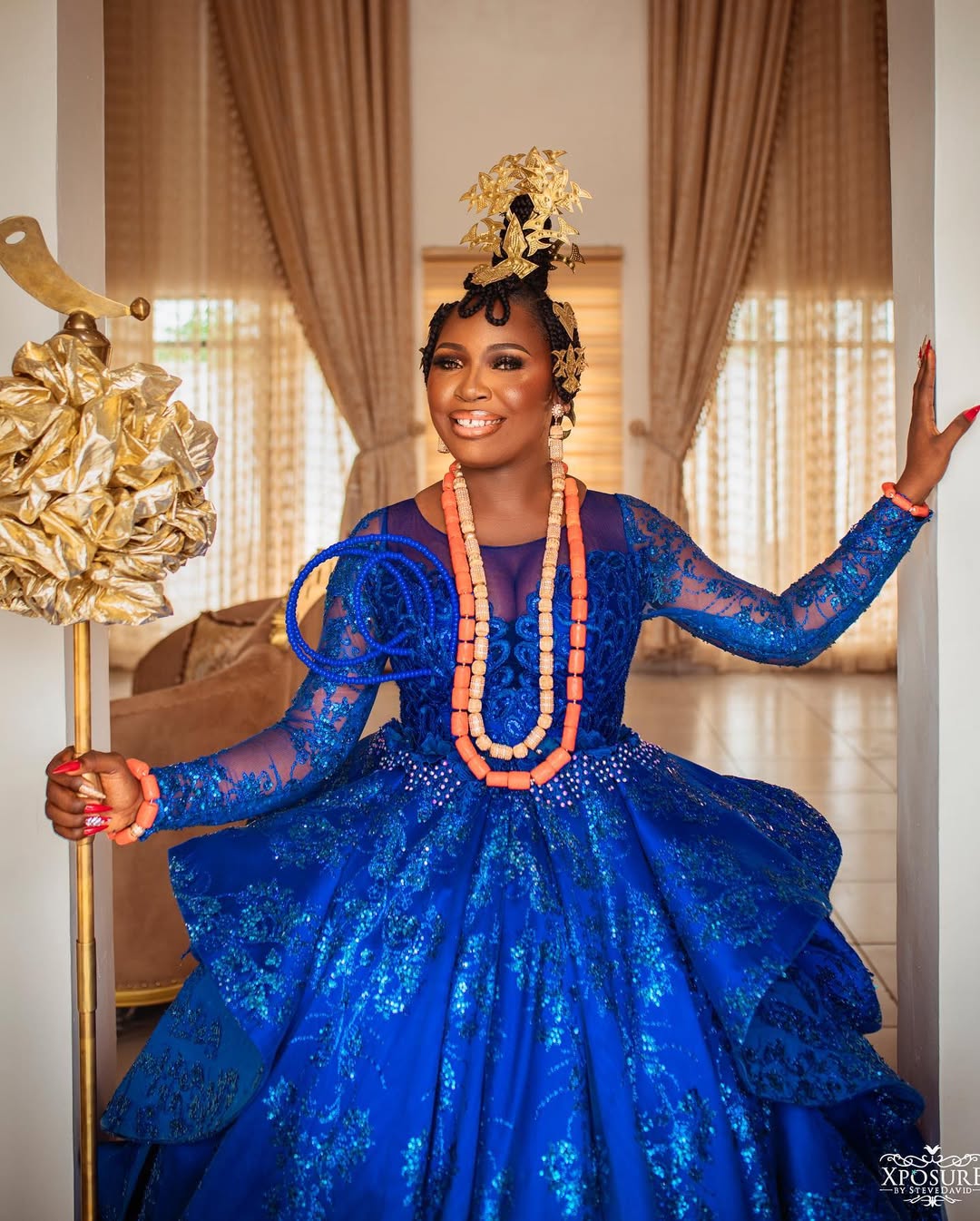
Before examining the five styles, it is necessary to understand the coral bead tradition that anchors every formal Efik woman’s outfit. In the Efik culture, coral beads are not accessories. They are a declaration of royalty, wealth, status, and ancestral connection worn simultaneously on one body. Efik brides wear layered coral bead necklaces, bracelets, and anklets, each strand communicating a specific social message to anyone in the room who knows how to read it. The beads are sourced from deep-sea coral and are considered a symbol of affluence, distinct from glass or plastic imitations. As Fashion Police Nigeria notes, coral beads in Efik culture also honour ancestors, the wearing of inherited coral carrying the weight of family lineage across generations. A woman whose coral beads were her grandmother’s is not wearing jewellery. She is wearing her family’s history.
No Ofod style is complete without coral. The beads, the Etinghe hairstyle adorned with brass combs, the elaborately decorated staff, and the Ekpa Ku Kwa hand and leg ornaments together constitute the full Efik formal dressing system within which the Ofod garments operate. Understanding this context means understanding that when an Efik woman dresses for a ceremony, the cloth is one element of a total composition. Every element carries meaning. Nothing is incidental.
1. The Ofod Ukod Anwang: The Two-Piece Bridal Set
The Ofod Ukod Anwang is the older of the two primary Efik women’s formal garments and the one most directly rooted in pre-European contact Efik dressing tradition. It is a two-piece outfit consisting of a large skirt falling from the waist to the knee and a short blouse covering only the bust, leaving the stomach and shoulder area visible and adorned with beaded body ornamentation. As Eucarl Wears documents, the design of the Ofod Ukod Anwang is deliberate: the exposure of the midriff is intended to showcase the bride’s waist, presenting the feminine qualities of the woman to the assembled community. The body is the display, the garment is the frame, and the beaded adornment covering the exposed skin bridges the two.
The Ofod Ukod Anwang is worn with the full complement of Efik bridal accessories: layered coral bead necklaces at the neck, Ekpa Ku Kwa ornaments at the hands and legs, the Etinghe hairstyle with brass combs at the crown, and the elaborately decorated staff that is one of the most distinctive visual elements of Efik bridal presentation. In 2026, the Ofod Ukod Anwang is experiencing a revival among Efik women who see it as the most authentically pre-colonial element of their formal dress tradition, its silhouette undiluted by European influence and its cultural grammar entirely Efik in origin.
2. The Onyonyo: The Victorian Ball Gown Made Efik
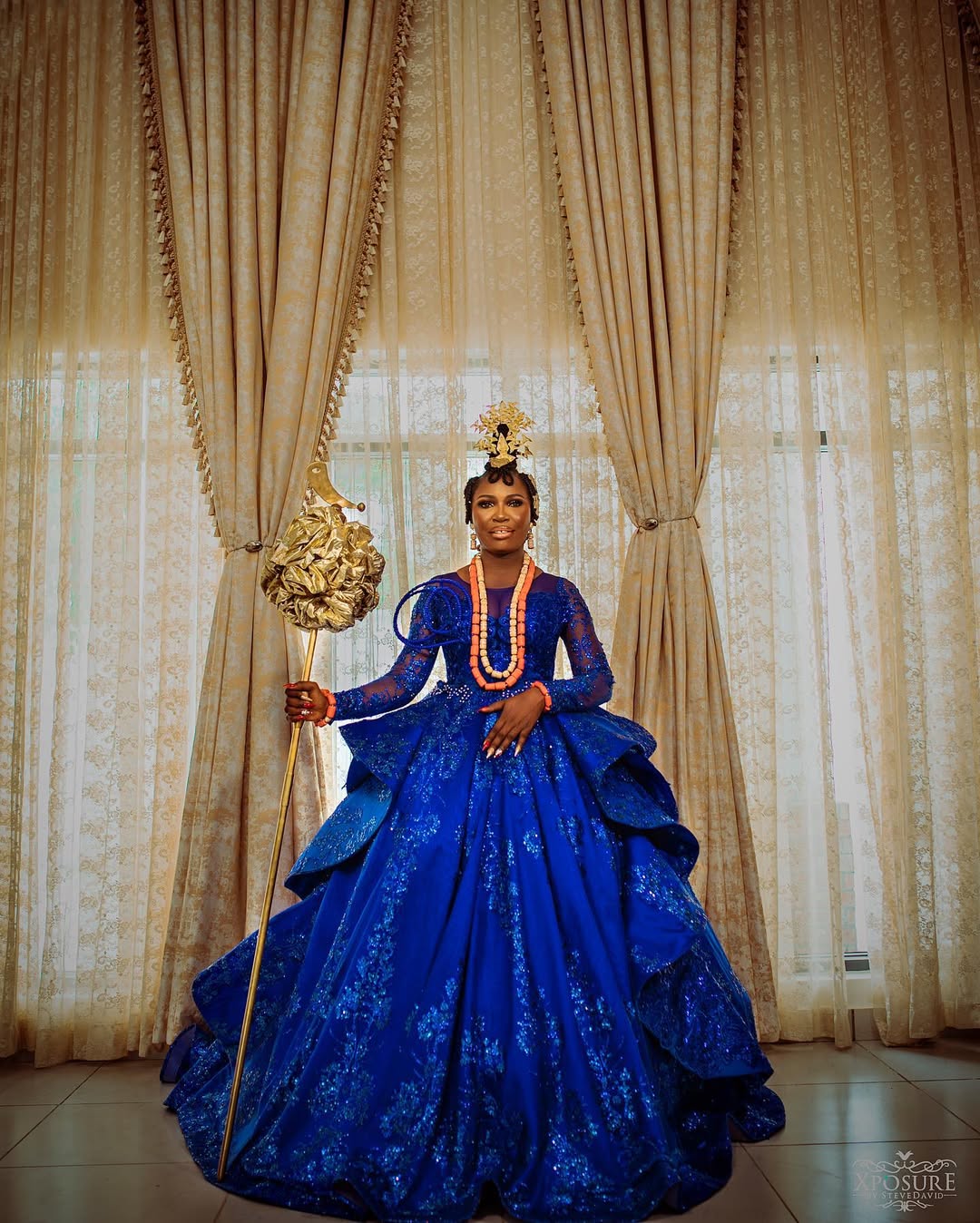
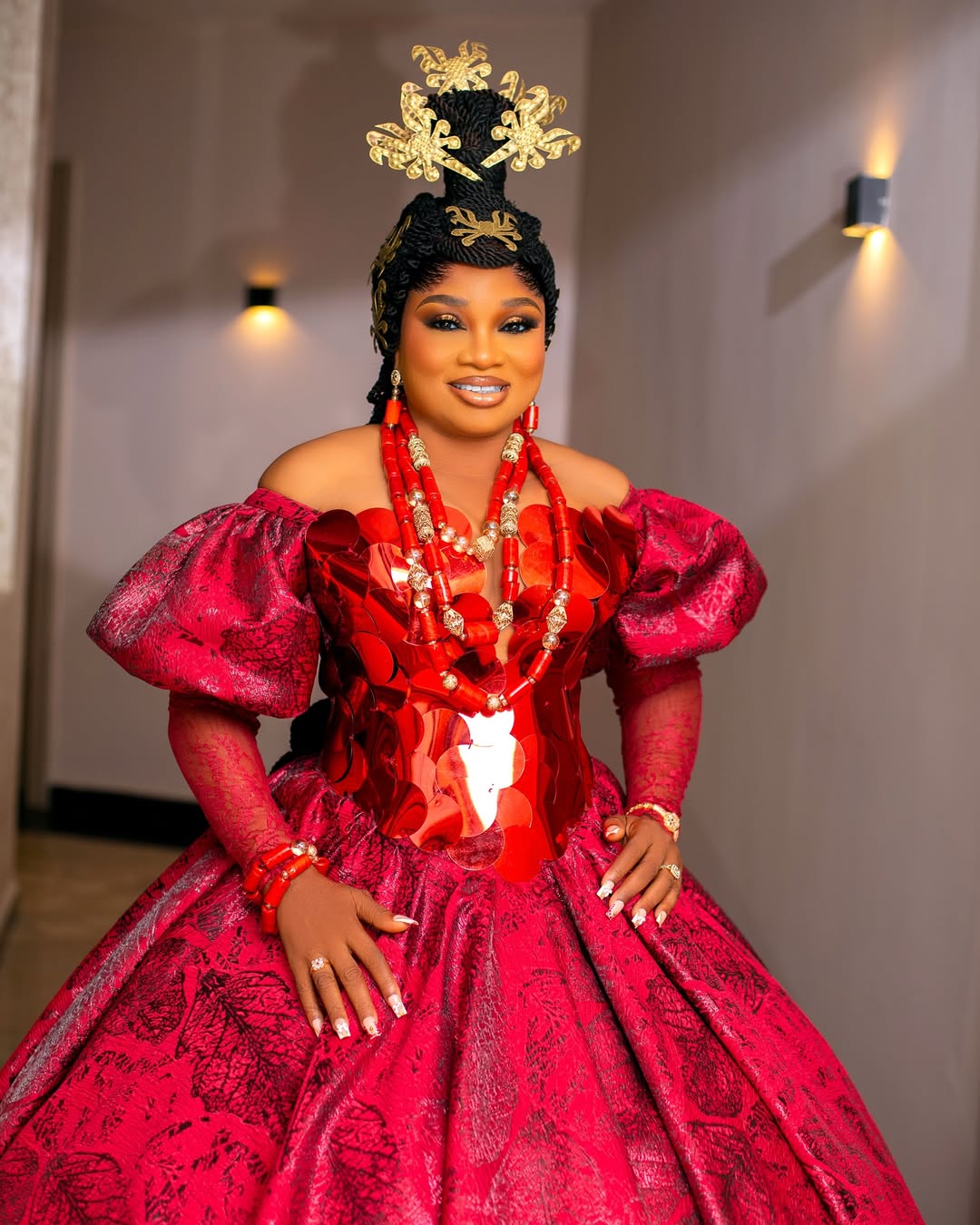
The Onyonyo is the most widely recognised element of Efik women’s formal dress and one of the most visually dramatic bridal garments in all of Nigeria. It is a long, flowing ball gown, typically off-the-shoulder, made from luxurious fabrics such as satin, silk, velvet, or lace, heavily embroidered with gold or silver threads, and worn with layers of coral beads that transform the European silhouette into something entirely Efik. Its origin is directly traceable to the Victorian missionary period, specifically to the influence of Mary Slessor and the Presbyterian mission that established itself in Creek Town in 1850, as Clipkulture records, the oldest house of worship in Nigerian Christendom. The Victorian dress silhouette arrived with the missionaries. The Efik kept the silhouette, added the coral, added the staff, added the Etinghe hairstyle, and produced something so culturally distinctive that its Victorian origins are now visible only to those who specifically look for them.
The Onyonyo represents one of the most remarkable acts of cultural transformation in Nigerian fashion history. A foreign silhouette was absorbed, localised, and elevated into a symbol of Efik queenly elegance over approximately 150 years of continuous adaptation. In 2026, the Onyonyo is available in every colour, with off-the-shoulder construction as standard, increasingly elaborate embroidery, and coral beads as central to the overall composition as the gown itself. The Onyonyo without coral beads is not an Efik Onyonyo. It is a ball gown. The beads are what make it mean something.
3. The Ofod Wrapper and Blouse for Community Occasions
Not every occasion demands the full formal weight of the Onyonyo or the Ofod Ukod Anwang. For community gatherings, naming ceremonies, church celebrations, and social events that sit between the everyday and the ceremonial, Efik women wear the Ofod wrapper and blouse: a richly coloured wrapper in George fabric or damask, paired with a blouse in the same or complementary material, worn with a restrained arrangement of coral beads and a modest headscarf. The wrapper fabric of choice for Efik women at semi-formal occasions is George, the Indian-origin silk-and-polyester blend that arrived in Cross River through trade routes and became one of the most prestigious fabrics in southeastern Nigerian women’s dressing.
The Ofod wrapper and blouse is the style in which Efik women are most legible across the broader Nigerian fashion landscape, because George fabric and the wrapper-and-blouse silhouette are shared reference points across the South-South and South-East geopolitical zones. What distinguishes the Efik version is the coral, the quality of the fabric, and the particular care taken with the headscarf arrangement. For more on how southeastern Nigerian women use cloth to navigate the space between cultural identity and social occasion, read Clothing as Declaration.
4. The Contemporary Ofod Co-ord
The contemporary Ofod co-ord brings Efik women’s fashion into the settings of 2026: a tailored top and matching wide-leg trousers or midi skirt in George, lace, or a luxurious damask, worn with a single strand of coral beads at the neck and a simple headwrap. It is the style through which younger Efik women carry their heritage into professional environments, fashion events, and social media spaces, where Efik cultural identity is becoming increasingly visible to audiences far beyond Cross River State. Several Nigerian designers are working with Efik aesthetic references; the coral bead detail and the richly embroidered neckline are translated into contemporary co-ord silhouettes that read as fashion-forward without requiring the wearer to explain the cultural grammar behind them. The same principle explored in our article on Top 5 Anger Cloth Styles for Tiv Women in 2026 applies here: a contemporary silhouette does not dilute a culturally loaded garment tradition. It extends the range of rooms in which that tradition can make its argument.
For Efik women in the diaspora, the contemporary co-ord is particularly significant. Wearing a richly coloured lace or George co-ord with coral at the neck in London, Houston, or Toronto is a statement of cultural continuity that does not require the setting to already understand the Onyonyo or the Ofod Ukod Anwang. The Efik visual grammar, the quality of the fabric, the coral bead, and the deliberateness of the composition travel with the woman wearing it.
5. The Ekombi Dance Ceremonial Dress
The Ekombi is the dance tradition of the Efik people, a performance that mimics the waves of the Cross River and the ocean, whose rhythms have governed Efik coastal life for centuries. Dance experts have described the Ekombi as one of the most complex and graceful dance forms in Africa, as Cross River State government documentation confirms. The dress worn by Ekombi performers is a specific ceremonial attire that forms a distinct category within Efik women’s dressing: the Ofod Ukod Anwang decorated with Ekpa Ku Kwa raffias at the wrists and ankles, the Ibuot Abang headdress with bird feathers fastened to flexible cane stems, and multiple strands of coloured beads, including the Nkwaesit Itong around the neck and the Anana Ubok across the shoulders. This is not a performance costume. This is Efik ceremonial dress at its most elaborately specific, every element carrying cultural meaning and worn in precise combination.
The Ekombi ceremonial dress is included here because it represents the aspect of Efik women’s dressing most fully removed from European influence and most deeply rooted in the pre-colonial visual culture of the Cross River. The Onyonyo absorbed Victorian England. The Ekombi dress predates that contact entirely. In 2026, Efik women will perform the Ekombi at cultural festivals, state events, and diaspora communities. Celebrations are wearing the most uninterrupted line of Efik dressing tradition available, and doing so with the full understanding of what that continuity represents.
When the Cloth Speaks: Ofod Across Efik Ceremonies
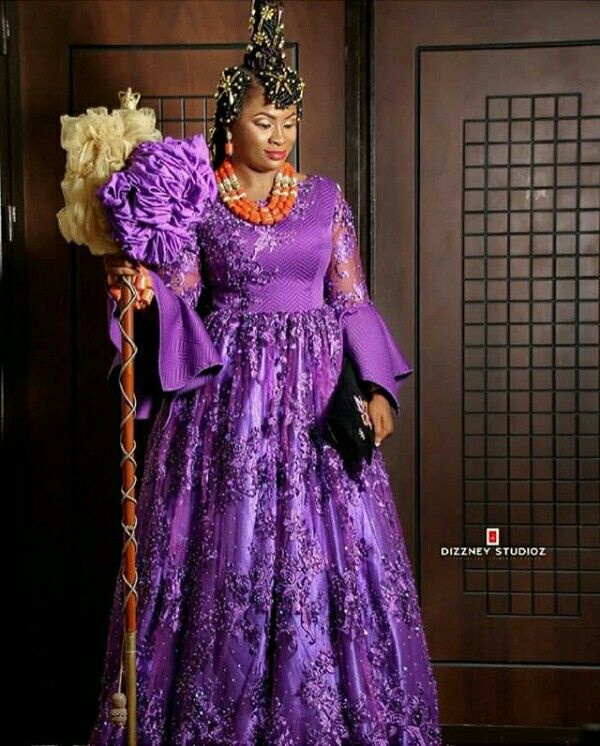
Efik dress does not stay the same across occasions. Each ceremony draws on a specific register of the dressing tradition, and understanding where each style sits in the ceremonial landscape clarifies what it is being asked to communicate.
The Traditional Wedding
The Efik traditional wedding is among the most visually elaborate ceremonial occasions in Nigerian cultural life. The bride typically wears two changes of attire: first the Ofod Ukod Anwang for the initial presentation, then the Onyonyo for the main ceremony. During the wedding, she is kept in seclusion before emerging before the assembled community, her coral beads, Etinghe hairstyle, brass combs, and decorated staff completing the total composition that communicates her transformation into a bride. As Eucarl Wears’ full documentation of Efik bridal attire shows, every element of the Efik bride’s presentation is culturally specific and ceremonially sequential. Nothing is chosen for decoration alone.
The Fattening Room: Nkuho
The Efik fattening room tradition, known as Nkuho, is one of the most distinctive premarital practices in Nigerian cultural life. A young woman approaching marriage enters a period of seclusion during which she is cared for, fed abundantly, massaged daily, and instructed by elder women in domestic skills, the Ekombi dance, folklore, and the cultural responsibilities of womanhood. When she emerges from the fattening room, she does so in full Efik ceremonial dress, the first public wearing of the Ofod Ukod Anwang marking her transition into eligibility for marriage. The dressing is the declaration. It is witnessed by the community and understood without explanation.
The Calabar Carnival and Cultural Festivals
The Calabar Carnival, held annually in December across Cross River State, is the largest street carnival in Africa, drawing visitors from across Nigeria and internationally. It is the occasion where Efik traditional dress is most publicly visible to the widest audience, and where the full range of Efik women’s attire, from the Onyonyo to the Ekombi ceremonial dress to the contemporary co-ord, is displayed simultaneously in one celebratory space. The Nyoro Ekpe Festival, held annually at the Botanical Garden in Calabar, is the more specifically ceremonial counterpart to the carnival, celebrating the history and authority of the Ekpe society and drawing Efik, Efut, and Qua communities together in traditional attire. Women attending the Nyoro Ekpe Festival dress in their finest Ofod, the occasion carrying the gravity of cultural continuity rather than the exuberance of carnival celebration.
The Abang Dance Ceremony
The Abang is a dance performance that celebrates beauty, femininity, and the importance of water in Efik cultural life. Its name translates as “waterpot” in Efik, a vessel central to every Efik homestead, and its movements celebrate the grace of women who carry water and, by extension, sustain the household and community. Performers wear the Ofod Ukod Anwang decorated with specific dance ornaments, including the akasi waist hoop and the ofong akasi fabric that drapes over it, the Ibuot Abang headdress with bird feathers, and multiple beaded strands. The Abang is a women’s ceremony from which men are excluded, one of several female-governed performance traditions through which Efik women exercise cultural authority independently of the male Ekpe institution.
Chieftaincy Coronations and the Obong of Calabar
The coronation of the Obong of Calabar, the paramount traditional ruler of the Efik people, and the installation of any significant traditional title holder in Cross River State, are occasions at which the full formal register of Efik women’s dress is required. The Onyonyo, in its most elaborate configuration, with the deepest coral arrangements, the finest George or velvet fabric, and the most heavily embroidered silhouette, marks these events. Women attending chieftaincy coronations dress in ways that communicate their status within the Efik social hierarchy; the quality and quantity of their coral beads are as much a statement about their family standing as the garment they have chosen to wear.
Funerals and Mourning
The Efik mourning dress is sober in tone without being plain. Darker colours replace the vivid ceremonial palette: deep blue, burgundy, and black in the Onyonyo, or wrapper-and-blouse, worn with restrained coral rather than the full layered arrangements of celebratory occasions. The gathering of Efik women in dignified formal dress at a funeral is a collective act of respect and community solidarity. The quality of the cloth and the presence of coral, even in reduced quantity, communicate that the loss is being mourned by people who understand what it means to dress properly for the gravity of an occasion.
In Efik life, every element of dress carries meaning. The coral communicates status. The staff communicates authority. The cloth communicates the occasion. A woman who has all three is not dressed. She has arrived.
ALSO READ:
- Top 5 Anger Cloth Styles for Tiv Women in 2026
- Top 5 Ankara Styles for Nupe Women in 2026
- Clothing as Declaration: What African Women Wear When They Mean Business
- Culture as Currency: Why Traditional Fabric Is the Most Valuable Thing in Your Wardrobe
The Omiren Argument
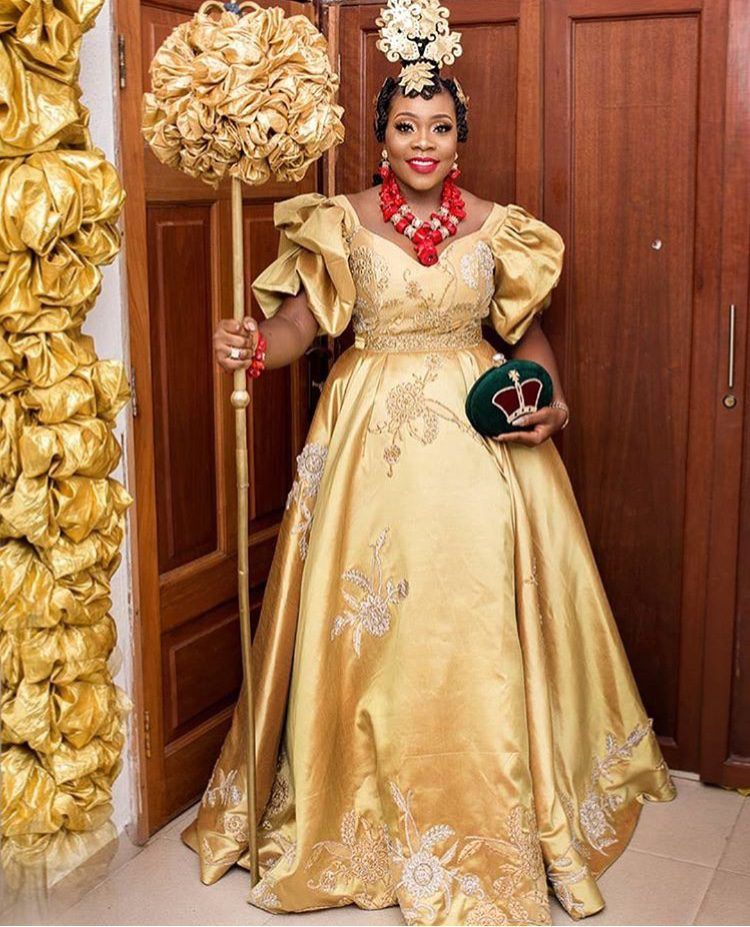
The Efik produced Nsibidi, one of the oldest indigenous writing systems in Africa, inscribed on cloth before most of the world understood that cloth could carry language. They built the Ekpe society, a governing institution so sophisticated that scholars have argued it contributed to early models of democratic organisation that later influenced European governance theory. They turned a Victorian missionary’s dress into one of the most regal bridal traditions in Nigeria. And they did all of this while maintaining active, centuries-long commercial contact with European traders without losing the thread of their own cultural identity.
Wearing Ofod styles in 2026 is not nostalgia. It is a continuation of the same cultural confidence that took a Victorian ball gown and made it Efik, that took European contact and kept everything that was already theirs, and that produced a writing system, a governance institution, and a dance tradition so complex that the King of Pop reportedly could not learn it. The cloth and the coral carry that inheritance. Dress accordingly.
Browse the full African Style collection at Omiren Styles.
Frequently Asked Questions
1. What is the difference between the Ofod Ukod Anwang and the Onyonyo?
The Ofod Ukod Anwang is a two-piece outfit consisting of a knee-length skirt and a short bust-covering blouse, leaving the midriff exposed for beaded body adornment. It is the older of the two garments and more directly rooted in pre-European-contact Efik dress. The Onyonyo is a long, flowing ball gown derived from the Victorian dress silhouette introduced by missionaries in the 19th century, adapted by the Efik with coral beads, elaborate embroidery, and the distinctive staff and Etinghe hairstyle. Both are worn at traditional weddings, typically with the Ofod Ukod Anwang for the initial ceremony and the Onyonyo for the main celebration. Full visual documentation of both styles is available at Eucarl Wears.
2. What do coral beads mean in Efik culture?
Coral beads in the Efik culture communicate royalty, wealth, status, and ancestral connection simultaneously. They are sourced from deep-sea coral and considered a symbol of affluence, distinct from imitations. Inherited coral carries the weight of family lineage, with beads passed from grandmother to granddaughter representing a direct link to ancestral identity. No formal Efik woman’s dress is complete without coral. The quantity, quality, and arrangement of the beads communicate the wearer’s social standing to anyone in the room who knows the cultural language.
3. What is the Efik fattening room tradition?
The fattening room, known as Nkuho, is a pre-marital seclusion tradition in which a young woman approaching marriage enters a period of care, instruction, and physical preparation under the guidance of elder women. She is fed abundantly, massaged daily, and taught domestic skills, the Ekombi dance, and the cultural responsibilities of womanhood. Her emergence from the fattening room in full Efik ceremonial dress is a public declaration of her transition into eligibility for marriage, witnessed and acknowledged by the assembled community. The tradition has been significantly modified in contemporary practice.
4. Who is the Obong of Calabar?
The Obong of Calabar is the paramount traditional ruler of the Efik people, elected from among the heads of the various Efik Houses, as Britannica notes. The current Obong is Ekpo Okon Abasi Otu V, who has held the position since 2008. The Obong presides over Efik cultural ceremonies, including the annual Calabar Festival, and represents continuity with the Efik city-state tradition of Old Calabar. The coronation of a new Obong is one of the most significant ceremonial occasions in Efik cultural life and one at which the full formal register of Efik women’s dress is required.