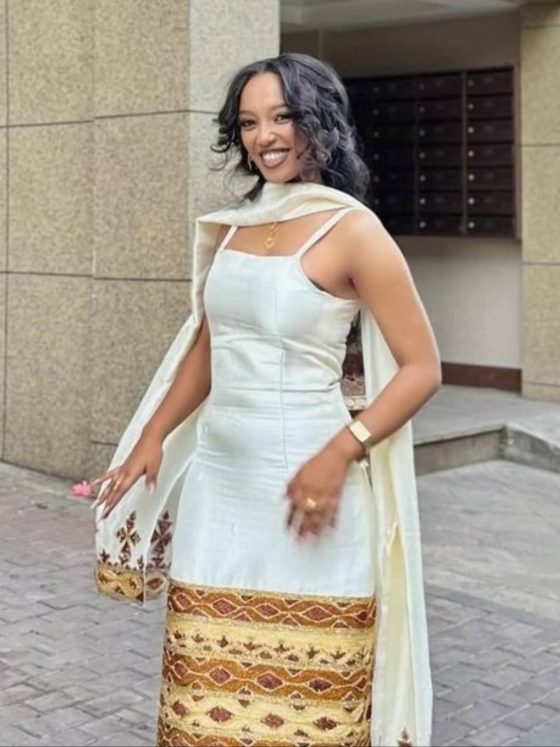
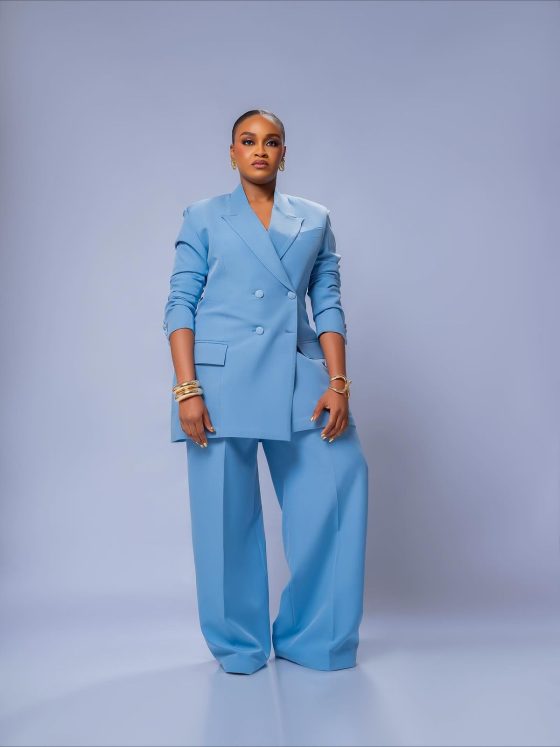
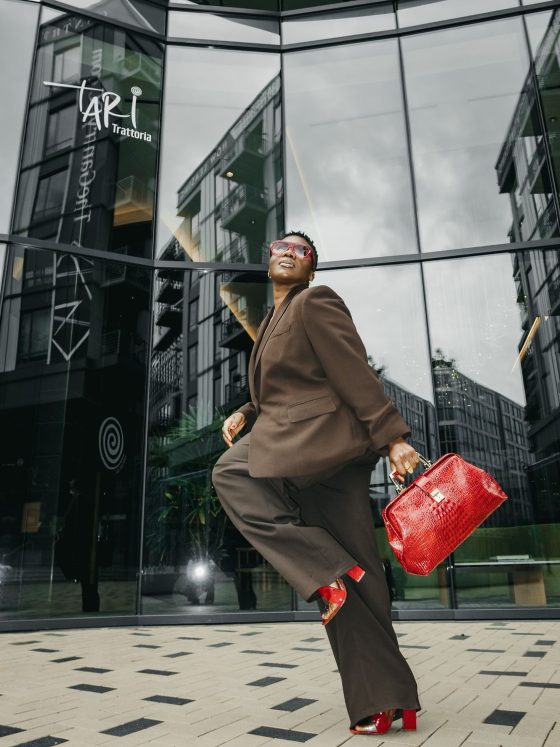
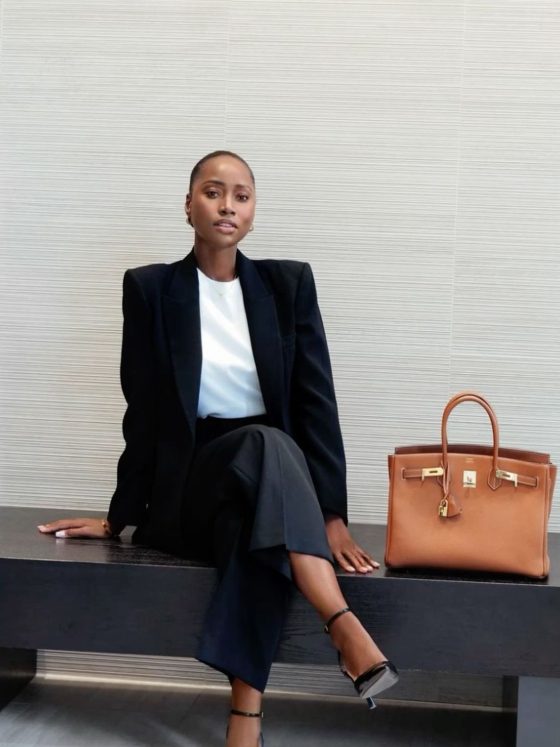
She has never needed permission to know who she is. She simply needs the space to dress accordingly.
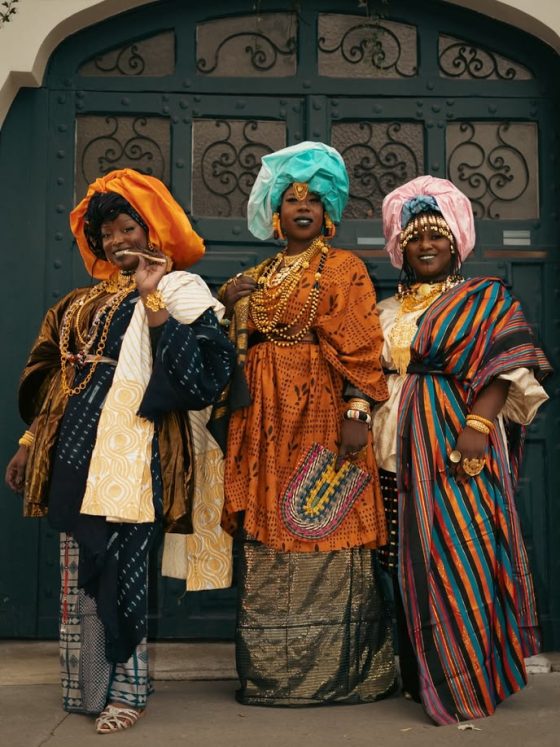
There is a particular kind of woman this section is written for. She is not a target market. She is neither a search query, a style archetype, nor a mood board pinned together by an algorithm that confuses aspiration with identity. She moves between the rhythm of an owambe, where fabric is a social contract, and arriving correctly dressed is a form of respect for everyone in the room, and the particular pressure of a boardroom, where the same confidence has to be translated into a different grammar. She does not find this exhausting. She finds it fluent. She has always spoken in more than one register.
The Omiren Women’s section exists because she deserves more than just “weekend tips” and “professional looks.” She deserves writing that understands what dressing actually costs and what it gives back. Getting dressed in the morning, really getting dressed and not just putting on clothes, is a small act of self-definition in a world that runs on other people’s definitions of you.
A capsule wardrobe is not a formula. It is a position. It says, ‘I know myself well enough to stop shopping for an identity and start wearing one.’ The capsule is not about owning less for a woman who navigates London rain and Lagos heat while carrying her grandmother’s Adinkra alongside her own ambitions. It is about meaning more.
This section is for her whole being. This section encompasses both her personal identity and political beliefs. This section is dedicated to her rest and her journey toward self-realisation. This section discusses her wardrobe and its significance in her life.
The Omiren woman is not a demographic; she is an architect of her narrative. Discover how she navigates boardrooms and heritage with a wardrobe that reflects her ambitions, her politics, and her becoming.
Dressing From Identity, Not for One
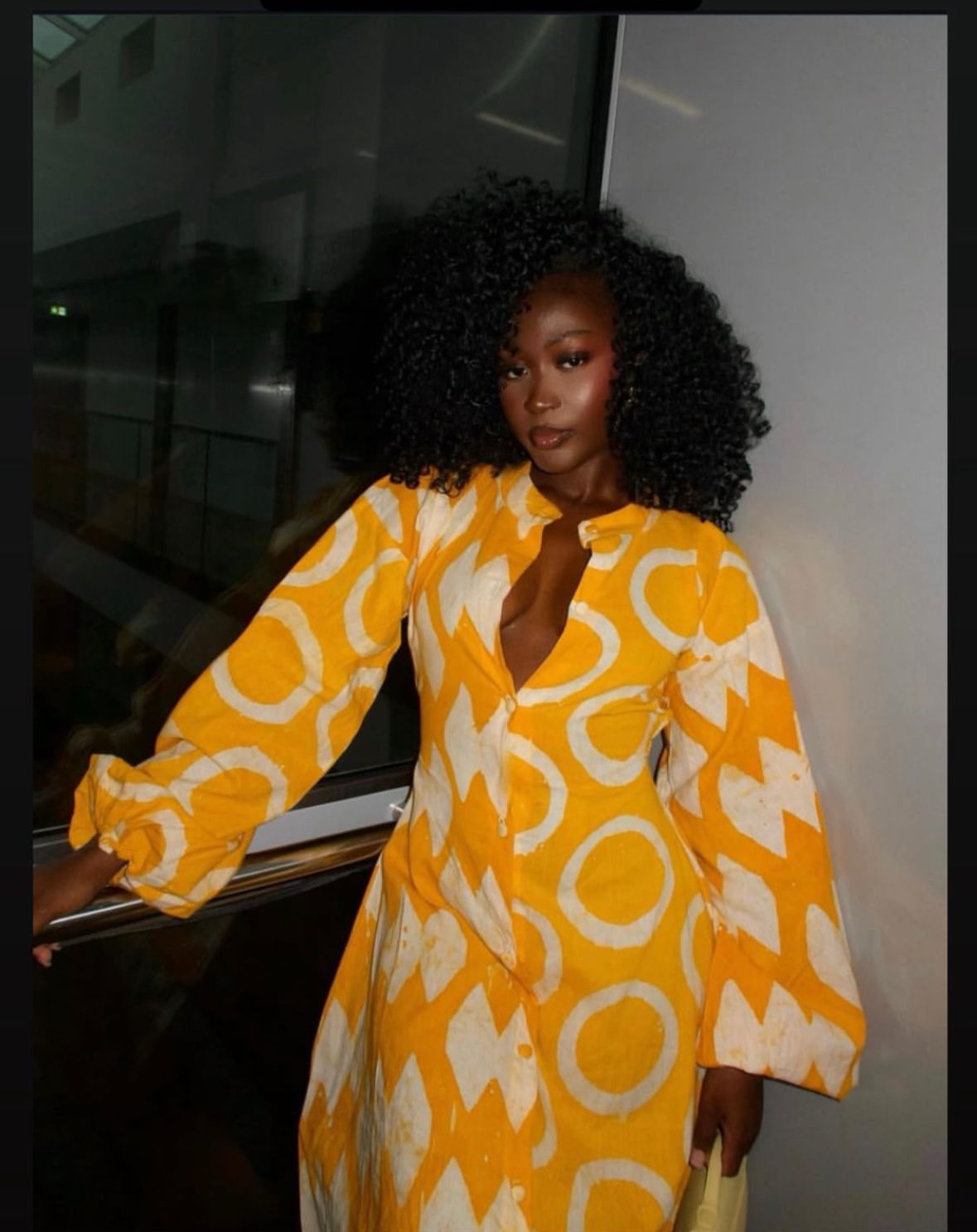
The global fashion industry’s obsession with labelling any change in silhouette as a “trend” was always a show, and the audience’s applause is finally over. A capsule wardrobe is not a list of “must-haves,” a limiting formula, or an easy way for an Omiren woman to stay comfortable. It’s a job. “I know myself well enough to stop shopping for an identity and start dressing from one,” the statement reads.
For millennia, African design has grasped the silent power of clothing with purpose, where a wrap’s drape or a textile’s weight is never coincidental. Not only is she “wearing her culture,” but she is also negotiating it, transforming her heritage into a silhouette for her daily self, whether she is navigating the cultural vibrancy of an owambe or the boardrooms of global capitals.
This move toward “African minimalism” is not just a matter of taste; rather, it is a subtly provocative statement that African design can be recognised as African without resorting to flamboyant prints or maximalism. When designers like Ajabeng and Thebe Magugu remove ornamentation, it raises the question of what’s left: structure, proportion, and a spatial intelligence derived from African architectural vernacular. This style is not an aesthetic taken from a Western eco-lexicon; rather, it is minimalism as an argument. The Omiren woman ensures that her clothing is as academically serious as her goals by carrying her ancestors’ languages, the geometry of Adire, and the structural integrity of Aso-Oke as she constructs her own future.
She is aware that her style represents a chapter in the history of African self-determination and that it has evolved without needing to be changed or apologised for. By selecting upscale, eco-friendly clothing that values heritage over “microtrends,” she rejects the disposable lifecycle that characterises the Western fashion sector.
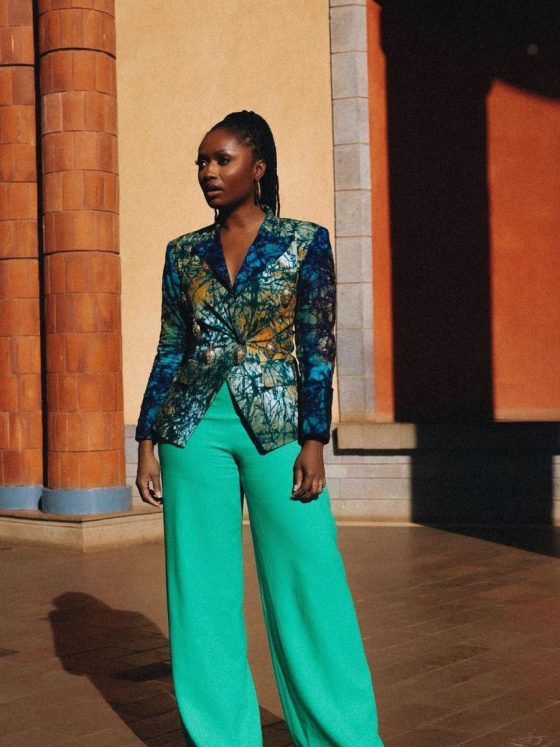
Her outfit embodies a soulful fusion of her past and future, a healthy, inclusive celebration of wholeness. In her view, the wrap is a cloak of authority, and the blazer is a coat of armour; both are instruments of an independent professional activity that shapes rather than follows global trends.
The Wardrobe as a Professional Position
The Omiren woman views Monday morning not as a routine to endure, but as a statement of intent. She navigates her space using the structural intelligence of African design in a global business environment that frequently requires assimilation.
The Monday momentum describes the shift from the personal tranquillity of the weekend to the authoritative clarity of the workweek. We are claiming that her clothing is a live tool for her professional progress and that it departs from the conventional “office-wear” advice given in Western periodicals.
The architectural framework serves as the foundation for this momentum. Whether she opts for a provocatively minimalist silhouette from Ajabeng or a structured, high-end blazer from Thebe Magugu, her boardroom agency is tangible. This clothing is more than simply “clothes”; it’s a defence of an African ideal of excellence that is more traditional and exacting than the “capsule” fashions of the West.
She is not only “dressing for the job” by spearheading these brands; rather, she is shaping her workplace’s culture and ensuring her influence is noticed before she even speaks.
The Monday ritual is an inclusive self-alignment activity. It is the moment she decides that her heritage, the weight of her Aso-Oke detailing or the geometry of her Adire print, is not a weekend costume, but a Monday asset. The result is a modern, healthy style of leadership that doesn’t distinguish between culture and business.
She knows that to lead with soul, she needs to be fully present in the room. She uses Monday momentum to ensure that, even when the rest of the world is preoccupied with the “grind,” she stays committed to her craft and the durability of her legacy.
ALSO READ:
- The Sovereign Woman: Achieving Professional Power Without Losing Your Identity
- Modern Women’s Workwear: Professional Style on Your Own Terms
- Between Expression and Expectation: Navigating Professional Style for Women in 2026
Maintaining Sovereignty Through the Noise
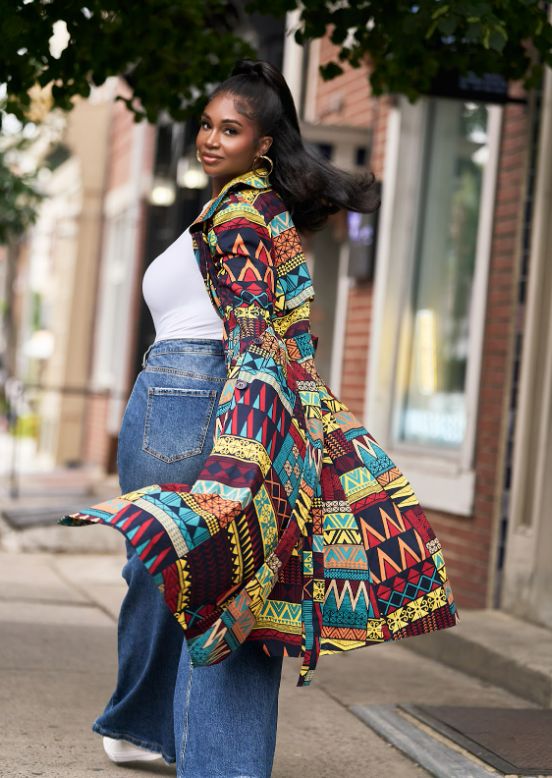
The Omiren woman’s deep connection to her skin and lineage helps her stay clear as the week goes on and the industrial “noise” gets louder. By Wednesday, Monday’s initial momentum often clashes with the “grind,” but she won’t let burnout take control of her story.
This period is the Mid-Week Pivot, a deliberate time to refocus during which she embraces luxurious, eco-friendly fabrics that align with her aspirations. When the phrase “self-care” is used in the Western eco-lexicon as a euphemism for superficial consumption, we reject it and instead use the term “completeness.”
Her choice is an act of self-authorship, whether she is wearing the inclusive, heritage-heavy knits of Maxhosa Africa for a high-stakes meeting or the flowing, hand-dyed silks of Orange Culture for a creative discussion. These are not just “outfits”; they are tools of her independent career choice. She is aware that her direct market is the craftsmanship of the continent, while the international fashion business is preoccupied with the results of far-off fashion weeks.
She guarantees that her style never follows the hectic pace of the outside world but rather moves at the purposeful, authoritative pace of her development, upholding this soulful and fashionable alignment.
She continues to be the designer, making sure that her closet is a barrier against distraction. Her midweek shift serves as a constructive reminder that her attendance is a ritual for her, not a show for others.
She has not only “survived” the week by the time the weekend arrives, but she has written about it, utilising each article of clothing as a chapter in her narrative of African self-determination.
The Omiren norm is to live a life in which one’s cultural pride, professional strength, and personal peace are all interwoven into a single, inclusive, and sustainable fabric rather than existing as distinct silos.
Conclusion
In the end, dressing intentionally is a refusal to be a passive observer of one’s own life, not just a fashion decision. The Omiren woman recognises that her clothes are a physical barrier between a world designed to divert her attention and her inner clarity. By the end of the week, she has created her surroundings rather than just “occupied” a desk or “attended” a meeting. She has communicated that her presence is a cultural legacy and a professional advantage by utilising the emotional geometry of Adire and the structural weight of Thebe Magugu.
As you go through the week, remember that you are the author of your own story. We oppose the idea that a woman must choose between her power and her peace or between her aspirations and her heritage. These are the cornerstones of a fully realised life in the Omiren Styles universe, not paradoxes. Move with the subdued power of a woman who is aware of her identity, whether you’re at an owambe or a boardroom. Your grammar is your style, not a costume. Speak it with ease.
Own your 9-to-5 style — explore Workwear & Professional Looks on OmirenStyles.
Frequently Asked Questions (FAQs):
- Why does Omiren reject the term “workwear” in favour of “professional agency”?
“Workwear” implies a costume you put on to perform a task for someone else. Professional agency is about the authority you bring into the room. By choosing structural, high-end pieces from designers like Thebe Magugu, you aren’t just meeting a dress code; you are setting the tone. It is a soulful and healthy way to ensure you are the architect of the boardroom, not just an occupant.
- How do I balance being “trendy” with the desire for “sustainability”?
In the Omiren universe, these are the same thing. True trendiness isn’t about fast-fashion cycles; it’s about being at the forefront of the movement toward African craftsmanship. Investing in an inclusive, sustainable piece from Ajabeng or Maxhosa Africa is trendy because it represents the future of global luxury, a future that values lineage over disposal.
- Is “Afro-minimalism” appropriate for global corporate environments?
It is your competitive advantage. Afro-minimalism draws on the spatial intelligence of African architectural vernacular to create precise, authoritative silhouettes. It allows you to carry your heritage in a way that is intellectually serious and globally fluent, making it an inclusive choice for any high-stakes environment.
- How does “dressing with intention” impact my mental wholeness?
When you stop shopping for an identity and start dressing from one, you eliminate decision fatigue and “imposter syndrome” distractions. This is a healthy, soulful ritual of self-alignment. By the time you begin your Monday, your wardrobe has already established your identity, freeing your mind to concentrate on your aspirations.