Before crowns, there were beads.
Before European heraldry, there were coral collars.
Before banknotes, there were cowries.
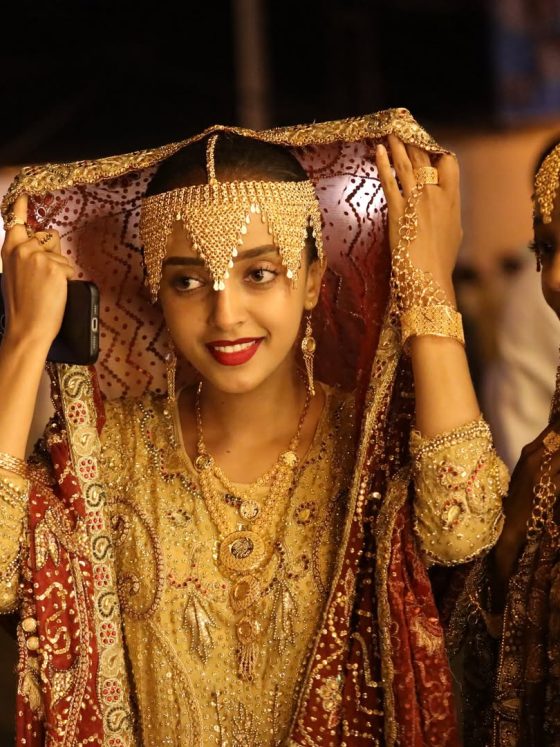
Across the African continent, ornament was never mere decoration. Gold, coral, and cowrie shells operated as currency, protection, political authority, and spiritual technology. To wear them was to speak about lineage, rank, fertility, trade networks, and divine legitimacy.
Today, these materials resurface on runways and in luxury editorials, often stripped of context. But their original function was structural, not aesthetic.
Ornament was governance.
Exploring how gold, coral, and cowrie shells functioned as symbols of power, wealth, and identity across African ornament traditions.
Gold: Authority Cast in Metal
In West Africa, gold has long signified more than wealth. It signified divine sanction.
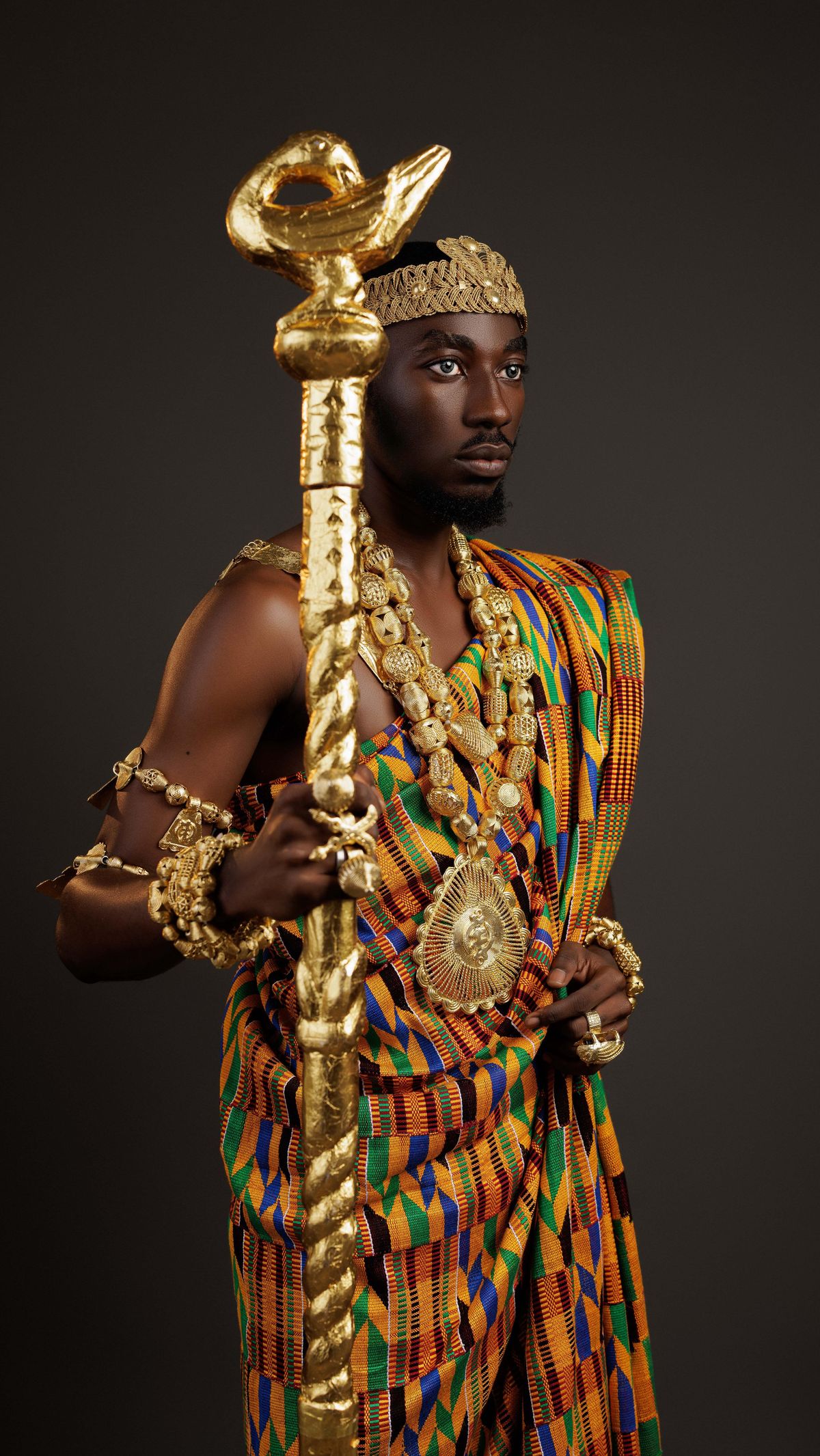
The Akan kingdoms of present-day Ghana built complex regalia systems around gold, both in jewellery and in symbolic objects carried by rulers. Gold weights, pendants, and discs encoded proverbs and philosophical principles. To own gold was to participate in statecraft.
Gold did not merely decorate the body; it legitimised it.
Among the Ashanti (Asante), gold regalia distinguished royalty from commoners. The gleam of metal reflected cosmic hierarchy, the sun, permanence, and continuity. The ornament visually reinforced the political structure.
When contemporary designers incorporate heavy gold layering into modern fashion, they echo that lineage, whether or not they acknowledge it.
Gold still communicates rank.
Coral: Living Authority in the Niger Delta
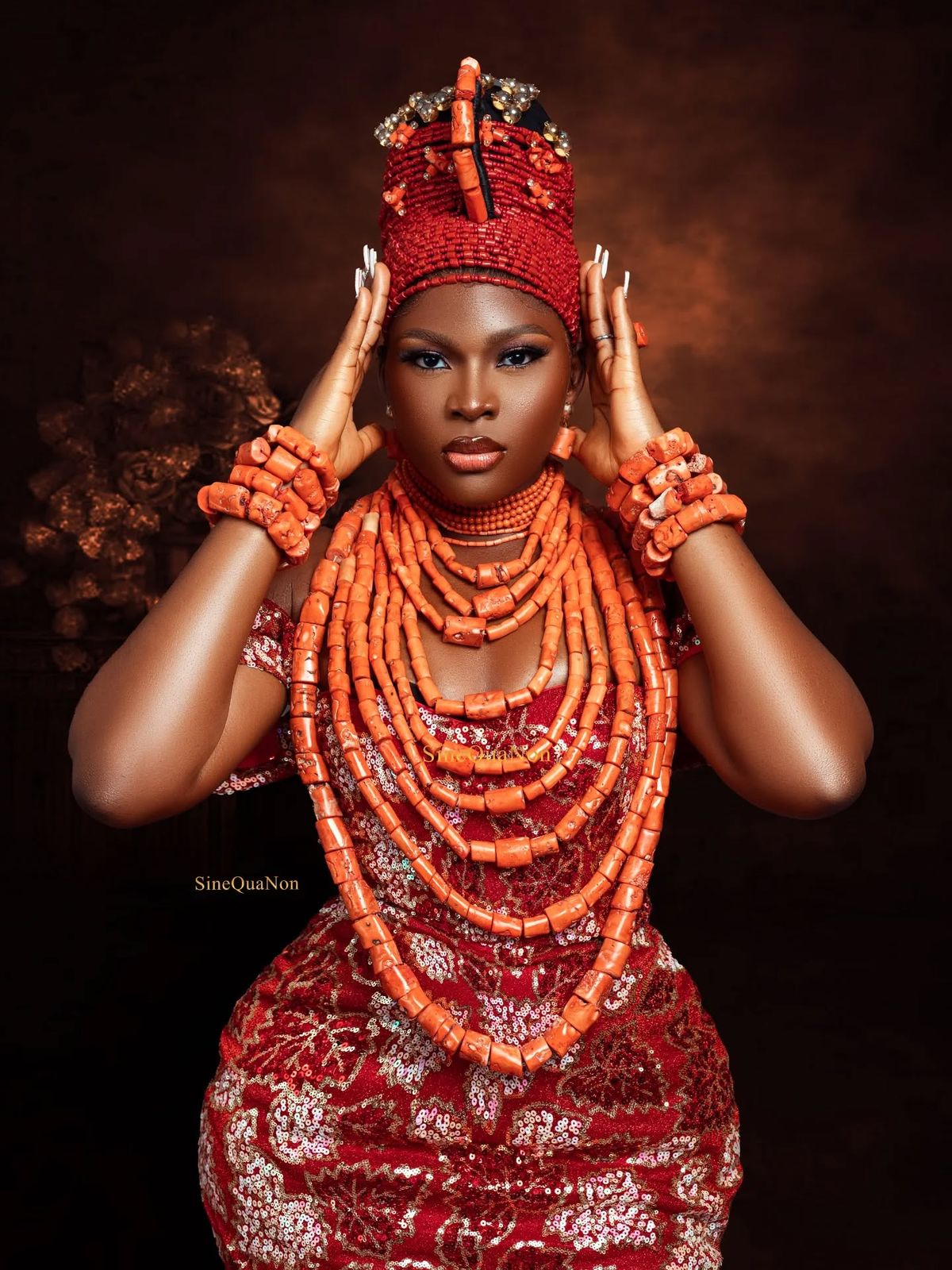
In southern Nigeria, particularly among Edo and Itsekiri royalty, coral beads signal sovereignty.
The regalia of the Benin Kingdom are among the most recognisable symbols of West African monarchy. Thick, stacked coral collars and beaded crowns transform the body into an architectural form. The Oba of Benin’s regalia is inseparable from political identity.
Coral is not inert. It was historically imported through complex trade routes linking West Africa to the Mediterranean and beyond. Its rarity amplified its value.
But coral also carries spiritual resonance. It is organic, once living, and thus associated with vitality and continuity.
To wear coral was to embody ancestral authority.
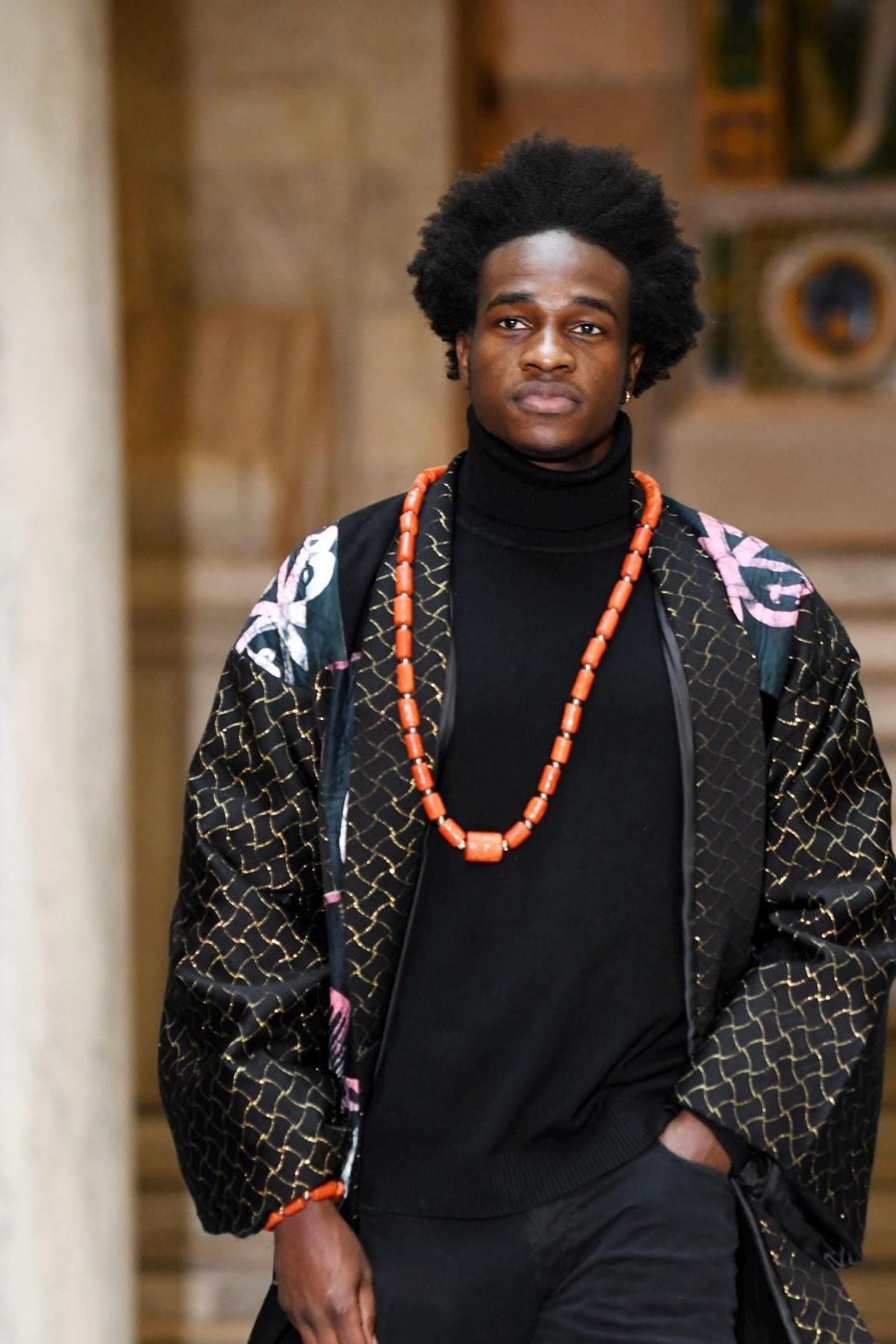
Today, coral bead chokers and layered necklaces circulate in bridal fashion and contemporary styling across Nigeria. Even when worn outside palace contexts, they retain echoes of power.
Cowrie: Currency of the Sacred and the Everyday
Before colonial currency systems, cowrie shells served as money across much of Africa. Their portability, durability, and recognisable form made them practical trade tools.
But cowries were not merely economic instruments. They were spiritual objects.
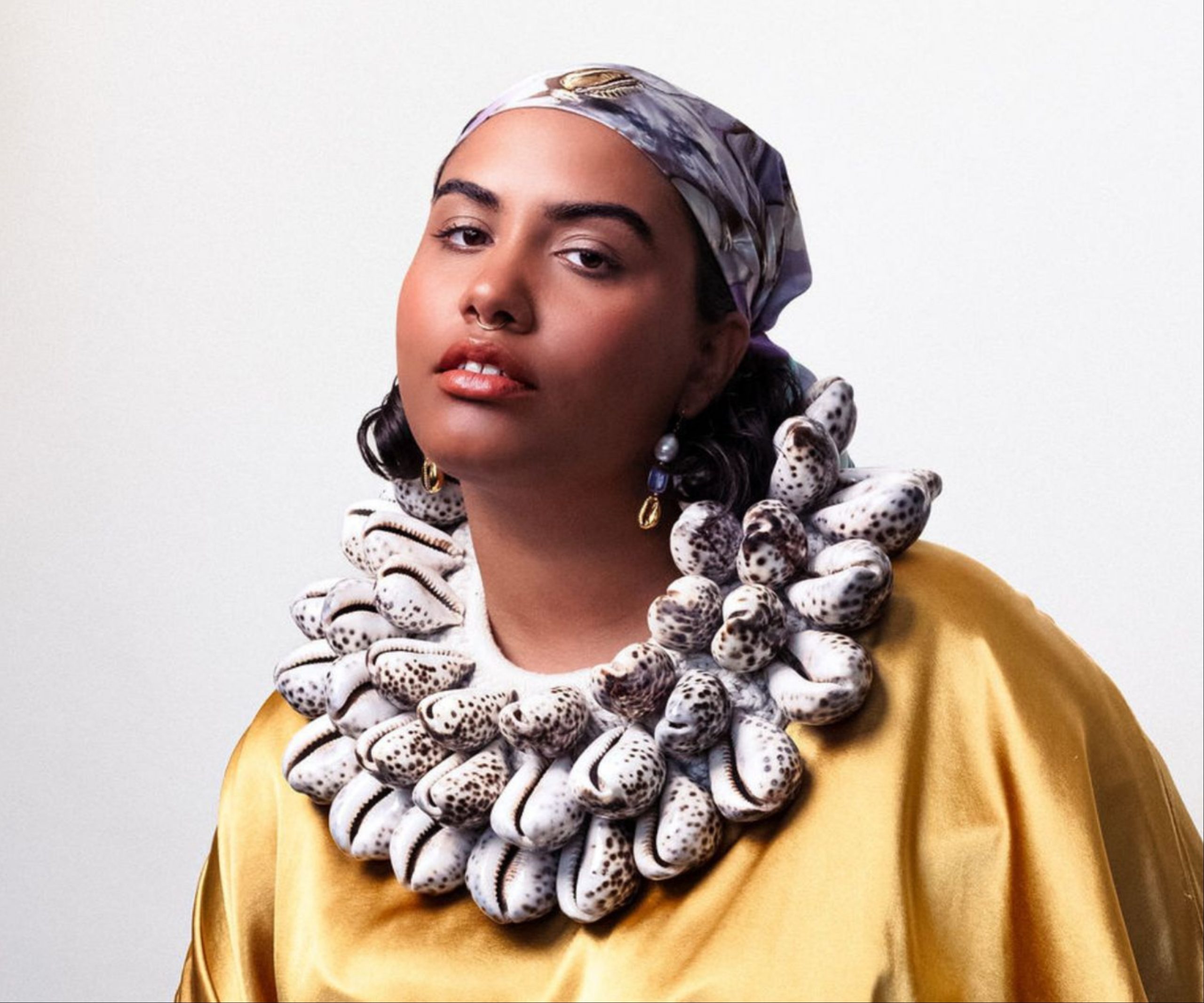
Across West Africa, cows symbolised fertility, femininity, and protection. Their form resembling an eye or a womb imbued them with metaphysical meaning. They appeared in divination rituals, on garments, and within royal regalia.
To sew cowries onto cloth was to weave protection into the body.
The dual function, monetary and sacred, positioned cowries uniquely. They operated at the intersection of economy and cosmology.
In contemporary fashion, cowrie embellishments often appear as beachy aesthetics or “tribal chic.” Yet historically, they were systems of value.
Ornament as Political Language
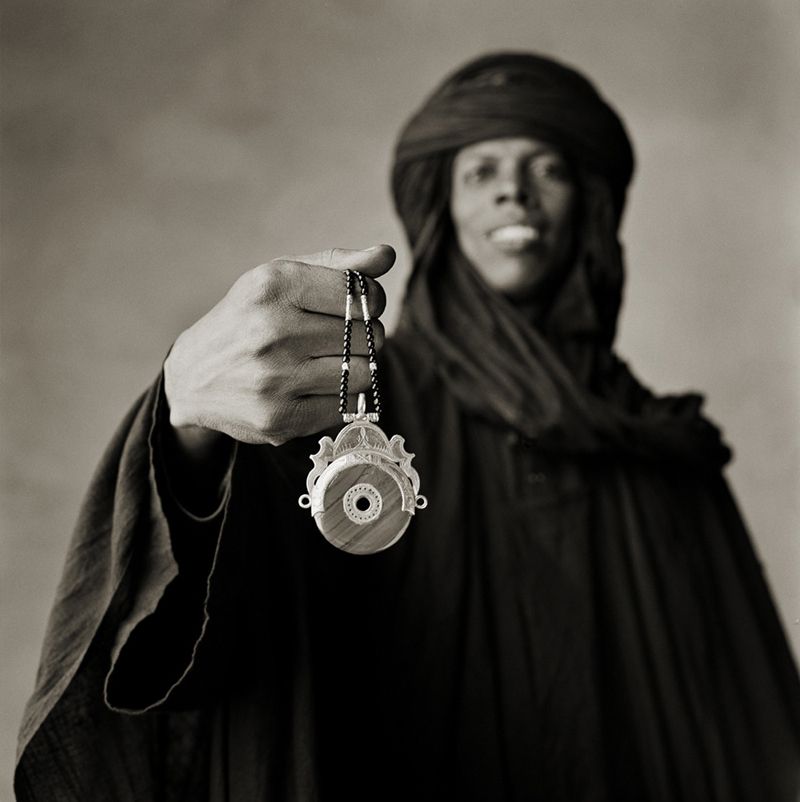
Across multiple African societies, ornament functioned as non-verbal governance.
Hierarchy was visible. Status was legible. Wealth was worn.
In the Sahel, Tuareg silver amulets carried protective inscriptions. Exquisite cross pendants were a sign of Christian heritage and faith in Ethiopia. In Southern Africa, beaded colour combinations communicated marital status and social identity.
Ornament reduced ambiguity. It codified belonging.
This system contrasts with modern Western luxury, where logos often signal consumption rather than lineage. African ornaments traditionally signalled both responsibility and privilege.
Power came with obligation.
Gender and Adornment
Women were central custodians of ornament traditions.
In many societies, beads and metal pieces formed part of bridal wealth. Jewellery served as a form of portable security, providing assets for exchange in times of economic hardship. Adornment was therefore both an aesthetic and a financial strategy.
At the same time, ornament structured femininity and masculinity differently across regions. In some West African cultures, men wore significant regalia, including gold chains, beadwork, and layered garments, especially in royal or ceremonial contexts.
Adornment was not exclusively feminine. It was ceremonial and political.
Modern fashion’s gendered assumptions often flatten this complexity. Historically, African ornament moved across bodies with intention.
Trade Networks and Global Influence
Gold, coral, and cowrie shells tell stories of trade.
Trans-Saharan routes connected West Africa to North Africa and the Mediterranean. The Indian Ocean trade brought cowries from the Maldives to East and West Africa. Coral travelled across seas before resting on royal collars.
These materials were widely available long before globalisation became a buzzword.
African ornament, therefore, reflects early international economies. It is evidence of interconnectedness rather than isolation.
When contemporary luxury houses draw inspiration from layered beads or heavy gold stacks, they engage with that history, even if unintentionally.
The Runway Revival
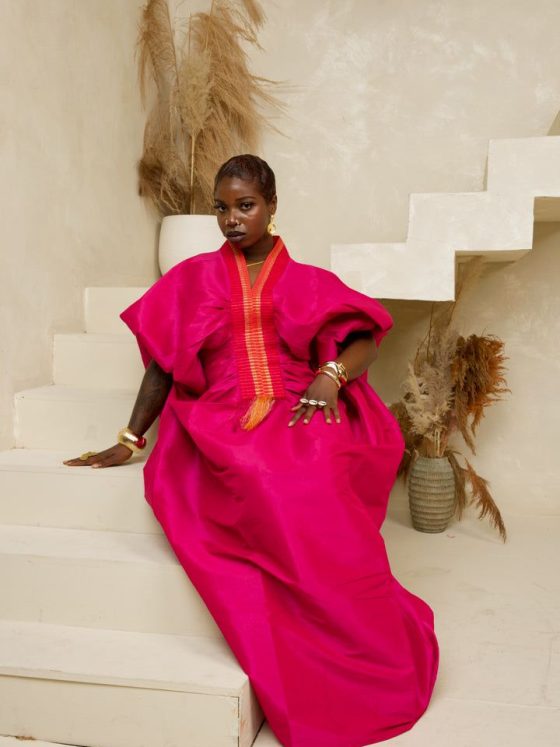
In recent years, African designers have reasserted ornament as a contemporary code of power.
Coral-inspired beadwork appears in bridal couture. Cowrie embellishments reemerge in high-fashion accessories. Gold layering dominates editorial styling across Lagos, Accra, and Dakar.
The revival is not nostalgic. It is declarative.
Young designers are reframing ornaments as authorship, reclaiming symbolism from reductive interpretations. Rather than stripping materials of context, they embed narrative in the presentation.
Ornament becomes resistance against minimalism’s dominance.
Minimalism Versus Density
Global luxury has long privileged restraint, thin chains, subtle studs, quiet logos.
African ornament traditions operate differently. Density signifies abundance. Layering signals continuity. Shine reflects visibility.
Neither system is inherently superior. But the Western tendency to frame maximalism as excess ignores the structural meaning embedded in African regalia.
In many African contexts, ornament is archived.
Removing it removes language.
READ ALSO:
- Beads, Bangles, and Braids: The Signature Beauty of Fulani Women
- Why Culture Is the Foundation of Style in African and Global Fashion
Contemporary Power Dressing
Today’s African elite, from entrepreneurs to entertainers, often consciously draw on historical ornament codes.
Coral beads at weddings. The use of gold cuffs is common at state events. Music videos often feature cowrie accents. These are not random aesthetic choices. They signal cultural literacy.
The materials continue to operate as social shorthand.
Power, once encoded in gold weights and coral crowns, now appears in boardrooms and red carpets.
The language persists.
Reclaiming Context
The challenge facing contemporary fashion is not whether to use gold, coral, or cowries, but whether to contextualise them.
When stripped of meaning, these materials become surfaces. When contextualised, they become narratives.
African designers increasingly insist on the latter. Through storytelling, sourcing transparency, and heritage acknowledgement, they re-anchor ornament in its cultural framework.
Luxury becomes not only what shines but also what signifies.
Beyond Decoration
Gold was governance.
Coral was sovereign.
Cowrie was currency and protection.
African ornament has always operated at the intersection of beauty and structure. It encoded systems of power long before the global fashion industries formalised theirs.
As contemporary luxury evolves, the continent’s ornament traditions offer a reminder: decoration is never neutral.
It speaks.
And in Africa, it has always been about power.
Experience the finer side of life — explore Luxury Living on OmirenStyles now.
FAQs
- In African cultures, what do gold ornaments symbolise?
Gold traditionally represents wealth, authority, divine legitimacy, and political power in many African societies.
- Why are coral beads important in Nigeria?
Coral beads are associated with royalty, especially in Benin Kingdom traditions, where they symbolise sovereignty and ancestral authority.
- Were cowrie shells used as money in Africa?
Yes. Cowrie shells functioned as currency across West and parts of East Africa before colonial monetary systems.
- What do cowrie shells represent?
Cowries represent fertility, protection, wealth, and spiritual power in many African cultures.
- Is the African ornament purely decorative?
No. Historically, African ornament communicated rank, identity, lineage, and economic status.