Luxury watches have always been about more than time. They signal inheritance, authority, and permanence. For decades, this language has belonged almost exclusively to Europe, guarded by Swiss valleys, centuries-old maisons, and a mythology that frames precision as a birthright rather than a practice.
Africa has rarely been invited into that conversation as a maker.
That absence is precisely what makes the emergence of African horology so significant. Not because it seeks to compete with Europe on its terms, but because it reframes what luxury timekeeping means when rooted in cultural proximity rather than distance.
At the heart of this quiet shift is Caveman Watches, the Ghanaian brand founded by Anthony Mensah Dz. Caveman Watches’ rise signifies a paradigm shift in the perception, production, and use of African luxury.
African horology is rising. Caveman Watches leads a new generation redefining luxury time through culture, accessibility, and quiet confidence.
Time as Cultural Ownership
Caveman Watches does not present itself as a rebellion against Swiss dominance. Instead, it approaches horology from a subtler perspective: ownership.
In many African societies, time was communal before it was mechanical. It is measured through ritual, memory, and continuity. Caveman translates this sensibility into wristwatches designed to feel personal, recognisable, and culturally legible without explanation.
The watches do not perform Africanness. They assume it.
Design elements reference African symbolism with restraint. The cases are clean. The dials are legible. Nothing is ornamental for the sake of spectacle. This clarity is deliberate. Caveman understands that true luxury does not need to announce itself.
Luxury Without Alienation
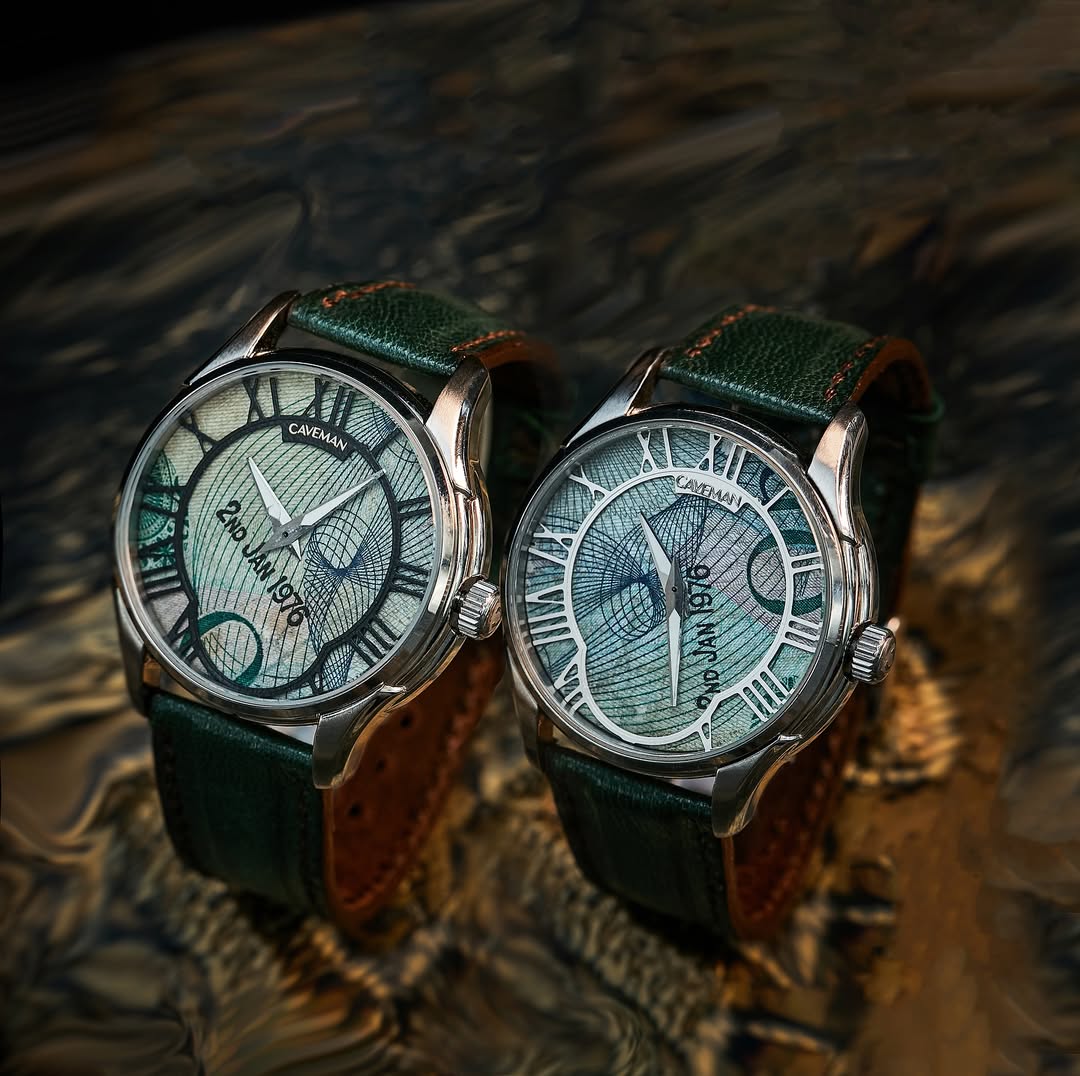
Perhaps the brand’s most defining philosophy is its refusal to treat luxury as distant. Caveman operates within what it describes as “affordable luxury”, but the term functions more as a cultural stance than a pricing strategy.
Caveman asserts that aspiration shouldn’t necessitate exclusion in markets where imported luxury goods frequently exceed local affordability. The watches are assembled in Ghana, priced for local buyers, and designed for daily wear rather than occasional display.
This approach challenges one of luxury’s most entrenched assumptions: that desirability increases with inaccessibility.
For Caveman, desirability comes from recognition.
Craft, Assembly, and Intention
Caveman Watches assembles its timepieces in Ghana, adhering to established mechanical standards while building a distinct identity around presentation and storytelling. The brand is careful not to overclaim technical innovation. Instead, it emphasises reliability, durability, and design clarity.
This honesty matters. African horology does not need exaggerated claims to earn legitimacy. It needs consistency.
Each Caveman watch is designed to serve as a functional object before becoming a symbol. That order is intentional. Timepieces are meant to live on the wrist, collecting meaning through wear rather than reverence.
Global Attention, Carefully Held
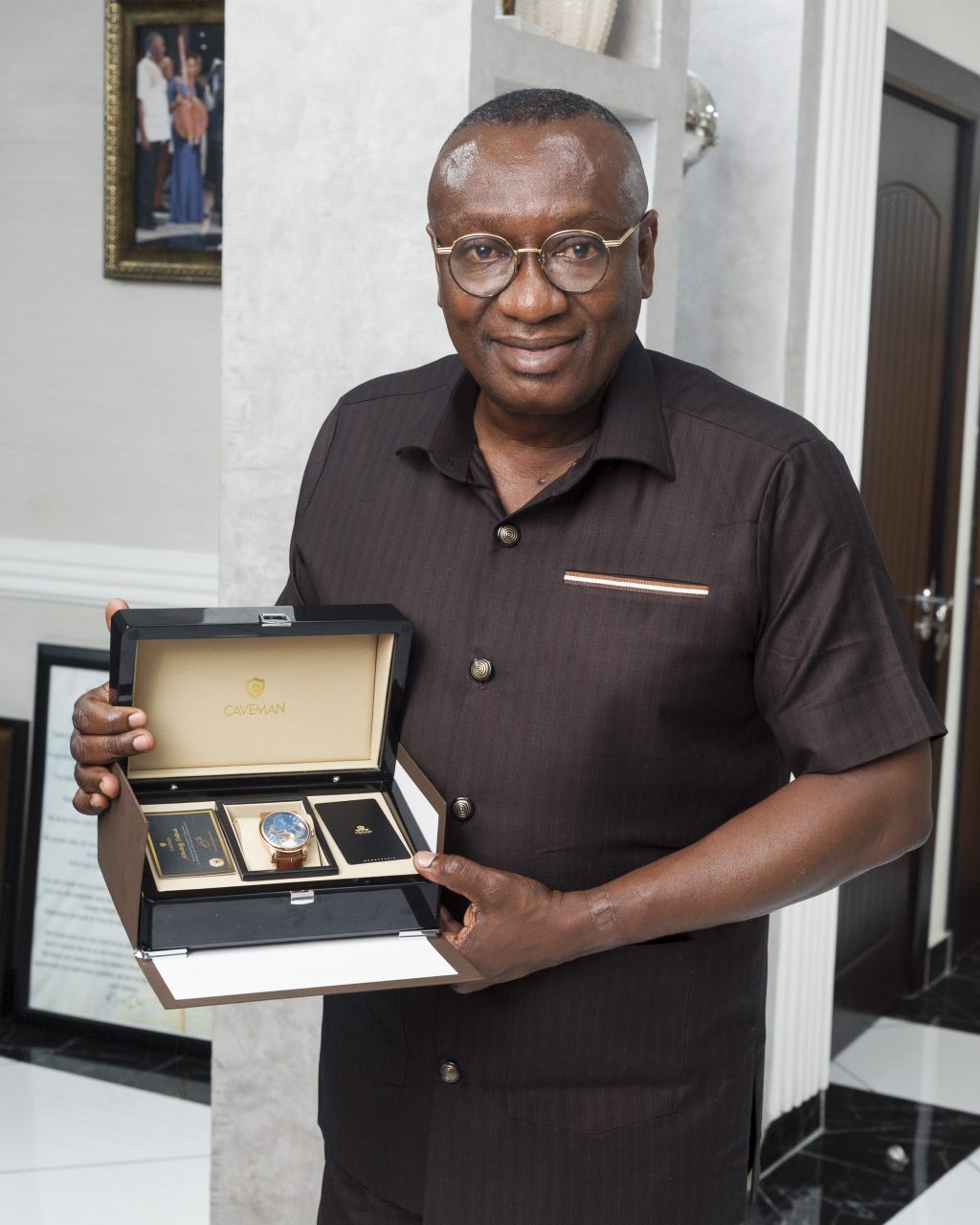
International attention arrived for Caveman Watches in a moment that was both unexpected and instructive. In 2023, the brand created a bespoke 24k-gold timepiece for Beyoncé, a detail that circulated widely across global media.
What is notable is not the celebrity moment itself, but how Caveman responded to it. The brand did not reposition itself as exclusive or untouchable. It did not pivot into spectacle. Instead, it continued operating with the same design language and market philosophy.
This restraint signals maturity. Recognition, in the caveman’s case, is not treated as validation but as visibility.
A Wider African Movement
Caveman Watches do not exist in isolation. Across Nigeria, a parallel horological conversation is unfolding. Brands such as Asorock and Micserah approach watchmaking with similar care, blending Swiss movements with locally resonant symbolism.
These Nigerian labels recognise that engineering builds trust in watches, but meaning builds loyalty. By anchoring their designs in familiar cultural references while maintaining mechanical credibility, they position themselves as interpreters rather than imitators.
Together, these brands form a quiet network of African horology that prioritises narrative coherence over disruption rhetoric.
Claiming Space Without Permission
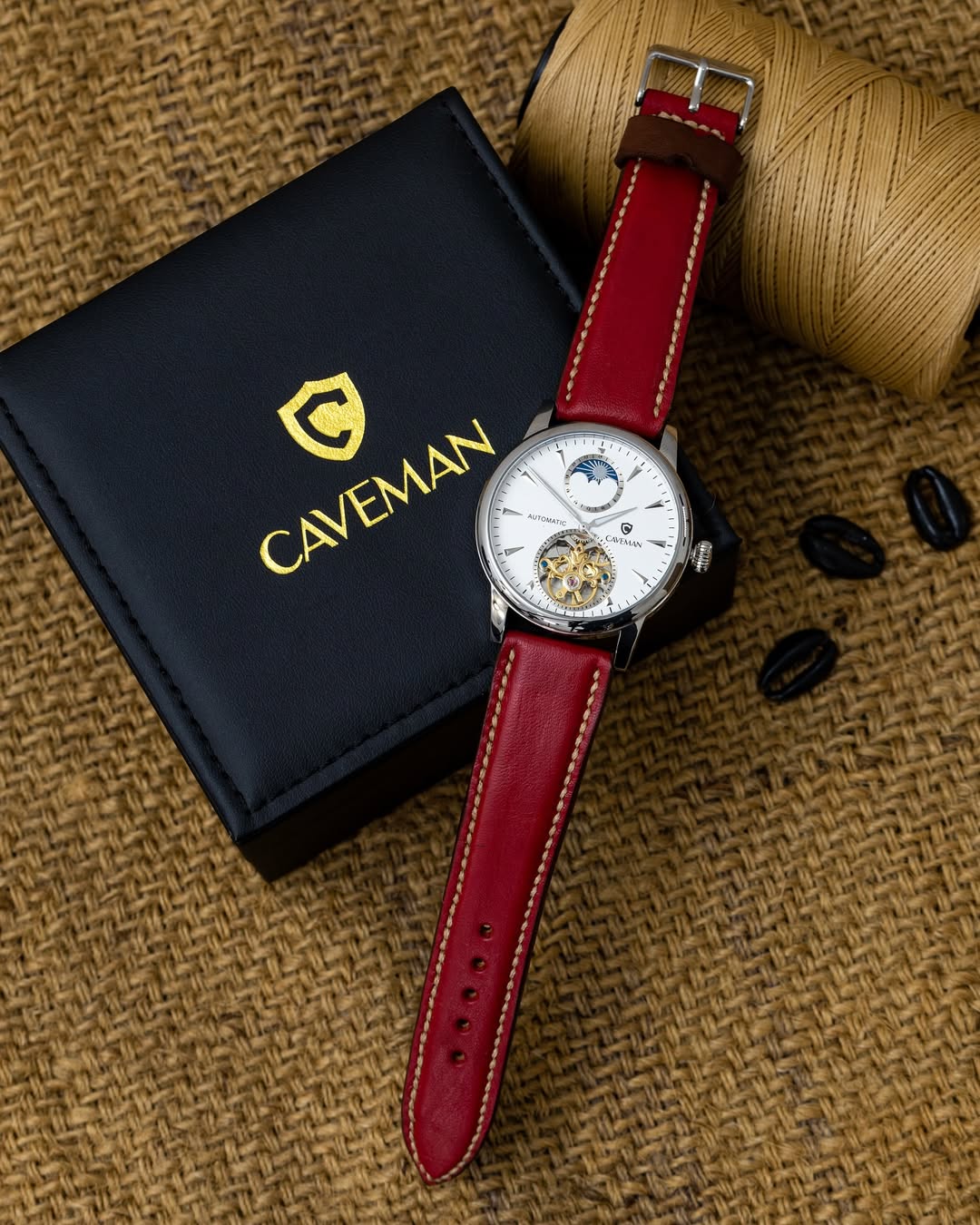
The European watch industry is notoriously insular. Its authority rests on centuries of continuity and a closed ecosystem of validation. African brands entering this space face a choice: chase acceptance or redefine relevance.
Caveman Watches chooses the latter.
Rather than attempting to rewrite horological history, the brand inserts itself into the present. It is designed for people who understand luxury intuitively, even if they have been historically excluded from its production.
This strategy is subtle but powerful. It reframes African watchmaking not as an emerging trend, but as an inevitable expansion of luxury’s geography.
Why This Matters Now
Luxury audiences are changing. They are younger, more culturally aware, and less invested in inherited hierarchies. They want objects that carry a story without excess explanation.
African horology meets this moment precisely.
Caveman Watches offers a model of luxury, that is:
- culturally grounded
- mechanically credible
- accessible without dilution
- confident without spectacle
It suggests that the future of luxury may not belong to the loudest brands, but to the most intentional ones.
RELATED ARTICLES:
- Accessories That Carry Our History: Bags and Jewellery as Living Heritage
- From Utility To Style: Why Accessories Matter
- Sculptural Statements: Architectural Bags Shaping The New African Aesthetic
Time, Reclaimed
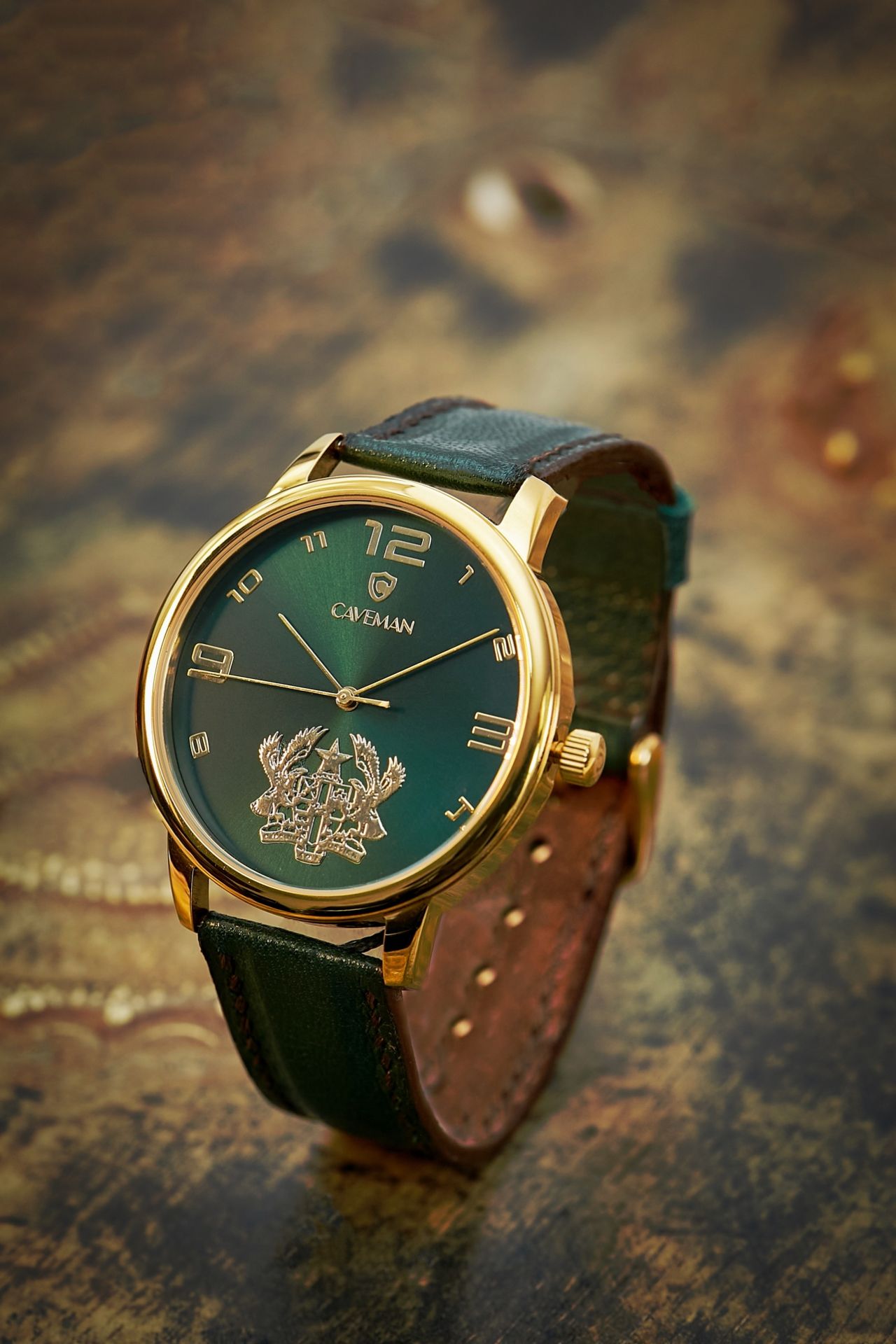
Wearing a Caveman watch does not mean rejecting Swiss timekeeping. It is to expand the scope of who can measure time with authority.
African horology does not ask for permission. It arrives quietly, worn daily, accumulating relevance through use. In doing so, it serves as a reminder to the luxury world that time, like culture, does not belong to any single location.
Experience the finer side of life — explore Luxury Living on OmirenStyles now.
Frequently Asked Questions
- What is African horology?
African horology refers to luxury and contemporary watchmaking brands founded and designed in Africa.
- Who founded Caveman Watches?
Ghanaian entrepreneur Anthony Mensah Dz founded Caveman Watches.
- Are Caveman Watches made in Africa?
The watches are assembled in Ghana, combining global mechanical standards with local design identity.
- Is African watchmaking internationally recognised?
Recognition is emerging gradually through cultural platforms, collectors, and global media attention.
- Why are African luxury watches essential now?
They expand luxury beyond Europe, offering culturally grounded design and accessible prestige.