There are a few textiles in Africa that function as living cultural currency: cloth that does not merely cover the body but also codes identity, status, history, and belonging. The Basotho blanket is one such textile. Worn across Lesotho and among Basotho communities in South Africa, it carries a history as an ancient lineage rather than a visual heritage.
To many, it may appear just warm wool. To the Basotho people, it represents life’s major transitions and reflects rank, honour, and cultural belonging. It is a garment tied not to fashion, but to sovereignty over self-definition.
Designer Thabo Makhetha-Kwinana did not treat this cloth as material to be abstracted. She treated it as material with memory, a cultural archive that could be articulated through design without erasing its historical meaning.
Thabo Makhetha-Kwinana skilfully incorporates the Basotho blanket, a historical cultural emblem of Lesotho, into contemporary fashion, all while preserving its significance and identity.
The Basotho Blanket: A Living National Insignia
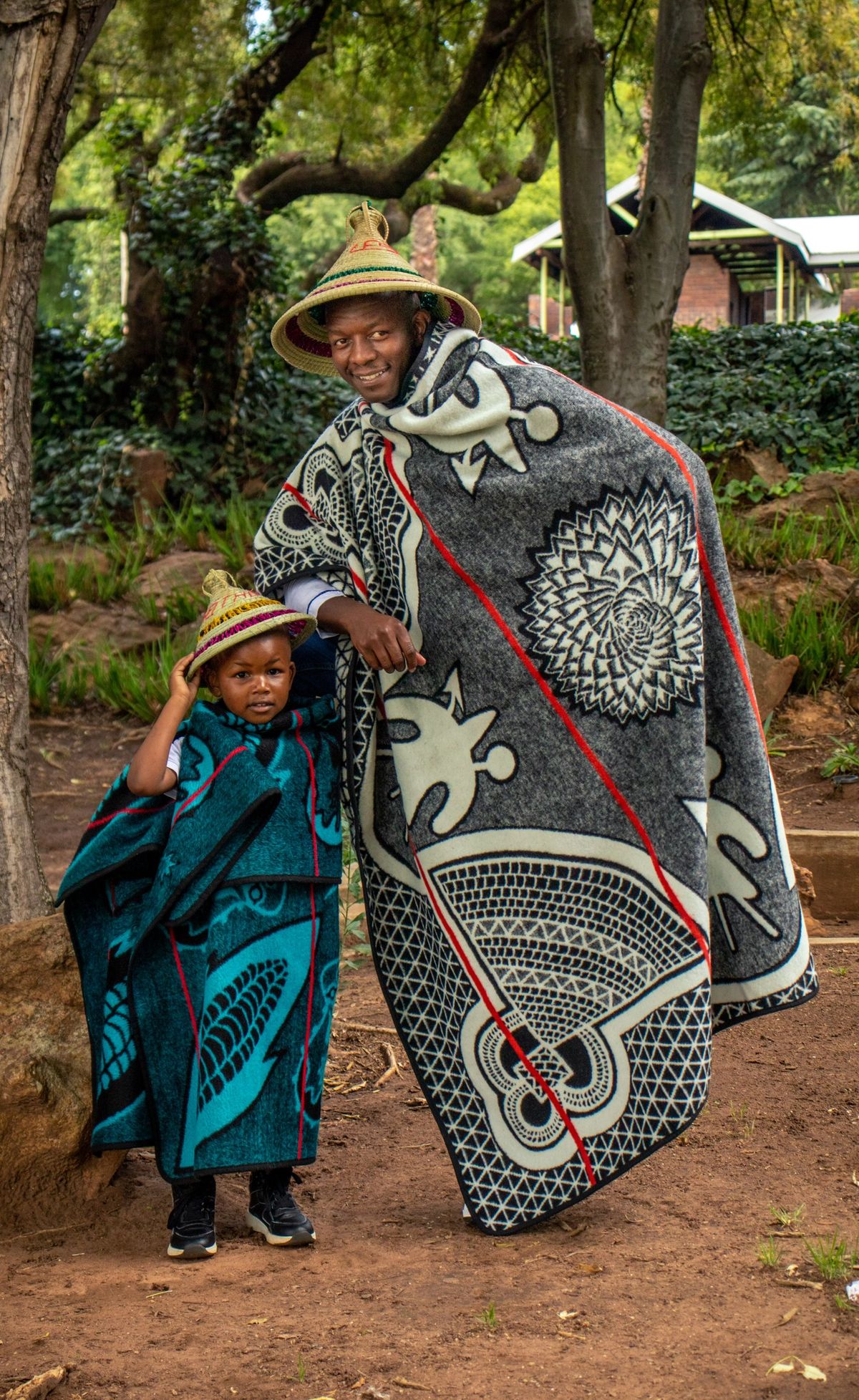
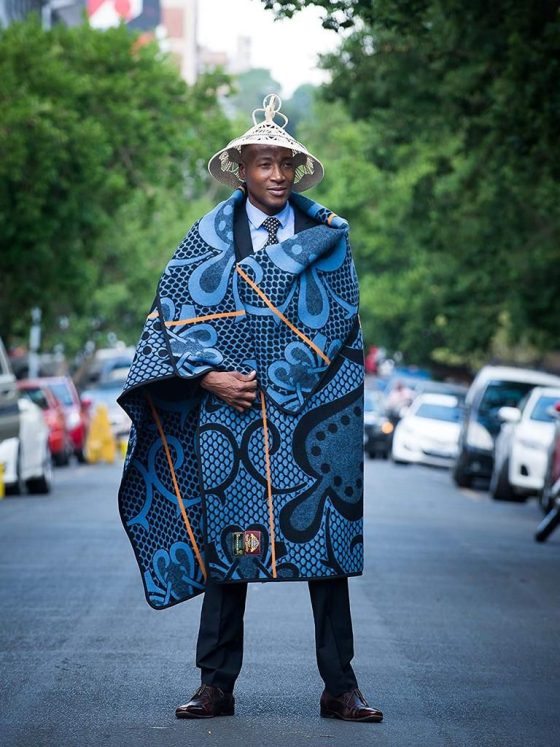
The Basotho blanket is a heavyweight woollen textile central to Basotho identity. It did not originate as an aesthetic tradition. A British visitor gave a wool blanket to King Moshoeshoe I, the founder of the Basotho nation, in the late 1800s. The king adopted and popularised it, replacing traditional animal-skin cloaks (karosses) that were becoming scarce due to environmental and economic pressures.
The cloth quickly became a national emblem rather than imported apparel. Over the decades, patterns and names on blankets came to hold specific meanings: Seanamarena (“to swear by the chiefs”) became associated with status and loyalty, while other designs referenced events, lineage, and societal roles. Newer blankets even commemorate war contributions and significant historical figures.
Each blanket’s name and motif tells a story:
- Seanamarena is a high-status blanket commonly associated with chiefs.
- Motlatsi – created to honour the birth of a crown prince.
- Mealie or wheat patterns serve as symbols of fertility and prosperity.
More than warmth, the Basotho blanket is worn during birth ceremonies, marriage rites, funerals, and initiation rituals. It’s exchanged as a gift, wrapped on the body to signal respect, and even incorporated into spiritual observances. Basotho people remain blanket people “to the bone”, a phrase used by cultural historians to emphasise the integral role of this textile across life’s arc.
Thabo Makhetha-Kwinana: A Designer Rooted in Heritage and Purpose

Born in Lesotho and raised in South Africa, Thabo Makhetha-Kwinana founded her self-named luxury label in 2009 at just 21 years old, inspired by early experiences with her grandmother (a seamstress) and her own Basotho heritage.
From the outset, her work centred on the traditional Basotho blanket, particularly through her Kobo Ea Bohali (“Blanket of Prestige”) collection. Her debut on international runways came with this collection at Vancouver Fashion Week in 2014, earning praise for craftsmanship and cultural integrity.
Her mission was not to commodify culture but to carry it forward, creating a textile that already held deep meaning for a new generation, especially young people who often gravitate toward Western brands at the first sign of success.
Makhetha’s work has been recognised globally. From South African Fashion Week to exhibitions and features in Vogue, Elle, and Marie Claire, her designs consistently focus on Basotho textiles and have earned awards, including the Impact Award for Design Excellence and honours for cultural preservation.
Material Integrity: Preserving Meaning Through Design
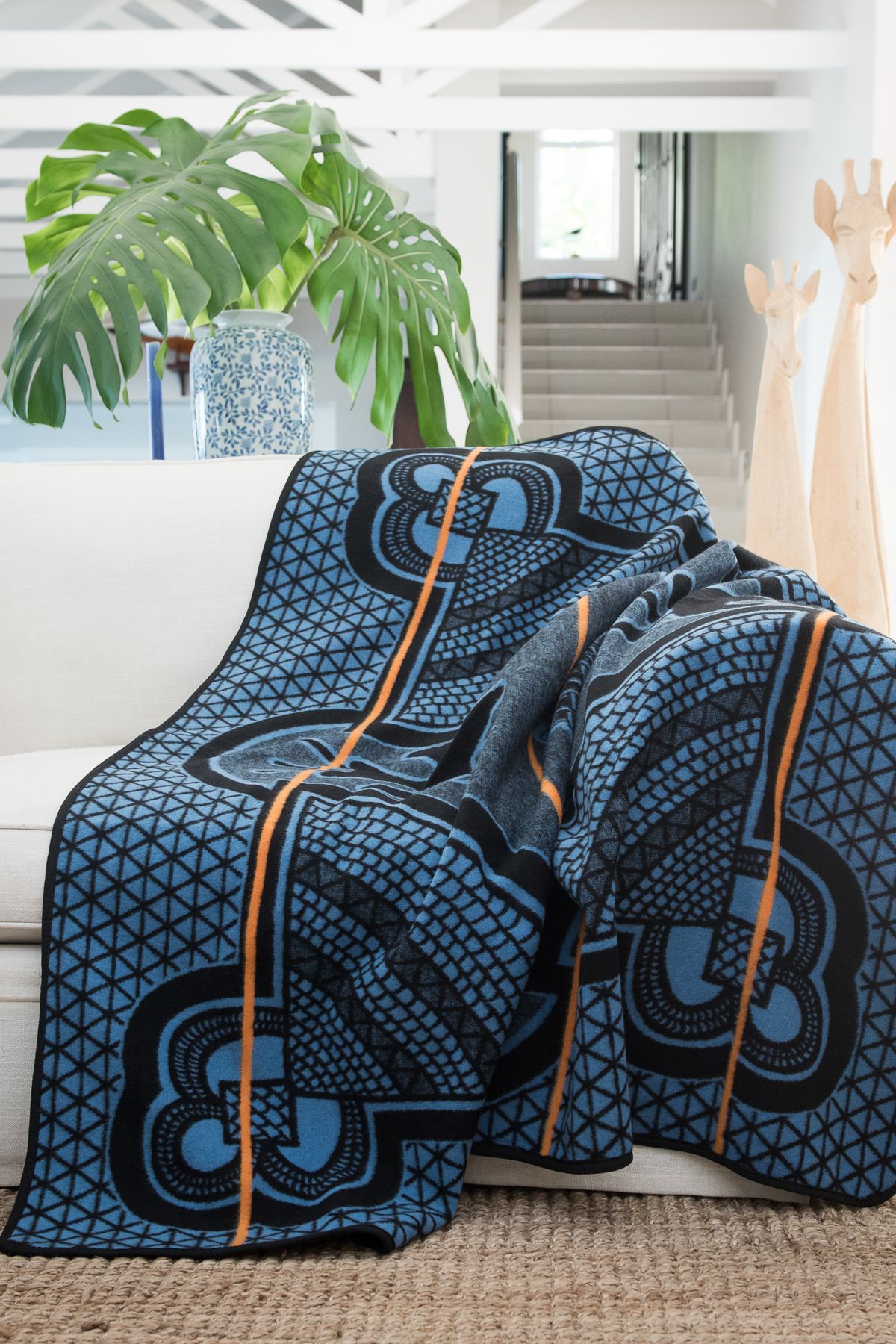
Where many designers flatten cultural textiles into prints or accents, Makhetha-Kwinana’s approach is the opposite: meaning determines form.
The authentic Basotho blanket’s symbolism isn’t decorative; it lives in:
- The pattern and placement of the motifs tell social stories.
- Textile composition (heavy wool intended to protect and signify presence).
- Wear and performance (how the blanket is draped and worn with intention).
Makhetha’s garments, capes, coats, and jackets – preserve these elements. The textiles are not cut arbitrarily. They are placed so that motifs remain readable. The work doesn’t obscure history; it makes it wearable.
Her signature garments maintain the blanket’s integrity while translating it into luxury ready-to-wear pieces meant to be worn widely, not just in traditional settings.
Collections as Cultural Narratives, Not Trend Cycles
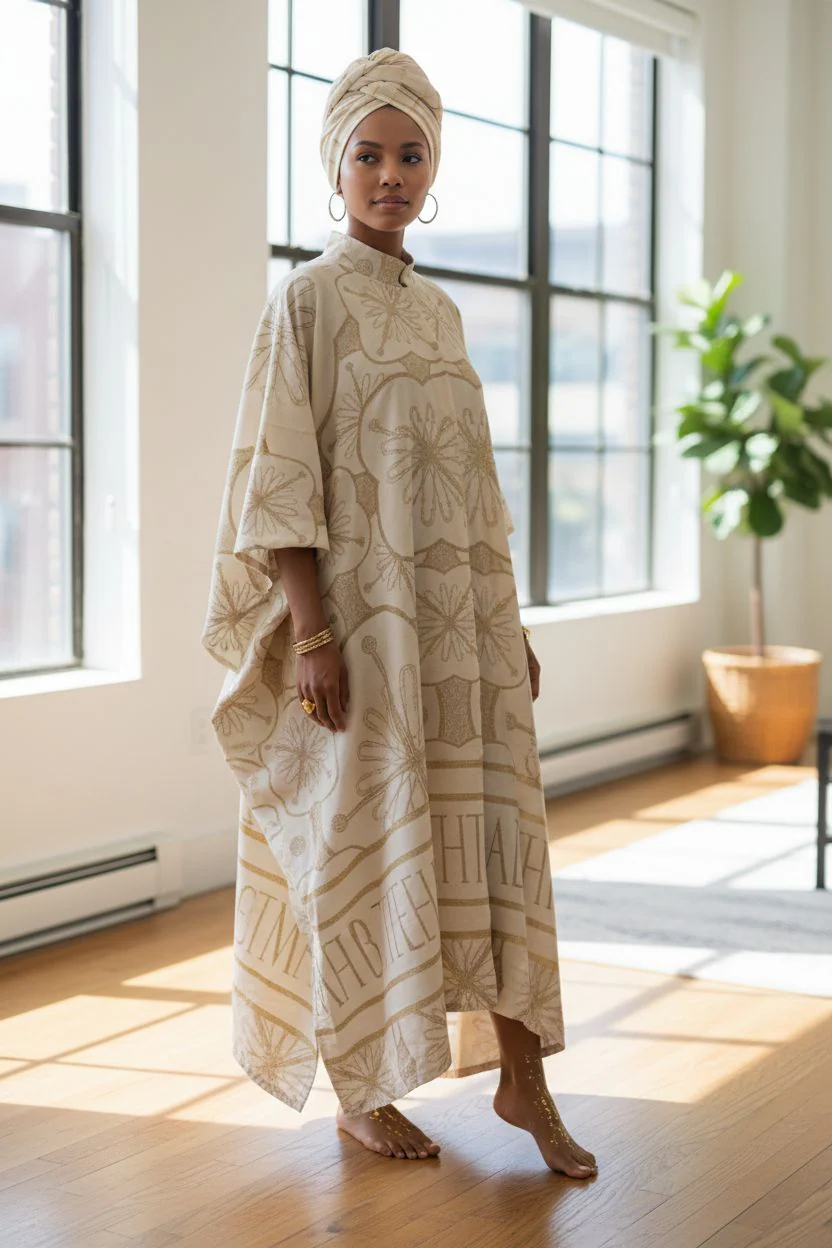
Makhetha’s collections read like chapters in a living story:
- The Kobo series, rooted in Basotho heritage, uses blankets associated with prestige and legacy.
- Later explorations have introduced her own unique prints (e.g., incorporating personal and familial symbols), marking an evolution while respecting tradition.
- Her 2024 collaborations with local brands, such as Veldskoen Shoes, at South African Fashion Week further link Basotho identity to broader conversations about African heritage.
Throughout, the cloth remains an anchor, not a recycled idea, but a continued cultural witness.
Global Impact, Appropriation, and Ethical Context
The Basotho blanket entered global fashion long before Makhetha’s work, albeit often without context. For example, a 2017 Louis Vuitton collection faced controversy for borrowing Basotho designs without acknowledgement, stirring debate about cultural appropriation.
Makhetha has been candid about such issues. She has faced copies of her own work, including lower-quality blanket garments from overseas markets, which highlights both the commercial power of the Basotho textile and the risk of cultural dilution when meaning is stripped away.
Her approach contrasts sharply with such appropriations because she does not extract the visual language from its context. She carries the stories, the meanings, and the social signals into fashion in a way that insists on respect rather than spectacle.
Legacy and Future: Cloth That Still Speaks
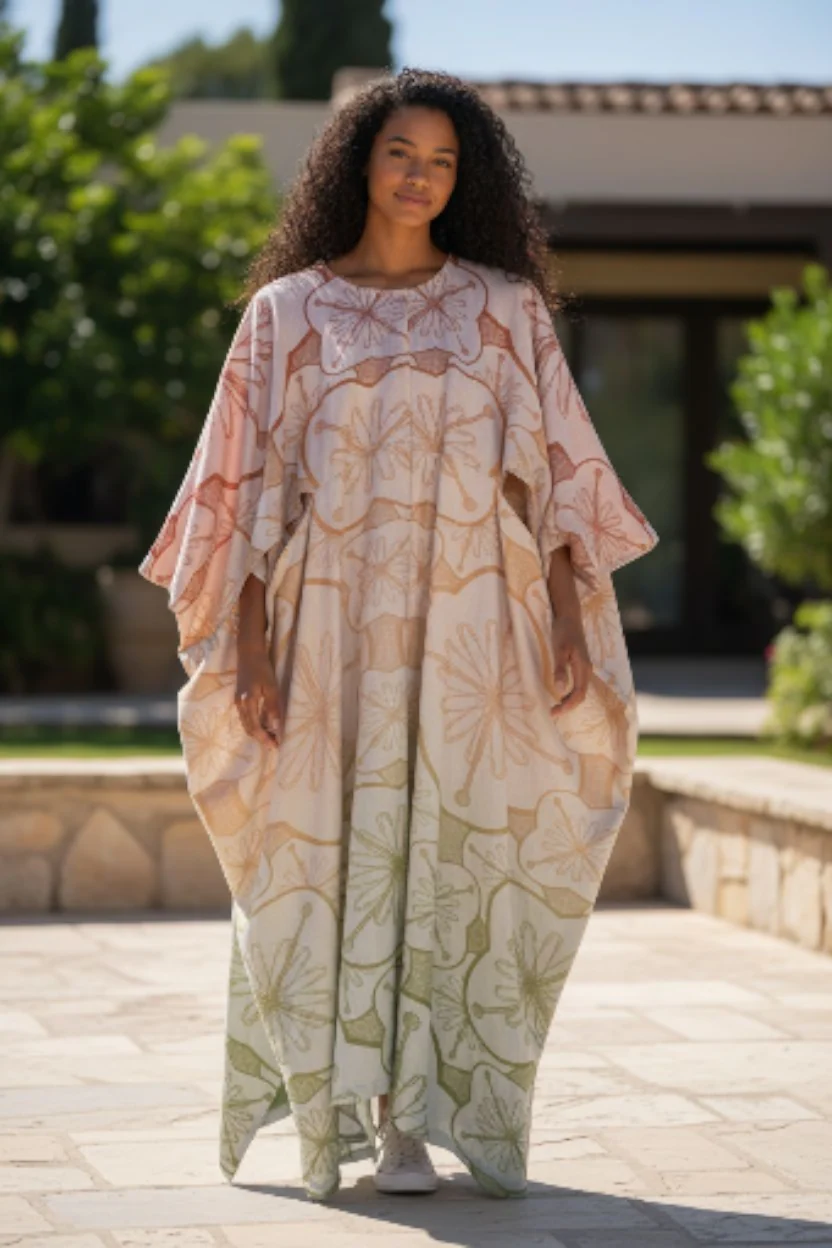
Well into the 2020s, Makhetha’s work remains at the intersection of heritage preservation and contemporary innovation. Her pieces are not just worn on runways; they articulate a worldview where African identity and history are lived, not reimagined for trends.
The Basotho blanket, through her vision, becomes:
- A living archive, not a relic.
- A marker of identity, not costume.
- A statement of dignity, not decoration.
Her work affirms something profound: culture doesn’t need translation to matter globally, it just needs a platform that respects its voice.
FAQs
- What is the Basotho blanket, and why is it meaningful?
The Basotho blanket originated in the late 19th century and became a cultural emblem of Lesotho, worn in life’s significant rituals and signalling status, identity, and respect.
- Who is Thabo Makhetha-Kwinana?
A Lesotho-born designer who founded her namesake label in 2009 and is known for transforming Basotho blankets into luxury fashion while preserving their cultural significance.
- How does her work preserve cultural meaning?
She preserves cultural meaning by using authentic textiles and retaining the original placement and significance of motifs and patterns in garments, rather than treating them as mere prints.
- Has the Basotho blanket been appropriated?
Yes, for example, a 2017 Louis Vuitton collection drew controversy for using similar designs without context, underscoring Makhetha’s ethical approach to cultural material.
- What is the future of the Basotho textile in fashion?
Designers like Makhetha are ensuring it remains culturally meaningful while continuing to evolve in contemporary clothing, securing its place in both heritage and global fashion narratives.