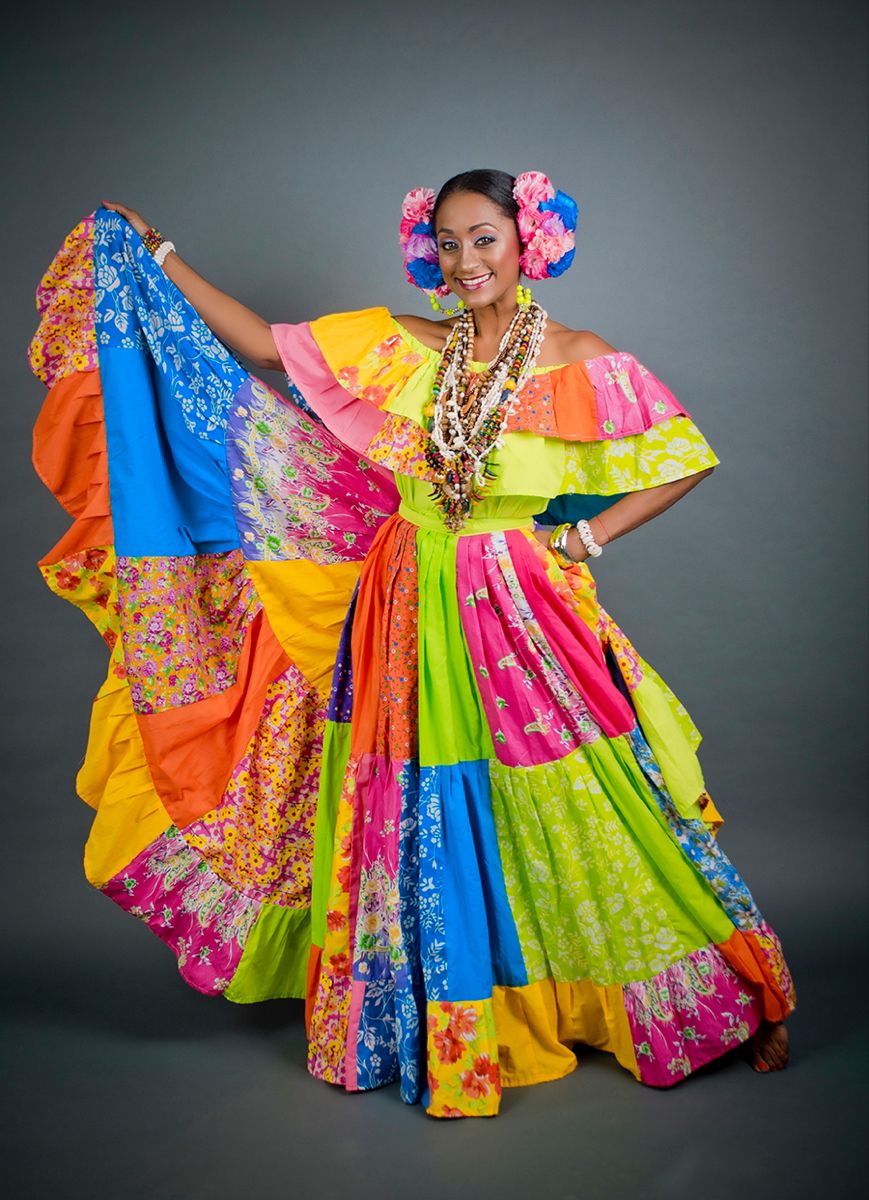
Colombian traditional fashion is one of the most diverse and least understood dress cultures in the Americas, and the international fashion industry’s version of it is a highly edited summary. The story it tells begins in Cartagena’s resort market, passes through Medellín’s manufacturing floors, and ends with a ruffled skirt silhouette on a Paris runway that vaguely references the Pollera. What it omits is the reason the Pollera exists at all. The Mola textile tradition of the Guna people, which takes sixty hours of skilled labour to produce a single panel, carries the political history of a 1925 revolution in which a government tried to ban it and failed. The Palenquera dress of San Basilio de Palenque, a community whose ancestors fought for freedom in 1599, secured it in 1713, and maintained a distinct creole language and dress culture over four centuries without institutional support. The Wayuu mochila bag, worn in fashion capitals from New York to Tokyo and copied by fast-fashion manufacturers across three continents, every one of whose geometric patterns encodes a personal and ancestral biography that the copying never transmits. These are not footnotes to the Colombian fashion story. They are the story. The resort industry is the footnote.
Colombia has no single national costume. What it has is a regional dress system so varied that it maps directly onto the country’s five geographic zones: the Andean highlands, the Caribbean coast, the Pacific coast, the Llanos plains, and the Amazon basin. Each zone produced dress traditions shaped by its climate, its Indigenous communities, its specific colonial history, and the African cultural inheritance carried there by the transatlantic slave trade. Understanding Colombian traditional fashion means recognising that it is not a single thing. There are at least five, and each of the five is a complete vocabulary.
Colombian traditional fashion is five distinct dress cultures, not one. The Mola, the Pollera, the Palenquera, and the Wayuu mochila all predate the fashion industry. Here they are.
Colombian Traditional Fashion: Five Regions, Five Systems
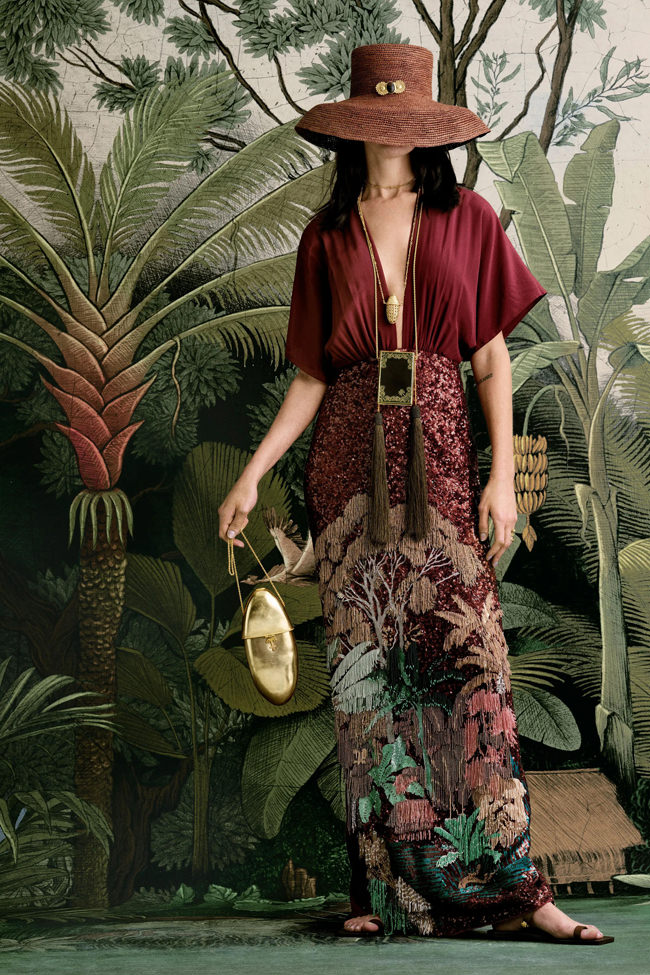
The Colombian fashion industry, which is internationally visible and centred in Bogotá, Medellín, and Cartagena, draws selectively from this regional heritage. Johanna Ortiz has reimagined the Pollera skirt as a modern expression of femininity for the international luxury market. Silvia Tcherassi has elevated tropical prints into a premium category. These are legitimate creative achievements. But the heritage they draw from is richer, more complex, and more politically layered than any resort collection has yet fully engaged with. As Industrie Africa’s documentation of Colombian fashion and national independence confirms, the relationship between a country’s fashion industry and its textile heritage is never simple, and the garments and traditions that precede the industry deserve coverage as primary subjects rather than as inspiration categories.
The five-region framework is not academic geography. It is the practical structure within which Colombian dress traditions developed, diverged, and produced distinct aesthetics that a single national fashion narrative cannot hold. The Caribbean coast gave Colombia the Pollera Colorada and the Sombrero Vueltiao. The Pacific coast, home to the highest concentration of Afro-Colombian communities in the country, produced its own aesthetic system that the international fashion press has almost entirely ignored. The Andean highlands produced the heavier, darker regional Pollera variants that the resort industry’s appropriation of the Caribbean version has partially obscured. The La Guajira peninsula produced the Wayuu mochila. The Chocó department, on Colombia’s Pacific coast, is where Guna communities produce the Mola. All five deserve equal documentation.
The Mola: What the Fabric Carries Beyond the Pattern
The Mola is one of the most technically demanding textile traditions in the Americas. Produced by Guna women through a reverse appliqué process in which multiple layers of brightly coloured fabric are stitched together and cut to reveal intricate designs through the layers beneath, each panel takes approximately sixty hours to complete. The word mola means cloth or blouse in Dulegaya, the Guna language. The designs, geometric patterns, animals, birds, and natural forms carry cultural and spiritual meaning specific to the Guna worldview. The Guna are an Indigenous people whose territory spans Panama’s Guna Yala comarca and communities along the Colombian border in the Uurá region of Chocó. As the Fashion History Timeline’s documentation of the Mola confirms, the tradition is a living practice in communities whose Colombian members produce and wear Mola blouses as part of a complete traditional dress that includes the saburet wrapped skirt, the musue headscarf, wini arm and leg beads, olasu gold nose ring and earrings, and the dulemor Mola blouse together.
The Mola’s significance cannot be separated from the Guna Revolution of 1925. The Panamanian government had attempted to force cultural assimilation on the Guna people, including banning traditional dress, restricting the Guna language, and specifically prohibiting the wearing of Mola blouses. The revolution, which lasted three months and succeeded, transformed the Mola from an item of everyday dress into a symbol of Guna political survival and cultural sovereignty. It has carried that additional weight ever since. The Museo de la Mola in Panama City holds over 300 pieces and is the only museum in the world dedicated solely to the Mola textile. The Guna communities along Colombia’s Pacific border face additional pressure from rising sea levels, which are already displacing their island communities. The textile is not historical. It is urgent.
For fashion editorial to engage with the Mola as a design reference or aesthetic object without acknowledging this political history is to perform exactly the kind of cultural extraction the Guna fought to prevent. The sixty hours of labour in each panel are not simply a craft achievement. They are the time the Guna community invests in maintaining a practice that a government once tried to eradicate. The pattern that emerges from that labour communicates within a knowledge system that belongs to the people who built it. That distinction matters, and no fashion publication that has covered Mola-inspired collections has yet adequately engaged with it.
For readers interested in exploring the visual language of layered textile work, explore Mola-inspired textile art and handmade appliqué pieces on Etsy. Look for sellers who clearly describe the origin and nature of the work rather than presenting generic reproductions as authentic Guna textiles.
The Pollera: Colombia’s Most Misread Garment
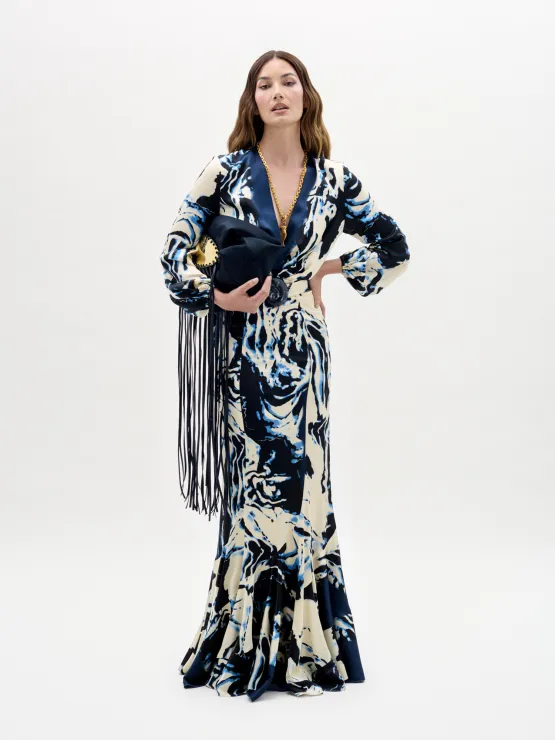
La Pollera Colora is Colombia’s most famous traditional dress: a floor-length, brightly coloured skirt paired with a matching off-shoulder blouse, decorated with ruffles, lace, and embroidery. It is most strongly associated with the Caribbean coast. It is the centrepiece of Colombia’s most important cultural festival, the Carnaval de Barranquilla, which UNESCO recognised as an Intangible Cultural Heritage in 2003. The word pollera simply means skirt in Spanish, and the garment’s origins trace through Spanish colonial dress brought to the Americas and hybridised with Indigenous and African influences over centuries. The construction is not simple: the ruffles of a Pollera Colora require precision sewing across multiple fabric tiers, the lace detailing is handmade in specific regional traditions, and the embroidery carries pattern vocabularies specific to the Caribbean coast communities that developed them.
What Colombian fashion coverage consistently fails to note is that the Pollera is not a single garment. It varies significantly by region in cut, colour, construction, and cultural meaning. The Caribbean coast version, ruffled and vivid, is the one that circulates internationally. The Andean Pollera tends toward darker colours and heavier fabrics, reflecting the cooler highland climate, and carries distinct associations with Indigenous communities that the Caribbean version does not share. The Pacific region’s Pollera variants are silk-based and brightly coloured in reds, yellows, and blues, reflecting the strong Afro-Colombian cultural presence of that coast. Each regional variation reflects a distinct community’s creative history. The resort industry that borrows the Pollera silhouette typically takes the Caribbean Coast version and presents it as representative of all of Colombia. It is not.
The Mola became a symbol of survival in 1925 when the government tried to ban it. San Basilio de Palenque’s dress has been saying the same thing for over 400 years. Neither is a fashion reference. Both are primary texts.
For readers drawn to the silhouette, browse ruffled Latin American skirts and Pollera-inspired pieces on Etsy. for contemporary interpretations of the layered skirt structure.
The Palenquera Dress: What San Basilio de Palenque Built and Why It Matters
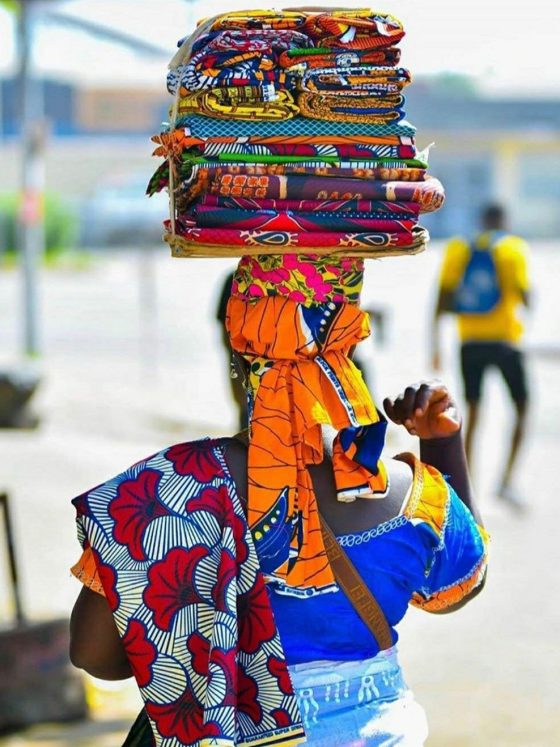
The most photographed people in Cartagena are the Palenqueras: women from San Basilio de Palenque who walk the colonial city’s streets in bright ruffled skirts and off-shoulder blouses in yellows, reds, and blues, with elaborate headwraps and baskets of tropical fruit balanced with perfect precision above them. They are everywhere in Cartagena’s tourism imagery. What the tourism imagery rarely communicates is who they are and what their dress represents. San Basilio de Palenque is the first free Black settlement in the Americas. Its founder, Benkos Biohó, a king from the Congo or Angola region, escaped slavery at the port of Cartagena in 1599, built a fortified community in the forests south of the city, and fought the Spanish colonial forces for over a century until the Crown formally recognised the community’s freedom in 1713. As UNESCO’s declaration confirmed in 2005, San Basilio de Palenque is a Masterpiece of the Oral and Intangible Heritage of Humanity. Its community maintained a distinct creole language, Palenquero, a Spanish-Bantu creole influenced by Kikongo, across four centuries. It is the only Spanish-based creole language in South America.
The Palenquera dress is a living cultural practice of a community that fought for and won its freedom and has kept its cultural identity intact across four centuries without institutional support and in the face of sustained external pressure. Its bright colours, ruffled construction, and elaborate headwraps reflect the African aesthetic inheritance of Benkos Biohó’s community, maintained through deliberate collective practice. The braiding traditions of Palenque add a further layer: Palenquera women historically braided escape routes, river maps, and hiding places into their cornrows, concealing seeds and gold from overseers. The hair was cartography and survival. The dress was the visible statement of who they were on the days when they were permitted to be visible at all. When Cartagena’s tourism industry uses the Palenquera image without acknowledgement of what San Basilio represents, it performs a specific erasure that the dress itself was designed to resist. The Palenquera dress is not a costume for tourist photography. It is a 400-year cultural argument that has never stopped being made.
The headwrap is also an important part of the visual language. Readers interested in experimenting with similar styling can browse colourful African and Latin American headwraps on Etsy, while keeping in mind that a contemporary styling accessory is not the same thing as the traditional Palenquera dress itself.
The Pacific Coast and the Afro-Colombian Fashion the International Press Has Not Found
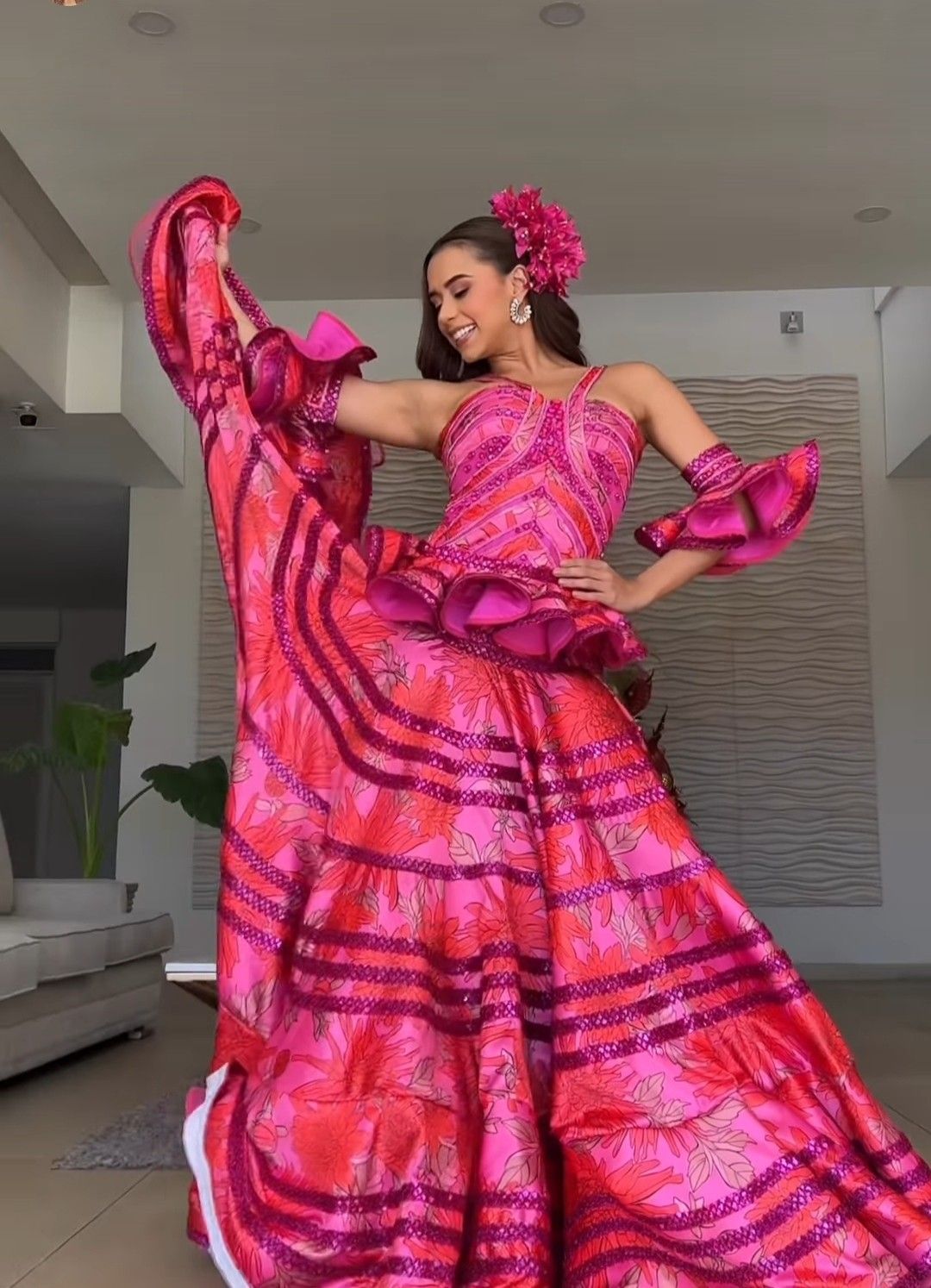
Colombia’s Pacific coast, home to the highest concentration of Afro-Colombian communities in the country, has produced a dress culture that receives almost no international editorial attention. Quibdó, the capital of the Chocó department, has a population that is approximately 95 per cent Afro-Colombian and hosts the San Pacho festival, which showcases multicultural dress that blends Colombian flag colours with silk materials. Pacific coast women’s dress is characterised by colourful, pastel-toned fabrics with flowers and ribbons. The chocatos, traditional shoes made from cabuya and fique plant fibres, are specific to Afro-Colombian Pacific communities and represent a craft tradition entirely absent from mainstream Colombian fashion documentation.
Designer Lia Samantha Lozano was among the first to formally bring African fabrics into modern Colombian fashion over a decade ago, and the Afro-descendant design movement that followed has centred particularly in Cali, which has become a significant hub of Afro-Colombian culture and fashion. These designers are working within a living tradition that the Pacific coast has been developing for generations. The international fashion press that covers Medellín’s commercial industry and Bogotá’s contemporary designers has largely not made its way to Quibdó or the Pacific communities, whose dress culture is among the most distinctive in Colombia. That absence is not a reflection of the tradition’s quality. It is a reflection of the press’s geography.
Also Read:
- How Afro-Brazilian Fashion Is Reconnecting With the Continent After 400 Years
- Afro-Cuban Fashion: Abakuá Societies, Yoruba Heritage, and the Politics of Afrocentric Identity
- The African Origins of Carnival Costume: Feathers, Beads, and the Masquerade Tradition
- The Silence Around African Luxury: Why the Continent’s Most Expensive Fashion Is Almost Never Discussed
The Wayuu Mochila: When a Bag Is a Biography
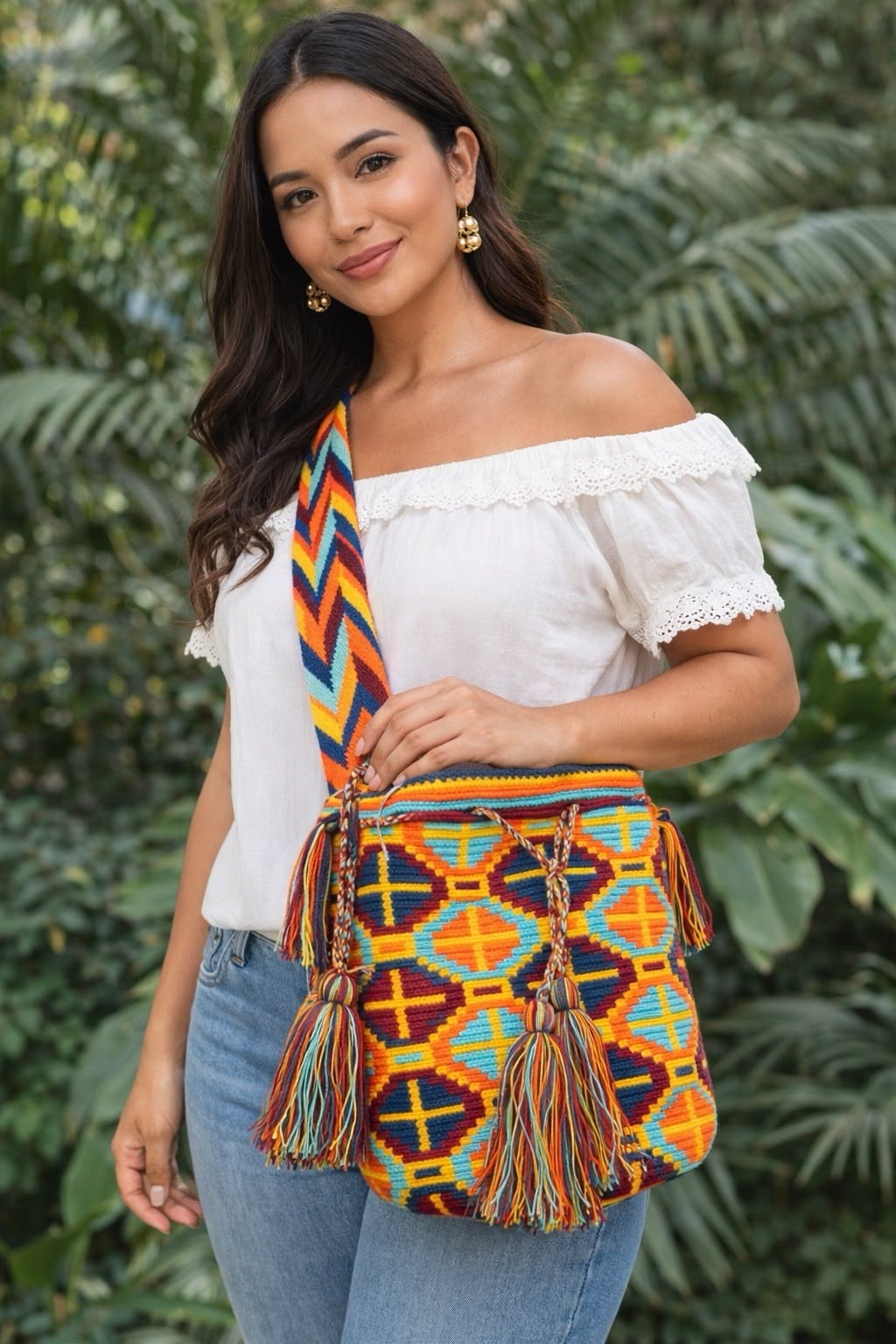
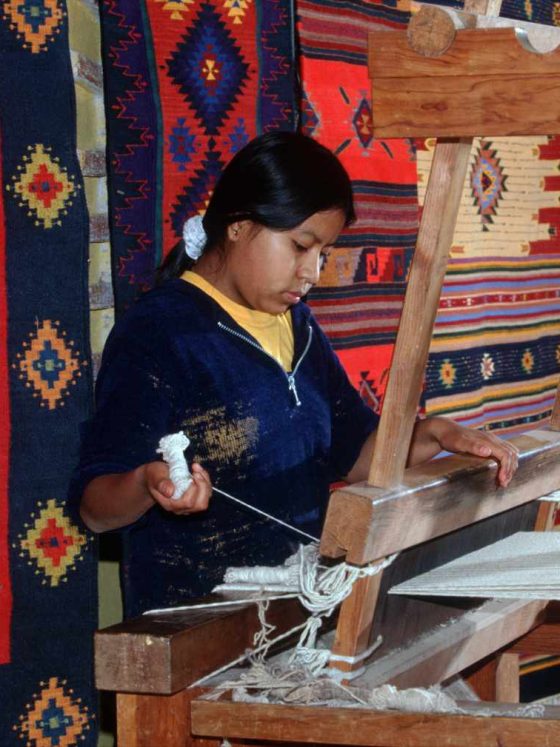
The Wayuu mochila bag is among Colombia’s most internationally recognised artisanal products, carried in fashion capitals from New York to Tokyo, copied by fast-fashion manufacturers across three continents, and sold in airport gift shops across Latin America. What the global market that buys and copies it rarely carries with it is what the mochila actually is. Each bag is woven by a Wayuu woman from the La Guajira peninsula in a technique that takes weeks to complete, passed across generations, and encodes a complete personal and ancestral narrative through its geometric pattern, known as the kanaa. For readers interested in owning a handwoven piece, explore Wayuu-inspired and handwoven mochila bags on Etsy. Where possible, look for sellers who identify the artisans, community of origin, weaving process and materials rather than treating the pattern simply as a decorative print.The kanaa is not a decorative motif. It is a statement about the weaver’s identity, her community, and her connection to the natural world. Wayuu oral tradition holds that the patterns are received in dreams from Wale’kerü, the spider deity, who teaches the weaver her specific design. Each pattern is therefore simultaneously personal and cosmological. The bag circulating in a fast-fashion stockroom in Shenzhen carries none of this.
The Wayuu are an Indigenous people of the La Guajira desert who have maintained their language, Wayuunaiki, and their cultural practices across centuries of external pressure. The mochila’s global commercial success has generated both economic opportunity and significant exploitation risk. Fast-fashion copies are produced across three continents without attribution or compensation to the communities whose knowledge system the patterns encode. Wayuu cooperatives have actively pursued recognition and fair compensation for authentic production. The Sombrero Vueltiao, the handwoven hat made from caña flecha palm fibres and associated primarily with Colombia’s Caribbean Zenú people, was formally designated a Cultural Symbol of the Nation in 2004. No equivalent national protection yet exists for the Wayuu mochila, and that policy gap has direct fashion industry implications.
For readers looking for contemporary accessories that can complement an African, Latin American or heritage-inspired wardrobe, explore colourful statement jewellery and headwrap accessories .
The Omiren Argument
The Colombian fashion narrative that circulates internationally is a highly edited version of what Colombia actually produces in cloth. It centres the commercial industry, which is skilled and significant, at the expense of the cultural traditions that predate and underwrite it. Johanna Ortiz can reimagine the Pollera because the Pollera exists. The Palenquera dress is photographed in Cartagena because Benkos Biohó built something in 1599 that survived colonial wars, centuries of isolation, and four hundred years of external pressure. The Wayuu mochila sells in Tokyo because Wayuu women encoded generations of cosmological knowledge into its kanaa patterns. The Mola appears in international fashion collections because Guna women spent sixty hours on each panel and then fought a revolution to keep the right to make it. The industry profits from this depth without documenting it.
Omiren Styles covers Colombian traditional fashion as the primary subject rather than an inspiration category because the source material is the story. Each of the five regional dress traditions documented here operates as a complete cultural system: the Mola as political survival and reverse appliqué mastery, the Pollera as a five-region vocabulary that no single silhouette can represent, the Palenquera dress as four centuries of African freedom maintained in cloth, the Pacific coast’s Afro-Colombian aesthetic as a living tradition that international fashion has not yet had the geographic range to find, the Wayuu mochila as a personal biography woven in geometric pattern. These traditions are not emerging. They were already here. The fashion industry arrived later.
Frequently Asked Questions
1. What is Colombian traditional fashion?
Colombian traditional fashion refers to the dress traditions of Colombia’s five geographic regions: the Andean highlands, the Caribbean coast, the Pacific coast, the Llanos plains, and the Amazon basin. Each region has its own distinct garments, textiles, and dress culture shaped by Indigenous, Spanish colonial, and African heritage. Key garments and traditions include the Pollera Colora skirt, the Sombrero Vueltiao hat (designated a Cultural Symbol of the Nation in 2004), the Wayuu mochila bag of the La Guajira peninsula, the Mola textile of the Guna people in the Chocó region, and the Palenquera dress of San Basilio de Palenque. There is no single national costume. Colombian traditional dress is a regional system with at least five distinct vocabularies.
2. What is the Mola fabric from Colombia?
The Mola is a hand-sewn textile produced by Guna women using a reverse appliqué technique in which multiple layers of brightly coloured fabric are stitched together and cut to reveal intricate geometric designs. Each panel takes approximately sixty hours to complete. The Guna are an Indigenous people whose territory spans Panama’s Guna Yala region and communities in Colombia’s Chocó department. The Mola’s designs carry cultural and spiritual meaning in the Guna worldview, and the tradition gained political significance after the 1925 Guna Revolution, in which the Panamanian government’s attempt to ban the Mola and force cultural assimilation was defeated in a three-month uprising. The Mola continues as a living cultural practice among Guna communities, facing additional pressure from rising sea levels, displacing their island settlements.
3. What is the Pollera, Colombia’s national dress?
La Pollera Colora is Colombia’s most famous traditional dress, a brightly coloured floor-length skirt paired with an off-shoulder blouse decorated with ruffles, lace, and embroidery. It is most associated with the Caribbean coast and the Carnaval de Barranquilla, designated a UNESCO Intangible Cultural Heritage in 2003. The Pollera traces its origins to Spanish colonial dress, hybridised with Indigenous and African influences. It varies significantly by region: Caribbean versions are ruffled and vivid, Andean versions are darker and heavier, Pacific versions are silk-based and brightly coloured, reflecting the Afro-Colombian communities of that coast. Contemporary designers, including Johanna Ortiz, have reinterpreted the Pollera internationally, though most representations are limited to the Caribbean coast version.
4. What is the Palenquera dress, and what does it represent?
The Palenquera dress is worn by women from San Basilio de Palenque, the first free Black settlement in the Americas, founded by Benkos Biohó, a king from the Congo or Angola region who escaped slavery in Cartagena in 1599. The community’s freedom was formally recognised by the Spanish Crown in 1713. The dress consists of brightly coloured ruffled skirts and off-shoulder blouses in yellows, reds, and blues, worn with elaborate headwraps. San Basilio de Palenque was designated a UNESCO Masterpiece of the Oral and Intangible Heritage of Humanity in 2005. Its community maintained Palenquero, a Spanish-Bantu creole language influenced by Kikongo, the only Spanish-based creole in South America. The Palenquera dress is not a costume for tourism. It is a 400-year cultural survival statement.
5. What is the Wayuu mochila and why is it culturally significant?
The Wayuu mochila is a handwoven bag produced by Wayuu women of the La Guajira peninsula in northern Colombia. Each bag takes weeks to complete using techniques passed across generations and encodes a personal and ancestral narrative through its geometric pattern, the kanaa. In Wayuu oral tradition, these patterns are taught to weavers by Wale’kerü, the spider deity, in dreams, making each design both personal and cosmological. The Wayuu are an Indigenous people who have maintained their language, Wayuunaiki, through centuries of external pressure. The mochila’s global commercial success has created significant exploitation risk: fast-fashion copies are produced across three continents without attribution or compensation. No national protection equivalent to the Sombrero Vueltiao’s 2004 Cultural Symbol designation yet exists for the mochila.
Explore More
Read the full Fashion > Latin America section at for Omiren Styles’ documentation of the dress traditions, textile histories, and cultural systems that Latin America’s Indigenous and Afro-descendant communities have been building for centuries, on their own terms and without the editorial coverage they deserve.