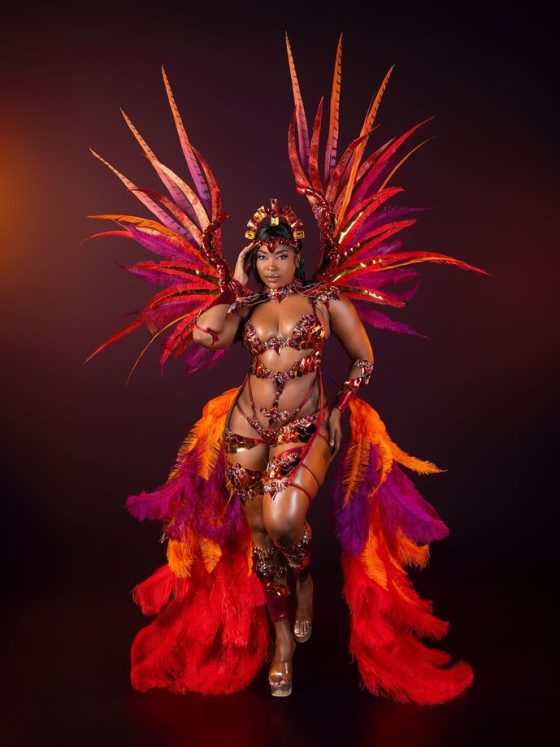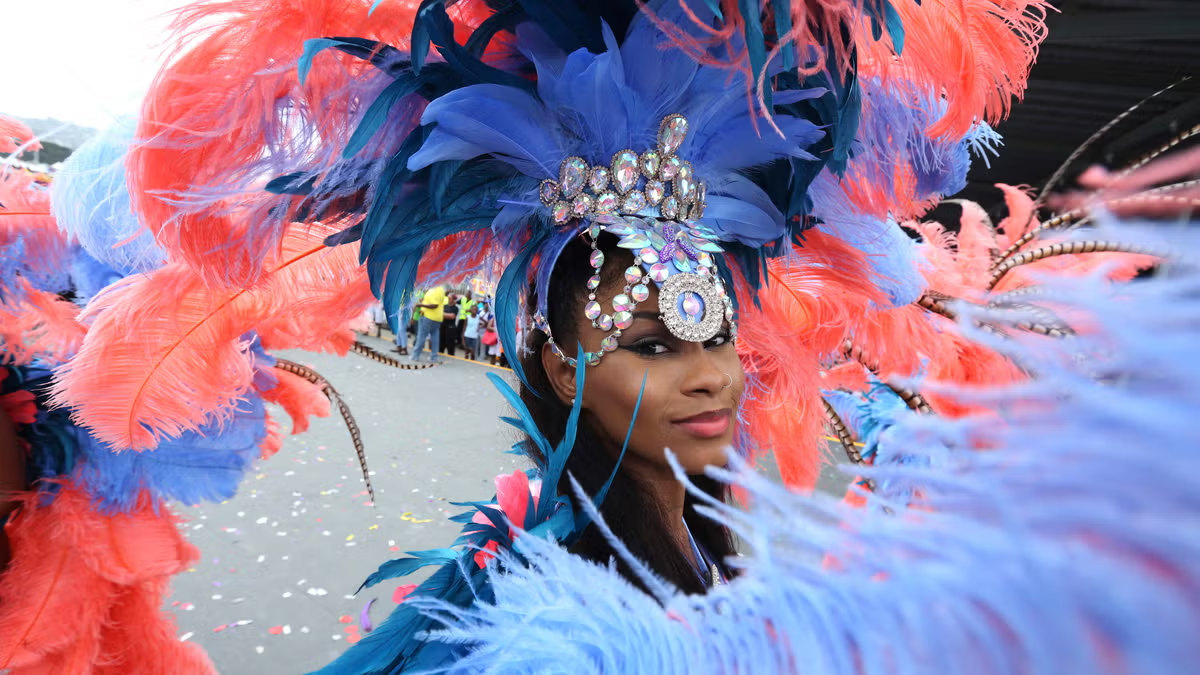
Every February, the eyes of the world turn to Rio de Janeiro, Port of Spain, and New Orleans. The images are always the same: enormous feathered headdresses catching the light, bodies covered in sequins and beads, faces hidden behind masks, crowds moving to rhythms that seem to come from somewhere deeper than the music alone. Journalists call it spectacle. Travel brands call it culture. Fashion editors call it inspiration. Nobody, in the mainstream press, calls it what it actually is: one of the most extraordinary examples of African spiritual and artistic tradition surviving five centuries of deliberate suppression, crossing an ocean, and arriving in the twenty-first century more alive than ever. Omiren Styles calls it what it is.
The feathers at Trinidad’s Carnival are not decorations. The beads at New Orleans Mardi Gras are not accessories. The masks at Junkanoo in the Bahamas are not costumes in the Western sense of the word. Every one of these elements traces directly to West and Central African masquerade traditions that predate European contact by centuries, that were carried across the Atlantic by an estimated twelve to fifteen million enslaved Africans, and that survived not by accident but by active, deliberate preservation by communities who understood that how you dress in ceremony is how you remember who you are
The feathers, beads, and masks of Caribbean Carnival did not begin in Trinidad or Rio. They began in West and Central Africa, in sacred masquerade traditions that enslaved Africans carried across the Atlantic and kept alive under conditions designed to destroy them. Omiren Styles traces the full story.
The Masquerade Was Never Entertainment
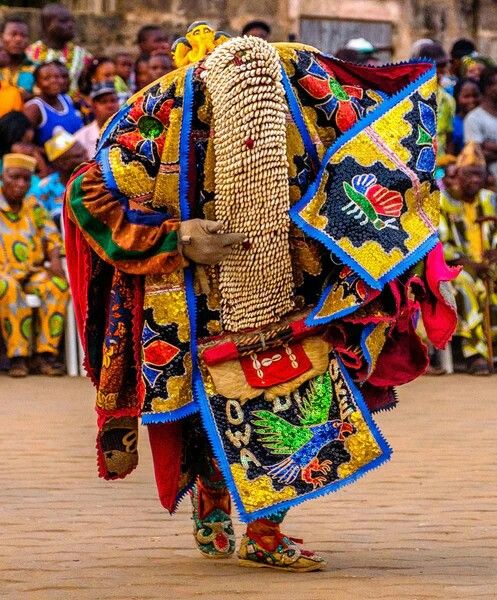
Before the word “carnival” existed in the Americas, the masquerade existed in Africa. Raphael Chijioke Njoku, professor of history at Idaho State University, whose research on West African masking traditions and diaspora masquerade carnivals is among the most comprehensive in the field, argues that masquerade culture developed among the Bantu peoples of West Africa before 3000 BCE, with the most intricate costumed masquerade rituals developing among the Igbo, Efik, Ibibio, and Ijaw peoples of the Bight of Biafra hinterland in what is today southeastern Nigeria.
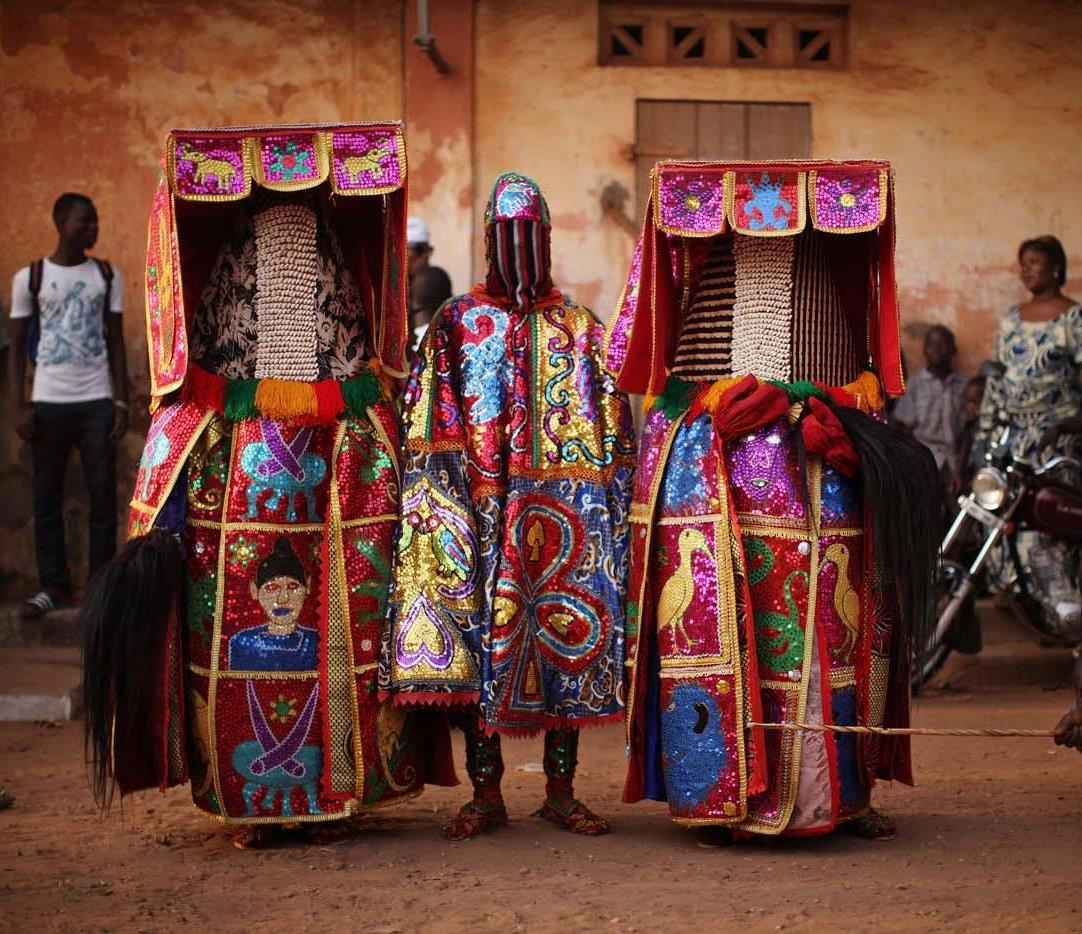
What the masquerade was, in its original context, was a spiritual technology. It was not a performance for an audience. It was a mechanism for connecting the living with the dead, for bringing ancestral authority into the present, for enforcing social order, for marking transitions, for resolving disputes, and for maintaining the relationship between the community and the spirit world. The costume was not worn. It was inhabited. The word Egungun, the Yoruba term for their ancestral masquerade, translates directly as “powers concealed.” The costume was the vessel. The person inside it ceased to exist. What remained was the ancestor.
According to the Art Institute of Chicago, the Egungun masquerade originated within the Yoruba kingdom of Oyo, perhaps as early as the seventeenth century, and spread across the Yoruba region. During Egungun ceremonies, costumed men move through communities embodying the presence of their ancestors, singing, dancing, and delivering blessings or corrections to the living. The costume itself is the most important object in the ceremony. Egungun costumes are made from layers of richly brocaded fabric, beads, cowrie shells, sequins, mirrors, animal skins, and talismans, built up over the years, with new cloth added annually. The number of layers indicates the masquerade’s age and spiritual power. The more elaborate the costume, the more powerful the ancestor it embodies.
The Igbo Mmanwu, meaning “masquerade” or “spirit,” operates on the same principle. Costumes are made from raffia, cloth, feathers, and beads, with each material carrying a specific spiritual meaning. Raffia represents nature spirits. Feathers, particularly in the Oro and other Yoruba masquerade traditions, carry the spiritual authority of birds, creatures understood to move between the human and the spirit world. In the Kongo spiritual tradition, a diviner’s costume was covered with wild animal skins, bird feathers, leopard teeth, and bells, each element encoding a specific spiritual power. None of this was aesthetic. All of it was language.
How the Costume Crossed the Atlantic
Colonial authorities understood what the masquerade meant, which is why they targeted it. In French colonies, the Code Noir of 1685 forbade all non-Catholic religions and required enslaved Africans to convert to Catholicism. African spiritual practices, including masquerades, were banned. The drum was banned. The mask was banned. What colonial powers did not account for was the ingenuity of people who had spent generations encoding spiritual knowledge into costume, movement, and rhythm. What they banned in one form, it found another.
As Professor Njoku documents, the diaspora masquerades are not exact replicas of their African originals. They need not be. They are a continuation of the same impulse, adapted to new environments, new materials, and new conditions of oppression. Enslaved Africans fused their masquerade culture with European parading traditions and Catholic feast day celebrations to continue practising their culture without detection. The result was Carnival. Not Carnival as a European festival with African influences, as mainstream accounts prefer to frame it—Carnival as an African masquerade tradition wearing European clothes.
The Egungun in the Americas: Trinidad’s Mas and the Living Ancestor
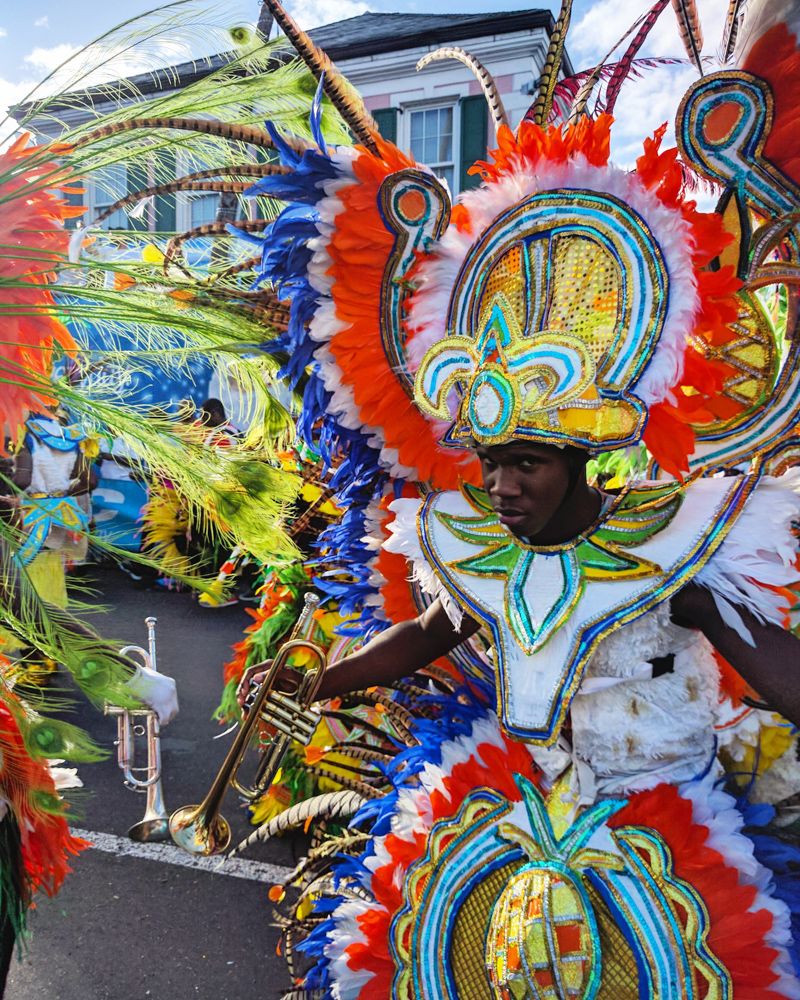
Trinidad and Tobago’s Carnival, known as playing Mas, is the most globally recognised expression of Caribbean Carnival costume tradition, and its connection to African masquerade is both structural and documented. The term Mas comes directly from masquerade. The practice of forming Mas bands, in which groups of performers wear coordinated, themed costumes and parade through the streets, mirrors the structure of West African masquerade societies, in which lineage groups coordinate ceremonies and performances within a community framework.
Scholars, including Hollis Liverpool, in his landmark work on the origins of ritual and custom in Trinidad Carnival, have documented the direct connection between the Yoruba Egungun festival and the masquerade traditions of Trinidad. The act of masking itself, as Liverpool argues, was a means of empowerment. It was the same empowerment that the Egungun costume provided in Yorubaland: the costume removed the individual and installed the spirit, giving the wearer an authority that colonial society denied them in every other context. A man in chains had no power. A man in a masquerade was an ancestor. Colonial authorities could not arrest an ancestor.
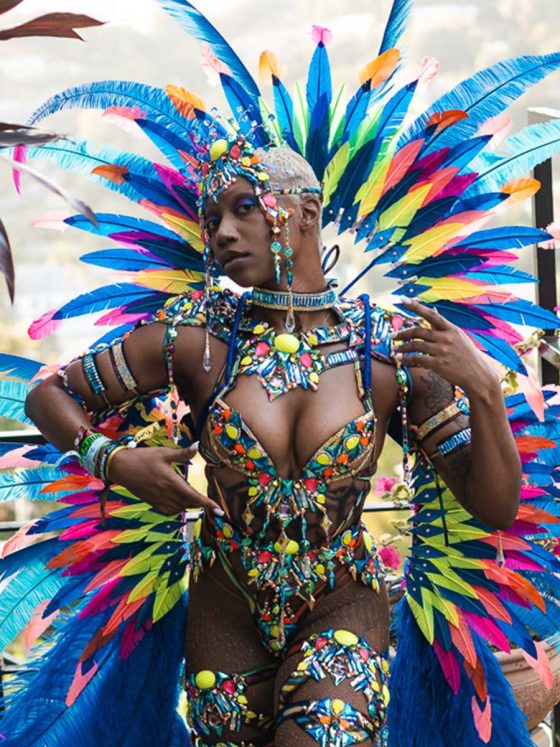
The feathers that define modern Trinidad Carnival costumes are not a fashion evolution. They are a continuation of the spiritual vocabulary of West African masquerades, in which feathers marked the boundary between the human and the spirit world. In Yoruba cosmology, birds are the sacred symbol of female spiritual power, and carved birds frequently surmount the helmet masks of the Egungun tradition. In the Igbo masquerade tradition, feathers signal the presence of a spirit that moves between worlds. When a Carnival queen steps onto the Savannah stage in Port of Spain wearing a headdress of ostrich feathers that rises three metres above her head, she is not wearing fashion. She is wearing a tradition that is older than the city she stands in.
Junkanoo: The Bahamas and the Unbroken Masquerade Line
Junkanoo, the national festival of the Bahamas, celebrated every Boxing Day and New Year’s Day, is one of the most directly documented examples of African masquerade tradition surviving intact in the diaspora. Its roots can be traced to West Africa, with scholars identifying connections to the Igbo yam deity Njoku Ji, the Igbo Okonko masking tradition, and the Yoruba Egungun festivals. Douglas Chambers, professor of African studies at the University of Southern Mississippi, has written on the Igbo origins of specific Junkanoo characters and costume elements that mirror West African masquerade types with a precision that cannot be explained by coincidence.
The original Junkanoo costume was made from cloth, fringed paper, sea sponges, leaves, and other natural materials, all attached to netting worn over the body. Faces were hidden under flour paste, later replaced by wire masks. The materials were different from those used in West Africa. The function was identical: to conceal the individual, to install the spirit, to create a figure that moved in the space between the human and the ancestral world. The National Museum of African American History and Culture holds a Junkanoo costume that illustrates the full maturity of this tradition: gold construction with elaborately beaded panels, rows of yellow, red, and ostrich feathers, and large plumes at the crown. Feathers. Beads. Crown. The vocabulary of the Egungun, translated into Bahamian materials.
The Mardi Gras Indians: New Orleans and the Most Explicit African Retention
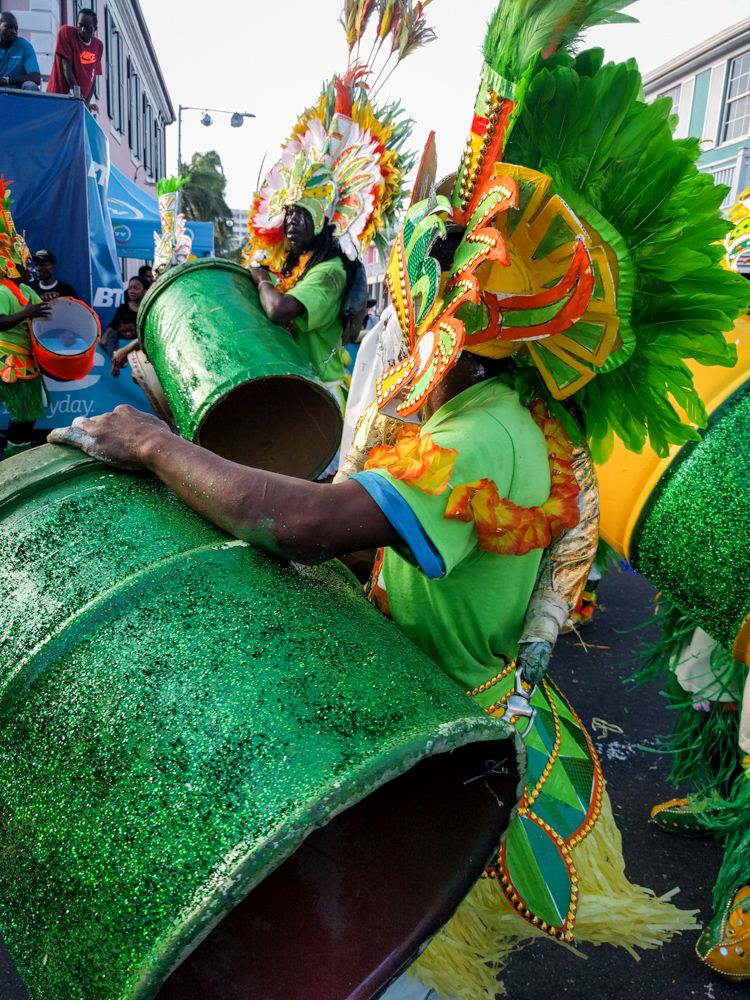
Of all the Carnival masquerade traditions in the Americas, the Mardi Gras Indians of New Orleans offer perhaps the most explicitly documented link to West African masquerade practice. Scholars Fehintola Mosadomi and Joyce M. Jackson have noted the ceremonial similarities between the Yoruba Egungun and the Mardi Gras Indians: both are performed in the streets with music and folk rituals, both feature elaborate, colourful costumes, both are historically male-dominated, and both serve as rites of passage and community-bonding traditions for men.
Cherice Harrison-Nelson, a fifth-generation Mardi Gras Indian, puts it plainly: the tradition uses a Native American motif, including feathered headdresses and beadwork, but everything else about it is West African. The polyrhythms. The call and response. The regalia structure. The communal political function. The Mardi Gras Indian tradition is an African masquerade society wearing Indigenous American aesthetic references, created by communities who understood that the only way to continue their spiritual practices under colonial surveillance was to make them look like something else.
The beadwork on a Mardi Gras Indian suit, which can take an entire year to complete and involves thousands of hand-sewn glass beads, mirrors the beadwork of the Yoruba masquerade tradition, in which cowrie shells and beads encoded the spiritual identity and power of the costume. The cowrie shell, which appears on Egungun costumes as a symbol of wealth and sacred power, also appears on Mardi Gras Indian suits in the same structural position: as an adornment that is both decorative and spiritually encoded. The bead is not there to look beautiful. It is there to say something.
Also Read:
- The Pollera, the Wob Dwiyet, and the Baiana: The African Women Who Dressed the Americas
- The Cloth That Crossed the Ocean: How African Fashion Tradition Lives in the Caribbean and Latin America
- The African Roots of Caribbean and Latin American Dance: When the Drum Speaks
- Afrocentric Beadwork and the Language of Adornment
Rio’s Samba Schools and the Kongo Ancestral Structure
Brazil’s Carnaval, centred in Rio de Janeiro, is the largest Carnival celebration on earth, and its costume tradition is the most globally recognised. The Samba school system, in which neighbourhood groups spend an entire year designing and building coordinated themed costumes for a single parade performance, is framed in popular culture as a Brazilian invention. It is not. The structure of the Samba school, in which a community organises itself around a shared ceremonial production, mirrors the structure of West African masquerade societies with precision.
The contemporary popularity of Carnaval began in 1917 when the Samba was introduced, an energetic dance derived directly from traditional African dances and rooted in the Kongo semba. The feathered headdresses and elaborate body costumes worn by Samba dancers at Rio Carnaval carry the same feather vocabulary as the West African masquerade: feathers as spiritual elevation, feathers as a connection to the ancestor world, and feathers as a visual signal that what you are watching is not simply a person dancing but a tradition moving through a person. The Baianas of the Samba schools, the elder women who open each school’s procession in white, layered skirts and headwraps, are the most direct embodiment of the Yoruba spiritual tradition: they are the community’s ancestral authority made visible, walking at the head of a ceremony that the world calls a parade.
What the Fashion Industry Refuses to Say
Every year, fashion media produces its Carnival coverage. The images are selected for maximum visual impact: the biggest feathers, the most sequins, the most elaborate headdresses. The captions reference Brazil, Trinidad, the Bahamas, and New Orleans. They do not reference the Egungun. They do not reference the Mmanwu. They do not reference the Kongo diviner whose costume of feathers and animal skin was the prototype for everything on those pages. That omission is not ignorance. The Smithsonian’s research and Harvard’s Hutchins Centre have both published extensively on African cultural retentions in diaspora Carnival. The knowledge is available. The fashion industry simply chooses not to use it because doing so would require crediting Africa as the origin of one of the world’s most commercially valuable aesthetic traditions.
The Omiren Argument
Vogue covers Carnival every year. So does Elle, so does GQ, so does every major fashion publication with access to a flight to Rio. What none of them publish is the sentence that makes the rest of the coverage honest: this began in West Africa. The feathers came from a Yoruba masquerade. The beads came from an Igbo ceremony. The masked procession came from the Kongo ancestral ritual. The community costume-making tradition came from the same social structure that organised Egungun societies in Nigeria centuries before the first enslaved African stepped off a ship in the Americas. The fashion industry has built a billion-dollar aesthetic industry on the visual output of African spiritual practice, and it has done so without once naming the source. That is not an oversight. It is a policy.
Omiren Styles operates by a different policy. The African masquerade tradition is not a reference point for Carnival. It is Carnival’s origin, structure, spiritual grammar, and reason for existing. The communities that kept it alive did so under conditions that included legal prohibitions on their drums, masks, religions, and languages. The fact that the Egungun still walks in Port of Spain, that the ancestor still dances in New Orleans, that Junkanoo still rushes the streets of Nassau at 1 a.m., is not a cultural curiosity. It is one of the most significant acts of collective human resistance in recorded history. And it was dressed, every single time, in feathers and beads.
The masquerade did not survive five centuries by accident. It survived because people chose, deliberately and at great cost, to keep it. The feathers, the beads, the mask, the procession: none of it is decoration. All of it is memory. And memory, as West Africa has always known, is the only thing that cannot be enslaved.
Frequently Asked Questions
1. What is the direct connection between the Yoruba Egungun masquerade and the Caribbean Carnival costume?
The Egungun masquerade of the Yoruba people of Nigeria is a ceremony in which costumed performers embody ancestral spirits, parading through communities in layered, beaded, and elaborately decorated costumes. Scholars, including Hollis Liverpool and Fehintola Mosadomi, have documented direct structural, ceremonial, and aesthetic connections between the Egungun and Caribbean Carnival masquerade traditions, including Trinidad’s Mas, which takes its name directly from the word “masquerade”. The feathers, beadwork, communal costuming structure, and the spiritual function of concealing individual identity to install ancestral authority are all Egungun features that appear intact in Caribbean Carnival.
2. Why do Carnival costumes use feathers, and what is the African origin of this tradition?
In West African masquerade tradition, feathers carry specific spiritual meaning, representing the ability to move between the human and spirit worlds. Birds are sacred in Yoruba cosmology, symbolising female spiritual power and divine communication. Feathers appear on Egungun helmet masks, Oro masquerade costumes, and Igbo Mmanwu ceremonial dress as markers of spiritual elevation. This vocabulary crossed the Atlantic with enslaved Africans and is preserved in the feathered headdresses of Trinidad Carnival, Rio Carnaval, and Junkanoo in the Bahamas, where the feather retains its function as a marker of spiritual and ancestral authority even when its origin is not named.
3. What is Junkanoo, and how does it connect to African masquerade tradition?
Junkanoo is the national festival of the Bahamas, celebrated on Boxing Day and New Year’s Day, dating to the seventeenth century. Its roots lie directly in West African masquerade tradition. Scholars have identified connections to the Igbo Okonko masking tradition, the Yoruba Egungun festival, and the Akan Fancy Dress festivals of Ghana. Its defining features, including masked procession, communal costuming, drumming, and the spiritual concealment of identity, are all features of the West African masquerade. The National Museum of African American History and Culture holds Junkanoo costumes that illustrate the full continuity of this tradition, including the beadwork and feather placement vocabulary of the Yoruba masquerade.
4. Why does mainstream fashion media not acknowledge the African origins of Carnival costume?
Mainstream fashion publications cover Carnival annually for its visual impact, but consistently frame the tradition as Brazilian, Caribbean, or Trinidadian without tracing its origins to West and Central Africa. This reflects the same structural pattern identified in Omiren Styles’ coverage of traditional dress and dance: African cultural production is absorbed into the identity of the nations where it was preserved, without crediting the continent and peoples who created it. Research from the Smithsonian Institution and Harvard’s Hutchins Centre confirming African origins is publicly available. The omission is not a knowledge gap. It is an editorial choice, and Omiren Styles exists specifically to make a different one.